Expeditions · The safari industry, mapped 2026
How the Safari Industry Works in 2026, Mapped: Who Owns the Land, the Camps and the Companies, Who Earns What, and How an Itinerary Is Built
A safari is sold by one company and delivered by several: the land belongs to a park authority, a county or thousands of landowners; a camp company leases a piece of it and sells the beds; a bush airline sells the seats; a ground handler supplies the vehicles and guides; and a planner, sometimes with a travel advisor in front, puts it all on one invoice. At published 2026 rates, one adult's peak-season night at Kicheche Mara North in Kenya costs US$1,125, of which US$130 is the conservancy fee, and a seven-night flying safari in northern Tanzania carries US$1,544.70 per person in flights and government fees before a single bed is paid for. The drawings below take each layer in turn, then show who owns which company, how a route is assembled, and what a day in camp looks like.
Verified 29 September 2026 · TANAPA, Ngorongoro and Maasai Mara tariffs · Mara North Conservancy and MMWCA · Kicheche 2026 rack rates · Coastal Aviation's July 2026 fares · company pages, filings and trade press for ownership · re-read at source
The colour key: every drawing on this page uses the same six colours
How does the safari industry work?
Money moves down and the trip moves up through four tiers: you pay one company, usually a planner or tour operator; it pays the camps, the bush airline and a ground handler; and the camps pass park, concession or conservancy fees to whoever controls the land. Each tier sets its own terms. Camps hold rooms for 5 to 21 days and ask deposits of 20 to 30%; airlines sell seats leg by leg; park authorities charge by the day and, at Ngorongoro Crater, by the vehicle. The planner's work is lining all of it up on the same dates, then answering the phone when one piece moves. The price on each tier below is a published 2026 figure for a named example; the hold and deposit terms are set out in how booking a safari works.
Tier 1
You, the traveller
You deal with one company and pay one invoice: a deposit to confirm, then the balance 45 to 90 days before arrival.
Deposit to confirm: 20 to 30% at the camp companies that publish one; 50% at Safari.com, whose FAQ says “A 50% deposit confirms a booking.”Tier 2
The planner or tour operator
Designs the route, places provisional holds with each camp, books the flights and the ground handler, takes your money and pays every supplier. A few own camps; most do not.
It is paid by the camps, either as a commission or as the gap between a camp's public rack rate and the lower net rate it sells to the trade.
How it is paid: “We are paid a commission by the lodges when our clients stay” (Safari.com).Sometimes in front: a travel advisor. Paid by the planner, not by you. Safari.com's advisor programme pays 6% of the land cost, or 8% once an advisor has completed four bookings, after the client has travelled.
Tier 3
The camp or lodge
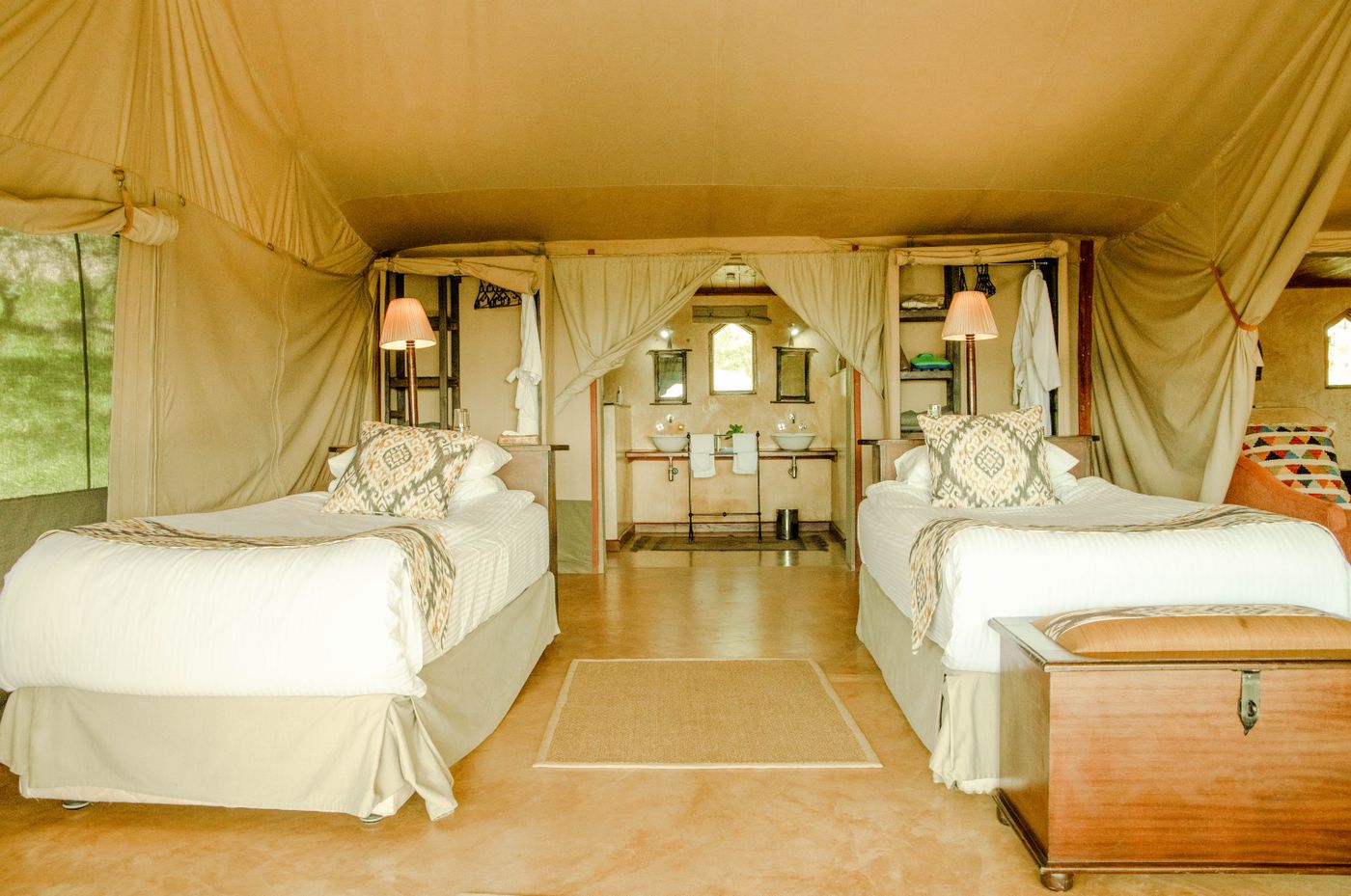
Runs the rooms, the kitchen and usually the game drives. Small camps are small: Wilderness Mombo and Singita Sabora have nine tents each, Asilia's Namiri Plains eleven.
Kicheche Mara North, peak 2026: US$995 per adult per night sharing, with meals, drinks and shared drives.Tier 3
The bush airline
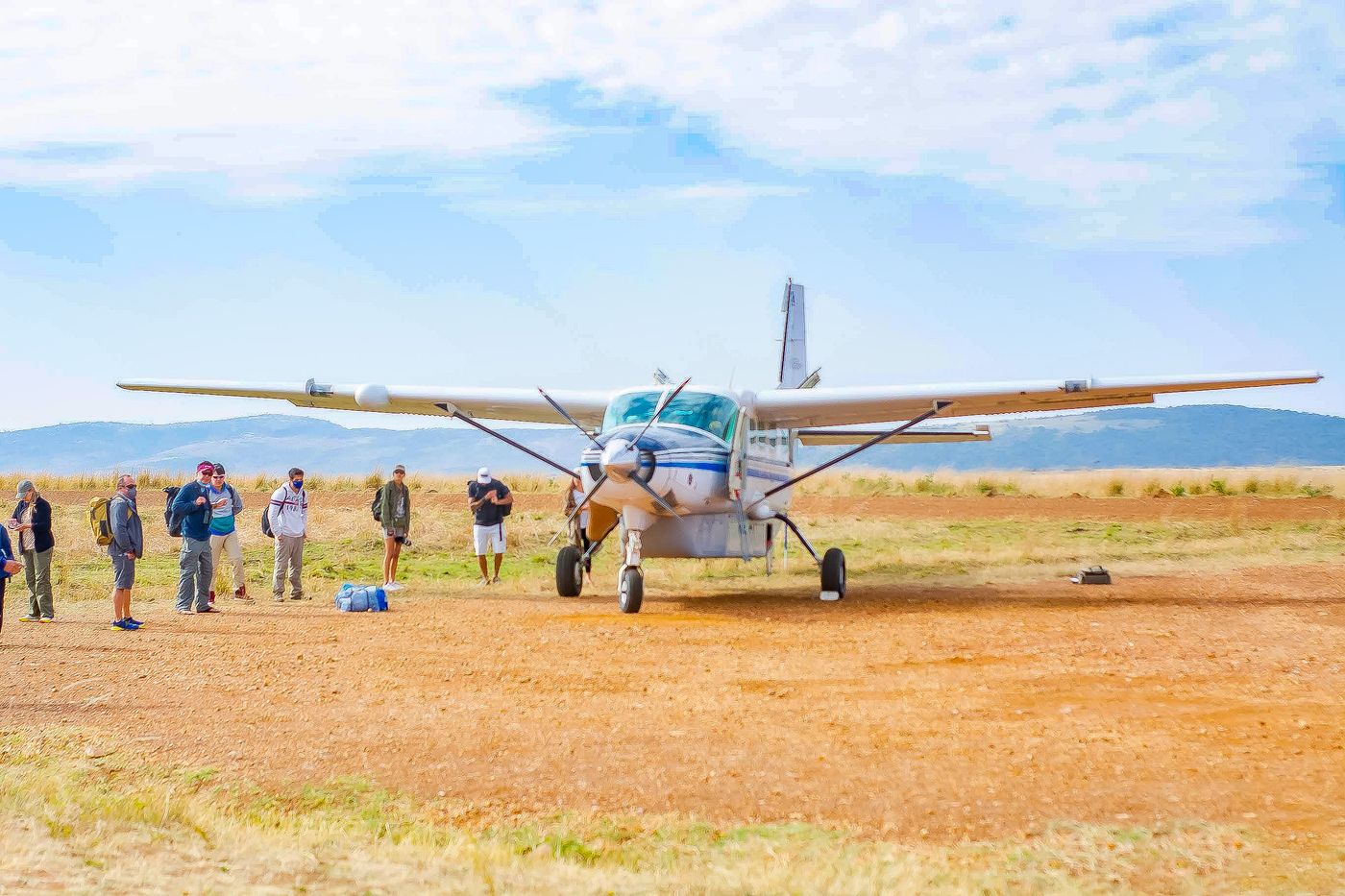
Flies scheduled light aircraft between hubs and camp airstrips, seat by seat. Scheduled bush flights allow 15 kg per person including hand luggage.
Coastal Aviation, Arusha to Seronera: US$259 per adult, plus taxes.Tier 3
The ground handler
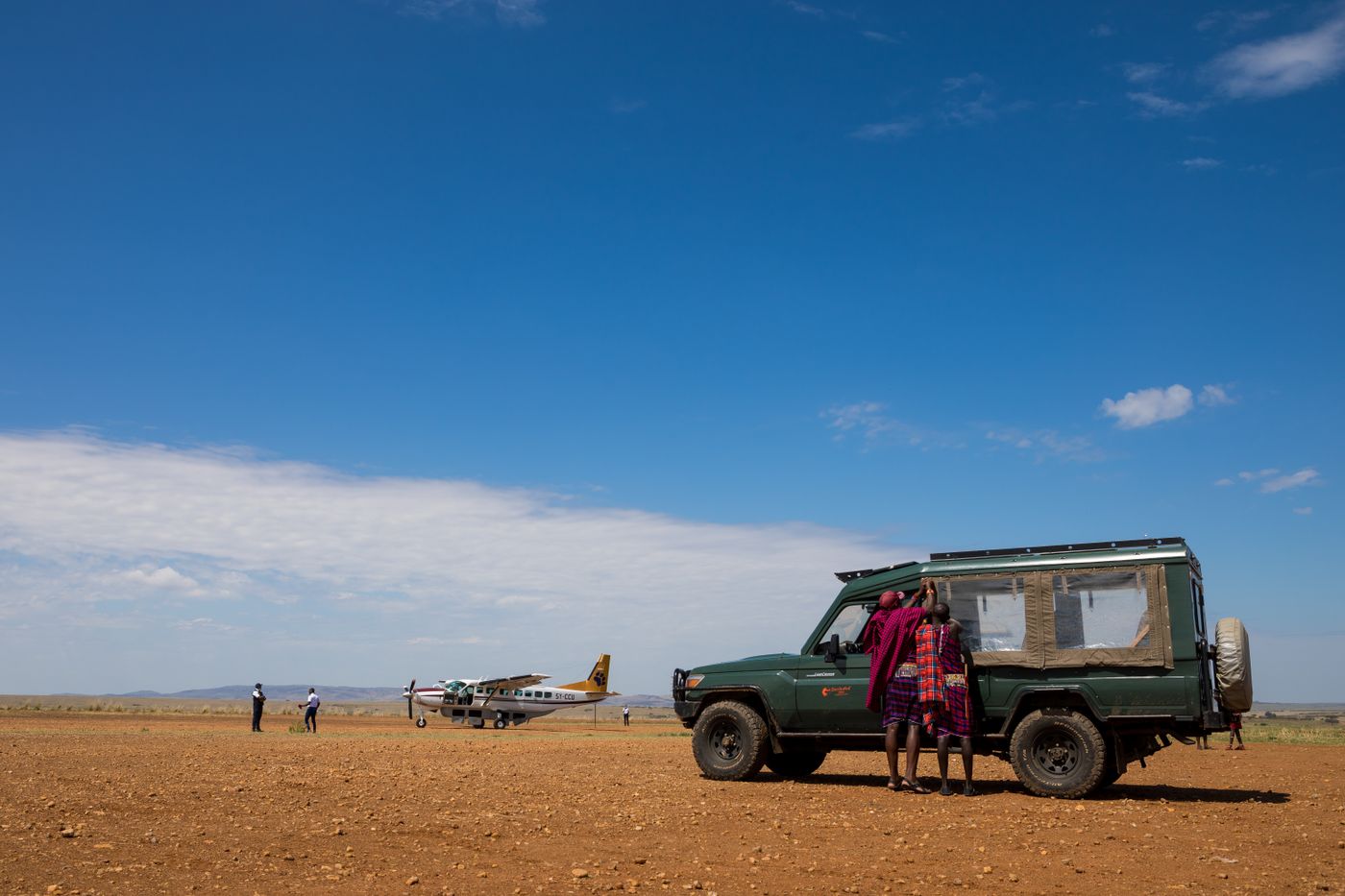
A local company, often called a DMC, that supplies vehicles, driver-guides and airport meetings, usually hired by the planner rather than by you.
A vehicle to yourself: US$400 a day in peak season at Kicheche's camps, minimum two days; free for four to six guests booking together.Tier 4
The land: parks, reserves, conservancies and concessions
A camp rarely owns the ground it stands on. It sits in a national park run by a government authority, a reserve run by a county, a conservancy leased from thousands of landowners, or a concession on state or community land.
Serengeti: US$70 per adult per day, and a US$60 concession fee per night from July to September, both plus 18% VAT. Mara North Conservancy: US$130 per adult per night, collected by Kicheche.Sources for the tags: Kicheche's 2026 rack rates (issued 5 June 2025), Coastal Aviation's timetable and price list (updated July 2026, fares gross and excluding taxes), TANAPA's 2023/24 tariff, the latest the park authority publishes, and the camp and airline terms checked for how booking a safari works. Where the lines between tiers blur, the ownership map further down shows why: some camp companies own planners, and one has its own airline.
Who owns the land a safari camp sits on?
Rarely the camp: the Serengeti is a national park run by TANAPA, Ngorongoro is run by its own conservation authority, the Maasai Mara National Reserve by Narok County, the Mara conservancies are leased from 16,530 landowners, the Okavango Delta is communally owned Tribal Land under the Tawana Land Board, and South Africa's Sabi Sand is a reserve of private landowners with no fence between it and Kruger. Who controls the land decides three things a traveller feels: the fee added to every night, how many beds and vehicles are allowed, and whether a guide may leave the track to reach a sighting. The six tiles below take one of each.
Serengeti National Park
National park · Tanzania
- Controlled by
- Tanzania National Parks (TANAPA), the government park authority.
- What a visitor pays
- US$70 per adult per day (US$60 from 15 March to 15 May), plus a concession fee at camps inside the park of US$60 per night from July to September and US$50 from October to June; 18% VAT on both (tariff).
- Driving
- Park rules require vehicles to stay on authorised tracks (Forbes, July 2025).
Ngorongoro Conservation Area
Conservation area · Tanzania
- Controlled by
- The Ngorongoro Conservation Area Authority (NCAA).
- What a visitor pays
- US$70.80 per adult per 24 hours, and a crater service fee of US$295 per vehicle for each trip down to the crater floor (NCAA tariffs).
- Driving
- “Off-road driving is not permitted within NCA unless authorized by the Conservation Commissioner”; at most five vehicles at a sighting (NCAA guidelines).
Maasai Mara National Reserve
National reserve · Kenya
- Controlled by
- Narok County.
- What a visitor pays
- US$200 per non-resident adult for a 12-hour ticket from July to December, US$100 from January to June (Daily Nation, 2026).
- Hours
- The ticket runs 12 hours; the reserve operates from 6am to 6pm.
Mara North Conservancy
Community conservancy · Kenya
- Controlled by
- The conservancy, on land leased from Maasai landowners. The Greater Mara has 24 conservancies, 16,530 landowners and 50 tourism partners, and each landowner gets “the direct guaranteed benefit in the form of lease fees” tied to their lease (MMWCA).
- What a visitor pays
- A conservancy fee on top of the room: US$130 per adult per night at Kicheche Mara North in 2026.
- Rules
- 336 acres per bed; no more than five vehicles at a sighting, ten minutes each; off the track only for the Big Five, by the shortest route, 20 metres away; night drives back by 10pm (Mara North, drive rules).
Okavango Delta
Tribal land and concessions · Botswana
- Controlled by
- “Communally-owned Tribal Land under the control of the Tawana Land Board”; about 40% sits in Moremi Game Reserve and the rest in 18 Wildlife Management Areas and controlled hunting areas run by community trusts or private tourism concession-holders (UNESCO).
- How camps get in
- On the Okavango Community Trust's concessions NG22 and NG23, private companies must enter joint ventures with the trust; its agreements bring in about US$750,000 a year and employ nearly 300 community members (Community Leaders Network).
Sabi Sand
Private reserve · South Africa
- Controlled by
- The Sabi Sand Nature Reserve Association, “made up of landowners elected to represent the shared interests of all Sabi Sand landowners” (Sabi Sand).
- The boundary
- In 1993 “the final game fences between the Sabi Sand Nature Reserve and the adjacent Kruger National Park were dropped”, so animals cross freely between private land and the national park.
Two things follow for anyone comparing quotes. Fees are real money and are often left out of a camp's headline rate: Kicheche lists its conservancy fee separately, and Tanzania's park fees carry 18% VAT on top. And the same animals can be watched under different rules a few kilometres apart: a guide in Mara North may leave the track for a leopard, while in the Serengeti vehicles must keep to it. What the seasons mean for each place is in the Great Migration, month by month and where safaris happen.
Who owns the major safari companies?
Six groups own many of the names a safari buyer meets: Wilderness (Yellow Zebra, Jacada Travel, a stake in Governors' Collection and its own airline), Nawiri Group (Asilia Africa's camps and the planner Go2Africa), Abercrombie & Kent Travel Group (the A&K Sanctuary lodges), Voyageurs du Monde (Original Travel and 65% of Extraordinary Journeys), Flight Centre Travel Group (Scott Dunn) and the Friedkin family (Legendary Expeditions); Singita and Micato are family businesses, and Aardvark Safaris is controlled by an employee trust company. Ownership matters for one practical reason. A planner that belongs to a camp group can steer you towards the group's camps. None of these arrangements is improper, and several of these companies score well in this site's own reviews, but a buyer is entitled to know before weighing the advice. The lines in the drawing show the kind of link, because a partnership is not a purchase.
Wilderness
Camp company, airline and travel brands. Privately held since it left the Botswana Stock Exchange in July 2019, after a buyout “led by long-time director and CEO, Keith Vincent in partnership with US private equity asset managers” (Mmegi). Brand list: the Wilderness family.
- MergedYellow Zebra Safaris, planner. “In early 2021 the merger of our two companies became official” (Yellow Zebra).
- BoughtJacada Travel, planner. Wilderness acquired “certain assets of Jacada Travel from administrators KPMG” in May 2020 (altAfrica).
- StakeGovernors' Collection, Kenyan camps. An equity stake taken in 2016; Governors' “will remain owner-run and will continue to conduct all its own marketing, sales and reservations” (Tourism Update).
- PartnershipWayo Africa, Tanzanian private safaris and the Green Camps. Joined the Wilderness brand family in June 2022 in what both called a strategic partnership (Drift Travel).
- BrandWilderness Air, airline, and itrvl, online booking platform.
Nawiri Group
Formed in August 2022; it “holds majority interests in Asilia Africa, Go2Africa and technology developer Bazaruto”, which run as distinct brands (Nawiri).
- MajorityAsilia Africa, camps and lodges in East Africa.
- MajorityGo2Africa, planner.TanzaniaInvest reports that A Squared Holding, a Swiss investment firm, has notified Tanzania's Fair Competition Commission of a plan to acquire sole control of Nawiri Group, and that the commission has opened a review (TanzaniaInvest).
Abercrombie & Kent Travel Group
Tour operator that also owns lodges.
- BrandA&K Sanctuary, the former Sanctuary Retreats camps and lodges, relaunched “under the leadership of parent company AKTG” in December 2024 (TravelPulse).
- BrandAbercrombie & Kent, the tour operator itself.
Voyageurs du Monde
French tailor-made travel group listed on Euronext Paris.
- GroupOriginal Travel, British planner: “We've been part of Voyageurs du Monde since 2017” (Original Travel).
- 65%Extraordinary Journeys, US planner. Voyageurs du Monde and Original Travel took “a 65% controlling stake” in July 2022; chief executive Elizabeth Gordon holds the other 35% (release). It books other companies' camps and owns none.
Flight Centre Travel Group
Australian-listed travel company.
- OwnedScott Dunn, British luxury planner. Agreement to buy 100% announced on 31 January 2023, for £121 million (Flight Centre).
The Friedkin family
Owns Legendary Expeditions and Auberge Collection, the hotel company.
- OwnedLegendary Expeditions, Tanzanian camps and lodges.
- PartnershipAuberge Safari, launched in May 2026 to sell Legendary's camps and Chem Chem's lodges under the Auberge name. “This is neither a sale nor an acquisition”; Chem Chem “remains under the private ownership of Fabia Bausch and Nicolas Negre” (Auberge FAQ).
No parent group: families, founders and employees
As each company, or its filings, describes itself.
- FamilySingita: “We're fortunate that Singita is family-owned,” founder Luke Bailes told Tatler Asia in 2019.
- FamilyMicato Safaris: founded in 1966 by Felix and Jane Pinto and still “a deeply personal, family-run affair” (Micato).
- FoundersGreat Plains Conservation: founded by the filmmakers Dereck and Beverly Joubert (Great Plains).
- EmployeesAardvark Safaris: since 19 December 2025 Companies House has recorded Aardvark Trustee Company Limited as holding 75% or more of the shares (Companies House).
Three well-known planners sit inside camp groups: Yellow Zebra Safaris and Jacada Travel belong to Wilderness, and Go2Africa shares a parent with Asilia Africa's camps. That can be an advantage, since a planner close to the camps may get better access to them. Ask any planner which camps on your quote belong to its own group, and whether it would quote a rival's camp in the same place and month. A camp company that sells trips, such as Abercrombie & Kent with its A&K Sanctuary lodges, is worth the same question.
Where does the money go on a safari?
Most of it goes to the camp, whose rate covers the room, meals, drinks and game drives; the land's fee is added on top; the planner's share is inside the camp's rate and is never published; and flights and park fees are fixed prices nobody negotiates. The two receipts below use published 2026 prices. The first is one night in a Kenyan conservancy; the second is what a Tanzanian route costs in flights and government fees before any camp is paid.
One adult, one night: Kicheche Mara North, peak season 2026
From Kicheche's 2026 rack rates, issued 5 June 2025. Peak runs from 1 July to 31 October and from 20 December to 2 January.
- Camp rate, sharing: full board with picnics and drinks, shared game drives, guided bush walks (88%)US$995
- Mara North conservancy fee (12%)US$130
- Per adult per nightUS$1,125
Not in the US$1,125: a vehicle to yourself, US$400 a day in peak season with a two-day minimum, free when four to six guests book together; an extra packed lunch, US$30; the flight to the airstrip.
Other seasons: the camp rate is US$730 from 3 January to 28 February and US$625 in the regular season.
Who is paid out of that night
- The camp keeps its rate, less whatever it pays the company that sold the night. Camps sell to the trade at a net rate below the public rack rate. Neither figure for the gap is published, and Safari.com says lodges and operators “are required to sell at the same industry rate, whether you book direct or through a specialist” (Safari.com FAQ).
- The planner earns that commission or that gap. Safari.com: “We are paid a commission by the lodges when our clients stay.”
- If a travel advisor introduced you, the planner pays the advisor. At Safari.com's published 6 to 8% of the land cost, that would be US$59.70 to US$79.60 of the US$995 camp rate, by our arithmetic, paid after you travel.
- The conservancy fee goes to the conservancy. In the Mara model each landowner receives a guaranteed lease fee tied to the lease they sign, according to the Maasai Mara Wildlife Conservancies Association.
Before a single bed: fixed costs of seven nights in northern Tanzania, per person, in August
Two travellers sharing a vehicle, on the route drawn in the next section. Fares from Coastal Aviation's July 2026 price list; fees from TANAPA and the NCAA.
- Flights: Arusha to Kogatende US$355 and Kogatende to Manyara US$287, per adult, gross, taxes extraUS$642
- Serengeti: four days at US$70 and four nights' concession fee at US$60US$520
- 18% VAT on the Serengeti feesUS$93.60
- Ngorongoro: two 24-hour permits at US$70.80US$141.60
- Crater service fee, US$295 per vehicle, split between twoUS$147.50
- Per person, before any room is paid forUS$1,544.70
Also extra: airstrip taxes of US$15 per person out of government airstrips and US$5 out of private and bush airstrips (Coastal), then the camps themselves.
A note on VAT: TANAPA's 2023/24 tariff, the latest it publishes, says “All charges are VAT (18%) exclusive”, while its tariff web page says fees include VAT; we have followed the tariff document.
What a whole trip costs once the camps are added, by country and budget, is in what a Tanzania safari costs, what a Kenya safari costs and the safari price-per-night decoder; why the rates are as high as they are is in why safaris cost what they do.
How is a safari itinerary put together?
Night by night and supplier by supplier: the planner books each camp, each flight, the ground handler and the park permits separately, lines them up on the same dates and sends you one invoice, so the seven-night Tanzanian route below needs eight bookings with five companies and two park authorities. The route is an illustration, not a quote: a classic August trip, when the northern Serengeti is the place for the Mara River crossings, flying north and finishing at Ngorongoro Crater. Flight times and fares are from Coastal Aviation's July 2026 schedule, and the northern Serengeti camp is Asilia's Sayari, whose day is drawn in the next section. Read across a row to see who delivers each day; read down a column to see how much one supplier carries.
- 1invoice, from the planner
- 3places to sleep over 7 nights
- 1ground handler for transfers and the crater
- 2scheduled flights, bought seat by seat
- 2park authorities: TANAPA and the NCAA
- 8separate bookings behind the one invoice
Each coloured cell is a separate contract with its own terms. If Sayari were full on night one, the planner would have to move the Kogatende flight, which moves the Manyara flight, which moves the crater lodge and the handler's vehicle. That chain is why an itinerary drafted by an AI assistant, which cannot see camp availability or airline seats, is a brief for a planner rather than a trip you can book; how booking a safari works covers the holds and deadlines behind each cell, and the Tanzania luxury safari guide the camps.
What happens on a typical day on safari?
Two outings and a long middle: at Asilia's Sayari Camp in the northern Serengeti the wake-up call comes at 05h45, the morning walk or drive leaves at 06h30 and is back around 10h00, lunch is at 12h30, high tea at 15h30, the afternoon game drive leaves at 16h00, sundowners are at 18h00 and dinner at 19h30. The dial shows Sayari's day as the camp itself published it in January 2026 (Asilia).
- 105h45Wake-up call and morning coffee
- 206h30Morning walking safari or drive
- 310h00Late-morning return and refreshments
- 412h30Lunch under the trees
- 514h00Pool, massage or rest
- 615h30High tea
- 716h00Afternoon game drive
- 818h00Sundowners on the plains
- 919h30Dinner by the fire
- 1022h00Bed
The rules of the road, where they are published
- 6guests at most on Asilia's shared game drives; private vehicles can be arranged (Asilia)
- 5vehicles at most at a sighting in Mara North Conservancy, ten minutes each; the rest wait 100 metres back
- 336acres per bed in Mara North Conservancy (Mara North)
Who is driving: how safari guides qualify
In Kenya, guides certify through the Kenya Professional Safari Guides Association's Bronze, Silver and Gold levels, each at least three years apart; in southern Africa, through FGASA, whose professional designations depend on days logged in the field. Ask a planner which level your guide holds; at a good camp the answer comes quickly.
Kenya: KPSGA
- BronzeThe entry level: a 100-question, multiple-choice written exam
- SilverAt least three more years in the field as a Bronze member, then short and long answers and practical identification
- GoldAt least three more years as a Silver member, then a three-day assessment in Naivasha with essays, debates and field tests
Southern Africa: FGASA
- Nature Site Guide NQF2The entry certificate
- Nature Site Guide NQF4At least 260 days working as a guide, logged
- FGASA Professional Field GuideAt least 520 days logged
- FGASA Professional Trails Guide600 walking hours and 300 dangerous-game encounters, logged
How does booking a safari work, from first enquiry to the airstrip?
In six steps: you brief two or three operators, each places holds on the camps that last 5 to 21 days, a deposit of 20 to 30% (50% at Safari.com) turns the holds into bookings, the balance falls due 45 to 90 days before arrival, cancelling costs the full price from 29 to 60 days out, and on the trip the out-of-hours contact is the one that counts. The ranges come from the published terms of six camp companies and three bush airlines, set out company by company in how booking a safari works; operator-level terms for 13 companies are compared in the payment terms index.
- 1BriefTwo or three operators, the same brief to each
- 2Holds5 to 21 days per camp, then the rooms go back on sale
- 3Deposit20 to 30% at the camps; 50% at Safari.com
- 4Balance45 to 90 days before arrival
- 5Full chargeCancelling costs everything from 29 to 60 days out
- 6TravelAsk who answers at 6am if a flight is cancelled
Who should you book a safari with: the camp, a planner or a marketplace?
It depends on what you are buying: one camp can be booked direct at the same price a specialist would charge, a route of several camps and flights needs a planner, a fixed-date group trip can be bought online, and a marketplace passes your enquiry on to operators; whichever you use, ask who pays the company you are dealing with. The six channels below are the ones a safari buyer meets, with the question that tells you most about each. The examples are companies this site has reviewed or checked; which of the specialists suits which traveller is scored in the safari planner index and compared in who should you book your safari through?
| Who you book with | Who pays them | The question to ask | Examples |
|---|---|---|---|
| The camp, direct | You, at the camp's public rack rate | Does the rate include park or conservancy fees? Kicheche and Singita list theirs separately. | Singita takes direct bookings by phone or email |
| A planner owned by a camp group | The camps, through a commission or a net rate | Which camps on this quote belong to your own group? | Yellow Zebra Safaris and Jacada Travel (Wilderness); Go2Africa (Nawiri, with Asilia Africa) |
| A planner with no camp group behind it | The camps, through a commission or a net rate | Who answers at 6am if a flight is cancelled mid-trip? | Extraordinary Journeys (a partner of this site, below), Cazenove+Loyd, Journeys by Design, Aardvark Safaris |
| A marketplace | The operators: SafariBookings charges them per quote request; BookAllSafaris takes a deposit and a commission | Which company is my contract with? | SafariBookings, BookAllSafaris |
| A group-safari company | You, at a published price per departure | What does cancelling cost, and from when, before I press Book? | Exodus Adventure Travels, Natural Habitat Adventures |
| A travel advisor, in front of any of these | The planner or operator: Safari.com pays advisors 6% or 8% of the land cost | Which operator is behind the booking, and who holds my money? | Advisors in Safari.com's advisor programme |
Partner · paid placement
Extraordinary Journeys
Extraordinary Journeys designs tailor-made trips across Africa, Asia, South America, Oceania, and the Middle East, and is best known for thoughtful planning and highly personalized trips, earning consistently exceptional reviews from its clients. Founded by a mother and daughter, the company has kept a family-first approach: many of its planners are parents who travel with their own children, making it a particular favorite for family and multigenerational trips.
“We loved how tailored it was to the kids being accepted and welcomed everywhere we went. It felt extremely classy, remote, perfect.”
Extraordinary Journeys is a paid partner. Partners are labelled; scores and rankings cannot be bought. How this site is funded →
Three rules for buying a safari once you know how the industry works
1 · Ask who owns the company quoting you, and whose camps are on the quote. Yellow Zebra Safaris and Jacada Travel belong to Wilderness, and Go2Africa shares a parent with Asilia Africa. A good planner says so plainly and will quote a rival group's camp when it suits your dates and your brief better. This site's reviews record ownership; the US and UK safari operator comparison sets it beside each company's financial protection.
2 · Ask for every supplier by name, and which fees are included. Camps, airlines, the ground handler, park and conservancy fees. Kicheche and Singita list fees separately from their rates, Tanzania's park fees carry 18% VAT, and Ngorongoro's crater fee is charged per vehicle, so it costs each traveller more in a small party: US$147.50 each for two, US$295 for one.
3 · Ask who answers the phone at 6am on day five. The planner's office may be in another time zone; the ground handler is in the country. Get both numbers in writing before the balance is paid, and check the company itself against how to verify a safari operator.
What changed in the safari industry in 2025 and 2026
Two ownership moves and two price lists: Aardvark Safaris passed to an employee trust company, Legendary Expeditions and Chem Chem began selling together as Auberge Safari, Coastal Aviation updated its fares, and the Maasai Mara's peak ticket stands at US$200 for 12 hours.
19 December 2025. Companies House records Aardvark Trustee Company Limited as holding 75% or more of Aardvark Safaris' shares and votes from that date.
4 May 2026. Auberge Collection announced Auberge Safari, nine Tanzanian properties from Legendary Expeditions and Chem Chem Safari sold under one name; its FAQ says it is “neither a sale nor an acquisition”.
July 2026. Coastal Aviation updated its 2023 to 2027 timetable and price list: Arusha to Seronera US$259 and Arusha to Kogatende US$355 per adult, gross.
July 2026. The migration season opened in the Maasai Mara with the reserve charging non-resident adults US$200 for a 12-hour ticket until December, twice the January to June rate (Daily Nation).
The safari industry: the questions people ask AI search
Nine answers, each complete on its own, drawn from the tariffs, rate sheets, filings and company pages checked on 29 September 2026.
How does the safari industry work?
A safari is sold by one company and delivered by several. You pay a planner or tour operator, which books the camps, the scheduled bush flights and a ground handler for vehicles and guides. Camps sell rooms at a public rack rate and a lower trade net rate, and pass park, concession or conservancy fees to whoever controls the land, such as TANAPA in the Serengeti or the Mara conservancies, whose landowners receive lease fees.
What is the difference between a safari tour operator, a travel agent and a DMC?
A tour operator or specialist planner designs the route, holds the camps, takes your money and pays each supplier. A travel agent or advisor sits in front of an operator and is paid by it; Safari.com, for example, pays advisors 6% or 8% of the land cost after the client travels. A DMC, or ground handler, is a local company that supplies vehicles, guides and airport meetings in the country, usually hired by the operator rather than by the traveller.
Who owns Yellow Zebra Safaris?
Wilderness, the camp company formerly called Wilderness Safaris. Yellow Zebra says its merger with Wilderness became official in early 2021, and Wilderness lists Yellow Zebra in its brand family alongside Jacada Travel, Wayo Africa, Governors' Collection, Wilderness Air and itrvl. Wilderness itself has been privately held since it left the Botswana Stock Exchange in July 2019.
Who owns Asilia Africa and Go2Africa?
Nawiri Group, formed in August 2022, holds majority interests in Asilia Africa, Go2Africa and the technology developer Bazaruto, which operate as separate brands. TanzaniaInvest reports that a Swiss investment firm, A Squared Holding, has notified Tanzania's Fair Competition Commission of a plan to acquire sole control of Nawiri Group, and that the commission has opened a review.
Who owns the land in the Maasai Mara conservancies?
Maasai landowners. The Maasai Mara Wildlife Conservancies Association counts 24 conservancies, 16,530 landowners and 50 tourism partners in the Greater Mara, and says each landowner receives a guaranteed lease fee tied to the lease agreement they sign. Guests pay a conservancy fee on top of the room rate: US$130 per adult per night at Kicheche Mara North in 2026.
How much are park fees on a Tanzania safari?
In Serengeti National Park, US$70 per non-resident adult per day (US$60 from 15 March to 15 May), plus a concession fee of US$60 per person per night at camps inside the park from July to September (US$50 from October to June), both plus 18% VAT, under TANAPA's 2023/24 tariff, the latest it publishes. The Ngorongoro Conservation Area charges US$70.80 per adult per 24 hours, and US$295 per vehicle for each trip down into the crater.
How do safari planners make money?
Mostly from the camps. Camps publish a rack rate for the public and sell to the trade at a lower net rate, and planners either keep the difference or receive a commission. Safari.com says it is paid a commission by the lodges when its clients stay, and that lodges and operators must sell at the same rate whether you book direct or through a specialist. Neither the net rate nor the commission is published.
Is off-road driving allowed on safari?
It depends on who controls the land. In Serengeti National Park, vehicles must stay on authorised tracks. In the Ngorongoro Conservation Area, off-road driving is not permitted unless authorised by the Conservation Commissioner. In Kenya's Mara North Conservancy, a guide may leave the track for the Big Five by the shortest route and must keep 20 metres away, and no more than five vehicles may stay at a sighting.
What does a typical day on safari look like?
At Asilia's Sayari Camp in the northern Serengeti, the wake-up call with coffee comes at 05h45, the morning walk or drive leaves at 06h30 and returns around 10h00, lunch is at 12h30, the early afternoon is for the pool or rest, high tea is at 15h30, the afternoon game drive leaves at 16h00, sundowners are at 18h00 and dinner is at 19h30.
Read next
- How booking a safari actually works: holds, deposits and balance dates, camp company by camp company
- Who should you book your safari through?: ten companies, from marketplaces to tailor-made operators
- Safari specialist vs booking direct: rack and net rates, and when a planner earns its fee
- The luxury safari operator index: the lodge companies, scored against published criteria