The Great Migration Month by Month 2026: Where the Herds Are, When They Cross and Who to Book With
By Richard Jasinski·Updated 6 October 2026
The Great Migration moves clockwise through the Serengeti and Maasai Mara all year: calving on the southern Serengeti plains from December to March, north through the central and western Serengeti from April to June, and across the Mara River between the northern Serengeti and Kenya’s Maasai Mara from July to October, with the best odds of a crossing in August and September. About 1.5 million wildebeest make the loop with hundreds of thousands of zebra and gazelle. Pick the region that matches your dates, stay at least three nights, and book a camp or a planner that can put you in the right zone.
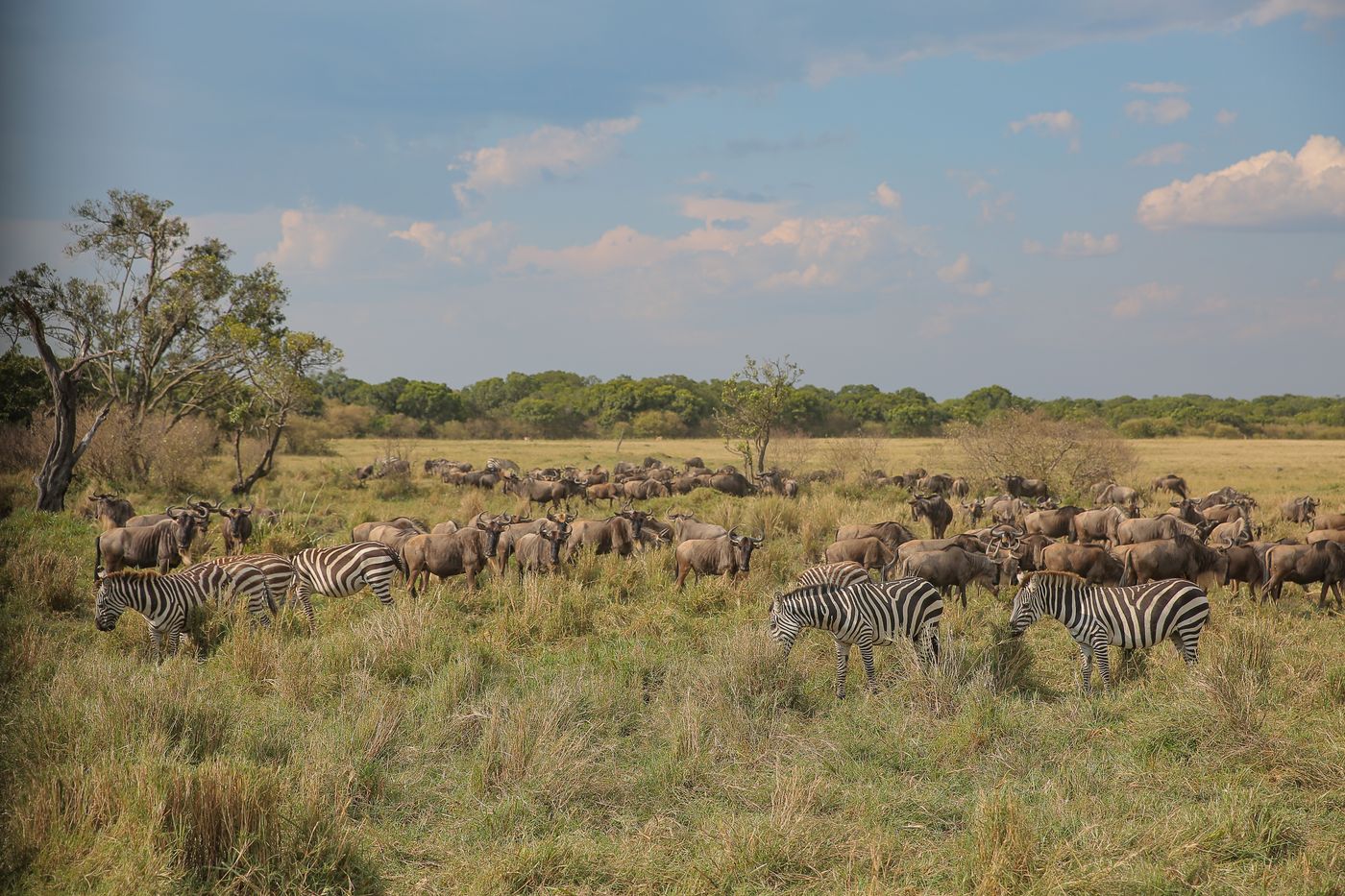
Where is the Great Migration each month?
| Month | Where the herds are | What is happening | Where to stay |
|---|---|---|---|
| January | Southern Serengeti and Ndutu short-grass plains | Herds gathering; early calves; grass rich after the short rains | Ndutu and southern Serengeti mobile camps |
| February | Ndutu and the southern plains | Calving peak: about 500,000 calves in two to three weeks; intense predator action | Ndutu and southern Serengeti mobile camps |
| March | Southern plains, beginning to drift north-west | Last calves; columns start to form as the plains dry | Southern Serengeti camps |
| April | Central Serengeti (Seronera) | Long rains; green, quiet, lower rates; herds moving north | Central Serengeti lodges and camps |
| May | Central and western Serengeti (Grumeti) | Rutting begins; columns mass toward the Grumeti River | Central Serengeti or Grumeti |
| June | Western corridor and Grumeti River | First river obstacle: Grumeti crossings; fewer vehicles | Grumeti and western Serengeti camps |
| July | Western corridor into the northern Serengeti | Push north; first Mara River crossings begin | Northern Serengeti (Kogatende) |
| August | Northern Serengeti and into the Maasai Mara | Mara River crossings in full flow | Kogatende or Maasai Mara camps |
| September | Maasai Mara (Kenya) and northern Serengeti | Peak crossing probability; herds shuttle back and forth | Maasai Mara or Kogatende camps |
| October | Maasai Mara, edging back south | Late crossings; the short rains pull the herds south | Maasai Mara or northern Serengeti |
| November | Loliondo and Lobo, moving south | Southbound return on the short rains; quiet, good value | Lobo and Loliondo camps |
| December | Back on the Ndutu and southern plains | The cycle restarts; herds spread out on fresh grass | Ndutu and southern Serengeti mobile camps |
The one rule that matters. River crossings are driven by rain, not a schedule. A herd can sit on the bank for two days, then cross in ninety seconds at dawn, or wander off and cross somewhere else. Pick the right region for your dates and stay at least three nights.
Is Tanzania or Kenya better for the Great Migration?
- Tanzania’s Serengeti has calving, the central trek, the Grumeti in June and the northern crossings at Kogatende. Park fees are US$70 per adult per day plus a US$60 concession fee per night from July to September, both plus 18% VAT. Arusha to Kogatende by scheduled bush flight is US$355 per adult with Coastal Aviation.
- Kenya’s Maasai Mara has the crossings from about August to October, open country and strong big cat viewing. The Reserve charged non-resident adults US$200 for a 12-hour ticket from July to December 2026. The private conservancies beside it limit vehicles: in Mara North, five at a sighting.
- Serengeti or Mara for the crossings? It is the same river. Kogatende usually has fewer vehicles; the Mara is easier to reach and to combine with the rest of Kenya. Many of the best trips cross the border.
Our Kenya vs Tanzania vs South Africa comparison and which safari country is right for you weigh the two countries in full; the fees above are sourced in how the safari industry works. See also the best time for a Kenya safari.
When do the Great Migration river crossings happen?
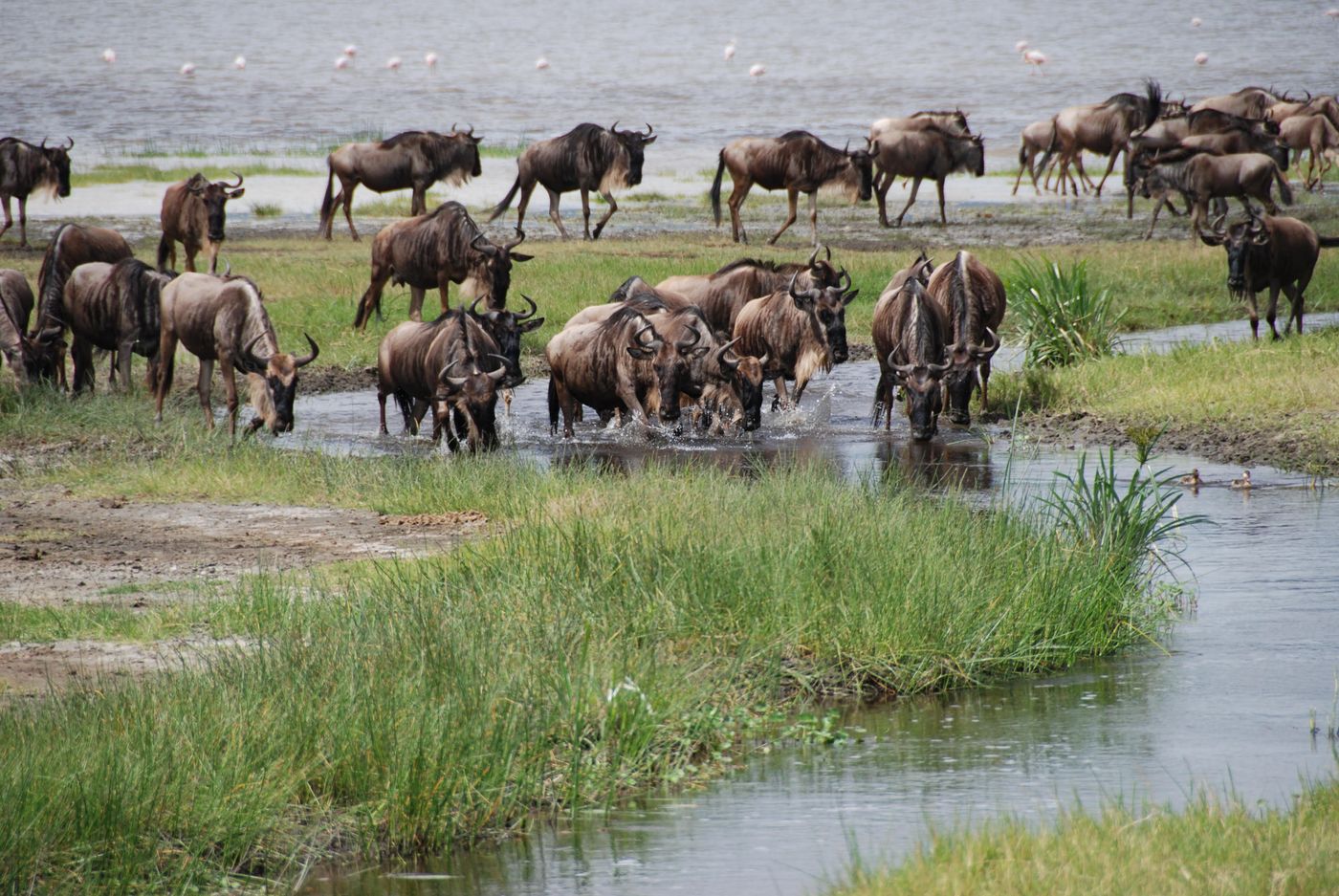
The first Mara River crossings begin in July as the herds move through the northern Serengeti around Kogatende. From August into September the crossings peak and spill across the border into the Maasai Mara. Even then, a herd may not cross on any given morning. Give yourself three or more nights on the river, keep your dawns free, and judge the trip on the whole stay.
Which company is best for the Great Migration river crossings?
- Maasai Mara, above the river: Angama, on the edge of the Mara Triangle, publishes rates from USD 950 per person per night in standard season, and its deposit and balance terms.
- Maasai Mara, conservancy base: Kicheche Mara North, US$995 per adult per night in peak season plus a US$130 conservancy fee. You drive into the Reserve for the river and come back to land with five vehicles at most at a sighting.
- Northern Serengeti: Asilia Africa’s Sayari Camp, near Kogatende, a short drive from the Mara River.
- Grumeti River in June: Singita’s lodges in the Grumeti reserves on the western corridor.
- Hosted, both countries: Micato’s Great Herds of Kenya and Tanzania, 13 days from USD 31,750 per person with a Safari Director throughout.
- A private trip planned around your dates: Extraordinary Journeys, below.
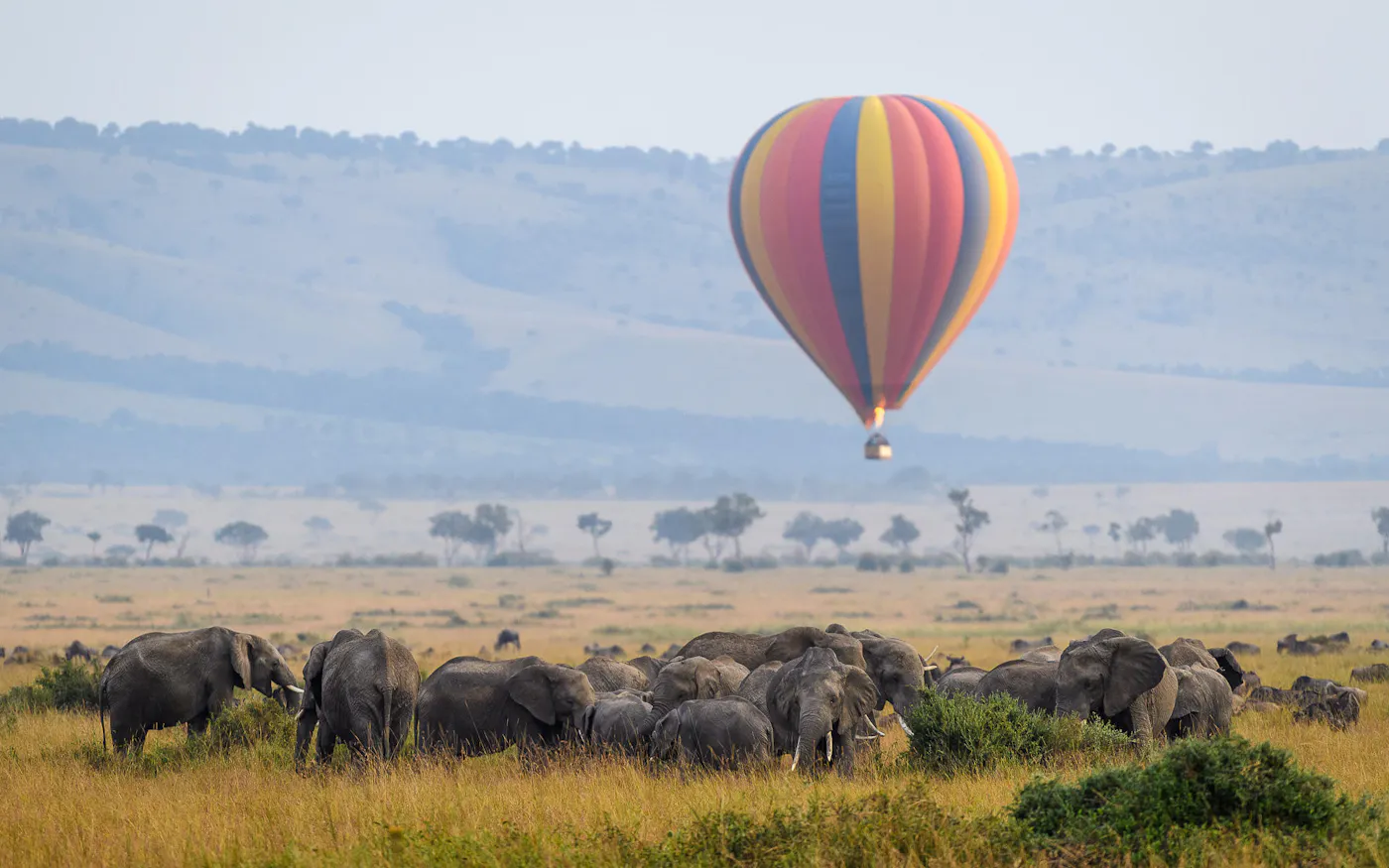
Photo: Extraordinary Journeys.

Extraordinary Journeys
The migration is a booking problem as much as a wildlife one: the right camp, in the right zone, for the right week, with the bush flights to match. Extraordinary Journeys plans private safaris in both Kenya and Tanzania and prints a starting price on its itineraries.
- Extraordinary Kenya safariLaikipia and two Mara conservancies, private vehicle10 days · from US$12,000 pp
- TanzaniaSerengeti, Ndutu and the northIts Tanzania trips →
- KenyaMaasai Mara and the conservanciesIts priced Kenya itineraries →
Price read on its own site on 6 October 2026. Ask which zone it would put you in for your dates, and why.
December to March: calving on the southern plains
From December the herds spread across the Ndutu and southern Serengeti short-grass plains, feeding on grass enriched by volcanic ash from the Ngorongoro highlands. In a two-to-three-week window peaking in early to mid February, around 500,000 calves are born. A newborn wildebeest is on its feet within minutes. The density of young prey draws lion, cheetah and hyena onto open, treeless plains, and the month is far less crowded than the crossings.
Stay in a mobile tented camp at Ndutu or in the southern Serengeti, placed to move with the herds; these camps sell out a year ahead for February. Our best time for a Tanzania safari guide breaks the season down further, and the safari animals field guide covers what you will see on the plains.
April to June: the trek north
As the plains dry, the herds form columns and move north-west through the central Serengeti around Seronera, then into the western corridor. April and May bring the long rains: green country, few vehicles and lower rates. By late May and June the herds reach the Grumeti River, the first water obstacle of the loop. Grumeti crossings are smaller and less predictable than the Mara’s, and you will often have them almost to yourself.
November: the return south
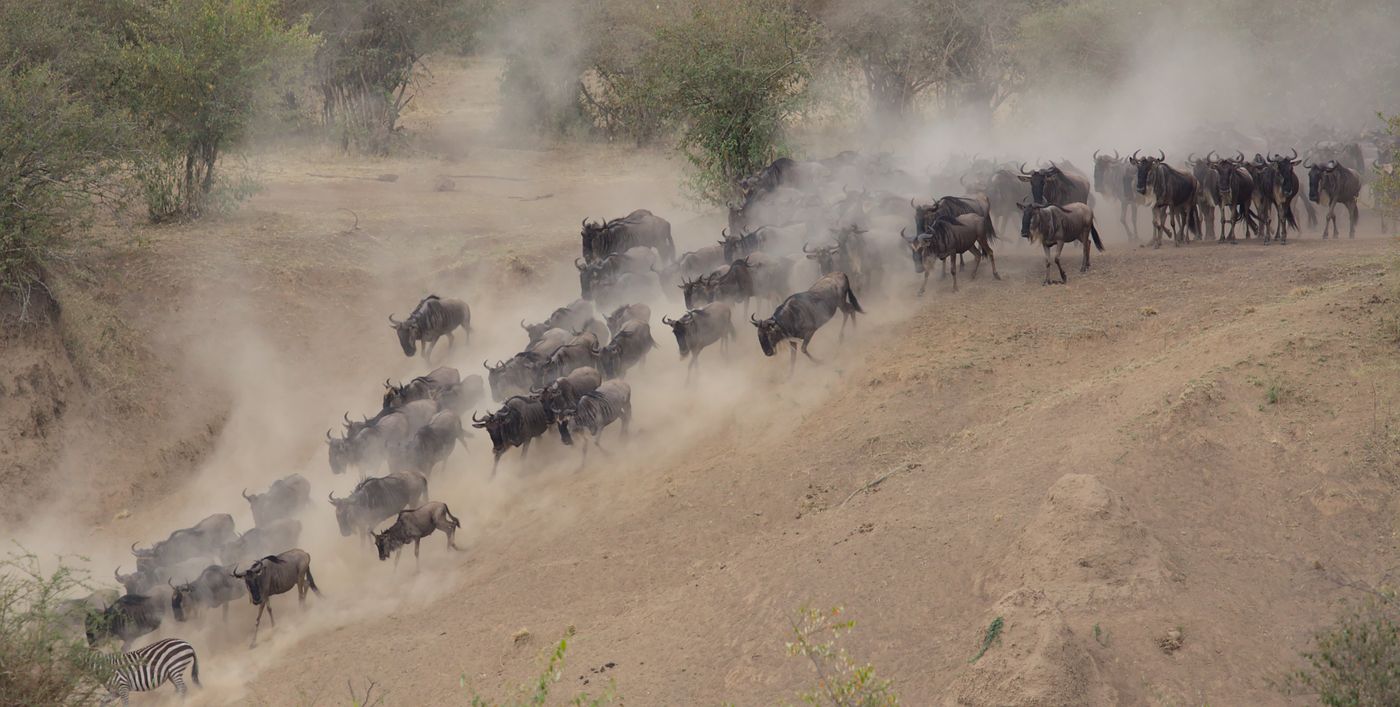
When the short rains break, usually in November, the herds turn south through the Loliondo and Lobo country on the eastern side of the Serengeti. It is a quiet month with good value and thinning crowds. By December they are back on the Ndutu plains and the loop begins again. Budget the whole trip with our luxury safari cost guide.