Expeditions · Safari booking explained 2026
How Booking a Safari Actually Works (2026): What You Can Book Online, Why Small Camps Can’t Be, and How Many Operators to Ask
Scheduled group safaris can be booked online with a deposit, as Exodus Adventure Travels and Natural Habitat Adventures sell them; tailor-made trips at small camps cannot, because a camp of nine or eleven tents keeps its live availability in reservation systems built for agents and holds rooms for an operator for 5 to 21 days while the flights and transfers around it are put together. The sections below set out what can and cannot be booked online, the published hold, deposit and balance terms of six camp companies, why one full camp breaks a whole itinerary, and how to brief operators, how many to ask and how to compare their quotes.
Verified 26 September 2026 · booking terms of Singita, Great Plains Conservation, Natural Selection, Asilia Africa, The Safari Collection and Wilderness · Safarilink, Airkenya and Coastal Air terms · Exodus and Natural Habitat departures, SafariBookings and BookAllSafaris terms re-read at source
How does booking a safari work?
An operator checks each camp, places provisional holds, adds the flights and transfers that join the camps, and sends you a proposal; your deposit turns the holds into bookings, and the balance follows 45 to 90 days before arrival. That is the sequence for a tailor-made safari at small camps, which is how most high-end safaris are sold. A scheduled group safari skips the first three steps: the company has already contracted the camps and vehicles for each departure, so you buy a place on it.
| Step | What happens | Published terms, checked 26 Sep 2026 |
|---|---|---|
| 1 · Brief | You send dates, party, budget and must-haves to one to three operators. | No cost to you. Marketplaces may charge the operator: SafariBookings bills listed operators per quote request. |
| 2 · Holds | The operator checks availability at each camp and places provisional holds. | Holds last 5 to 21 days at the six camp companies below; unpaid holds lapse and the rooms go back on sale. |
| 3 · Proposal | A route with camps, bush flights, transfers and park fees, and the date each hold expires. | Flights have their own rules: 15 kg per person on Safarilink, Airkenya and Coastal Air. |
| 4 · Deposit | Your deposit confirms the camps and flights. | Camps ask 20 to 30%; Safari.com asks 50% to confirm a booking. |
| 5 · Balance | The rest is paid on a schedule set by the camps in the route. | 45 to 90 days before arrival; 120 days at Singita for stays from 15 December to 5 January. |
| 6 · Travel | Vouchers, flight tickets and transfer times; camps or a ground handler meet each flight. | By now cancelling usually costs the full price: the 100% charge starts 29 to 60 days before arrival at the six camp companies. |
Can I book a safari online?
Yes for a scheduled group safari or a national-park rest camp; no for a tailor-made route through small private camps, which has to be assembled and held by an operator before anyone can pay for it. The difference is who has already done the camp-by-camp work. When Exodus Adventure Travels lists its eight-day Tanzania Safari Adventure for 31 January 2027 at US$7,940 per person excluding flights, with a “Book This Trip” button and a US$1,985 deposit, it has already contracted the lodges and vehicles for that departure. Natural Habitat Adventures sells its ten-day Tanzania’s Great Migration and Ngorongoro Crater trip, limited to 12 travellers, the same way: from US$15,995 for 3 to 12 October 2026, with a non-refundable deposit of US$500 to US$1,500 depending on the departure. South African National Parks takes Kruger bookings through its own portal, accepting them up to 11 months ahead.
| What you are booking | Example (checked 26 Sep 2026) | Book online? | What confirms it |
|---|---|---|---|
| Scheduled group safari | Exodus, Tanzania Safari Adventure: 8 days, US$7,940 per person excluding flights (31 January 2027) | Yes, “Book This Trip” | A US$1,985 deposit |
| Scheduled group safari | Natural Habitat, Tanzania’s Great Migration and Ngorongoro Crater: 10 days, 12 travellers, US$15,995 to US$17,495 | Yes, “Book Now” | A non-refundable deposit of US$500 to US$1,500 |
| National-park rest camp | SANParks, Kruger National Park: Skukuza Safari Lodge alone has 128 units | Yes, up to 11 months ahead | Payment by card or transfer, referenced to the booking |
| Marketplace listing | BookAllSafaris: the operator “has discretion over price and availability” on each inquiry | Partly: you reserve through the site | A deposit taken by the platform; the contract is with the operator |
| Marketplace listing | SafariBookings: “Clients cannot book Tours directly on the SafariBookings.com Website” | No | The operator’s own quote and deposit |
| Small private camp | Wilderness Mombo, Botswana, and Singita Sabora, Tanzania: nine tents each | No instant booking | The camp’s provisional hold, then its deposit |
| Multi-camp flying safari | Three camps, two bush flights, transfers and park fees | No | An operator’s proposal, then one deposit covering every part |
Two things catch people out. A search for a well-known camp turns up agents’ pages with titles such as “online booking and live availability”; behind one such page for Mombo, checked on 26 September 2026, there was an enquiry form. And a “Book Now” button on a group trip is a real purchase with a real deposit, so read the cancellation scale before pressing it. How agents, operators and marketplaces differ is set out in Who should you book your safari through?; if safari itself is new, start with What is a safari?
Compare dated group safaris with published prices on BookAllSafaris →
Why can’t I book safari camps online?
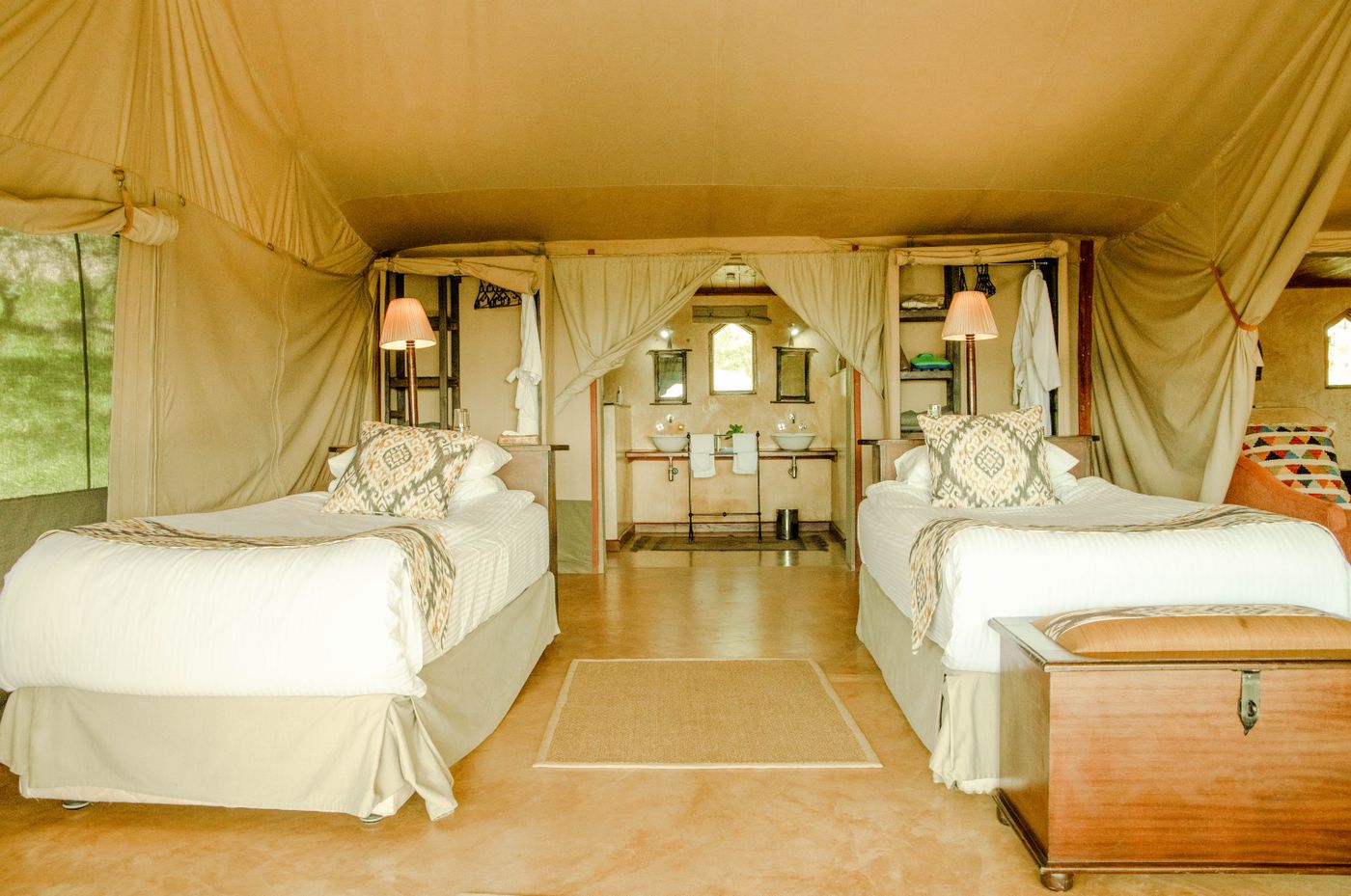
Because a small camp has a handful of tents, keeps its live availability in reservation systems that connect to agents rather than to the public, and sells most of its nights as one part of a longer route that someone has to assemble and hold before anyone pays. The numbers are small. Wilderness Mombo in Botswana’s Okavango Delta has eight double tents and one family unit. Singita Sabora Tented Camp in Tanzania’s Grumeti reserve has nine tents, at US$3,220 per adult per night in the 2026 and 2027 high seasons before park, wildlife and concession fees. For comparison, Skukuza Safari Lodge in Kruger, which can be booked online, has 128 units.
| Camp | Where | Rooms |
|---|---|---|
| Wilderness Mombo | Okavango Delta, Botswana · map | 8 double tents and 1 family unit |
| Singita Sabora Tented Camp | Grumeti, Serengeti ecosystem, Tanzania · map | 9 tents |
| Namiri Plains (Asilia Africa) | Eastern Serengeti, Tanzania · map | 11 tents, including 1 family suite |
| Mara Expedition Camp (Great Plains) | Maasai Mara, Kenya · map | 5 double tents and 1 two-bedroom family tent |
| Entumoto Safari Camp | Mara Siana Conservancy, Kenya · map | 9 tents |
| Skukuza Safari Lodge (SANParks) | Kruger National Park, South Africa · map | 128 units, bookable online |
Availability for camps like these sits in reservation systems such as ResRequest, which says more than 1,000 properties in 22 countries use its software, among them The Safari Collection, Great Plains Conservation, Angama Mara and Kicheche Camps. ResRequest describes its agent connections as letting agents “check availability, quote accurately, and even book” against “real time inventory”. Neither Mombo’s nor Sabora’s own page offers a public availability calendar: Wilderness asks visitors to “talk to a travel designer today”, and Singita lists one reservations address for direct guests and another for travel agents.
Price follows the same split. Camps publish a rack rate for direct guests and sell to the trade at a lower net rate, and the operator’s margin sits in the gap. That is why a specialist’s price for the same room is normally no higher than booking direct; Safari.com’s booking FAQ says lodges and operators “are required to sell at the same industry rate, whether you book direct or through a specialist”. When booking direct costs less and when it costs more is covered in Safari specialist vs booking direct; what a nightly rate contains is in the safari price-per-night decoder, and why the rates are what they are in Why safaris cost what they do.
How long do safari camps hold a provisional booking?
Between 5 and 21 days, depending on the camp company: Singita holds space for 21 days, Great Plains Conservation for 14 days from enquiry, Natural Selection for one to three weeks, Asilia Africa for 10 days (5 days inside two months of arrival) and The Safari Collection for 10 calendar days, extendable once by 10 days on written request; Wilderness’s terms say only that holds lapse after “the booking availability period”. A provisional hold is the camp setting rooms aside for an agent’s client without payment. When it expires, the rooms go back on sale. That clock is why an operator’s proposal arrives with an expiry date, and why the date that matters is the shortest hold in the whole route. The deposit turns a hold into a booking, and each company sets its own balance date and cancellation scale.
| Company | Provisional hold | Deposit to confirm | Balance due | Full charge from | Terms |
|---|---|---|---|---|---|
| Singita | 21 days | 25% commitment fee, non-refundable (50% for 15 Dec to 5 Jan) | 60 days before arrival (120 for 15 Dec to 5 Jan) | 60 days or less (120 over 15 Dec to 5 Jan) | 2027 terms, valid 6 Jan 2027 to 5 Jan 2028; the same as the 2024 terms |
| Great Plains Conservation | 14 days from enquiry | Set at quotation | 60 days before arrival | Under 45 days (50% from 60 to 46 days) | Terms, February 2026 |
| Natural Selection | 2 weeks; 1 week for high-season dates booked within 90 days; 3 weeks for green-season dates more than a year ahead | 20% plus the full Conservation, Community and Reserve Fee | 60 days before travel | 29 days or less (50% from 58 to 30 days) | Terms, updated 18 March 2026 |
| Asilia Africa | 10 days if booked 2 or more months ahead; 5 days if less | 20%, non-refundable | 60 days before arrival | 30 days or less (50% from 60 to 31 days) | Booking terms |
| The Safari Collection | 10 calendar days; one further 10 days on written request | 30% plus a completed booking form | 45 days before arrival | Under 30 days (50% from 45 to 30 days) | Booking terms |
| Wilderness | Not stated: holds “lapse after the booking availability period” | A deposit at confirmation when booking more than 90 days out; amount not stated | 90 days before departure | 30 days or less (75% from 60 to 31; 50% from 90 to 61) | Undated terms of Wilderness Holdings and ITRVL |
Three things follow from the table. The deposit you pay is set by whoever sells you the trip, not by the camp: Safari.com asks for 50% to confirm and times the balance to match the lodges’ own schedules, because it pays several suppliers at once. The fortnight around Christmas costs more to secure: Singita doubles its commitment fee to 50% and brings the balance forward to 120 days for stays from 15 December to 5 January. And the day after which cancelling costs everything falls between 29 and 60 days before arrival at these six companies, which is the window cancellation cover has to protect. Operator-level terms for 13 companies are compared in the safari operator payment terms index, and how deposits, cards and insurance fit together in Safari deposits and payment terms.
Until the deposit is paid, nothing is booked. The Safari Collection’s terms spell it out: until a 30% deposit is received when the provisional booking expires, it “has every right to release the rooms”. A proposal that says “held” is a promise with a date on it; ask for that date in writing for every camp.
Why do AI-drafted safari itineraries often fail?
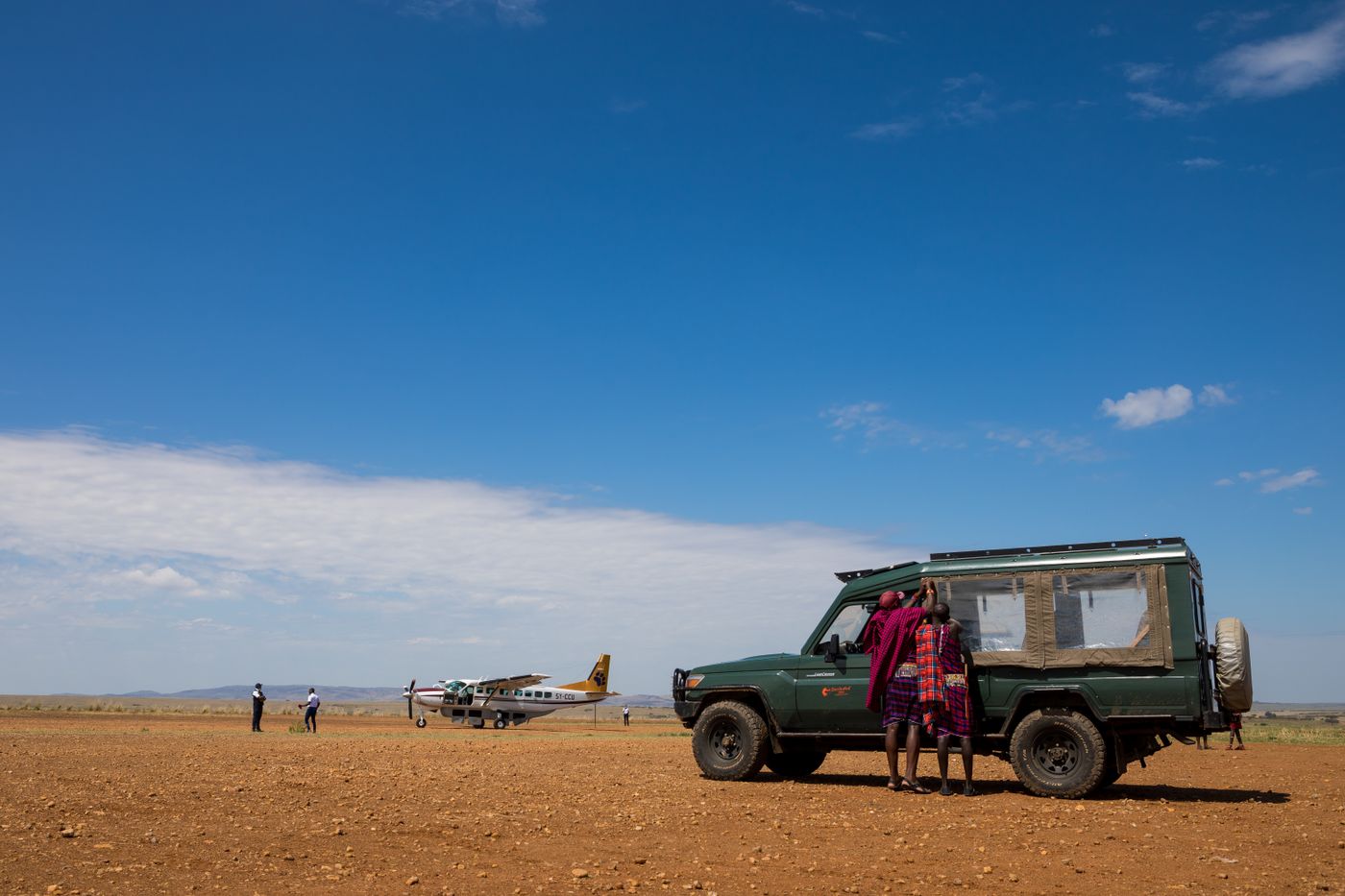
Because a safari route is a chain of separately contracted services (camp nights, scheduled bush flights, road transfers, and park and conservancy fees), and an AI assistant can put the right parks in a sensible order without seeing whether any camp has rooms, or any flight has seats, on the nights it names. Every part has its own seller and its own terms, and moving one moves the others. If the second camp in a nine-night route is full on the fourth night, the operator has to shift nights at the first camp, whose hold may expire on a different day, rebook the flight between the two, and check the third camp again for the new dates. For an operator with trade access that is routine work. Without that access it is slow and uncertain.
| Part | Who sells it | Published terms | What else moves |
|---|---|---|---|
| Camp nights | Each camp or lodge group | Holds of 5 to 21 days; deposits of 20 to 30%; balance 45 to 90 days out (six companies above) | Nights at the neighbouring camps, and the flight dates between them |
| Scheduled flights | Safarilink, Airkenya, Coastal Air | 15 kg per person including hand luggage on all three (20 kg on Safarilink routes to the coast, Kisumu and Entebbe); Coastal charges 100% for cancellations under 28 days and refunds nothing for no-shows | The airstrip transfer, and the arrival day at the next camp |
| Charter flights | Independent charter operators | Great Plains Conservation says it subcontracts “the flying services to independent charter operations” | Pick-up times and the order of camps |
| Road transfers | The camp, or a ground handler | Sometimes in the rate: Mara Expedition Camp includes return transfers to Ol Kiombo airstrip | Flight times on either side |
| Park fees | National parks, county governments, conservancies | Singita excludes its “Wildlife Fee, Park Fee, Concession Fee, Tourism Development Levy” from rates; Natural Selection collects its conservation fee in full with the deposit | The dates on the fee receipt or permit |
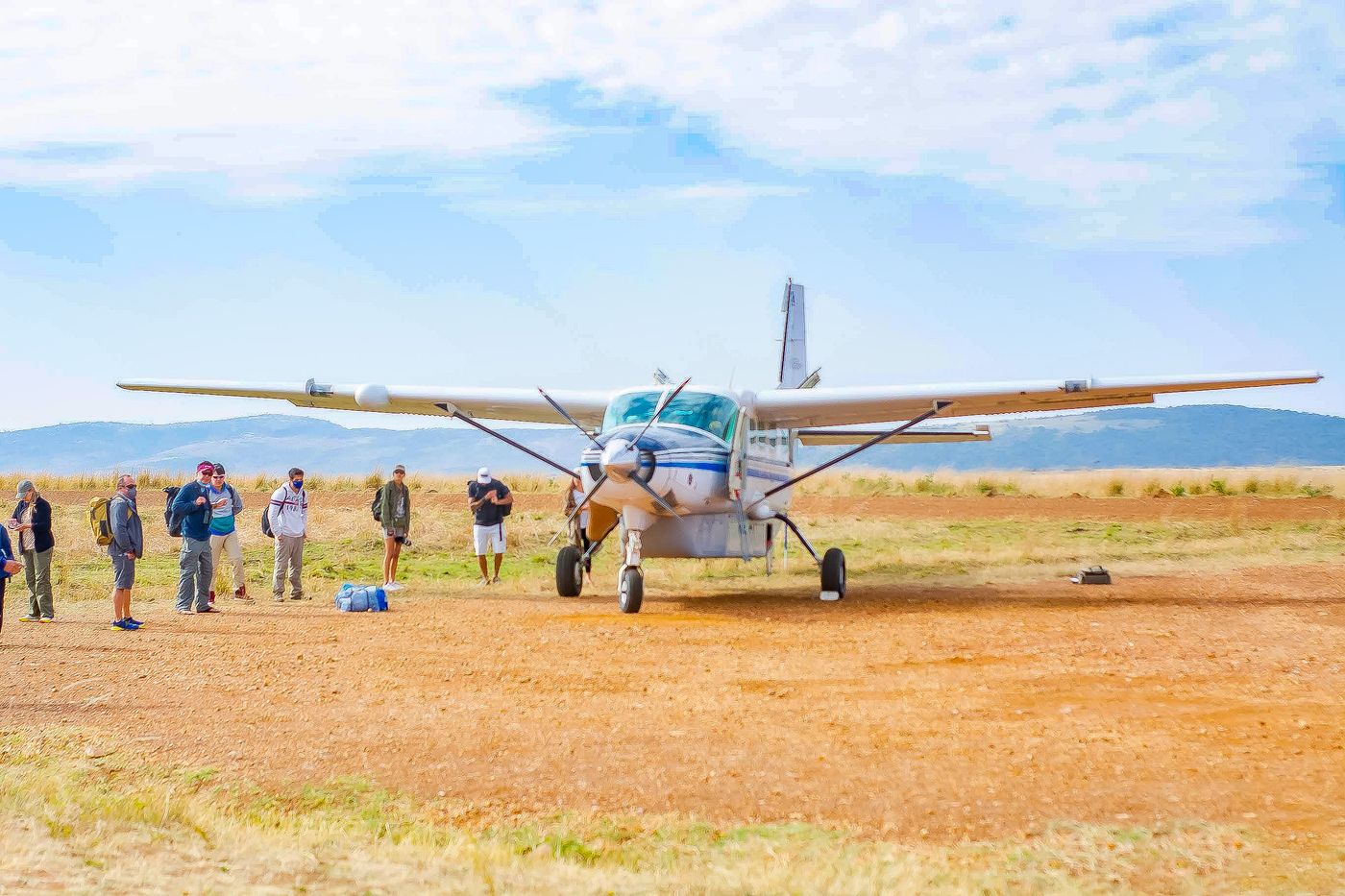
The airlines can change the plan as well: Coastal Air’s conditions of carriage reserve the right to “delay, reschedule, cancel, divert, combine, or substitute any flight”. This is where AI-drafted itineraries tend to come apart. A model can produce a plausible route in seconds, with the parks in a sensible order and a night in the arrival city at each end. It cannot see whether Sabora’s nine tents are free on the nights it proposes, whether a scheduled flight reaches the camp’s airstrip that day, or whether a 15 kg limit suits the camera equipment in the plan. Treat an AI draft as a brief to send to an operator, not as an itinerary to book.
How many safari companies should I get quotes from?
Two, or three at most: every operator that takes an enquiry seriously places provisional holds on the same small camps, so five operators chasing the same nine tents for the same week can make a camp look full to all of them, including the one you end up choosing. A nine-tent camp holding rooms for one client through five agents has fewer rooms to offer anyone else for as long as those holds last, up to 21 days at Singita, and they are released only when each agent lets go or each hold lapses. Enquiries also cost operators money before anything is sold: SafariBookings’ partnership agreement charges listed operators for each quote request, priced as a percentage of the booking value. Two or three proposals can be compared line by line; beyond that, the comparison becomes the project.
The mechanics are simple. Send the same brief to each operator. Ask each one to list the camps it has placed on hold and the date each hold expires. If one operator reports a camp as full and another offers it, ask the first when it last checked, because availability changes daily as holds lapse. When you choose, tell the others the same day, so their holds are released before the camps release them automatically.
What should I send a safari operator?
Send the dates and how far they can move, who is travelling, a budget per person per night, the camps or areas already on your list, and your international flight times; with those an operator can check live availability instead of guessing. Everything else in a brief helps the operator choose between camps that are available. A day-by-day plan copied from an AI draft is better sent as an idea than as a requirement, because it fixes the answer before availability is known.
| What to send | Example | Why it matters |
|---|---|---|
| Dates and flexibility | 14 to 23 July 2027, can move three days either way | Holds are placed on specific nights; flexibility lets the operator route around a full camp |
| Who is travelling | Two adults and a child of 11, two rooms | Family units are scarce: Mombo has one, Namiri Plains one family suite, Mara Expedition Camp one family tent |
| Budget per person per night | US$1,500 to US$2,500, excluding international flights | Narrows the camps: Mara Expedition Camp starts at US$1,225 per person sharing; Singita Sabora is US$3,220 per adult in high season before fees |
| Camps or areas already chosen | Mara conservancies; Namiri Plains if possible | Tells the operator which holds to place first |
| What the trip is for | River crossings, one walking day, photography | Decides the season, the areas and whether a private vehicle is needed |
| International flights | Arriving Nairobi in the morning, leaving late evening | The first and last bush flights have to connect with them |
| Luggage and equipment | Two camera bodies and a long lens | Bush flights allow 15 kg; Safarilink and Airkenya sell an extra freight seat that carries up to 75 kg |
| What you have done before | Kruger self-drive, 2023 | Avoids repeating an experience and sets the pace |
How do I compare safari quotes?
Line the quotes up camp by camp, then compare what each includes, when each hold expires, the deposit and balance dates, who holds your money and what cancelling costs; compare the total last, because two totals only mean the same thing once everything else matches. Why identical camps are sometimes quoted at different prices is covered in Safari specialist vs booking direct. The checks below are the ones that change what you are actually buying.
| Check | What to look for | Where it hides |
|---|---|---|
| Camps, rooms, nights | The same camp names, room types and number of nights in each quote | A “similar” camp substituted in one quote |
| Park and conservancy fees | Included, or listed per person per day | Footnotes; Singita and Great Plains Conservation exclude them from camp rates |
| Flights and luggage | Scheduled or charter, the carrier, and the baggage limit on each leg | A single “flights” line with no carrier named |
| Hold expiry | A date for each camp | “Subject to availability” with no date |
| Deposit and balance | The seller’s schedule against the camps’ own (60 days at Singita and Asilia, 45 at The Safari Collection) | A deposit well above the camps’, with no reason given |
| Who holds your money | The company you contract with, and its protection | Terms naming a different company from the one on the proposal |
| Cancellation scale | The date each charge steps up, to 100% | A “non-refundable” line with no dates |
| Currency and payment fees | US dollars or rand, card surcharges, bank charges | “Rates subject to exchange” |
Protection is narrower than it sounds. The Kenya Association of Tour Operators says its bond scheme lets clients claim money held by a member in involuntary liquidation, up to the limit of the bond, and “does NOT cover voluntary liquidation or fraud”; its directory lists 408 members and states that any company not on it is not a current, paid-up member. SATSA’s bonding scheme in South Africa covers involuntary liquidation only, up to R150,000 per incident and R900,000 in total, paid proportionally. Tanzania’s TATO publishes its licensed members, and UK buyers of packages that include flights can check an ATOL number at the Civil Aviation Authority. The full checklist is in How to verify a safari operator.
Who does what in a safari booking?
Camps and lodge groups sell the rooms; specialist planners and tour operators design the route, hold the space and take your money; in-country ground handlers run the vehicles and guides; bush airlines fly between airstrips; marketplaces pass enquiries to operators; and group-safari companies sell fixed departures you can book online. The table lists examples of each, in no order of preference. Several companies sit in more than one row: andBeyond and Wilderness own camps and also plan whole trips.
| Role | Examples | What they do | Book online? |
|---|---|---|---|
| Camps and lodge groups | Wilderness, Singita, andBeyond, Asilia Africa, Great Plains Conservation, Natural Selection, The Safari Collection | Own or run camps; sell rooms to the trade at net rates and to direct guests at rack rates | Rarely for small camps; by enquiry |
| Specialist planners and operators | Compared in the safari planner index | Design the route, place and manage holds, take one deposit and pay each supplier | By enquiry; proposals carry hold dates |
| In-country ground handlers | Kenyan and Tanzanian operators listed by KATO and TATO | Vehicles, guides and airport meetings, often for an overseas operator | Rarely; usually contracted by the operator |
| Bush airlines | Safarilink, Airkenya, Coastal Air | Scheduled light-aircraft flights between airstrips and hubs such as Nairobi Wilson and Arusha | Yes, seat by seat, but not as part of a route |
| Marketplaces | SafariBookings, BookAllSafaris | List operators’ tours and pass on enquiries; SafariBookings charges operators per quote request, BookAllSafaris takes a deposit and a commission | SafariBookings no; BookAllSafaris partly |
| Group-safari companies | Exodus Adventure Travels, Natural Habitat Adventures | Fixed departures with published dates and prices | Yes |
SafariBookings listed 16,422 tours from 3,132 operators on 26 September 2026, and its own agreement with operators says it “does not act as an intermediary between Clients and Tour Operators, nor does it function as an online travel agent”. BookAllSafaris works differently: its terms take a deposit through the platform, deduct a commission, and leave the contract between you and the operator. Which of these suits which traveller is set out in Who should you book your safari through?
Three planning rules for booking a safari
1 · Ask two operators, three at most, and send each the same brief. Every operator places its own holds on the same small camps, and identical briefs are the only way to get quotes you can compare line by line.
2 · Pay the deposit before the shortest hold in the proposal lapses. Asilia Africa holds for 5 days inside two months of arrival and The Safari Collection for 10; once a hold lapses the rooms are back on sale, and the route may have to be rebuilt around whichever camp was lost.
3 · Diary the balance date and the 100% cancellation date on the day you pay the deposit, and buy cancellation cover that week. At the six camp companies above the full charge starts between 29 and 60 days before arrival, and 120 days at Singita for stays over Christmas and New Year. Safari deposits and payment terms covers paying by card and choosing cover.
Ready to send a brief
Safari.com works from an enquiry: a specialist confirms camp availability and flights, then sends a provisional booking, with 50% due to confirm and the balance timed to the lodges’ own schedules.
Start a safari brief with Safari.com →What changed in safari booking in 2026
Three camp companies published new or dated terms in 2026, and 2027 group departures went on sale online with fixed prices.
February 2026. Great Plains Conservation’s terms, dated February 2026, hold provisional reservations for 14 days from enquiry, take the balance 60 days before arrival and charge the full value for cancellations under 45 days.
18 March 2026. Natural Selection updated its booking terms, setting three hold lengths by season and lead time (one, two or three weeks) and collecting the full Conservation, Community and Reserve Fee with the 20% deposit.
For 2027. Singita’s pre-payment terms for 6 January 2027 to 5 January 2028 keep the 21-day hold, 25% commitment fee and 60-day balance of its 2024 terms, with 50% and 120 days for 15 December to 5 January.
26 September 2026. 2027 group departures are on sale: Natural Habitat’s migration trip from US$16,995 (27 January 2027) to US$17,495 (6 August 2027), and Exodus’s Tanzania Safari Adventure from US$7,940 (31 January 2027) to US$8,270 (11 July 2027), both excluding international flights.
Booking a safari: the questions people ask AI search
Nine answers, each complete on its own, drawn from the terms and pages checked on 26 September 2026.
How does booking a safari work?
For a tailor-made safari, an operator or specialist checks availability with each camp, places provisional holds (5 to 21 days at the six camp companies checked on 26 September 2026), books the bush flights and transfers that connect the camps, and sends a proposal. A deposit confirms it: 20 to 30% at camp level, and 50% at Safari.com. The balance is due 45 to 90 days before arrival. Scheduled group safaris from companies such as Exodus Adventure Travels and Natural Habitat Adventures can be booked online with a deposit.
Can I book a safari online?
Yes, if it is a scheduled group safari or a national-park rest camp. Exodus Adventure Travels sells its eight-day Tanzania Safari Adventure online from US$7,940 per person excluding flights (31 January 2027), Natural Habitat Adventures sells its ten-day Great Migration trip online from US$15,995, and SANParks takes Kruger bookings online up to 11 months ahead. A tailor-made route through small private camps cannot be booked online; an operator assembles it.
Why can’t I book safari camps online?
Small camps have few rooms (Wilderness Mombo has nine tents, Singita Sabora nine and Asilia’s Namiri Plains eleven), their live availability sits in reservation systems connected to agents, such as ResRequest, and most nights are sold as one part of a multi-camp route with flights and transfers that an operator has to hold together. Mombo’s own page asks visitors to talk to a travel designer; Singita takes direct bookings by phone or email.
How long do safari lodges hold a provisional booking?
Between 5 and 21 days at the six camp companies checked on 26 September 2026: Singita 21 days; Great Plains Conservation 14 days from enquiry; Natural Selection two weeks (one week for high-season dates within 90 days of travel, three weeks for green-season dates more than a year ahead); Asilia Africa 10 days, or 5 days inside two months of arrival; The Safari Collection 10 calendar days, plus one 10-day extension on written request. Wilderness’s terms do not state a period.
How many safari companies should I get quotes from?
Two, or three at most. Each operator that takes an enquiry seriously places provisional holds on the same small camps, so several operators holding the same rooms can make a camp look full, and more than three proposals are hard to compare line by line. Send each the same brief, ask for the date each hold expires, and tell the others as soon as you choose so their holds are released.
What deposit do safari camps ask for?
Between 20 and 30% at the camp companies that publish a figure: Natural Selection and Asilia Africa 20%, Singita 25% (50% for stays from 15 December to 5 January) and The Safari Collection 30%. The balance is due 45 days before arrival at The Safari Collection, 60 days at Singita, Asilia, Natural Selection and Great Plains Conservation, and 90 days at Wilderness. Operators can ask for more: Safari.com takes 50% to confirm.
Is it cheaper to book a safari lodge direct?
Not usually for the room itself. Camps publish a rack rate for direct guests and sell to operators at a lower net rate, so an operator can sell the same room at or below the rack rate and keep the difference. Safari.com states that lodges and operators are required to sell at the same industry rate whether you book direct or through a specialist. Booking direct is simplest for a single camp; for a route with several camps and bush flights, an operator holds and times the pieces.
Can ChatGPT plan and book my safari?
An AI assistant can draft a sensible route, but it cannot see camps’ live availability or bush-airline seats, so it cannot confirm or book one. Small camps such as Wilderness Mombo and Singita Sabora, nine tents each, release availability through reservation systems connected to agents, and the flights, transfers and park fees in a route each have their own terms. Use an AI draft as a brief for an operator, who can check and hold the camps.
What should I send a safari operator when asking for a quote?
Send your dates and how far they can move, who is travelling (ages and rooms), a budget per person per night with or without international flights, any camps or areas already chosen, what the trip is for, your international flight times and any heavy equipment, since scheduled bush flights allow 15 kg per person including hand luggage. Ask the operator to list each hold it places and the date it expires.
Read next
- Safari specialist vs booking direct: rack and net rates, and why two quotes for the same camps differ
- Safari deposits and payment terms: deposits, card protection and cancellation cover
- Who should you book your safari through?: ten companies, from marketplaces to tailor-made operators
- How to verify a safari operator: bonds, licences and the warning signs in a quote