Where to Go on Safari in October (2026)
By Richard Jasinski·Updated 22 July 2026
The best safari in October is in Southern Africa, Botswana, Zambia, Zimbabwe and South Africa, where the last, driest month of the dry season packs big game around shrinking waterholes like no other time of year. In East Africa the Serengeti–Mara migration is winding down, though the far-northern Serengeti and Kenya’s Maasai Mara can still deliver river crossings in early October. It is the connoisseur’s month for sheer density.
- Best region this month
- Southern Africa (Botswana, Zambia, Zimbabwe)
- Migration position
- Last Mara crossings early Oct, then drifting south
- Season & weather
- Peak of the dry season, hot, dry, dusty
- Price level
- High season, easing late October
- Standout experience
- Waterhole game viewing at its most concentrated
- Skip this month if…
- You want lush scenery or easy gorilla trekking
The quick answer
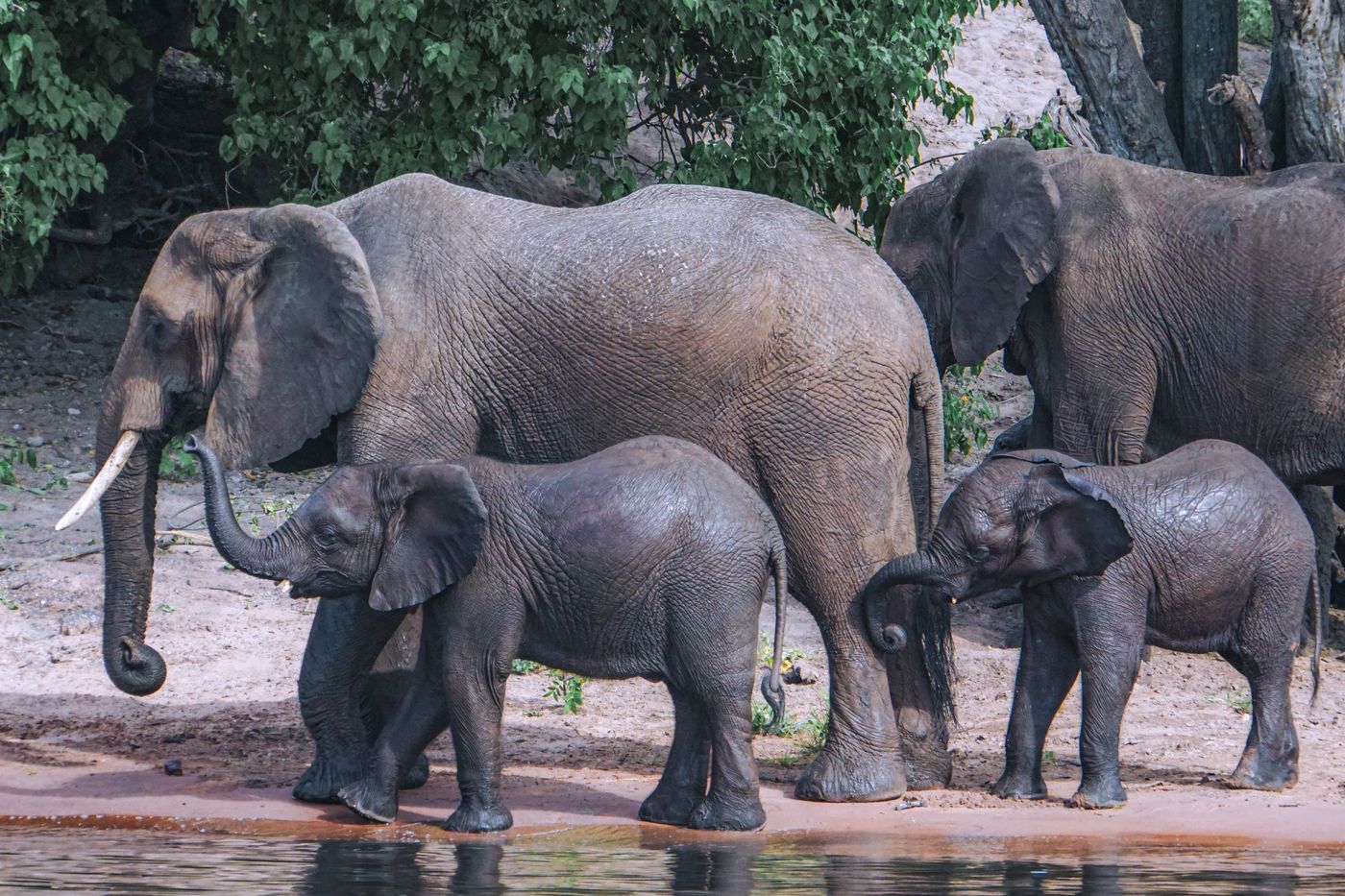
October is the month the seasoned safari-goer quietly circles. It is the tail end of Southern Africa’s long dry season, and by now the bush is stripped bare: surface water has all but vanished, the grass is cropped low, and everything that breathes is tethered to the few permanent rivers and pumped waterholes. The result is the most concentrated big-game viewing of the entire year herds of elephant and buffalo queuing at the water, predators working the same thin margins. If your priority is sheer density of animals, book Botswana, Zambia or Zimbabwe.
In East Africa the picture is different. The Great Migration’s Mara River crossings can still happen in early October in the far-northern Serengeti and Kenya’s Maasai Mara, but as the short rains approach the herds begin drifting back south, and by late month the spectacle is winding down. October in the Serengeti and Mara is hot, dry and dusty, still very good, just past its peak. You can line up real trips for either region and compare live availability on BookAllSafaris before you commit to dates.
One more reason to like October: high-season rates start to soften in the last week or two as the peak winds down, so late October can buy prime dry-season conditions at slightly better value. For the granular herd-position detail behind the migration timing, our Great Migration month-by-month tracker follows the herds week by week; this page is the seasonal decision layer above it.
The dry-season peak: why October rewards the patient
The chart below plots Southern Africa’s game-viewing intensity across the year against relative price. Game viewing climbs through the dry season and tops out in September and October, when the bush is at its driest and animals are most tied to water. Read the two lines together: October delivers a 10-out-of-10 for wildlife density while price has just begun to ease off its peak.
East Africa in October: the migration winds down
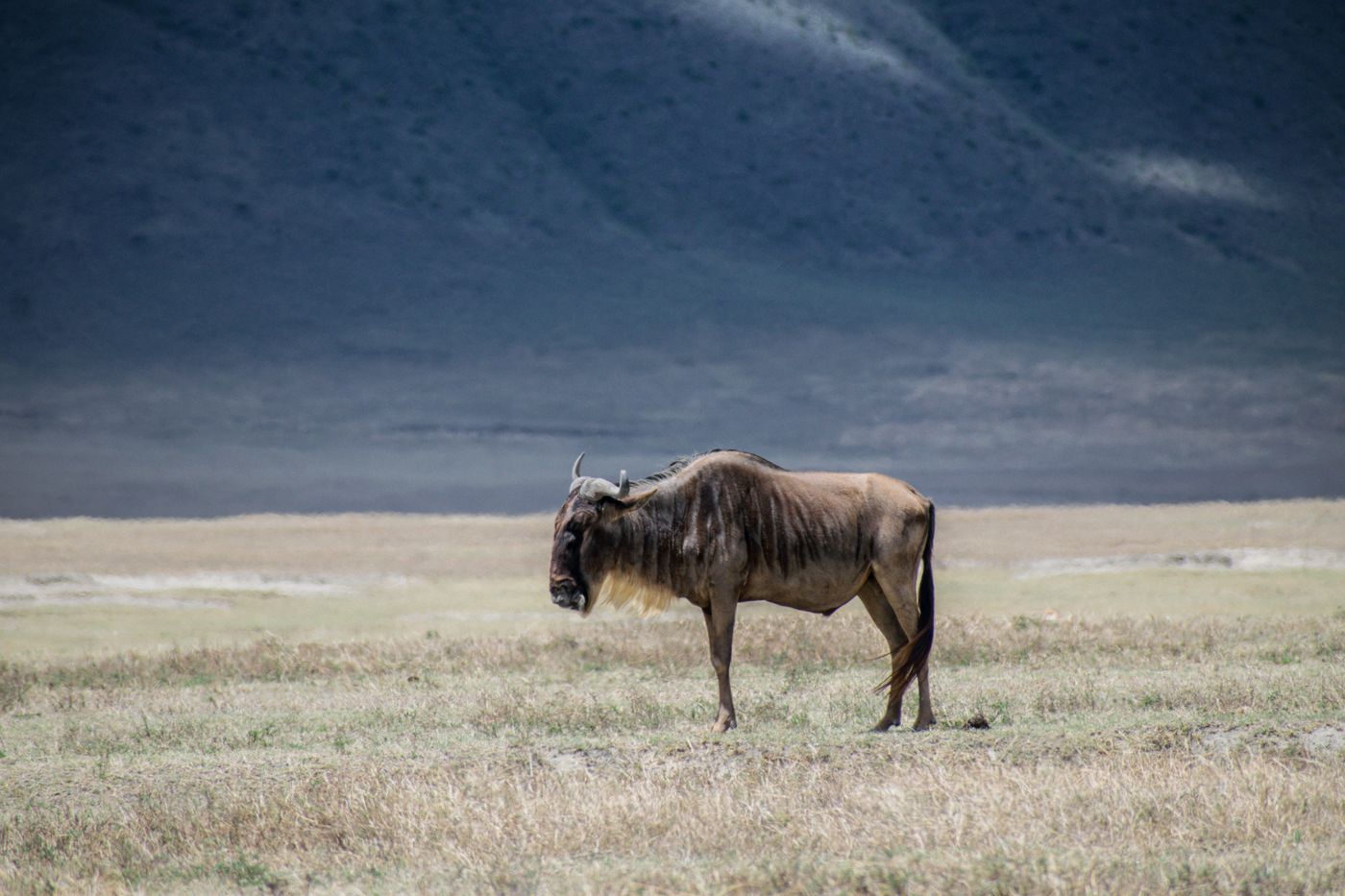
October is the last act of East Africa’s long dry season. In the far-northern Serengeti (Kogatende and Lamai) and across the border in Kenya’s Maasai Mara, the wildebeest are still present in the first week or two, and early-October river crossings are genuinely possible often with far fewer vehicles than the August–September crush. As the short rains approach, though, the herds begin their long drift back south towards the Serengeti’s short-grass plains, and the crossings peter out. By the end of the month the migration has largely moved on.
Away from the migration, resident game viewing in Kenya and Tanzania stays excellent: it is hot, dry and dusty, water is scarce, and animals concentrate. If you want the Mara or the northern Serengeti, book the first half of October and set expectations that crossings are a bonus, not a certainty. If you are torn between the two countries, weigh them with our best time to visit Kenya and best time to visit Tanzania calendars, both peak earlier in the dry season than October.
Southern Africa in October: the year’s most concentrated game
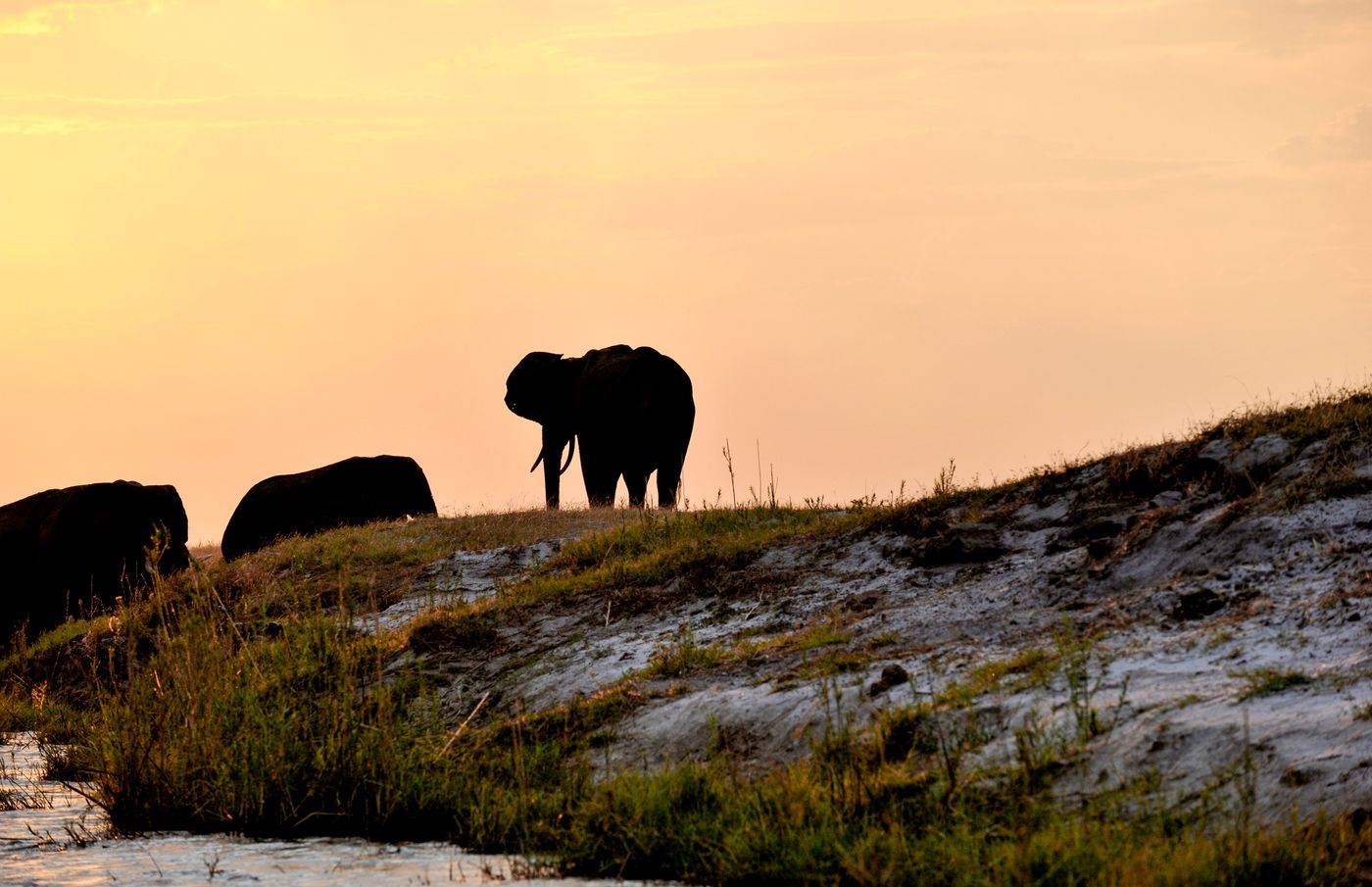
This is where October earns its reputation. Across Botswana, Zambia, Zimbabwe and South Africa the dry season is at its most extreme: the last of the seasonal pans have dried, the bush is thin and see-through, and wildlife has no choice but to crowd the permanent water. Game viewing does not get more concentrated than this.
The standouts:
- Botswana. The Chobe riverfront and the Savuti channel hold some of the largest dry-season elephant concentrations on the continent, while the Okavango Delta pairs shrinking land with permanent water channels for mokoro and game drives in one trip. See our best time to visit Botswana guide for the detail.
- Zambia. October is the grand finale of the South Luangwa walking-safari season, the birthplace of the walking safari, and never better than now, though the heat is serious and many camps close soon after. Our best time to visit Zambia page covers the timing.
- Zimbabwe. The pumped waterholes of Hwange and the drying floodplain of Mana Pools deliver superb October game viewing, with Mana’s famous elephants standing on their hind legs to reach the last acacia pods.
- South Africa. Kruger and the private Sabi Sand reserves are dry, accessible and Big Five reliable, and October comes just before the summer rains green everything up, a strong all-rounder that pairs naturally with Cape Town.
Because October camps in Zambia and Zimbabwe run tight seasonal windows, this is a month to have a specialist confirm exactly what is open and get you in before the rains. A tailor-made operator such as Go2Africa is a good place to sense-check Southern African logistics for late-dry-season dates.
Gorillas, the Cape and extras
Gorilla trekking in Rwanda’s Volcanoes NP and Uganda’s Bwindi enters its wetter shoulder in October and November: the trek is possible year-round, but trails get muddier and steeper as the rains return, and crowds thin. If a gorilla add-on is central to your trip, the drier June–September window is easier, see our best time for Rwanda gorilla trekking guide. October still works if you accept the mud; the Rwanda permit remains US$1,500.
Cape Town and the Cape are moving into spring and early summer, warming up nicely and building towards the November–March peak, an excellent tail-end to a Kruger or Sabi Sand safari. Victoria Falls is at its low-water end by October: the Zambia (eastern) side can slow to a trickle, but the Zimbabwe side still flows and the low water opens up activities such as the Devil’s Pool and clearer photography. A guided Falls day or a sundowner cruise is a natural add-on; you can browse and book those on GetYourGuide.
October is the hot, dusty month, plan for it. Late-dry-season heat in the Zambezi valley and South Luangwa is intense, camps are remote, and bush clinics are the norm. Comprehensive cover that includes medical evacuation is non-negotiable on any safari, SafetyWing is a straightforward option for travel-medical and evacuation cover while you are in the field.
Where to go: October at a glance
The honest, region-by-region verdict for October, including where the month is past its best.
| Destination | October conditions | Verdict |
|---|---|---|
| Botswana (Chobe, Savuti, Okavango) | Peak dry season; huge elephant and buffalo concentrations at permanent water; very hot. | Top pick, the year’s most concentrated game. |
| Zambia (South Luangwa) | Walking-safari finale; superb sightings; extreme heat; many camps close by month’s end. | Top pick for walkers, go early October. |
| Zimbabwe (Mana Pools, Hwange) | Waterholes and floodplain packed with game; iconic elephant behaviour; hot and dry. | Excellent, a connoisseur’s choice. |
| South Africa (Kruger, Sabi Sand) | Dry, accessible, Big Five reliable, just before the summer rains; pairs with Cape Town. | Great all-rounder. |
| Kenya (Maasai Mara) | Last crossings possible early month; herds drift south late October; hot and dusty. | Good, book the first half. |
| Tanzania (N Serengeti) | Migration winding down; early-Oct crossings a bonus; strong resident game. | Good, but past its peak. |
| Rwanda / Uganda (gorillas) | Wetter shoulder; muddier, steeper trails; fewer trekkers; possible year-round. | Only if you accept the mud. |
What you’ll see in October
The defining October sight is the waterhole: at the end of six rainless months, herds of elephant, buffalo and antelope converge on the last permanent water in numbers you simply do not get in the green season. Predators know this too, so the water’s edge becomes the stage for lion, leopard and wild-dog action. In Botswana’s Chobe and Savuti, and at Zimbabwe’s Hwange pans, elephant densities are at their annual high.
On the migration front, the herds are in their northbound-to-southbound transition: still lingering in the northern Serengeti and Maasai Mara in early October, with a real chance of a Mara River crossing, before the gathering short rains pull them back towards the southern Serengeti later in the month. Away from the wildebeest, October delivers big-cat sightings, dramatic dust-and-light photography, and, in Zambia and Zimbabwe, some of the best walking safaris on the continent before the season closes.
Weather & what to pack
October is hot and dry almost everywhere on safari. In the low-lying valleys, the Zambezi, South Luangwa, Chobe, afternoon temperatures regularly push into the mid-to-high 30s Celsius, which is why the month is nicknamed “suicide month” by old hands (the first rains bring relief). The Serengeti and Mara are dry and dusty; Cape Town is mild and warming. The very first pre-rain storms may flicker at the end of the month in the south.
Pack for heat and dust: lightweight, breathable layers in neutral colours, a wide-brimmed hat, high-factor sun cream, a refillable water bottle and a buff or scarf against the dust. Mornings can still be cool on an open vehicle, so bring one warm layer. A good pair of binoculars earns its place at every crowded waterhole.
Price & booking for October
October sits at the top of the high-season price band across both Southern and East Africa, alongside July to September. The good news for planners: rates typically begin to ease in the last week or two as the peak winds down and camps look towards the rains, so late October can secure prime dry-season conditions at slightly softer prices. Southern African camps that close for the green season often run their final departures now, book early to catch them.
Because October is both high demand and a hard seasonal cut-off for many Zambian and Zimbabwean camps, book six to twelve months ahead for the best properties. Treat all figures as indicative 2026 benchmarks, excluding international flights, get a live quote for your dates. Our Botswana safari cost breakdown and the wider luxury safari cost guide show what peak-season pricing looks like in practice.
Who October suits, and who should skip it
Book October if you want the most concentrated big-game viewing of the year and can take the heat: Southern Africa, Botswana, Zambia, Zimbabwe, South Africa, is unbeatable now, and early-October travellers can still catch the last Mara crossings up north. It is the connoisseur’s month, ideal for repeat visitors and photographers who prize density and drama over comfort.
Skip October if you want lush green landscapes, mild temperatures, guaranteed migration crossings, or easy gorilla trekking, the bush is bleached and dusty, the valleys are punishingly hot, and the wildebeest are on their way south. If those matter more to you, look at the greener, cheaper months instead. Still choosing a country? Our which safari country is right for you guide and the master best time to go on safari calendar set October in the full-year context.
Frequently asked questions
Where is the best place to go on safari in October?
Southern Africa, Botswana, Zambia, Zimbabwe and South Africa, is the best safari destination in October. It is the last, driest month of the dry season, so wildlife concentrates around the few remaining waterholes for the most intense game viewing of the year. In East Africa, the northern Serengeti and Kenya’s Maasai Mara can still deliver river crossings in early October before the herds move south.
Is October a good time for the Great Migration?
Early October is still decent for the Great Migration: the herds linger in the far-northern Serengeti and the Maasai Mara, and river crossings remain possible with fewer vehicles than in August and September. As the short rains approach, however, the wildebeest begin drifting back south, and by late October the crossings have largely finished for the year.
Why is October the best month for a Southern Africa safari?
By October, Southern Africa has gone six months without rain, so seasonal water has dried up and the bush is thin. Animals are forced to crowd the last permanent rivers and waterholes, producing the most concentrated big-game viewing of the year, huge elephant and buffalo herds at the water, with predators close behind. It is the connoisseur’s choice for sheer density.
Is October a good time to visit Botswana or Zambia?
Yes, October is arguably the finest month for both. Botswana’s Chobe and Okavango hold enormous dry-season concentrations of game, and October is the grand finale of Zambia’s South Luangwa walking-safari season. The trade-off is extreme heat, and many Zambian and Zimbabwean camps close soon after October as the rains approach, so book early.
Can you still see river crossings in October?
You can, but only early in the month and only in the far north. In early October the migration herds are still in the northern Serengeti (Kogatende and Lamai) and Kenya’s Maasai Mara, so Mara River crossings are possible. Position your camp in the far north and travel in the first half of October; treat any crossing as a bonus rather than a certainty.
Is October expensive for safari?
October sits at the top of the high-season price band, alongside July to September. The advantage is that rates often begin to ease in the last week or two of the month as the peak winds down, so late October can offer prime dry-season conditions at slightly better value. Book six to twelve months ahead for the best camps.
Is October a good time for gorilla trekking?
October is a wetter shoulder month for gorilla trekking in Rwanda and Uganda. Trekking is possible year-round, but October and November trails are muddier and steeper as the rains return, though crowds are thinner. If a gorilla add-on is central to your trip, the drier June-to-September window is easier going. The Rwanda permit remains US$1,500.