Where to Go on Safari in February (2026)
By Richard Jasinski·Updated 22 July 2026
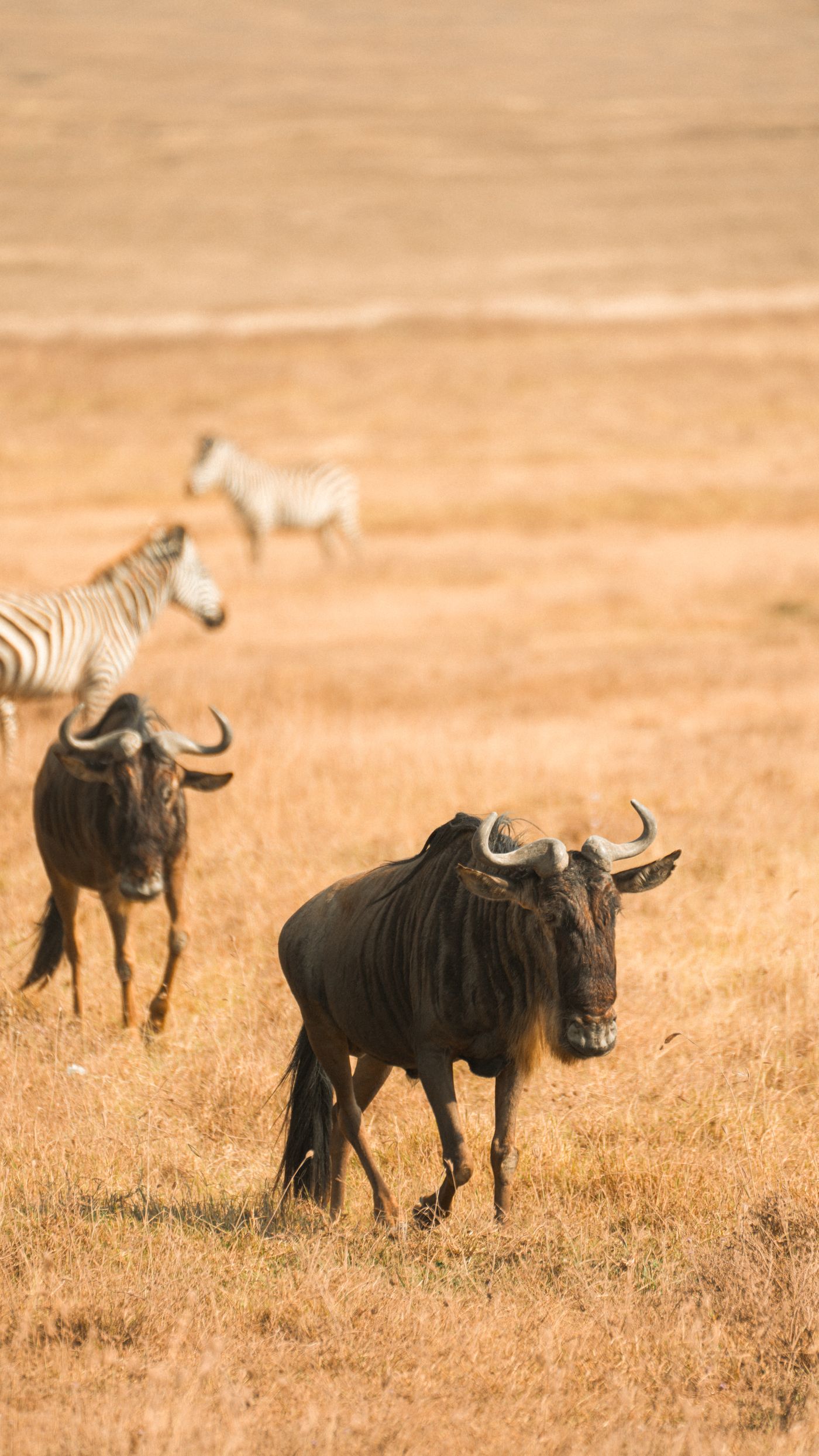
February is calving month. On the southern Serengeti and Ndutu short-grass plains, up to 8,000 wildebeest calves are born a day, drawing the most concentrated predator drama in Africa; this is the single best reason to go anywhere this month. For value and lush, newborn-rich bush, green-season Southern Africa is the quiet alternative.
- Best region this month
- Ndutu / southern Serengeti (calving)
- Migration position
- Southern plains, calving peak
- Season & weather
- E Africa short-dry; warm, mostly dry
- Price level
- Ndutu premium; elsewhere value
- Standout experience
- ~8,000 calves/day + big-cat action
- Skip this month if…
- You want Mara River crossings
The quick answer
If you can travel only in February, point yourself at the southern Serengeti and Ndutu in Tanzania. This is the heart of the Great Migration’s calving season: in a roughly three-week window around February, the wildebeest herds drop their young on the mineral-rich short-grass plains, up to 8,000 calves a day and the massed vulnerability of the newborns pulls in lion, cheetah, hyena and wild dog at a density you will not see at any other time of year. For predator-prey drama on open, uncluttered plains, no month beats it.
February’s second story is value. Across most of Southern Africa Botswana, Zambia, Zimbabwe, South Africa’s Kruger, Namibia; it is still the green (emerald) season: lush, bird-rich, full of newborn antelope, quiet and noticeably cheaper, with the trade-off of thicker bush and afternoon rain. Cape Town, meanwhile, is in high summer. You can shortlist and price both routes against real operator availability on BookAllSafaris before you commit to dates.
The migration is a continuous, roughly clockwise circuit around the Serengeti–Mara ecosystem, not a fixed event, and in February it sits firmly in the south. For the week-by-week herd detail, our Great Migration month-by-month tracker follows them across the year; this page is the seasonal decision layer above it.
Calving intensity by month
Calving is sharply seasonal. The strip below plots roughly how concentrated wildebeest births are across the year on the southern Serengeti, the point being that February towers over every other month. Miss this window and the spectacle is gone until the cycle restarts in December.
East Africa in February: the calving heartland
February is East Africa’s short-dry window the brief drier spell between the November short rains and the April–May long rains. On the southern Serengeti the plains are green and firm, days are warm, and any rain tends to fall as short afternoon showers that rarely disrupt a game drive. It is, in short, excellent calving weather.
The main event is on the Ndutu and southern Serengeti short-grass plains, where the herds mass to calve. Because the newborns are exposed on open ground, the predator viewing is exceptional; this is the classic month for cheetah hunts on the plains and for lion prides working the edges of the herd. Base yourself in one of the mobile camps that follow the herds south for the season; they are limited in number and sell out early. The permanent parks hold up well too: Ngorongoro Crater is a reliable year-round Big Five anchor, and pairs naturally with a few nights on the calving plains.
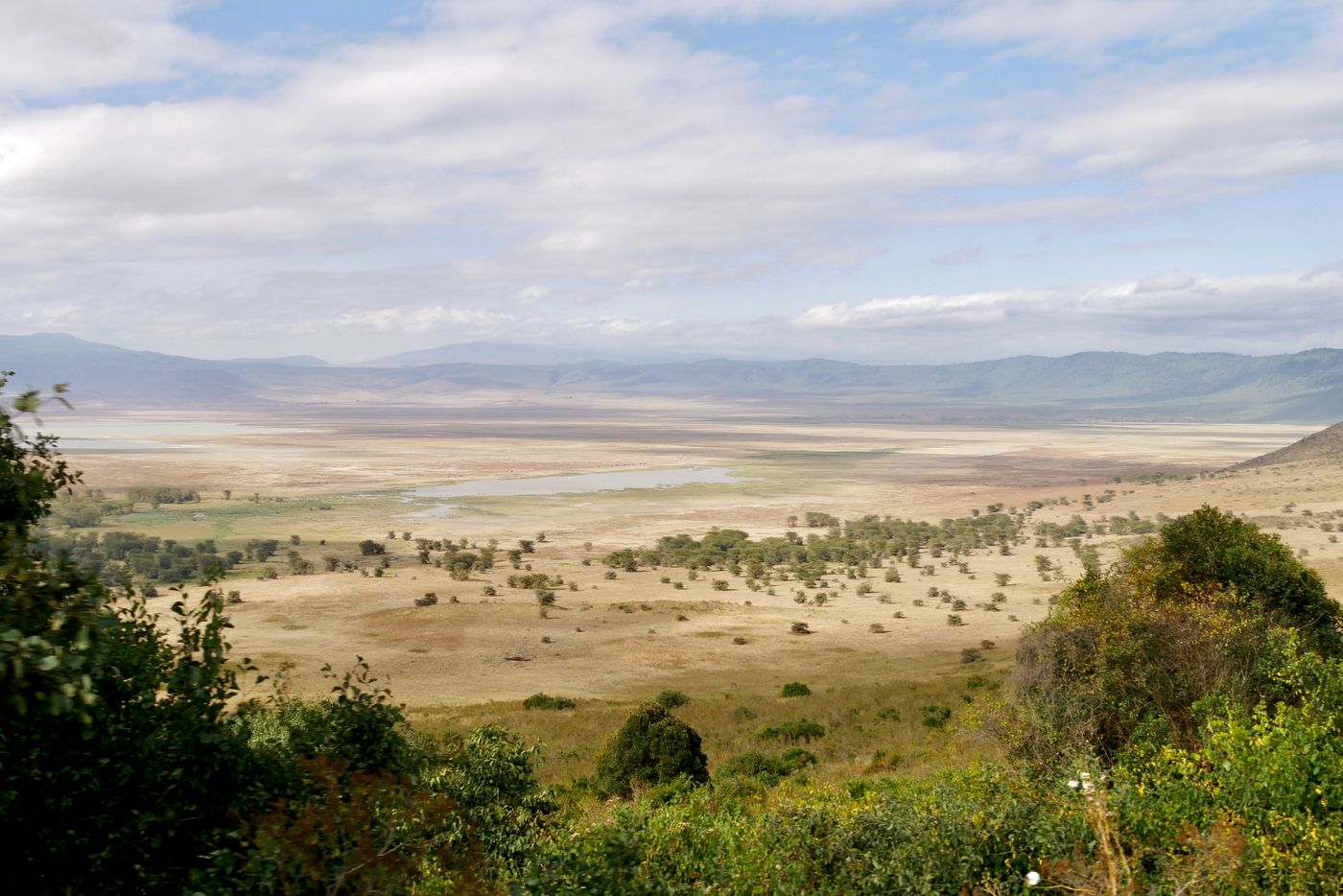
Kenya works in February too, the Maasai Mara and Laikipia conservancies offer warm, largely dry conditions and good resident game, but the migration herds are in Tanzania this month, so for the headline spectacle, Tanzania wins. If you are weighing the two, our best time for Tanzania and best time for Kenya calendars set out each country’s rhythm. For a tailor-made calving itinerary with the right mobile camp on your exact dates, a specialist is worth the call, Safari.com can build one around the herd’s position.
Southern Africa in February: green-season value
South of the equator, February sits deep in the green (emerald) season. In Botswana, Zambia, Zimbabwe and South Africa’s Kruger and Sabi Sand, the bush is lush and thick, the birding is at its best (migratory species in residence, breeding plumage everywhere), and impala, wildebeest and other antelope are dropping their own young, which means predator action here too, if you work for it. Rates are low, camps are quiet, and the light after a storm is superb.
The honest trade-offs: the vegetation is dense, so general game viewing is harder than in the dry season, when animals cluster at shrinking water. Some seasonal camps close, and a few areas, Zambia’s South Luangwa in particular, are largely shut or restricted to boat access at the height of the rains. This is a season for photographers, birders, repeat visitors and value-seekers rather than a first-timer chasing a guaranteed Big Five checklist. Namibia is green and photogenic now, with migratory birds on the pans, though Etosha’s waterhole game is easier in the dry months. A specialist can flag exactly which camps stay open in your window, Go2Africa is a good place to sense-check green-season logistics across the region. For the country-level detail, see our best time for Botswana and best time for South Africa guides.
February’s bonus in the far south is Cape Town in high summer: warm, dry, beach-and-wine weather that pairs beautifully with a few nights in the malaria-free Sabi Sand. Add a Table Mountain or Cape Winelands day with GetYourGuide to bookend a Kruger safari.
Gorillas & extras
February falls within the drier December–February trekking window for mountain gorillas in Rwanda’s Volcanoes National Park and Uganda’s Bwindi, generally firmer trails and easier going than the wetter March–May and October–November stretches, though a mountain rainforest can rain in any month. Trekking is possible year-round; the mountain gorilla permit in Rwanda is US$1,500 (an indicative 2026 benchmark, excluding international flights, get a live quote). A gorilla trek slots neatly onto the end of a Tanzania calving trip. See our best time for Rwanda gorilla trekking guide for the detail.
Travelling in the green season? Wet-season roads and light-aircraft schedules can shift, and remote bush clinics are the norm across the region. Comprehensive cover that includes medical evacuation is non-negotiable on any safari, SafetyWing is a straightforward option for travel-medical and evacuation cover while you are in the field.
Where to go in February: compared
The month’s three realistic routes, side by side.
| Destination | February conditions | Verdict |
|---|---|---|
| Southern Serengeti / Ndutu (Tanzania) | Short-dry, warm; green firm plains. Calving peak, up to ~8,000 calves/day, and intense big-cat action. | ✓ Best overall this month. Book mobile camps early; carries a calving premium. |
| Ngorongoro & northern Tanzania circuit | Warm, largely dry. Reliable resident Big Five in the crater; easy to pair with Ndutu. | ✓ Strong add-on to the calving plains for first-timers. |
| Kenya (Maasai Mara, Laikipia) | Warm, mostly dry, good resident game, but the migration herds are in Tanzania now. | ✓ Fine safari; not the headline spectacle this month. |
| Botswana, Zambia, Zimbabwe, Kruger | Green season: lush, thick bush, superb birding, newborns, some rain; low prices, some camps shut. | ✓ Best value. For birders, photographers & repeat visitors, not Big-Five first-timers. |
| Rwanda / Uganda gorillas | Within the drier Dec–Feb trekking window; firmer trails, rain still possible. Permit US$1,500. | ✓ Good month to trek; slots onto a Tanzania trip. |
| Cape Town & the Cape | High summer, warm, dry, beach and wine at their peak. | ✓ Superb city-and-coast pairing with a Sabi Sand safari. |
What you’ll see
Migration position: the herds are on the southern Serengeti and Ndutu short-grass plains, calving. This is the year’s peak birth window, some 400,000 calves are dropped across the wider January–March season, at a February peak of thousands a day.
Wildlife highlights: newborn wildebeest by the thousand, and the predators that follow them, cheetah hunting on open plains (February is one of the best months of the year for it), lion prides on the herd edges, spotted hyena and, with luck, wild dog. Zebra and gazelle calve alongside the wildebeest. In green-season Southern Africa, expect exceptional birding, impala lambs and dramatic stormlight; in Ngorongoro, resident lion, elephant, buffalo, flamingo and black rhino year-round. For a park-by-park sense of what you can realistically tick off, see the wider best time to go on safari master calendar.
Weather & what to pack
On the southern Serengeti, February is warm (daytime highs around 27–29°C) with cool mornings, green plains and occasional short afternoon showers, comfortable game-driving conditions. Southern Africa is hot and humid with heavier, more frequent rain, usually as short storms. Pack neutral layers, a light waterproof, a warm fleece for chilly dawn drives and the Ngorongoro rim, sun protection, binoculars and a good zoom lens, the calving plains reward one. In malaria-risk areas (most safari regions bar the Cape and parts of Namibia), take prophylaxis on medical advice.
Price & booking
February is a month of two price stories. In the Ndutu / southern Serengeti calving area specifically, rates run at a premium demand for the mobile camps is high and they are few, so the best sell out six to twelve months ahead. Elsewhere in East Africa it is otherwise green-season value, and across Southern Africa prices are low the green season is the cheapest time to visit, often well below dry-season peak for the same camp. Indicative 2026 park-fee benchmarks, excluding international flights: Serengeti ~US$82.60 per adult per 24 hours including VAT; Ngorongoro Crater ~US$295 per vehicle plus entry; Rwanda gorilla permit US$1,500. Always treat these as benchmarks and get a live quote.
For what a full trip actually costs by season, our Tanzania safari cost breakdown and the wider luxury safari cost guide model the numbers all-in.
Who February suits, and who should skip it
Go in February if you want the migration’s calving spectacle and the year’s most intense big-cat action on open plains; if you are a photographer or repeat visitor; or if you want green-season Southern Africa at low-season prices with superb birding. It is also a fine month to fold in a gorilla trek or high-summer Cape Town.
Skip February if your heart is set on the Mara River crossings, those are a July–October event in the northern Serengeti, so target March onward for the herds’ northward build, or the dry-season months proper. First-timers who want an easy, guaranteed Big Five checklist in sparse bush are better served by the dry season; in February, lean on Ngorongoro and the calving plains rather than green-season Southern Africa. Coming from the calving side of the cycle in January? The plains are already filling; February simply intensifies it.
Frequently asked questions
Where is the best place to go on safari in February?
The southern Serengeti and Ndutu plains in Tanzania. February is the peak of the Great Migration’s calving season, when up to 8,000 wildebeest calves are born a day and predator action is at its most intense. For value instead, green-season Southern Africa is lush, bird-rich and cheap.
Is February a good time to see the Great Migration?
Yes, but for calving rather than river crossings. In February the herds are on the southern Serengeti and Ndutu short-grass plains, dropping their young. It is the single best month for the calving spectacle and the concentrated big-cat action it draws. The Mara River crossings happen later, from July to October.
Can you see wildebeest calving in February?
February is the peak of it. In a roughly three-week window around February, the wildebeest calve on the mineral-rich southern Serengeti and Ndutu plains, up to 8,000 calves a day. The vulnerability of the newborns draws lion, cheetah, hyena and wild dog, making it one of the most concentrated predator-prey spectacles in Africa.
Is February a good time for a Southern Africa safari?
It is the green season across Botswana, Zambia, Zimbabwe, Kruger and Namibia: lush, superb for birding, full of newborn antelope, quiet and cheap. The trade-offs are thick bush that makes general game viewing harder, some rain, and a few camps closing. It suits photographers, birders and value-seekers more than first-timers wanting a guaranteed Big Five checklist.
Is February expensive for a safari?
It depends where. The Ndutu calving area in Tanzania carries a premium because the mobile camps are few and in high demand, so book six to twelve months ahead. Elsewhere in East Africa it is otherwise green-season value, and across Southern Africa the green season is the cheapest time of year for the same camps.
Can you trek gorillas in February?
Yes. February falls within the drier December-to-February trekking window in Rwanda’s Volcanoes National Park and Uganda’s Bwindi, which usually means firmer trails, though a mountain rainforest can rain in any month. Trekking is possible year-round; the Rwanda permit is US$1,500, an indicative 2026 benchmark excluding flights.
February or March for the calving season?
February is the peak, the greatest concentration of births and the most intense predator activity. March still has calving on the southern plains and remains excellent, with the herds beginning to think about moving north-west as the plains dry. If the calving spectacle is your priority, February edges it.