Angama Review 2026: Three Kenyan Lodges Scored, Every 2026 and 2027 Rate Listed
Angama scores 65 out of 100 on the 2026 luxury safari operator index, eleventh of fifteen owner-operators assessed and one place outside the ten that are listed. It runs three properties, all in Kenya: Angama Mara (30 tented suites on the Oloololo Escarpment above the Mara Triangle, opened June 2015), Angama Amboseli (10 suites in Kimana Sanctuary, opened November 2023) and Angama Safari Camp (a sole-use mobile camp of four tents inside the Triangle, opened October 2020). Published 2026 rates run from USD 950 a person a night at the Safari Camp in standard season to USD 2,750 at Angama Mara in peak; 2027 rates rise to USD 1,250 and USD 2,950, with a new shoulder tier in between. A USD 20 a night Foundation levy and park fees of USD 100 to 200 a day sit on top. Guests rate it 4.9 from 388 Tripadvisor reviews at Angama Mara. What keeps it out of the ten is not quality but scale: a single country scores 3 of 15 for coverage, and a 700-hectare private site on the edge of a national reserve scores 12 of 20 for concession access, against the full private reserves of Singita, Tswalu or Londolozi. What it does better than most of the ten is publish: every rate, levy, fee and cancellation term is on its own site, which is why the pricing score is 9 of 10.
| Criterion | Weight | Angama | Why |
|---|---|---|---|
| Property quality | 30 | 24 | Two lodges by one design team; 100 m² glass-fronted suites; Robb Report and T+L 500 listings 2025 |
| Conservation substance | 25 | 17 | Fixed USD 20 levy, named partners, Gold eco-rating; owns no reserve and publishes no Foundation accounts |
| Private concession access | 20 | 12 | 700 ha private site with own road; game drives are in the public Mara Triangle and Amboseli NP, not on exclusive land |
| Country coverage | 15 | 3 | Kenya only; three properties |
| Pricing transparency | 10 | 9 | Full 2026 and 2027 sheets, supplements, levies, fees and terms all published |
The bar for a listed place on the safari operator index is 65 points and an evidence confidence of 50. Angama met both and was eleventh; ten are listed. Scores are this site’s, from a dated evidence record of 26 attributes, and are re-scored quarterly.
On this page
The evidence record
| Attribute | Value | Source · grade |
|---|---|---|
| Legal entity | Angama (Pty) Ltd, registered in South Africa, no. 2014/033647/07; trades as Angama Group | angama.com T&Cs · A |
| Founded | Company registered 2014; building began 2013; Angama Mara opened June 2015 | angama.com/founders · A |
| Founders | Steve Fitzgerald (died October 2017) and Nicky Fitzgerald, formerly MD and operations director of Conservation Corporation Africa, now andBeyond; Steve Mitchell, co-founder and CEO 2022–23 | angama.com/founders · A |
| Ownership | Privately held; Nicky Fitzgerald remains a shareholder and board member; board chaired by Wolfgang Neumann since August 2021 | Tourism Update · B |
| Chief executive | Rosco Wendover, appointed September 2024; the third CEO since July 2022 | APTA · B |
| Head office | None published: no street address, telephone or email on angama.com, enquiry form only; lodges in the Maasai Mara and Kimana, Kenya | angama.com/contact · A |
| Countries · properties | Kenya · 3 (Angama Mara, Angama Amboseli, Angama Safari Camp) | angama.com/about · A |
| Staff | 129 at Angama Mara in June 2019, all but three Kenyan; no current group figure published | Ecotourism Kenya release (PDF) · A |
| Pricing disclosure | Publishes rates: full 2026 and 2027 seasonal sheets for all three properties | angama.com/rates-availability · A |
| Lowest published rate | USD 950 a person a night, Angama Safari Camp, 2026 standard season (USD 1,250 in 2027) | Safari Camp rates · A |
| Conservation levy | USD 20 a guest a night to the Angama Foundation, all properties, all ages; plus USD 80 an adult a night Kimana conservation levy at Amboseli | Angama Mara rates · A |
| Certifications | Ecotourism Kenya Gold eco-rating, Angama Mara, June 2019 | Ecotourism Kenya release (PDF) · A |
| Deposit · balance | Standard season 20% non-refundable, balance 45 days before travel; peak season 30%, balance 60 days | 2026 rack rates and trading terms (PDF) · A |
| Client fund protection | None published; a Kenyan lodge operator, not a bonded package organiser | angama.com T&Cs · A |
| Review platforms | Tripadvisor 4.9 from 388 reviews (Angama Mara), 4.9 from 30 (Amboseli), 5.0 from 11 (Safari Camp); no Trustpilot or SafariBookings profile | Tripadvisor · B |
| Evidence confidence | 83 of 100: 21 of 26 attributes verified, 19 from Angama’s own documents (grade A), two from trade press and platforms (grade B) | Uncompromised Travel evidence database, 14 September 2026 |
Who Angama is
Angama is the company Steve and Nicky Fitzgerald built after leaving Conservation Corporation Africa, the business that became andBeyond, where Steve had been managing director for fifteen years and Nicky ran operations and then sales. The pair bought a 700-hectare site on the Oloololo Escarpment, above the Mara Triangle, where the 1985 film Out of Africa shot its picnic scene, began building in 2013 with 23 local staff who later became the lodge team, and opened Angama Mara in June 2015. The name is Swahili for “suspended in mid-air”, which describes the position: high above the plain, with 1.2 kilometres of Rift Valley frontage and a private road that reaches the Reserve gate in ten minutes. The founders page is unusually candid about all this, including the 2017 death of Steve Fitzgerald, for whom a chapel was built on the escarpment.
The company behind it is Angama (Pty) Ltd, incorporated in South Africa, not Kenya, a detail that matters only for the booking terms: the contract is with a South African company operating Kenyan lodges, and there is no bonding, ATOL or package-travel protection of the kind a British or EU planner carries. Ownership is private. A July 2026 interview with the chief executive describes the founding as “with support from Close investor group”; Nicky Fitzgerald remains a shareholder and board member, and the founders’ daughter, Kate Fitzgerald Boyd, is chief marketing officer. The board has been chaired since August 2021 by Wolfgang Neumann.
Leadership has turned over three times in four years. Co-founder Steve Mitchell, a finance-trained professional, was chief executive from July 2022 into 2023; Nicky Fitzgerald returned to the role; and in September 2024 Rosco Wendover, a former military officer who had run a private-island operation in Madagascar, was appointed group chief executive. None of this shows in the guest record, which is remarkably even across the period, but it is a fact about a small company that a buyer of a USD 25,000 trip is entitled to know. Wendover’s public line is expansion, “Kenya is the champion of our business, but Africa as a whole is our heart”, and a presence in South Africa; as of September 2026 no fourth property has been named.
The three properties
| Property | Where | Rooms | Opened | 2026 rate, pp/night sharing |
|---|---|---|---|---|
| Angama Mara | Oloololo Escarpment above the Mara Triangle, Maasai Mara; 700 ha private site, own road to the Reserve; 45 minutes by air from Nairobi to Kichwa Tembo airstrip (map) | 30 tented suites in two identical camps of 15, North and South, each suite 100 m² with an 11 m glass front; four interconnecting suites a camp | June 2015 | USD 1,850 standard · USD 2,750 peak |
| Angama Amboseli | Kimana Sanctuary, a 5,700-acre community conservancy owned by 844 Maasai families, in fever-tree forest under Kilimanjaro; 45 minutes by road to the Amboseli National Park gate (map) | 10 suites, maximum 20 guests; two interconnecting pairs and three triples | 7 November 2023 | USD 1,850 all year |
| Angama Safari Camp | South-western Mara Triangle, inside the Reserve; moves with the migration from July to September | 4 en-suite tents, maximum 8 guests, booked as a whole; travels with a 13-person private staff (host, butler, chef, two guides) and two vehicles | October 2020 | USD 950 standard · USD 2,200 peak |
The two lodges share a design team, Jan Allan as architect with Annemarie Meintjes and Alison Mitchell on interiors, and it shows: the Amboseli lodge is recognisably the Mara lodge translated into forest, with the same glass frontage and the same restraint. The Mara lodge’s structure, two separate camps of fifteen suites with their own guest areas, is what lets a 30-room property feel like two 15-room ones, and is the reason it holds a 4.9 at that size where most lodges over 20 rooms drift to 4.6. The Safari Camp is the outlier: a sole-use mobile camp, one party at a time, with its own guides and vehicles, inside the Triangle rather than above it. At USD 950 a person a night in standard season it is the cheapest thing Angama sells and, for a family of six or eight, the best value in the portfolio by a distance.
Rates 2026 and 2027, every season
| Property | 2026 standard 5 Jan–30 Jun · 1 Oct–22 Dec | 2026 peak 1 Jul–30 Sep · 23 Dec–4 Jan | 2027 standard Mar–May · Nov–22 Dec | 2027 shoulder 5 Jan–Feb · Jun · Oct | 2027 peak Jul–Sep · 23 Dec–4 Jan |
|---|---|---|---|---|---|
| Angama Mara | USD 1,850 | USD 2,750 | USD 1,950 | USD 2,450 | USD 2,950 |
| Angama Amboseli | USD 1,850 | USD 1,850 | USD 1,950 | USD 2,200 | USD 2,450 |
| Angama Safari Camp | USD 950 | USD 2,200 | USD 1,250 | USD 1,750 | USD 2,550 |
Two things stand out. First, Amboseli holds a flat USD 1,850 through 2026 with no peak premium, which makes it the cheaper of the two lodges in July to September by USD 900 a person a night, and a July migration trip that splits four nights between them costs materially less than four nights at the Mara alone. Second, the 2027 sheet is a real repricing, not an index-linked nudge: the Safari Camp’s standard rate rises 32%, Amboseli’s peak rises 32%, and the shoulder tier removes the two months, June and October, that used to be the quiet-season bargain at the Mara. Anyone with flexibility should book 2026 dates before the sheet turns over on 5 January.
The published 2026 offers are worth the arithmetic: stay five pay three at the Mara in September 2026 from USD 8,250 a person, stay four pay three in standard season from USD 5,550, stay four pay three at Amboseli all year, a Safari Camp stay-three-pay-two in standard season, and a six-night Mountain and the Mara combination at USD 9,765 a person in standard season or USD 20,505 in peak. Set against the rack rates above, the September offer is effectively USD 1,650 a night for a peak-season Mara suite, and is the single best published price for the migration at this tier that this site has on record.
Check the sold price against the rack rate
Safari.com lists Angama Mara and Angama Amboseli with live availability and packaged prices that include flights from Nairobi. Useful for checking what a set of dates actually costs once transfers and park fees are in, before you compare it with a planner’s quote.
Check Angama dates on Safari.com →Affiliate link. The rates on this page are Angama’s own rack rates; a platform price may include flights, transfers or fees.
What the rate does not include
Angama publishes its exclusions on the same page as its rates, which is the transparent thing to do and also the reason the true cost of a stay is 15 to 25% above the headline. The mandatory items, per person, are these.
| Item | Amount | Applies to |
|---|---|---|
| Angama Foundation contribution | USD 20 a night | Every guest, every property, all ages |
| Maasai Mara National Reserve fee | USD 100 an adult a day January to June; USD 200 July to December; children 9–17 USD 50; under 9 free | Angama Mara and Safari Camp guests, per 24 hours in the Reserve |
| Kimana Sanctuary conservation levy | USD 80 an adult a night; USD 45 a child | Angama Amboseli, all guests |
| Amboseli National Park fee | USD 60 an adult; USD 30–35 a child, per day of entry | Angama Amboseli guests on days the lodge drives into the park |
| Private vehicle and guide, Mara | USD 200 half day / USD 400 full day standard season; USD 400 / USD 800 peak | Optional at the lodges; compulsory for children under six unless three or more suites are booked. Included at the Safari Camp |
| Gratuities, spa, shop, Champagne and reserve wines | At cost | All properties |
Worked through for a couple on four nights at Angama Mara in July, on a shared vehicle: USD 22,000 in accommodation, USD 160 to the Foundation and USD 1,600 in Reserve fees, so USD 23,760 before tips and the flights from Nairobi. Take a private vehicle for all four days and the figure is USD 26,960. The same four nights in standard season come to USD 15,760 on a shared vehicle. That spread, USD 8,000 for the same suite, is the peak-season premium on the Mara in a sentence, and it is why the Kenya safari cost guide and the best-time-to-go page both treat February and June as the months to look at first.
Booking terms
| Term | Standard season | Peak season |
|---|---|---|
| Provisional hold | 30 days | 14 days |
| Deposit on confirmation | 20%, non-refundable | 30%, non-refundable |
| Balance due | 45 days before arrival | 60 days before arrival |
| Cancellation charge | 20% outside 45 days; 100% inside | 30% outside 60 days; 100% inside |
| Client fund protection | None published | None published |
These are firm terms, firmer than most planners’: the deposit is forfeited on any cancellation, however early, and the cliff to 100% falls at 45 or 60 days rather than the 30 that the payment terms index records as the median. There is no bonding, which is normal for a lodge operator anywhere in Africa but means that the protection a British traveller would get from an ATOL-holding planner does not exist when booking direct. Two practical consequences: travel insurance with cancellation cover to the full value of the trip is not optional here, and a peak-season booking through a planner who carries financial protection is, on this one dimension, safer than booking direct, which is the argument set out in specialist vs booking direct.
Conservation and the Angama Foundation
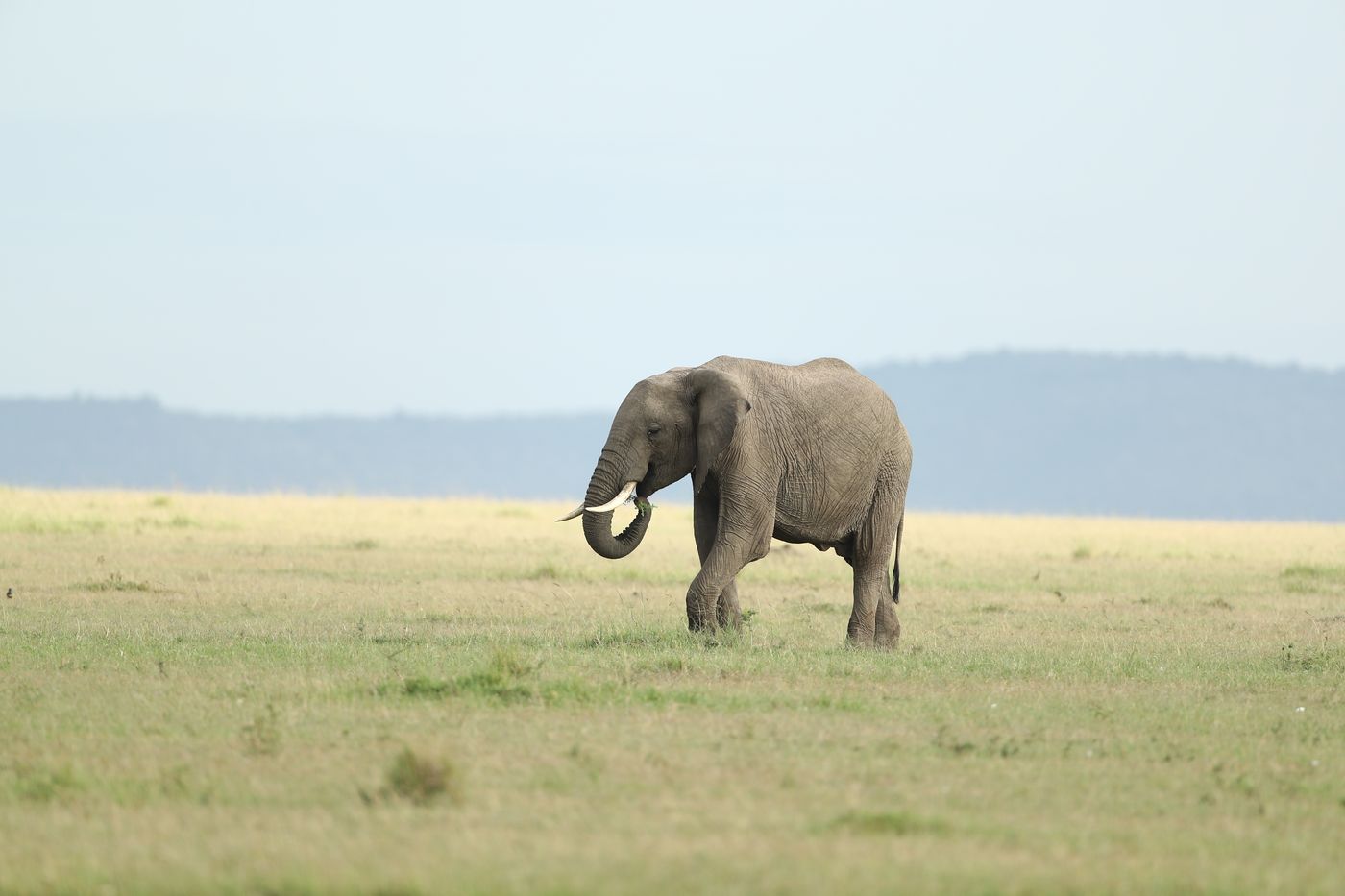
Angama’s own words on this are the honest ones: “we are not a conservation company, but rather a company that supports conservation”. It owns no reserve and manages no wildlife. What it does is fund, through a fixed levy of USD 20 a guest a night that is charged to every guest and cannot be waived, a set of named partners: the Mara Conservancy, which manages the Triangle; the Mara Elephant Project; the Mara Raptor Project; the Anne K. Taylor Fund; The Maa Trust; the Sheldrick Wildlife Trust; and, at Amboseli, Big Life Foundation, through which the Kimana Sanctuary lease fees reach the 844 Maasai families who own the land. The Foundation also runs the Davis Family Clinic for staff and community, funds scholarships and two primary schools, and pays livestock-predation compensation.
The one number that scales is the Greatest Maasai Mara Photographer of the Year, an annual competition whose entry fees go to the partners: USD 83,000 distributed in 2019 alone, with a grand prize of a five-night safari and USD 10,000. The chief executive put cumulative charitable impact at “almost USD 3 million” in July 2026. What is not published is any Foundation annual report or audited total, and that gap is the difference between the 17 out of 25 scored here and the 24 or 25 that Great Plains and Singita score for owning and rehabilitating land and publishing what they spend on it. Angama Mara’s Gold eco-rating from Ecotourism Kenya, the highest level, dates from June 2019; the release notes 129 staff at the time, all but three Kenyan, which is the figure that matters most to the communities on the escarpment.
What guests and awards say
Angama is one of the few owner-operators on the index with a deep, independent guest record, because its properties are hotels with Tripadvisor pages rather than a brand booked through agents. Angama Mara holds 4.9 from 388 reviews and ranks fourth of fifteen hotels in the Maasai Mara National Reserve; Angama Amboseli 4.9 from 30, second of ten in Kimana; the Safari Camp 5.0 from 11. All three carry the 2026 Travellers’ Choice badge. The reviews are consistent on one theme. An August 2026 reviewer: “What truly sets Angama apart is its incredible team. Every interaction felt warm, genuine and personal.” The chief executive’s own account of hiring, “not based on skill but on attitude”, is the same claim from the other side.
The awards record is long and, unlike many, mostly verifiable against the awarding body: Condé Nast Traveler’s number-one resort in Africa in the 2018 Readers’ Choice; Travel + Leisure World’s Best and Fodor’s Finest in 2020; TIME’s World’s Greatest Places 2024; Robb Report’s 50 Greatest Hotels on Earth, Condé Nast Traveler Readers’ Choice and the Travel + Leisure 500 in 2025; and a Condé Nast Traveler Triple Crown badge in 2026 whose category Angama does not specify. It did not place in the Travel + Leisure 2025 top-ten African safari lodges, where andBeyond Bateleur, its neighbour on the same escarpment, was first. How this record compares with the rest of the field is on the awards and credentials index; how the review record compares is on the review evidence index, where the absence of a Trustpilot or SafariBookings profile costs it, since those are the platforms on which planners are measured.
The case for, and the case against
For
- Full price transparency. Every 2026 and 2027 rate, supplement, levy, fee and cancellation term is on the site. Three of the ten listed operators do less.
- Founder pedigree and continuity of design. The Fitzgeralds built or ran more than fifty lodges at Conservation Corporation before Angama; the same architect and interior team did both lodges.
- The guest record. 4.9 from 388 reviews at a 30-suite lodge is a stronger signal than 4.9 from 40 at a 10-suite one.
- Auditable giving. A fixed levy, named partners, a Gold eco-rating, 97% Kenyan staff, and lease income to 844 landowning families at Kimana.
- Position. A 700-hectare private site on the Oloololo Escarpment with its own road to the Reserve gate, and a fully mobile sole-use camp inside the Mara Triangle.
Against
- The 2027 repricing. Mara peak up 7% to USD 2,950; Safari Camp standard up 32%; Amboseli peak up 32%; the shoulder tier removes the June and October bargain.
- The extras. A peak-season Mara couple adds USD 440 a day in fees and levies before a private vehicle at USD 800 a day.
- Firm, unbonded terms. 20–30% forfeited on any cancellation, 100% inside 45 or 60 days, no financial protection, no published payment methods or force majeure clause.
- Thin corporate disclosure. No office address, phone or email; no current staff figure; no Foundation accounts; a South African registered entity for a Kenyan business.
- Scale and stability. One country, three properties, three chief executives since 2022, and expansion talk without a named next property.
What changed in 2025–26
| When | What | Source |
|---|---|---|
| September 2024 | Rosco Wendover appointed group chief executive; Nicky Fitzgerald stays as shareholder and board member | Tourism Update |
| April 2025 | 2027 group rack rates and trading terms published to the trade library | partners.angama.com (PDF) |
| May 2025 | Chief executive’s six-month note, “New Beginnings, Same Heart”, commits to the people-first culture | angama.com |
| 2026 | 2027 rates published with a new three-tier season structure; Mara peak to USD 2,950, Amboseli to USD 1,950–2,450, Safari Camp standard to USD 1,250 | angama.com/rates-availability |
| 2026 | Condé Nast Traveler Triple Crown 2026 badge added to all property pages; Tripadvisor Travellers’ Choice 2026 for all three | angama.com |
| July 2026 | Chief executive interview: “almost USD 3 million” charitable impact; South African presence and appetite to expand; no new property named | Business Focus |
| September 2026 | Assessed for the first time on this site’s safari operator index: 65 of 100, eleventh of fifteen, not listed | Safari operator index 2026 |
Angama against its peers
The buyer weighing Angama Mara is nearly always weighing it against one of four things: the andBeyond lodge on the same escarpment, a conservancy camp north of the river, another Kenyan owner with a Mara-plus-Amboseli pairing, or a sole-use camp. Scores are from the safari operator index where the operator has been assessed.
| Operator | Index score | Kenya properties | Lowest 2026 Kenya rate | Where it beats Angama | Where Angama beats it |
|---|---|---|---|---|---|
| andBeyond (Bateleur Camp, Kichwa Tembo) | 79, listed 5th | 2, both on the Oloololo Escarpment | From-prices per journey only | Five countries under one operator; T+L 2025 number one; same Fitzgerald design lineage at a larger group | Publishes every rate; Angama Mara sits higher on the escarpment; the Safari Camp has no andBeyond equivalent |
| Great Plains Conservation (Mara Plains, Mara Nyika, Mara Toto) | 80, listed 4th | 3, in Olare Motorogi and Naboisho conservancies | Sheet on site; 2025 edition latest | Private conservancies with off-road and night driving; USD 100 a night to its own foundation; land under management | Current-year sheet; the escarpment view and the Triangle’s lower vehicle density; Amboseli pairing |
| Asilia Africa (Naboisho, Rekero, Ol Pejeta Bush Camp) | 72, listed 8th | 5, conservancies and the Reserve | USD 740 pp/night | Two countries; a full price ladder from USD 740; a Trustpilot record | Property quality by six points; Tripadvisor depth; Kilimanjaro from the suite |
| Elewana Collection (Sand River Mara, Tortilis Amboseli) | Not assessed | Portfolio across Kenya and Tanzania | Not assessed | The direct Mara-plus-Amboseli pairing from one company, with more properties to combine | Design, the escarpment site and guest scores; a 30-suite lodge that behaves like two of 15 |
| Cottar’s 1920s Camp | Not assessed | 1, on a private conservancy bordering the Reserve | Not assessed | Exclusive land with walking and night drives; a family safari name since 1919 | Published rates; two lodges and a mobile camp; the Amboseli option |
The honest summary is that Angama wins on the things it can control, the building, the team, the rate sheet, and loses on the thing it cannot: it drives in a public reserve. The Mara Triangle is the best-run third of the Reserve and the least crowded, but it is still the Reserve, with no off-road driving and no night drives, and a buyer whose priority is a leopard at close range in the dark should read the Kenya cost guide’s section on conservancy camps first. A buyer whose priority is the view, the room and the arrival should stop reading and look at February dates.
Compare Angama with the conservancy camps on one screen
BookAllSafaris lists Mara and Amboseli camps with per-person prices and dates side by side, which is the fastest way to see how a four-night Angama stay prices against Naboisho or Olare Motorogi for the same week.
Browse Mara and Amboseli camps →Affiliate link. Platform prices may include transfers or park fees that the rack rates above exclude.
Who should book Angama, and who should not
| You are | Verdict | Book | Why |
|---|---|---|---|
| First safari, one week, want the Mara and Kilimanjaro | Book it | 4 nights Angama Mara + 3 Angama Amboseli, standard season | One operator, one standard, one transfer; the six-night combination is published at USD 9,765 a person in standard season |
| Migration in August, want the river crossings | Book it, with a private vehicle | Angama Mara peak, or the Safari Camp for a group of six to eight | The Triangle holds the main crossing points and the lodge road reaches them in ten minutes; the September stay-five-pay-three is the price to find |
| Family of six or eight | Book it | Angama Safari Camp, standard season, USD 950 a person a night | Sole use, two vehicles and two guides included, no private-vehicle surcharge, second family suite free in standard season at the lodges |
| Photographer, want off-road and night drives | Look elsewhere | Great Plains Mara Plains or Asilia Naboisho | Both are illegal inside the Reserve; conservancy camps permit both |
| Budget under USD 1,000 a night in peak | Look elsewhere | Asilia’s lower tier, or Angama in standard season | Angama’s cheapest peak-season rate is USD 1,850 before USD 220 a day in fees and levy |
| Multi-country trip, three parks in ten days | Not on its own | A planner who pairs Angama with Tanzania or Rwanda | Kenya only; the planner index scores the specialists who build the rest |
On how to book: Angama takes direct bookings on the site and through the trade at the same rack rate, so there is no price penalty for using a planner, and the reasons to do so are the ones above, financial protection in peak season and the rest of the itinerary. Go2Africa (affiliate link) sells all three properties with a bonded contract; the planners scored on the safari planner index all list Angama Mara. A reader deciding between the two routes has the arithmetic in specialist vs booking direct and the wider price context in what a safari costs by budget.
Questions readers ask
How much does Angama Mara cost per night?
Is Angama a good safari operator?
Who owns Angama?
What is the difference between Angama Mara and Angama Amboseli?
What is Angama Safari Camp?
Does Angama include park fees?
What are Angama’s cancellation terms?
Is Angama Mara worth the money?
Why is Angama not on the luxury safari operator index?
- The luxury safari operator index 2026: the ten listed, and the bar →
- What a Kenya safari costs in 2026 →
- andBeyond review: the company the founders left →
- Great Plains Conservation review: the conservancy alternative →
- Asilia Africa review →
- The safari planner index: who books Angama best →
- Best time to go on safari →