Expeditions · Expedition Cruise Operator Index 2026
Expedition Cruise Operator Index 2026: 12 Operators Scored on Published Fares, Ice Class and How Many Guests Can Actually Land
By Richard J. · written from Valencia12 operators scored /100Verified 21 September 2026
The highest-scoring expedition cruise operator for 2026 is Lindblad Expeditions, at 97/100 — twelve expedition ships, 138 guests on Antarctic voyages, and a published Antarctic fare of USD 12,250 for ten days — followed by Aurora Expeditions (83), Ponant (82), Scenic (82) and Atlas Ocean Voyages (78). Twelve operators are scored against five published criteria, every figure carrying its source and the date it was read. Below the main table the same dataset is re-cut by landing capacity, fare per day, Arctic programme and ownership.
Verified 21 September 2026 · operator fare pages · IAATO operator directory · AECO member list · ice classes as the operator or class society states them
Expedition cruise operators scored on fares, ice class and landing capacity
Twelve operators were assessed against the criteria below. Six are ranked. The other six are assessed on the same rubric, appear by name throughout this page with their published figures, and are listed at the foot without a position — the index is a finite list, not a directory of everyone who sails.
How the score works (100 points). Fare transparency 25 — Publishes a real per-person fare (25), a from-price only (12), or nothing without an enquiry (0). · Polar credentials 25 — Highest ice class in the fleet, and membership of the IAATO operator directory. · Landing capacity 20 — Maximum guests carried on Antarctic voyages. IAATO permits 100 ashore at a time, so fewer guests scores higher. · Fleet scale 15 — Number of purpose-built expedition ships in the fleet. · Programme breadth 15 — Whether Arctic, tropical and priced Antarctic programmes are all published. Scores are ours; the inputs are linked. Where a figure is not published, the criterion scores zero and the table says so.
#
Operator
Score /100
Fares
Ice class
Polar guests
Ships
Antarctica from
Best for
1
Lindblad Expeditions
97
Publishes fares
PC5
138
12
USD 12,250 · 10 days
The deepest fleet with a published fare beside it
2
Aurora Expeditions
83
Publishes fares
PC6
130
3
USD 19,495 · 10 days
The smallest polar guest count in the index
3
Ponant
82
From-price only
Polar Class 2 (PC2)
200
11
USD 14,650 · 12 days
The strongest ice class in civilian expedition cruising
4
Scenic
82
Publishes fares
Polar Class 6
200
2
USD 16,560 · 15 days
Two ships, a PC6 hull and a fare you can read
5
Atlas Ocean Voyages
78
Publishes fares
1B
140
3
USD 9,944 · 9 days
The lowest published Antarctic fare per day
6
Quark Expeditions
75
Publishes fares
1A+ / PC6
199
4
USD 12,236 · 11 days
Polar only, and priced in the open
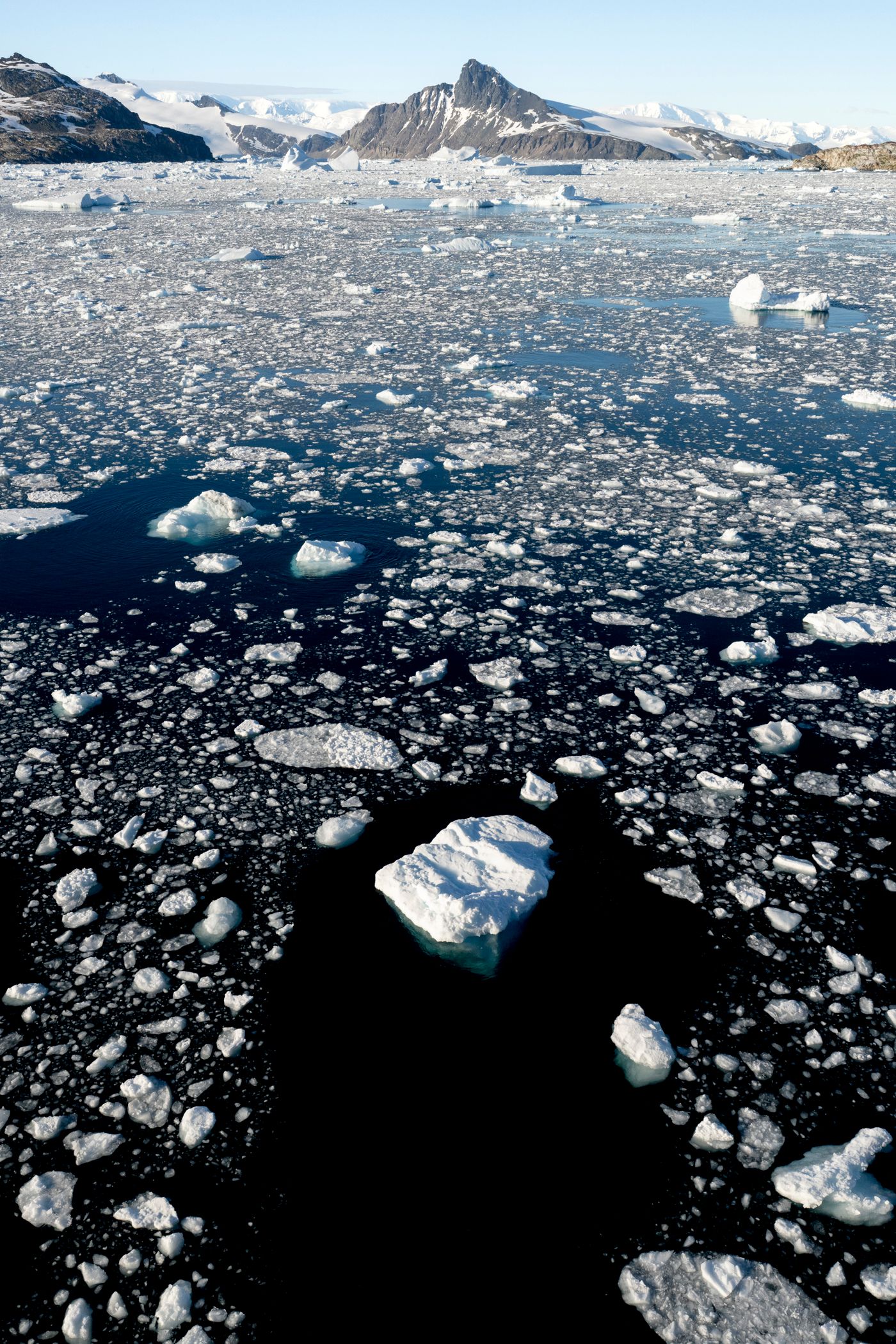
Antarctica. Every operator on this index sails the Peninsula between November and March; what differs is the hull, the guest count and whether you can read the fare. Photo: Pexels / Pexels
Score breakdown by criterion
Operator
Fares /25
Polar /25
Landing /20
Fleet /15
Breadth /15
Total
Lindblad Expeditions
25
22
20
15
15
97
Aurora Expeditions
25
20
20
3
15
83
Ponant
12
25
16
14
15
82
Scenic
25
25
16
1
15
82
Atlas Ocean Voyages
25
16
19
3
15
78
Quark Expeditions
25
20
16
4
10
75
The table separates two things that the category usually sells as one. The first is the ship: Ponant's Polar Class 2 hull is a genuine engineering distinction and takes the full 25 on credentials, and Lindblad's twelve-ship fleet is the deepest here. The second is disclosure, and it cuts across ownership in a way worth naming. The three operators that publish no Antarctic fare at all — Silversea, Swan Hellenic and Seabourn — include the two owned by large conventional cruise groups, Royal Caribbean and Carnival. The independents and the specialists publish. A buyer comparing a Seabourn Antarctic voyage against an Aurora one cannot do so on price without making two phone calls, and only one of those companies has decided that is acceptable.
One number explains more of this index than any other: how many guests a ship carries into polar water.IAATO permits a maximum of 100 people ashore in Antarctica at any one time. An operator carrying 130 guests lands almost everyone together. An operator carrying 490 runs the day as a rotation. Neither is wrong, both are sold as an Antarctic landing, and only one of them is the thing most buyers picture. That is why landing capacity carries twenty points here.
Most immersive expedition cruise experiences, compared by who actually gets ashore
Aurora Expeditions carries 130 guests on Antarctic voyages, Lindblad 138 and Atlas 140; HX carries up to 490 and Viking 378. The test is the IAATO hundred-guest shore limit, because it turns guest count from a comfort question into a structural one about how much time on land a fare actually buys.
#
Operator
Polar guests
Everyone ashore at once
Ice class
Ships
1
Aurora Expeditions
130
no — guests rotate in groups of 100
PC6
3
2
Lindblad Expeditions
138
no — guests rotate in groups of 100
PC5
12
3
Atlas Ocean Voyages
140
no — guests rotate in groups of 100
1B
3
4
Swan Hellenic
152
no — guests rotate in groups of 100
Polar Class 5 (PC5)
3
5
Quark Expeditions
199
no — guests rotate in groups of 100
1A+ / PC6
4
6
Albatros Expeditions
199
no — guests rotate in groups of 100
1A / Polar Code 6
1
7
Ponant
200
no — guests rotate in groups of 100
Polar Class 2 (PC2)
11
8
Scenic
200
no — guests rotate in groups of 100
Polar Class 6
2
9
Silversea
200
no — guests rotate in groups of 100
Polar Class 6
3
10
Seabourn
264
no — guests rotate in groups of 100
PC6
2
11
Viking
378
no — guests rotate in groups of 100
Polar Class 6
2
12
HX (Hurtigruten Expeditions)
490
no — guests rotate in groups of 100
Polar Class 6
5
The caution is that no operator in this index carries 100 guests or fewer, so on every ship here a full-complement Antarctic landing involves some rotation. The difference is one of degree, and it is large: a 130-guest sailing rotates twice, a 490-guest sailing rotates five times through a finite window of daylight and weather. Ask for the landing plan, not the landing count. Our guide to what an expedition cruise is actually like covers the shape of the day.
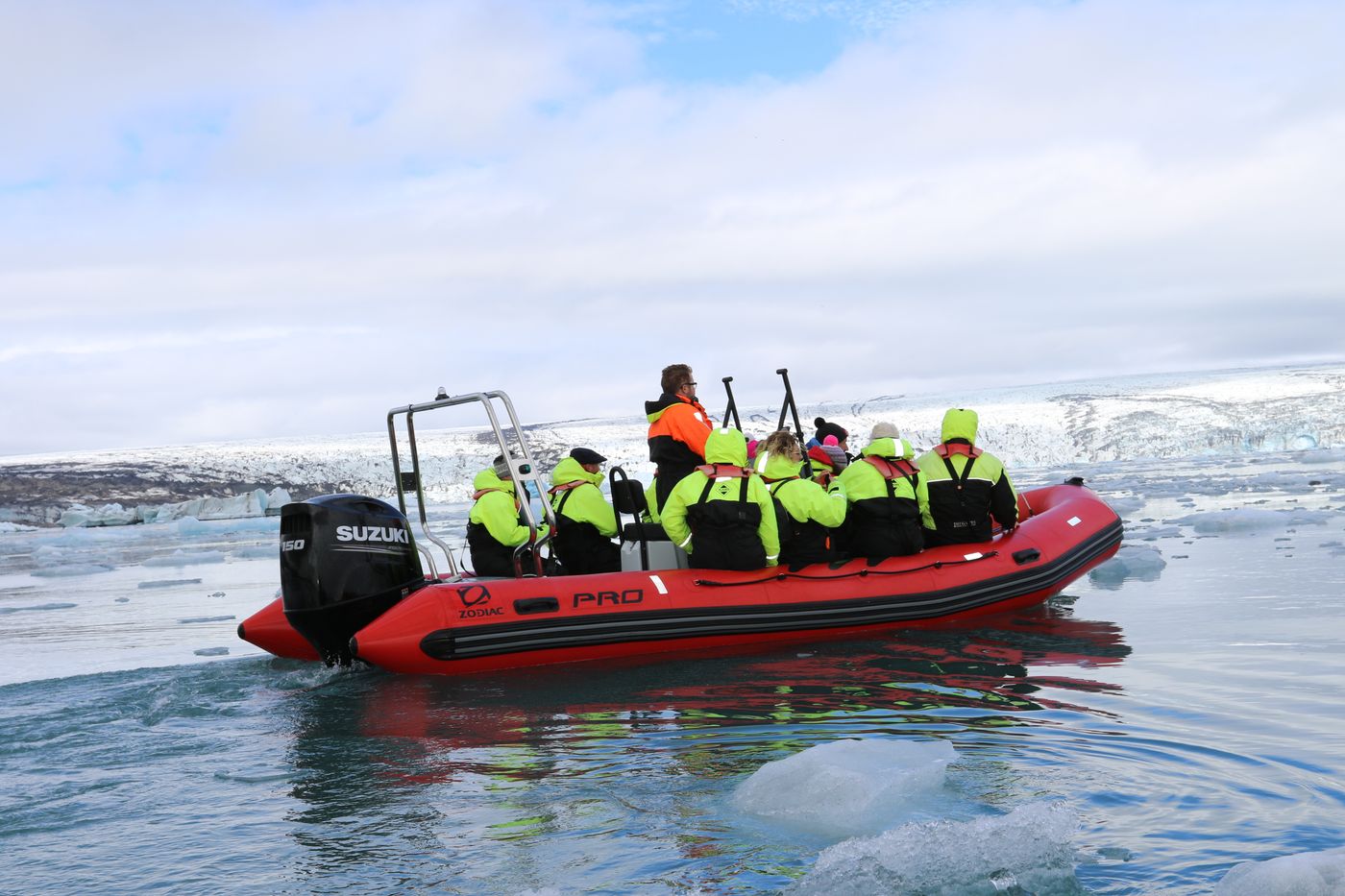
A group of passengers aboard a Zodiac-style inflatable boat on cold, icy water in Iceland. — the shore-landing craft every polar operator uses, and the reason the hundred-guest limit bites. Photo: Eterna Media / Pexels
Best value expedition cruise lines, by published fare per day
Of the nine operators publishing an Antarctic fare, HX is cheapest per day at about USD 736, Atlas Ocean Voyages next at about USD 1,105, and Aurora Expeditions the most expensive at about USD 1,950 — a spread of roughly two and a half times. The test is a published per-person fare divided by the published voyage length, because headline fares across different voyage lengths are not comparable.
#
Operator
Lowest published fare
Nights
Per day
Ice class
1
HX (Hurtigruten Expeditions)
USD 8,830
12 days
USD 736
Polar Class 6
2
Albatros Expeditions
AUD 8,999
10 days
AUD 900
1A / Polar Code 6
3
Atlas Ocean Voyages
USD 9,944
9 days
USD 1,105
1B
4
Quark Expeditions
USD 12,236
11 days
USD 1,112
1A+ / PC6
5
Lindblad Expeditions
USD 12,250
10 days
USD 1,225
PC5
6
Ponant
USD 14,650
12 days
USD 1,221
Polar Class 2 (PC2)
7
Viking
USD 14,999
13 days
USD 1,154
Polar Class 6
8
Scenic
USD 16,560
15 days
USD 1,104
Polar Class 6
9
Aurora Expeditions
USD 19,495
10 days
USD 1,950
PC6
Two cautions. The cheapest fares belong to the largest ships, which is the landing trade set out above rather than a coincidence, and Albatros's figure is quoted in Australian dollars and came from a promotional landing page rather than a standard itinerary. And three operators publish nothing at all, so they are absent from this table entirely — their absence is the finding. See how to book an expedition cruise for what a fare usually does and does not include.
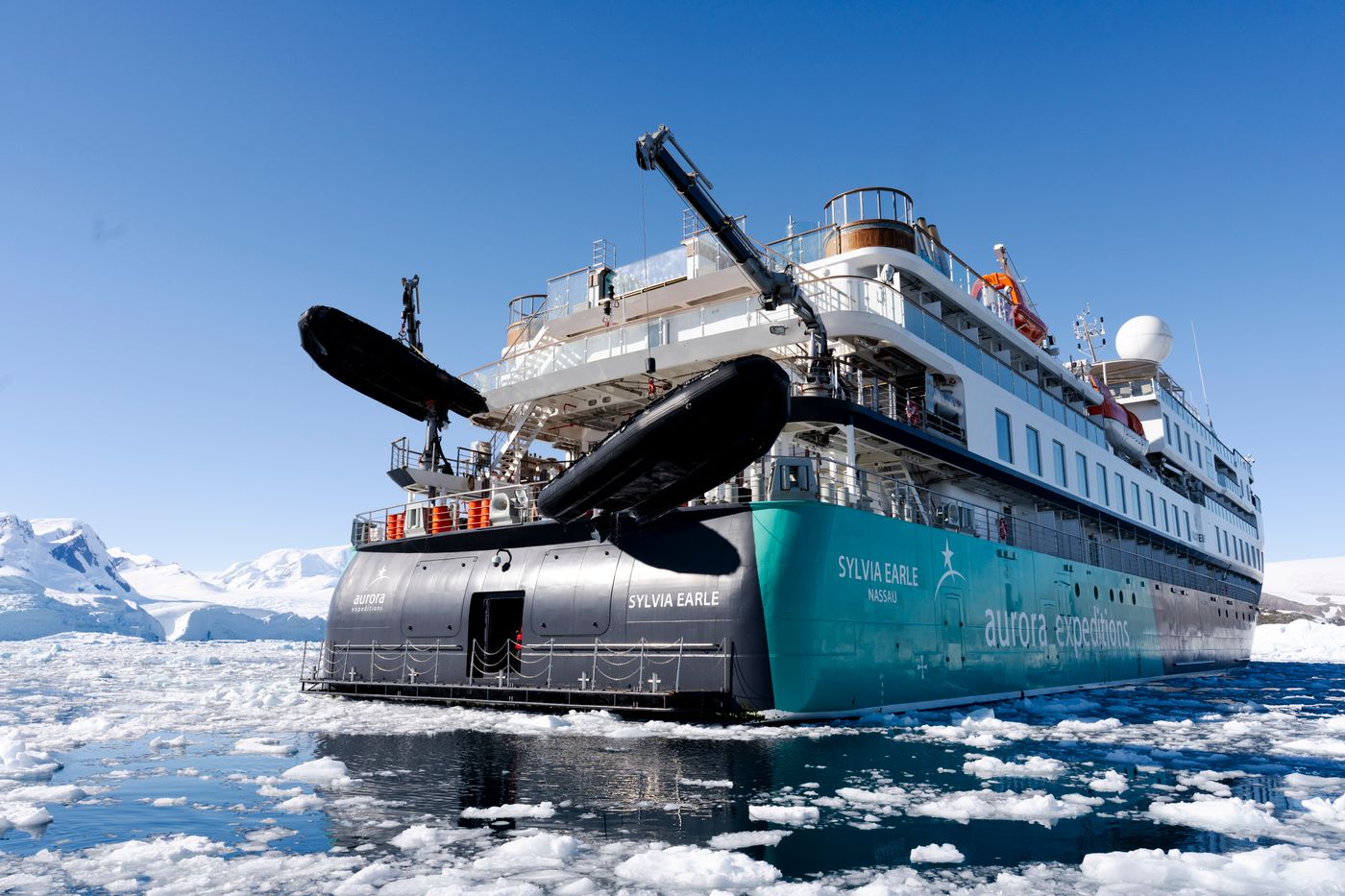
The expedition ship Sylvia Earle, operated by Aurora Expeditions, in Arctic water among icebergs. Photo: Hugo Sykes / Pexels
Best Arctic expedition cruise lines, and who sails beyond the poles
All twelve operators in this index publish an Arctic programme. The separation is at the warm end: Quark Expeditions, Albatros and Viking run no tropical season, and Quark is polar-only by design. The test is whether all three published programmes exist, which measures range rather than quality.
Operator
Arctic
Tropics
Antarctic fare published
IAATO
Ice class
Lindblad Expeditions
yes
yes
yes
listed
PC5
Aurora Expeditions
yes
yes
yes
listed
PC6
Ponant
yes
yes
yes
listed
Polar Class 2 (PC2)
Scenic
yes
yes
yes
listed
Polar Class 6
Atlas Ocean Voyages
yes
yes
yes
listed
1B
Quark Expeditions
yes
no
yes
listed
1A+ / PC6
HX (Hurtigruten Expeditions)
yes
yes
yes
listed
Polar Class 6
Albatros Expeditions
yes
no
yes
not found in the directory
1A / Polar Code 6
Silversea
yes
yes
no
listed
Polar Class 6
Viking
yes
no
yes
listed
Polar Class 6
Swan Hellenic
yes
not published
no
listed
Polar Class 5 (PC5)
Seabourn
yes
yes
no
listed
PC6
Quark's position is worth reading correctly. It scores 10 of 15 on breadth because it does not sail the tropics, and that is a deliberate specialisation rather than a gap — the company exists to sail ice. A rubric has to apply the same test to everyone or it is not a rubric, so the points come off and this paragraph explains why. Only Aurora Expeditions has an AECO membership we could verify from a primary source; for the rest we omitted it rather than infer it. Expedition destinations beyond Antarctica covers the wider map.
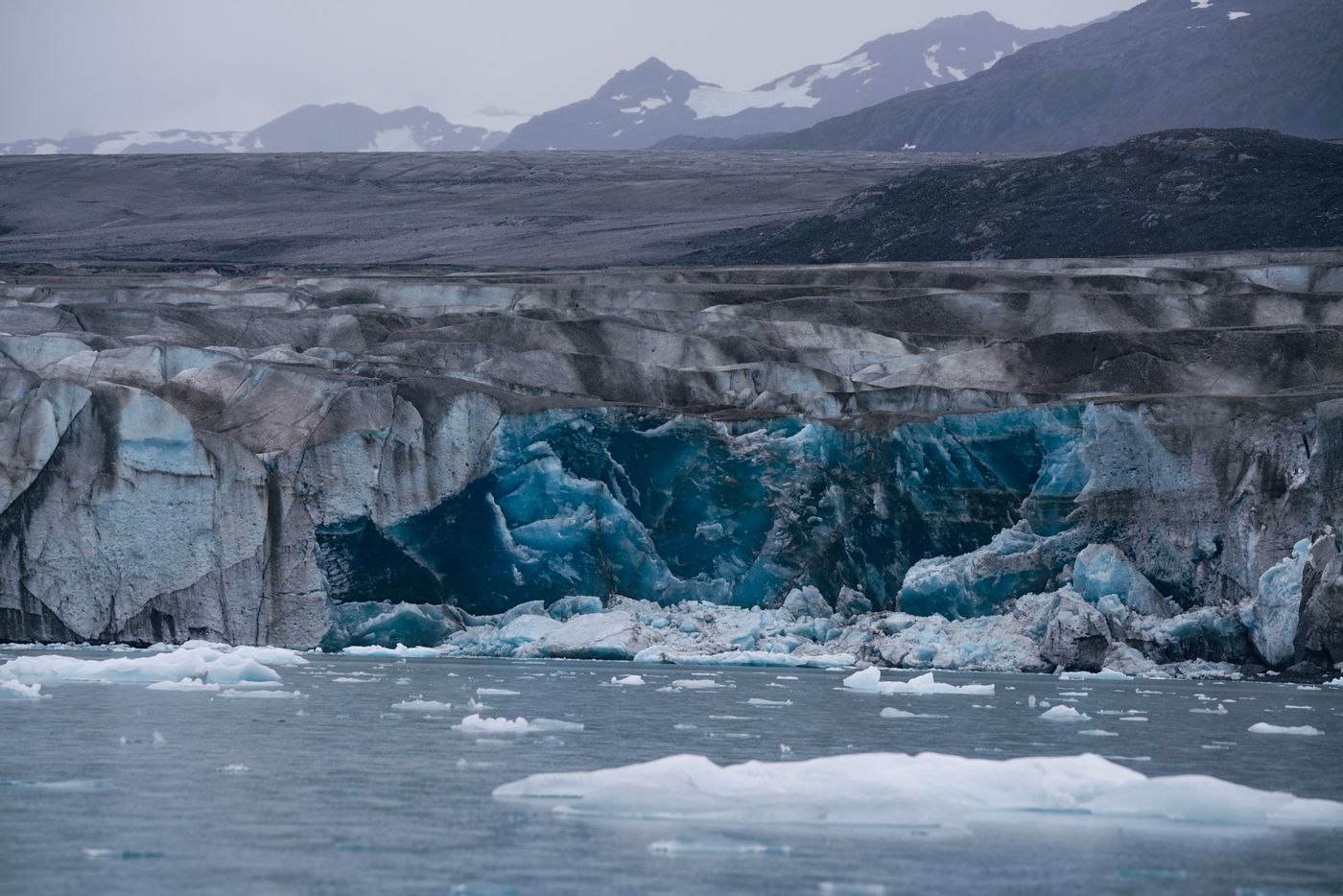
A glacier with icebergs floating in cold Arctic water (tagged Greenland/Arctic); no people or vessels in frame. — every operator in this index publishes an Arctic season. Photo: Yuanpang Wa / Pexels
The six ranked operators in detail
1. Lindblad Expeditions — 97/100
New York · founded 1979 · 12 expedition ships · 138 guests in polar water
Lindblad Expeditions scores 97 of 100, the highest mark on any index we have published, and it gets there by taking
four of the five criteria outright. Twelve purpose-built expedition ships is the largest dedicated expedition fleet here;
138 guests on Antarctic voyages is among the lowest, which matters for the reason set out below; it publishes a real
Antarctic fare of USD 12,250 for ten days rather than a from-price; and it runs Arctic, Antarctic and tropical programmes.
The one criterion it does not take is polar credentials at 22 of 25, because its highest ice class is PC5 rather than
Ponant's PC2. It is listed in the IAATO operator directory. The company has run the
National Geographic partnership since 2004 and is led by Natalya Leahy. A high
score here is a statement about disclosure and fleet as much as about the voyage.
2. Aurora Expeditions — 83/100
Sydney · founded 1991 · 130 guests in polar water · one guide per seven guests
Aurora Expeditions carries the fewest guests on Antarctic voyages of any operator in this index — 130 — and is the
only operator here to publish a guide ratio, at one expedition guide per seven guests. Both facts point the same way: this
is the small-ship end of the category, and the landing arithmetic works in the guest's favour. It publishes a real
Antarctic fare, though at USD 19,495 for ten days it is the most expensive per day in the index, roughly double HX's. Its
three ships cost it on fleet scale, 3 of 15. Polar credentials are 20 of 25 on a PC6 hull with
IAATO listing, and it is the only operator whose AECO membership we could verify from a
primary source. Australian-owned and independent, which in this index correlates strongly with publishing your prices.
3. Ponant — 82/100
Marseille · founded 1988 · Polar Class 2 · Groupe Artémis
Ponant holds the strongest ice class in civilian expedition cruising. Polar Class 2, carried by
Le Commandant Charcot, is a category above anything else in this index and takes the full 25 of 25 on polar credentials —
no other operator here reaches it. Eleven expedition ships is second only to Lindblad. What holds it to 82 is disclosure,
and there is an irony in it: ponant.com returned a block on every automated request we made, so its fare classification of
from-prices is graded C and sourced to a third-party reseller rather than to Ponant itself. This is the second time Ponant
has come back unverifiable in our work — it was recorded as could not be verified on our
four-way comparison earlier this year.
An operator with the best hull in the index and the weakest published record is losing points it does not need to lose.
Owned by Groupe Artémis, led by Hervé Gastinel.
4. Scenic — 82/100
Newcastle, Australia · founded 1986 · two ships · PC6 · publishes fares
Scenic ties Ponant on 82 with a fifth of the fleet, which is the clearest demonstration on this page of what the
rubric rewards. Two ships gives it 1 of 15 on fleet scale, the lowest mark of any operator here. It then takes the full 25
on polar credentials with a Polar Class 6 hull and IAATO listing, the full 25 on fares by publishing
USD 16,560 for a fifteen-day Antarctic voyage, and the full 15 on breadth by running Arctic, Antarctic and tropical
programmes. Its 200 polar guests cost it on landing capacity, 16 of 20. Scenic Eclipse and Scenic Eclipse II are
discovery yachts carrying helicopters and a submersible, which is a different proposition from a classic expedition ship
and is not something this rubric measures. Founded and still led by Glen Moroney.
5. Atlas Ocean Voyages — 78/100
Fort Lauderdale · founded 2019 · lowest published Antarctic fare per day
Atlas Ocean Voyages publishes the lowest Antarctic fare in this index once length is accounted for: USD 9,944 for
nine days, about USD 1,105 a day against Aurora's USD 1,950. It is the youngest operator here, founded in 2019, carries
140 guests in polar water for 19 of 20 on landing capacity, and runs Arctic, Antarctic and tropical programmes for the
full 15 on breadth. Where it gives ground is the hull. Its highest ice class on file is 1B, the weakest in this index —
IAATO lists it, but 1B is a Baltic ice class rather than a Polar Class designation, and the figure is
graded C because it comes from a third-party ship-specification site rather than from Atlas. For a first Antarctic voyage
on a budget the fare is the headline; the hull is the thing to ask about before booking.
6. Quark Expeditions — 75/100
Seattle · founded 1991 · polar only · Travelopia
Quark Expeditions is the only operator in this index that is polar and nothing else, and it is penalised for it:
programme breadth scores 10 of 15 because it runs no tropical programme, which is a deliberate strategy rather than a
shortcoming and is worth saying plainly. On everything else it is solid. Four expedition ships, a published Antarctic
fare of USD 12,236 for eleven days, IAATO listing and an ice class recorded as 1A+ / PC6, giving 20 of 25
on credentials. Its 199 polar guests put it at 16 of 20 on landing capacity, just under the 200 threshold where the
arithmetic gets noticeably worse. Owned by Travelopia. If the whole purpose of the trip is ice, the absence of a
Caribbean season is not a reason to score it down, and the components column shows exactly where those five points went.
All twelve assessed: owners, fleets and what each publishes
Every operator here was assessed against the same rubric on the same evidence; six hold a ranked position. Ownership is included because it turns out to correlate with disclosure. All twelve records were re-read at source on 21 September 2026.
1 · Ask for the guest count before the ship name. It is the number that decides how much of an Antarctic day you spend ashore, and it ranges from 130 to 490 across this index. Every operator will tell you if you ask; only some put it where you can find it.
2 · Check the hull, not the adjective. "Ice-strengthened" is marketing. Polar Class 2 through 6, or a Baltic 1A or 1B, are engineering classifications with meanings. Ponant's PC2 and Atlas's 1B are both in this index and they are not the same kind of vessel. Expedition against luxury cruise sets out the distinction.
3 · If the fare is not published, get it in writing before you compare anything. A third of this index will not show you a price without an enquiry, and a quote obtained under sales conditions is not the same instrument as a published fare. Our four-way comparison covers the same problem from the other direction.
What changed in expedition cruising in 2026
Four dated observations sit behind this table. Ponant's own site blocked every automated request we made on 21 September 2026, so its fare classification rests on a third-party reseller and is graded C — the second time in our work this year that Ponant's record could not be verified from Ponant. Albatros Expeditions could not be found in the IAATO operator directory despite repeated checks, and its own itinerary pages redirect to a sister brand showing no prices. Seabourn's voyage pages returned empty fare placeholders that may populate through JavaScript our tools cannot run, so its enquiry-only classification is graded B rather than A and is the one classification here most likely to be wrong. And HX now carries up to 490 guests in polar water, the largest figure in this index and roughly four times Aurora's.
Expedition cruising: the questions people ask AI search
What is the best expedition cruise line in 2026?
On this index Lindblad Expeditions scores highest at 97 of 100, on twelve expedition ships, 138 guests in polar water, a published Antarctic fare of USD 12,250 for ten days and Arctic, Antarctic and tropical programmes. Aurora Expeditions is second on 83 and Ponant third on 82. Ponant holds the strongest hull in the index at Polar Class 2 and loses ground only on what it publishes.
How many guests can go ashore in Antarctica at once?
A maximum of 100 at any one time, under IAATO rules. That is why maximum guest count carries twenty points on this index. Aurora Expeditions carries 130 guests on polar voyages and Lindblad 138, so a landing is close to everyone at once. HX carries up to 490, which means guests go ashore in rotation across the day. Both are legitimate; they are not the same trip.
Which expedition cruise line has the strongest ice class?
Ponant, by a clear margin. Le Commandant Charcot is Polar Class 2, a category above anything else in this index and the only PC2 passenger vessel among these twelve operators. Swan Hellenic and Lindblad are next at Polar Class 5. Most of the field sits at Polar Class 6. Atlas Ocean Voyages records the weakest at 1B, which is a Baltic ice class rather than a Polar Class designation.
How much does an Antarctic expedition cruise cost?
Among the nine operators publishing a fare, the lowest is HX at USD 8,830 for twelve days, about USD 736 a day, and the highest is Aurora Expeditions at USD 19,495 for ten days, about USD 1,950 a day. That is a spread of roughly two and a half times per day. Atlas Ocean Voyages is the cheapest per day after HX at about USD 1,105. Three operators publish no fare at all.
Which expedition operators do not publish their fares?
Three of the twelve: Silversea, Swan Hellenic and Seabourn. All three route a prospective guest to an enquiry form rather than showing a per-person fare, and all three score zero of twenty-five on fare transparency as a result. Two of them, Silversea and Seabourn, are owned by large conventional cruise groups — Royal Caribbean and Carnival respectively. Ponant publishes a from-price only, and its own site blocked every automated check we made.
What is IAATO and does membership matter?
IAATO is the International Association of Antarctica Tour Operators, which sets the operating rules for Antarctic tourism including the 100-guests-ashore limit. Eleven of the twelve operators in this index are listed in its directory. We could not find Albatros Expeditions listed, and have recorded that as not found rather than as not a member, because that is what we actually observed.
Is a bigger expedition ship worse?
Not worse, but different, and the difference is measurable. Above roughly 200 guests the Antarctic landing day becomes a rotation rather than a single excursion, because only 100 people may be ashore at once. HX at 490 guests and Viking at 378 are at one end; Aurora at 130 and Lindblad at 138 at the other. Larger ships generally carry lower fares, which is the trade being made, and this index scores the landing arithmetic rather than judging the choice.
Which expedition lines sail the Arctic as well as Antarctica?
All twelve operators in this index publish an Arctic programme. The difference is at the warm end: Quark Expeditions, Albatros Expeditions and Viking run no tropical programme, and Quark is polar-only by design. That costs them on programme breadth, which measures whether all three published programmes exist, not whether a polar specialist is doing something wrong.
Can an operator pay to rank higher on this index?
No. The rubric and weights are fixed and published above, assessment is identical for every operator whether it engages with us or not, and no position is for sale. What an operator can do is publish a fare, a guide ratio or a registry listing that currently scores zero, which changes the record rather than the rubric.
Rankings are scored against the published criteria above, fixed before the data was collected. Assessment is free and identical for every operator, and no position on this index is for sale. This page carries no affiliate links and no paid placements; every outbound link is editorial. Registry membership is taken from the registry's own directory rather than an operator's claim wherever the directory could be reached, and an operator not found in a directory is recorded as not found rather than as not a member. Sources verified 21 September 2026: the published sites and fare pages of Lindblad Expeditions, Aurora Expeditions, Ponant, Scenic, Atlas Ocean Voyages, Quark Expeditions, HX, Albatros Expeditions, Silversea, Viking, Swan Hellenic and Seabourn, the IAATO operator directory and the AECO member list. The complete evidence record, including every source URL and confidence grade, is held in our expedition operator database.
Richard J. · Uncompromised Travel · written from Valencia · first published 21 September 2026 · facts re-verified 21 September 2026
Cookie Settings
This website uses cookies
Cookie Settings
We use cookies to improve user experience. Choose what cookie categories you allow us to use. You can read more
about our Cookie Policy by clicking on Cookie Policy below.
These cookies enable strictly necessary cookies for security, language support and verification of identity.
These cookies can’t be disabled.
These cookies collect data to remember choices users make to improve and give a better
user experience. Disabling can cause some parts of the site to not work properly.
These cookies help us to understand how visitors interact with our website, help us measure and analyze traffic to improve our service.
These cookies help us to better deliver marketing content and customized ads.