How to Book an Expedition Cruise: The All-In Cost and the Terms That Matter
An expedition cruise costs about 40 per cent more than its headline fare, and the three things that decide whether the money is well spent are set before you choose a cabin: ship size, insurance, and the cancellation ladder. Antarctic Treaty visitor guidelines cap landings at 100 passengers ashore per vessel at a time with a 1:20 guide ratio, and bar vessels over 500 passengers from landing at all — so a 100-berth ship lands everyone at once and a 400-berth ship does not. This guide covers the real cost structure, what the fare does and does not carry, the contract clauses worth reading twice, and the order to do things in. For the category decision, start with expedition cruise versus luxury cruise; for where to point the ship, expedition destinations beyond Antarctica.
What it actually costs
The chart below is arithmetic, not a price list. It takes a 10,000 dollar headline fare for a twelve-day Antarctic voyage from London and adds the items that arrive later, so the shape of the total is visible before you fall in love with a particular departure. Every figure in it moves with the season and the operator; the ratio does not move much at all.
Two of those lines deserve attention out of proportion to their size. The pre-voyage hotel night is the cheapest insurance on the page: expedition ships do not wait, embarkation ports are small, and a missed connection converts the entire fare into a loss. Book a night in Ushuaia, Punta Arenas or Longyearbyen before the ship sails — Booking.com (affiliate link) carries the inventory in all three, and it fills during expedition season. And gear is a real number for anyone who does not already own polar clothing; operators lend boots and a parka, and nothing else.
What the fare carries, and what it does not
| Item | In the fare? | What to check |
|---|---|---|
| Cabin accommodation | Included | For the full voyage duration, in the category booked |
| All meals | Included | Breakfast, lunch, dinner and snacks throughout |
| Non-alcoholic drinks | Included | Coffee, tea and soft drinks; alcohol is billed separately |
| Zodiac landings and shore excursions | Included | The core of the product; every scheduled landing |
| Boots and parka | Included | On loan; the parka is often yours to keep |
| Naturalist guides and lectures | Included | Guide numbers are set by the 1:20 landing ratio |
| Port taxes and government fees | Usually included | Confirm — some operators quote these separately |
| Flights to the embarkation port | Not included | The largest single addition, and the one that ruins voyages |
| Travel and evacuation insurance | Not included | Mandatory in practice; operators check it before boarding |
| Alcoholic drinks | Not included | On-board account, settled at disembarkation |
| Optional activities | Not included | Kayaking, camping, snowshoeing, photography programmes |
| Crew gratuities | Not included | Discretionary on most ships; a few now build it in |
| Pre- and post-voyage hotels | Not included | Budget at least one night before embarkation |
| Personal cold-weather gear | Not included | Base layers, waterproof trousers, gloves, hats |
Where the voyage itself is booked matters less than most first-time buyers expect — the fare is the fare, and operators rarely discount their own direct bookings. What a marketplace adds is the ability to compare durations, ships and departure dates across operators in one place before you commit. TourRadar (affiliate link) lists multi-day polar and expedition programmes from a wide range of operators, which makes it a reasonable first sweep before going direct to a shortlist. Our scored index of seven expedition cruise lines covers the four ships most often shortlisted in the 200–300 passenger bracket, with scores and the case against each.
Ship size, and why it decides everything else
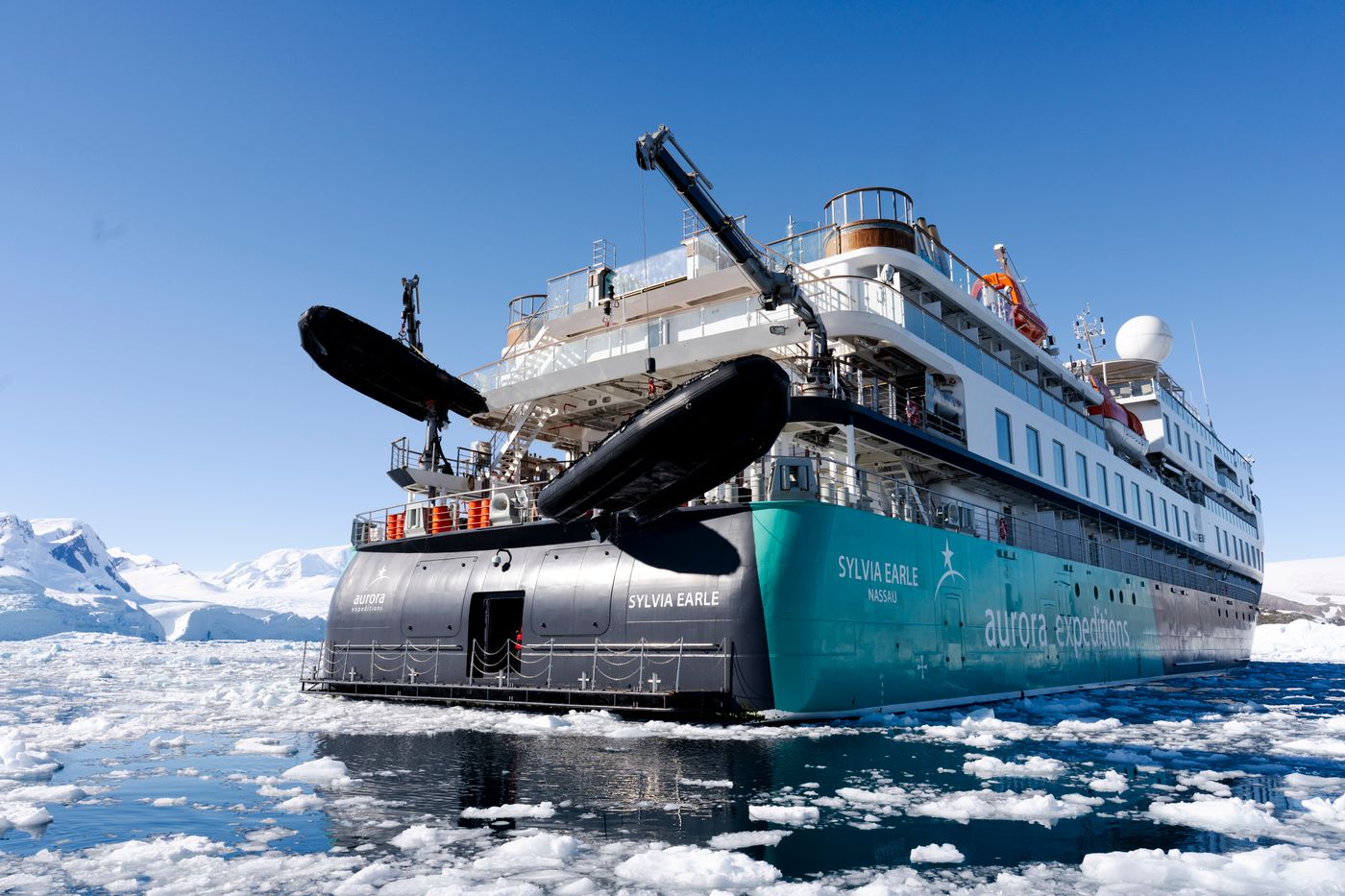
The practical reading: below about 100 passengers, the whole ship goes ashore together and the landing window is yours. At 200 the ship runs two rotations and your time ashore roughly halves. Above 500 the question is moot — the vessel cannot land anyone, and the voyage is a scenic cruise with lectures. Larger ships buy real things in exchange: better stability in the Drake Passage, more cabin categories, stronger dining. That is a legitimate trade for travellers who want the continent seen comfortably. It is the wrong trade for anyone whose reason for going is to be on the ice.
The second thing worth interrogating is the expedition team, because it is the largest quality difference between operators at the same price. The 1:20 ratio sets how many guides must be carried; it says nothing about who they are. Ask how many guides are aboard, what their field specialisms are, and how many have worked the region before. IAATO, founded in 1991, is the Antarctic industry body and AECO is its Arctic counterpart, covering Canada, Greenland, Iceland and Svalbard. Membership is a verifiable baseline rather than a ranking, and it takes a minute to check.
Insurance: get the operator’s number before you buy anything
Correction to the previous version of this page
An earlier version of this guide recommended a nomad-style travel policy for polar medical evacuation. That advice was wrong and has been removed. Policies of that type are typically written with a lifetime evacuation maximum around $100,000 and commonly exclude expeditions in remote areas outright — below the minimum several Antarctic operators require, and void for the activity in question. This site no longer links an insurer on this page, because it does not currently have one whose policy covers the activity.
The sequence matters. Ask the operator for its written minimum, then buy a policy that meets it and explicitly names expedition cruising in the region concerned. Reading it the other way round — buying a familiar policy and hoping it qualifies — is how travellers arrive at the quay uninsurable. Two further points: cancellation cover and medical cover are different products, and only a cancel-for-any-reason policy recovers a fare lost to the forfeit ladder below; and if the operator cancels, most contracts refund the fare and nothing else, leaving your flights and hotels to your own cover. Our travel insurance comparison and high-altitude trekking insurance guide cover the adjacent cases where a mainstream policy does work.
When to book
| Season | Window | Book ahead | Why |
|---|---|---|---|
| Antarctica, peak | December – January | 12–18 months | Longest days, warmest temperatures, peak wildlife. Best cabins on the best ships go first. |
| Antarctica, shoulder | November, late February, March | 6–9 months | Lower fares, different wildlife, less pressure on landing sites. |
| Antarctica, late release | Within 60 days | Watch weekly | Real discounts on unsold cabins, but you take what is left and pay short-notice airfares. |
| Arctic and Svalbard | June – August | 9–12 months | A shorter, more concentrated season; polar-bear departures fill first. |
| Svalbard, spring | April – May | 6–9 months | Snow and sea ice still in place; fewer ships, different programme. |
The buffer day before embarkation is worth filling deliberately rather than spending in a hotel room. Ushuaia has Tierra del Fuego National Park, the Beagle Channel and the End of the World Train; Longyearbyen has the mine tours and the sled-dog kennels. GetYourGuide (affiliate link) covers both ports, and capacity is thin during expedition season, so book that day at least 48 hours ahead. For connectivity on the pre- and post-voyage days — satellite Wi-Fi at sea is slow and expensive, and not the problem to solve — an Airalo eSIM (affiliate link) is a small line item that avoids the roaming bill in Argentina, Chile or Norway; the general case is in is an eSIM worth it.
The contract terms that actually matter
| Clause | What it says | What to do about it |
|---|---|---|
| Cancellation and deposit forfeit | Deposit is typically 20–25 per cent and is usually forfeit outright; forfeit escalates towards 100 per cent inside 60–90 days. | Ask for the exact forfeit ladder in writing before you pay. Only cancel-for-any-reason insurance recovers a fare lost this way. |
| Itinerary modification | Every expedition contract lets the operator change landing sites, reorder or shorten the voyage for ice, weather, wildlife protection or operations. | Normal, not a warning sign. What matters is whether the contract promises a standard — landings per expedition day — rather than named sites. |
| Medical fitness | A medical questionnaire is compulsory and the operator can refuse embarkation on medical grounds. | Complete it early and honestly. Being turned away at booking costs a deposit; being turned away at the quay costs the trip. |
| Force majeure and operator cancellation | If the operator cancels — vessel damage, geopolitics, health emergency — most contracts refund the fare and nothing else. | Your flights, hotels and transfers are your risk. This is the clause that makes independent trip-cancellation cover worth buying. |
| Insurance minimums | Operators set a required level of medical and evacuation cover and check proof before boarding. | Get the operator’s figure in writing first, then buy to it. Deep-field Antarctic operators publish requirements as high as $300,000. |
One risk sits outside the contract entirely. Because expedition departures do not wait, and because flights to Ushuaia, Punta Arenas and Longyearbyen connect through several hubs, a mishandled connection is the most preventable way to lose a voyage. Where a covered flight is delayed or cancelled, EU261 and its UK equivalent can produce meaningful compensation, though the claim process is bureaucratic and airlines contest routinely. AirHelp (affiliate link) runs the claim for a share of the settlement with nothing payable upfront; if you would rather do it yourself and keep the whole amount, our step-by-step EU261 claim guide walks through it, and honest AirHelp review is the honest assessment of when using them is worth the fee.
The order to do it in
Decide the region and the month, because that determines which operators are even relevant and how urgently you have to move. Set the ship-size band next, against the landing arithmetic above. Then shortlist operators on the expedition team and the association membership, ask each for the all-in quote and the written insurance minimum, and only then compare prices — against each other, on the same basis. Pay the deposit, and arrange flights, insurance and the pre-voyage hotel the same week rather than waiting for the balance date, because all three get worse the longer they are left. Finally, read the gear list properly: polar clothing cannot be improvised in Ushuaia on the morning of embarkation.
If you are still deciding whether the format suits you at all, what it is actually like aboard an expedition cruise is the piece to read first, and the Antarctica expedition guide covers the Antarctic planning question end to end. For destinations where a small ship is not the only way in, expedition overlanding in Patagonia and Mongolia and the Alaska luxury lodge guide cover the land-based and mixed alternatives; small-group versus private expedition covers the point at which a private charter starts to make sense.