The Verdict Dossier · Luxury Safari Operators
Tswalu Kalahari: The 2026 Review — Camps, Rates & Verdict
Tswalu is South Africa's largest private game reserve — over 110,000 hectares of the southern Kalahari, held by the Oppenheimer family and run to a single, quietly radical brief: restore the Kalahari to itself, and let a handful of guests spread across all that space. It is not a Big Five density play. It is the country's most convincing case for room to breathe, rare desert species, and conservation you can watch happening. Here is the honest read — every camp, the real 2026 rates, and a compass to find your fit.
110k+
Hectares · SA's largest private reserve
3
Camps · Motse, Loapi, Tarkuni
4 of 5
Big Five present (no elephant)
25+
Years of Kalahari restoration
$2,480
Per person, per night from
- The verdict, in two paragraphs
- The Kalahari Compass — find your Tswalu
- The camps & the reserve, honestly compared
- Every camp, every rate — 2026 matrix
- How to book Tswalu (three routes)
- Compare Tswalu against another operator
- Straight answers to the questions readers ask
Nowhere else in South Africa gives you this much space to yourself, this many rare species, and conservation this structural.
Tswalu's whole model is space per guest. Over 110,000 hectares of red dune and grassland carry only three small camps — a maximum of roughly 40 guests reserve-wide — and every single booking, at every camp, comes with a private vehicle, guide and tracker as standard, no premium, no sharing. That is the norm here, not an upsell. The result is unhurried, self-directed game viewing with no fixed drive routes and no other vehicles at a sighting.
The species list is the other half of the case, and it is genuinely unusual: habituated meerkats, black-maned Kalahari lions, and the reserve's signature after-dark specialists — aardvark and pangolin — that draw wildlife photographers from across the world. Conservation is not marketing here: the reserve is owned by the Oppenheimer family, funds the Tswalu Foundation and Dedeben Research Centre, and in 2024 was awarded Global Ecosphere Resort status by The Long Run. Walking and horseback safari, malaria-free, children of all ages — it is also one of the most family-flexible reserves at this tier.
It is not a classic Big Five density safari, access is remote, and the price sits at the very top of the market.
Tswalu carries four of the Big Five — there are no elephant, historically, and lion, leopard, buffalo and rhino sightings come at desert densities, not the leopard-every-drive rhythm of the Sabi Sand. A first-time safari-goer whose mental image is a crowded waterhole may find the Kalahari's rewards subtler and slower: this is a reserve for the second or third safari, or for a traveller who already knows they want space and rare species over big-herd spectacle.
It is also remote. There is no self-drive; access is by scheduled light-aircraft charter from Johannesburg (about 90 minutes) or Cape Town (about two hours) to Tswalu's own airstrip, which adds cost and a fixed schedule. And the rate is uncompromising — from around $2,480 per person per night, rising steeply for the exclusive-use Tarkuni homestead and the private Loapi homes. For the same nightly spend you could stay at Singita; Tswalu's answer is that no one else sells this much solitude.
The Kalahari Compass — find your Tswalu
Three camps, one enormous reserve, and a dozen ways to use it. Pick what matters most on your trip and the compass returns the best-fit Tswalu camp or experience, with the indicative 2026 rate and one line on why it fits.
What matters most on this safari?
Pick a trip priority above. The verdict, rate and the one camp that fits will appear here.
Tswalu's camps and reserve, honestly compared
One reserve, three very different ways to stay — plus the landscape and the wildlife that define all of them. This is the honest breakdown of which is which, and who each is for.
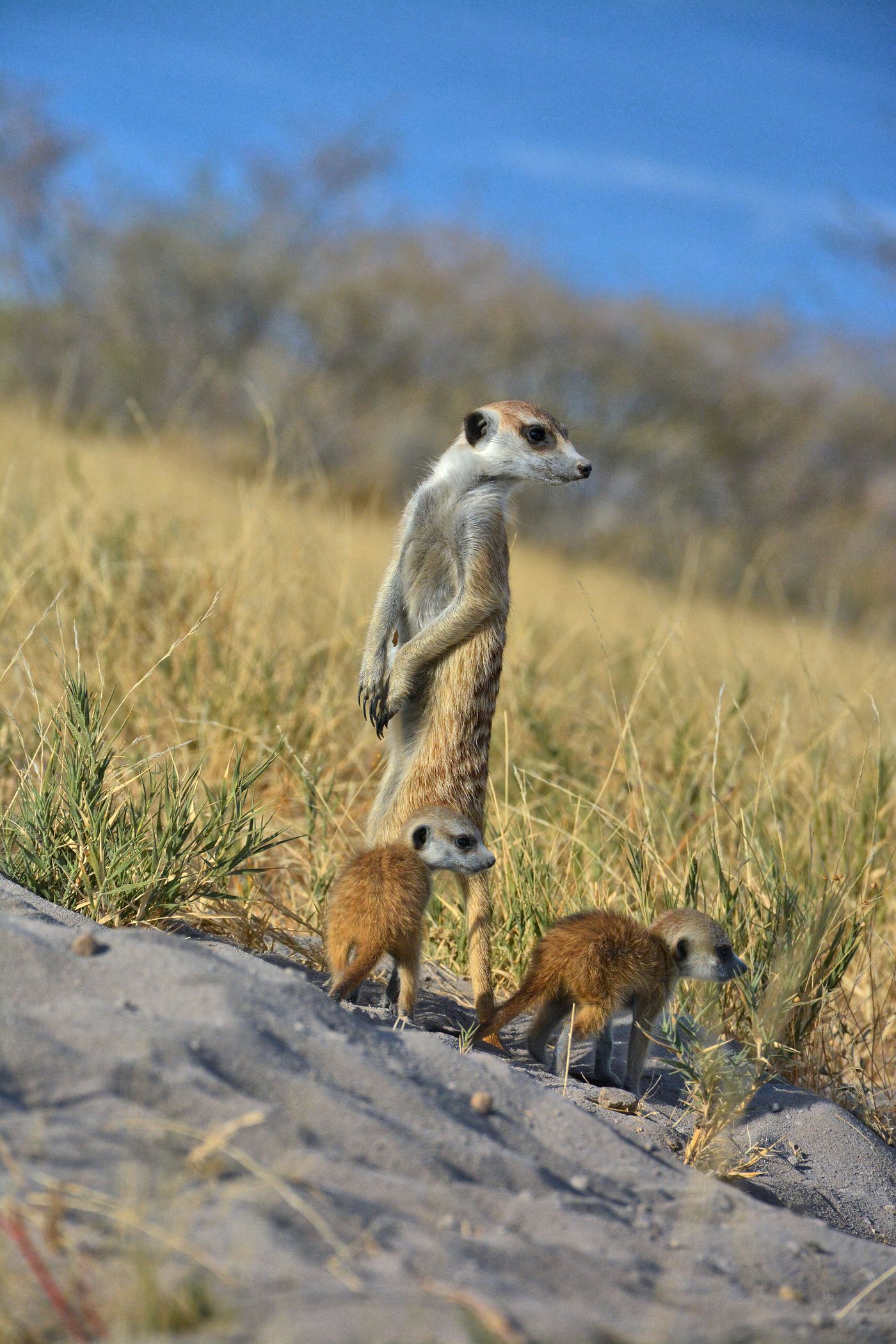
The Motse
Main lodge · Southern Kalahari · 9 legae
Tswalu's main lodge and the natural first stay: nine free-standing legae (Tswana for "little houses") of stone, red earth and glass, each opening onto grassland and the Korannaberg mountains, with two swimming pools and a spa. Two of the nine are family suites. This is where the reserve's signature experiences are anchored — habituated meerkats at first light, the black-maned lion prides, and dawn or dusk tracking for aardvark and pangolin — all from your own private vehicle with a dedicated guide and tracker.
Best for
A first Tswalu stay that wants the full spread — meerkats, black-maned lions and rare nocturnal species — with a private vehicle as standard and family suites on hand.
Tarkuni
Exclusive-use homestead · 5 bedrooms · up to 10 guests
Tarkuni is the Oppenheimer family's own former homestead, now taken on a sole-use basis: five en-suite bedrooms for up to ten guests, a private plunge pool, covered verandahs, a fire pit and a boma overlooking an active waterhole, in its own secluded valley. It comes with its own chef, guide, tracker and vehicles, so a family or friends group effectively has a private slice of the largest private reserve in the country. Booked whole, it is Tswalu's answer to the multi-generational trip where the whole party wants to move as one.
Best for
Multi-generational families and private groups who want the whole house, their own staff and their own pace — the exclusive-use benchmark in the Kalahari.
Loapi Tented Camp
Six private tented "homes" · solar-powered · opened 2023
Loapi (Tswana for "under the clouds") is Tswalu's newest and most private way to stay: six free-standing, solar-powered tented "homes" spread far apart across the reserve, each with its own lounge, private chef, guide, tracker, vehicle and plunge pool. Four are one-bedroom; two have a second bedroom for families. Because each home operates almost as a camp of one, Loapi is the closest Tswalu comes to having the Kalahari entirely to yourself — no communal areas, no fixed mealtimes, no other guests in sight.
Best for
Couples and small families who want maximum seclusion and full control of their day — a private home with its own team, not a lodge with shared spaces.
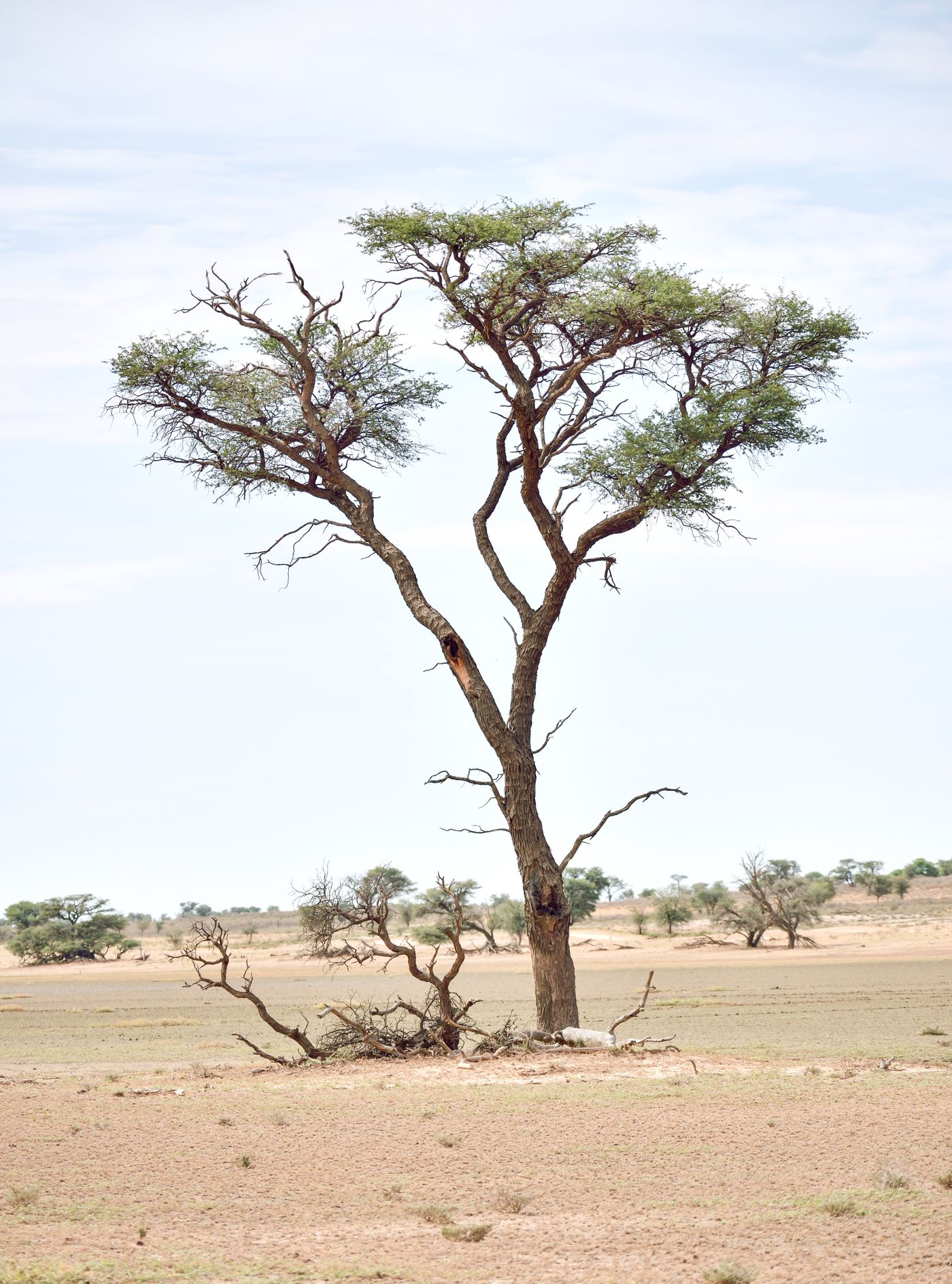
The Kalahari landscape
Southern Kalahari · Northern Cape, South Africa
This is a semi-desert, not a dune sea: rolling red Kalahari sand, golden grass, camelthorn and the Korannaberg range running through the reserve. It is quiet, big-sky country where the interest is in detail and adaptation rather than sheer numbers — and it photographs at its best in the low, warm light of dawn and dusk. The reserve sits in the far Northern Cape, reachable only by air; the reward for that remoteness is a horizon with nothing on it but Tswalu. You can trace its location on Google Maps.
Best for
Travellers drawn to space, silence and desert light over big-herd density — and photographers who want a clean, uncrowded backdrop.
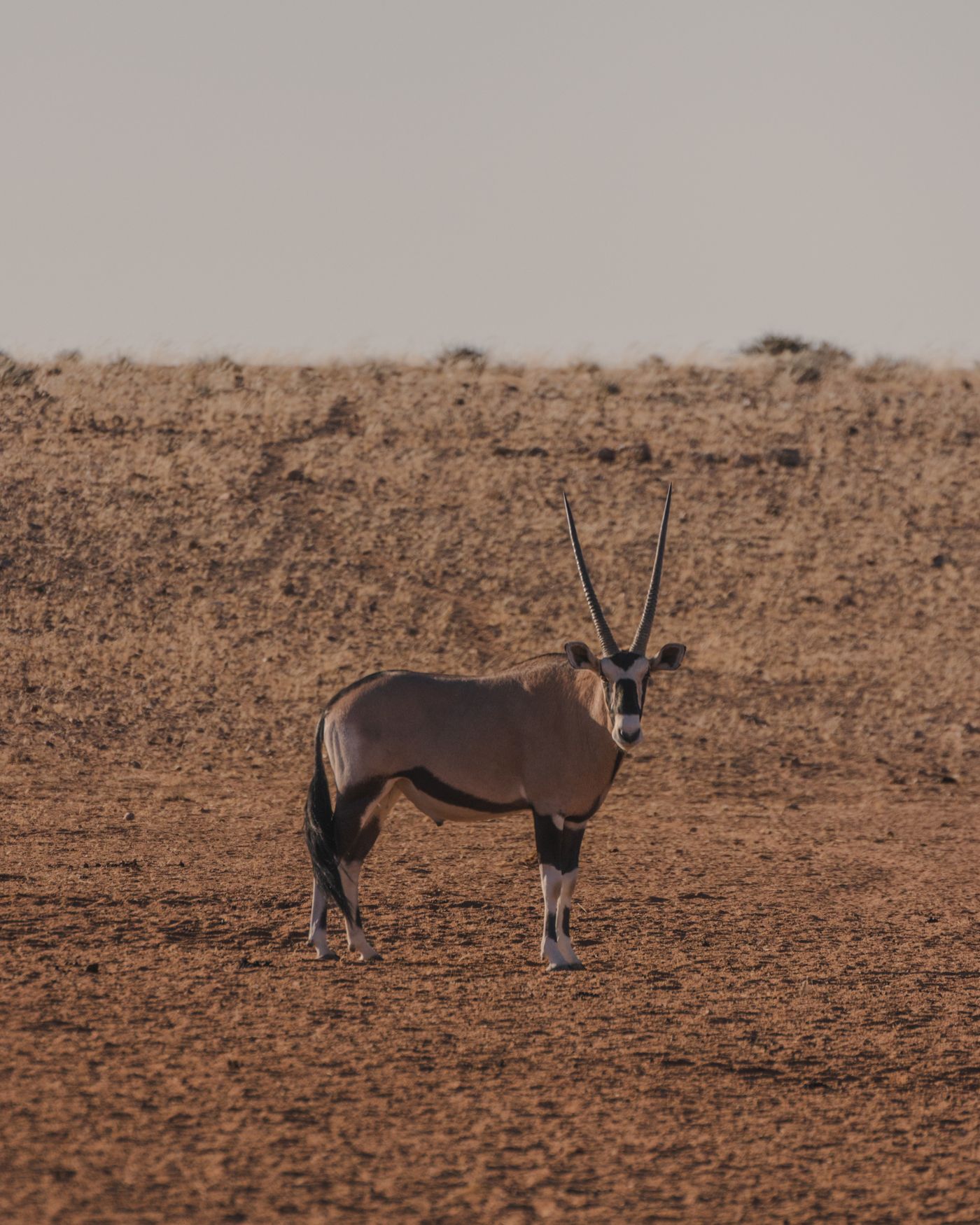
Rare-species tracking
Desert specialists · aardvark · pangolin · black-maned lion
Tswalu's real draw is not the Big Five headline — it is the species you cannot easily see elsewhere. Habituated meerkats, the shy aardvark emerging at dusk, the Temminck's pangolin that has made the reserve a pilgrimage for wildlife photographers, brown hyena, bat-eared fox, gemsbok and the famous black-maned Kalahari lions. With no fixed drive routes, a private vehicle and a tracker who knows the ground, sightings are worked for rather than queued for. It is the antithesis of a tick-list safari, and specialist photographic and tracking trips are a core part of what Tswalu sells.
Best for
Second- and third-time safari-goers and photographers chasing rare desert species — aardvark and pangolin above all — over classic Big Five volume.
Conservation & research
Tswalu Foundation · Dedeben Research Centre
Conservation is the reason Tswalu exists in its current form. The stated mission is to "restore the Kalahari to itself", and the reserve backs it with the Tswalu Foundation, which funds independent science through the on-site Dedeben Research Centre — long-running work on pangolin, aardvark, ecology and climate that guests can engage with directly. Owned by the Oppenheimer family and, since 2024, a certified Global Ecosphere Resort under The Long Run, Tswalu is one of the clearest examples anywhere of tourism revenue directly underwriting research and restoration — the same conservation-as-business thesis that drives Great Plains and Natural Selection.
Best for
Travellers who want their spend to fund genuine research and restoration — and the chance to meet the scientists doing it.
Every Tswalu camp, indicative 2026 rates
Tswalu publishes its rates in South African rand and prices vary by season. The figures below convert the 2026 published rand rates to US dollars at an approximate mid-2026 exchange rate and are rounded — treat every figure as indicative, not a fixed price. Note that The Motse prices per person sharing, while Loapi and Tarkuni price per home or per house.
| Camp | Style | Capacity | 2026 rate | Notes |
|---|---|---|---|---|
| The Motse — Motse Suite | Main lodge, stone & glass legae | 2 guests/suite · 9 legae | ~$2,480 pp/night | Private vehicle, guide & tracker as standard; full board |
| The Motse — Family Suite | Main lodge, two-room legae | 2 adults + 2 children | ~$2,480 pp/night | Two of the nine legae; children of all ages, malaria-free |
| Loapi Tented Camp | Solar-powered private tented home | 2 (one-bed) / up to 4 (two-bed) | ~$2,985 per home/night | Own chef, guide, tracker, vehicle & plunge pool; six homes total |
| Tarkuni | Exclusive-use homestead, sole use | 5 bedrooms · up to 10 | ~$10,170 per night | Whole house; own chef, guide, tracker & vehicles; waterhole boma |
Figures are indicative 2026 rates, converted from Tswalu's published rand pricing (The Motse ~R46,400 per person; Loapi ~R55,800 per home; Tarkuni ~R190,200 for the whole house) at an approximate mid-2026 exchange rate and rounded. Rates are fully inclusive of accommodation, all meals, most drinks, laundry and all activities including a private vehicle, guide and tracker; premium wines, light-aircraft charters to the reserve, and conservation levies may be additional. A minimum stay of two nights applies (four nights recommended). Rand rates are the authoritative figure — always confirm current pricing and the exchange rate at time of booking.
Live Tswalu Kalahari inventory
Tswalu trips, priced right now
Real per-person prices from the current catalogue, updated regularly. Filter and enquire on any itinerary — or scroll on for the three ways to book.
How to actually book Tswalu — three routes, honestly compared
Tswalu sells through specialists and preferred partners, and every stay is a fly-in package rather than a walk-in booking. Three routes work depending on how much planning support and how many quotes you want.
Route 1 · Bespoke planner
Go2Africa
The most comprehensive bespoke route, and the strongest choice if Tswalu is one leg of a wider South African trip — Cape Town, the Winelands or a Sabi Sand Big Five camp bolted on. Go2Africa builds the charters, transfers and multi-lodge routing around it. Best for first-time bookers who want a human designing the whole journey.
Design a Tswalu trip with Go2AfricaRoute 2 · Tailored specialist quote
Safari.com
Best for readers who want a curated Tswalu quote fast. Safari.com deep-links to the reserve, can price The Motse, Loapi and Tarkuni directly, and will pair them with adjacent lodges or a beach finish for a wider circuit.
Request a Tswalu quote via Safari.comRoute 3 · Self-serve comparison
BookAllSafaris
Best for readers still shortlisting — comparing Tswalu against other Kalahari and South African options before requesting a quote. Self-serve, with the broadest comparison field across operators and price points.
Compare Tswalu on BookAllSafarisNot sure Tswalu is the fit? Compare against another operator.
The other luxury safari operators we have reviewed in depth.
Singita
18 lodges, exclusive-use concessions. The benchmark on ultra-premium positioning.
Read the Singita review →andBeyond
29 lodges, pan-African breadth at one design-led standard. Big Five density where Tswalu is desert.
Read the andBeyond review →Wilderness
60+ camps. Deepest Botswana footprint; small, remote, low-footprint camps.
Read the Wilderness review →Great Plains Conservation
Joubert-founded, conservation-first. The closest match to Tswalu's ethos.
Read the Great Plains Conservation review →Natural Selection
Conservation-led Botswana & Namibia; characterful, lower-density desert camps.
Read the Natural Selection review →Asilia Africa
East Africa specialist; strong value-to-luxury ratio in Tanzania and Kenya.
Read the Asilia Africa review →Sanctuary Retreats
A&K-owned. Chief's Camp Okavango plus a Nile cruise fleet.
Read the Sanctuary Retreats review →African Bush Camps
Community-rooted. Deepest Zimbabwe portfolio at luxury tier.
Read the African Bush Camps review →The full operator index
Every luxury safari operator we have reviewed, ranked and compared in one place.
Open the operator index →Straight answers to the questions readers ask
Is Tswalu Kalahari worth it?
For the right traveller, yes — but be clear on what it is. Tswalu is South Africa's largest private game reserve, and its whole proposition is space and rarity rather than Big Five density: a maximum of around 40 guests across more than 110,000 hectares, a private vehicle and guide with every booking, and species — meerkat, aardvark, pangolin, black-maned lion — that are hard to see anywhere else. If you want space, solitude and unusual wildlife over a crowded waterhole, it is one of the most rewarding reserves in Africa. If you want your first classic Big Five safari, a Sabi Sand lodge will suit you better.
Who owns Tswalu, and how big is it?
Tswalu is owned by the Oppenheimer family, who acquired the reserve in the late 1990s after the death of its founder, Stephen Boler, and have run it as a conservation project for more than 25 years. It covers over 110,000 hectares (in excess of 1,100 square kilometres) of the southern Kalahari in the Northern Cape, which makes it the largest private game reserve in South Africa. Some sources cite a slightly higher figure of around 120,000 hectares; either way it is exceptionally large for a private reserve.
What animals will I see at Tswalu — and are there elephant or the Big Five?
Tswalu carries four of the Big Five: lion (including the famous black-maned Kalahari lions), leopard, buffalo and rhino. There are no elephant. Its real signature, though, is desert-adapted and rarely-seen species — habituated meerkats, aardvark, Temminck's pangolin, brown hyena, bat-eared fox, cheetah, wild dog and gemsbok. It is a reserve where the highlight is often a pangolin at dusk rather than a lion kill.
What does a stay at Tswalu include?
Rates are fully inclusive of luxury full-board accommodation, all meals, most drinks, laundry and all activities — and, unusually, a private vehicle with a dedicated guide and tracker for every booking at every camp, at no extra charge. Game drives, guided walks, horseback safaris and stargazing are all standard. Light-aircraft charters to Tswalu's private airstrip, premium wines and conservation levies are generally additional.
How much does Tswalu cost in 2026?
Indicatively, The Motse starts from around US$2,480 per person per night sharing (roughly R46,400), fully inclusive. The private Loapi tented homes price per home from around US$2,985 per night, and the exclusive-use Tarkuni homestead from around US$10,170 per night for the whole house of up to ten guests. Tswalu prices in rand and figures move with the exchange rate, so always confirm at time of booking.
What is the difference between The Motse, Loapi and Tarkuni?
The Motse is the main lodge — nine suites, shared pools and spa, priced per person and the natural first stay. Loapi is six solar-powered private tented "homes" spread across the reserve, each with its own chef, guide, vehicle and pool, for maximum seclusion. Tarkuni is a five-bedroom homestead taken on a sole-use basis by one family or group, with its own staff and vehicles. In short: Motse for a classic lodge stay, Loapi for privacy, Tarkuni for exclusive use.
How do you get to Tswalu, and is it malaria-free?
Tswalu is reached only by air. Scheduled light-aircraft charters run from Johannesburg (about 90 minutes) and Cape Town (about two hours) to the reserve's private airstrip; there is no self-drive access. The reserve is malaria-free, requires no prophylactics, and welcomes children of all ages — which, combined with fly-in convenience, makes it a strong family choice at the top end.
Is Tswalu good for families and for conservation-minded travellers?
On both counts, yes. It is malaria-free with children of all ages welcome, has family suites at The Motse, two family homes at Loapi and the whole-house Tarkuni for larger groups. On conservation, the reserve funds the Tswalu Foundation and the on-site Dedeben Research Centre — long-running science on pangolin, aardvark and Kalahari ecology — and holds Global Ecosphere Resort certification, so a stay directly supports genuine research and restoration.
Read next
Disclosure. Uncompromised Travel earns affiliate commissions on qualifying bookings made through Safari.com, Go2Africa and BookAllSafaris links on this page. Editorial verdicts, the honest case for and against, and the camp breakdowns are not influenced by commission structure. Rates cited are indicative 2026 ranges converted from Tswalu's published rand pricing and were compiled at time of publication; always confirm at time of booking. Tswalu Kalahari is not a paid partner and has no editorial input on this page.