F1 Team Suite Hospitality: Ferrari, Red Bull, McLaren, and Mercedes Compared
Team suite hospitality is the tier above Paddock Club — branded, garage-access, driver-contact experiences from the teams themselves. Here is the full spend ladder, what each rung buys, and where the team-suite premium is genuinely worth it.
Team suite hospitality sits above general Paddock Club in the Formula 1 access hierarchy — positioned within or directly adjacent to the pit building, branded to a specific constructor, and offering access that the official F1 product does not. Garage visits, team briefings, live pit wall data during sessions, and genuine contact with drivers and engineers are not available through standard Paddock Club at any price. They are only available through team suite programmes, and they come at a significant premium: $8,000 to $25,000 per person at most races, higher still at peak events. The question is whether the access justifies the cost over a product that is already one of the most expensive in sport.
Team suite hospitality costs $8,000–$25,000 per person for a three-day weekend ($30,000+ at Monaco and Las Vegas), against roughly $4,000–$7,000 for standard Paddock Club. The premium buys one thing Paddock Club cannot: garage access, engineer briefings, live pit-wall data and closer driver contact for one specific team. Worth it if you care about the mechanics of the sport or have a real team allegiance at its home race; hard to justify if you are mainly there for the environment.
Price a charter to the race →The F1 access ladder: what each spend tier buys
Formula 1 hospitality is not one product but a ladder of four. The useful way to judge the team-suite premium is to see exactly where it sits on the full spectrum — what the rung below already gives you, and what the rung above adds.
A reserved seat with a strong view, often near the start-finish line or a key corner. The foundation of the ladder and the reference point for everything above it.
- Reserved covered seat, good sightlines, big-screen coverage
- No dining, no paddock, no track access
The official F1 premium product, run to a consistent standard by DO & CO. Excellent, and for most guests the ceiling they actually need.
- All-day gourmet dining and open bar above the pit lane
- Pit lane walk and general paddock access
- Driver appearances and F1 legend Q&A sessions
- No specific-team garage access or pit-wall data
Everything in Paddock Club, plus branded access to one specific team — the rung where you stop watching the sport and start standing inside a team’s operation. This is a 50–150% premium over Paddock Club for access, not for a better lunch.
- Everything in Paddock Club, in team-liveried surroundings
- Guided garage access for the specific team
- Engineer / management technical briefings
- Live pit-wall data feeds during sessions
- Higher probability of meaningful driver contact
At Monaco and Las Vegas, and for the most sought-after team positions, pricing pushes past $30,000 and much of the inventory never opens to the public at all.
- Peak-event team suites at Monaco / Las Vegas
- Deepest access, best positions, most exclusivity
- Often invite-only — not commercially bookable in quantity
What team suite hospitality includes that Paddock Club does not
F1 Paddock Club is a consistent, well-executed product. Team suite hospitality is a different product that happens to occupy a similar physical space. The additions are specific and access-dependent rather than simply qualitative upgrades on the dining or suite environment.
What team suites add over standard Paddock Club
- Garage access for the specific team — a guided walk through the working garage during the race weekend, which provides a different level of technical proximity than the general pit lane walk.
- Team briefings — technical and strategic sessions delivered by team engineers or team management, covering race strategy and car setup in more depth than the driver Q&A sessions available in general Paddock Club.
- Live pit wall data feeds during sessions — access to the real-time telemetry and communication data used by the team during practice, qualifying, and the race itself.
- Driver and team personnel access — not guaranteed, and varies significantly by team and race, but team suites typically provide a higher probability of meaningful driver contact than general Paddock Club.
- Branded environment and team memorabilia — the suite itself is fitted in team livery, team merchandise is provided, and the food and beverage service reflects the team’s identity more than the DO & CO standard across general Paddock Club.
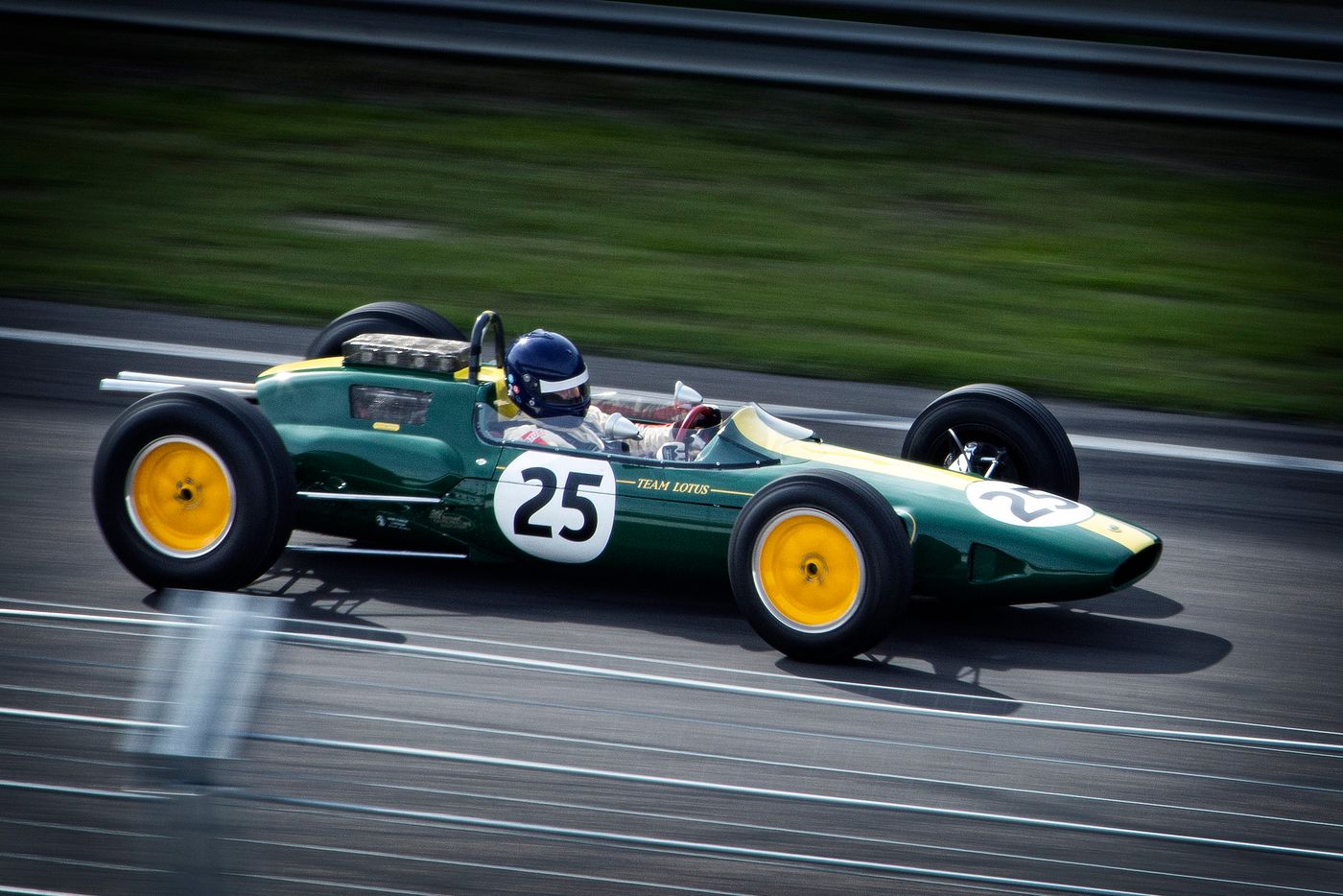
Ferrari, Red Bull, McLaren, and Mercedes: how the experiences differ
Each team’s hospitality programme reflects its culture, current on-track position, and approach to guest relationships. These are not interchangeable products.
Strongest atmosphere at Monza and high-emotion races. Italian food-and-beverage emphasis, Ferraristi culture in the suite, premium price year-round. The most sought-after corporate relationship in the sport.
High-energy atmosphere reflecting the team brand, strong driver accessibility, and entertainment alongside the racing. Particularly strong at the Austrian Grand Prix home race. Waitlist at most events.
Significantly elevated with the team’s title-winning form. Heritage brand with strong emotional resonance, particularly strong at Silverstone. More available than Ferrari or Red Bull, competitively priced.
Consistent standard across the calendar, strong corporate hospitality culture, excellent food and beverage. Atmosphere shifted post-dominant era but the product remains premium. Good availability.
The new and rebranded teams in 2026: Audi, Cadillac, Aston Martin
The 2026 regulation reset reshaped the grid more dramatically than any season in two decades. Audi’s formal entry (a full takeover of the former Sauber team), Cadillac’s debut as F1’s eleventh team, and Aston Martin’s sustained luxury positioning all introduced hospitality propositions that the established four-team analysis does not capture — each with materially better availability than Ferrari, Red Bull, or McLaren.
Debut works-team hospitality 2026 (took over Sauber). Premium automotive-enthusiast positioning, German-speaking market focus, strongest at Austrian, Italian and continental European rounds. Availability still genuinely open.
F1’s eleventh team, debut 2026. American manufacturer identity anchored to GM heritage, strongest demand at Miami, Austin and Las Vegas. Pricing $9,000–18,000 — first-mover advantage for US calendars.
Established luxury positioning, British heritage emphasis, Silverstone home race as the centrepiece. A stronger product than on-track results suggest, with reasonable availability across the calendar.
Williams and other midfield teams run smaller, more accessible suite programmes — the most competitively priced of the tier, with strong availability. Often overlooked, but a legitimate route for first-time team-suite buyers.
At which races does the team suite deliver the most value?
Team suite experiences are not uniform across the calendar. The emotional temperature of the race — the home-race effect, the championship context, the significance of the circuit to a specific team — changes what the suite environment delivers.
Monza is Ferrari’s spiritual home; the Tifosi turn it into a singular atmosphere. A Ferrari suite at Monza in a competitive season is the one team-suite/race combination that justifies the premium unambiguously. Extremely high demand — book early.
The Red Bull Ring is owned by the company and built to showcase the brand. The team’s suite at its own circuit, in an orange sea of supporters, is the natural Red Bull hospitality experience — and one of the most beautiful settings on the calendar.
Silverstone is McLaren’s home race — Woking is thirty minutes away and the British crowd has a specific relationship with the brand. The paddock is among the largest and most accessible on the calendar. A strong season makes it compelling.
Exceptional in setting if not in racing drama. The compressed paddock and unique layout make any team suite at Monaco different from every other venue. Prices are at the top of each team’s range, and some positions are invite-only.

What driver and team contact actually looks like
The single most misrepresented element of team suite hospitality is “driver access.” Every brochure promises it; the reality varies enormously by team, race, and the moment in the championship. Here is what guests actually experience.
The genuine deliverable at most suites: one appearance per weekend by one or both drivers, 15–30 minutes, controlled Q&A with a media handler moderating. Photos and selfies usually permitted; personal conversation not. Expect this from your booking.
The genuine upgrade over Paddock Club: engineers, the technical principal, occasionally the team principal, in informal settings around sessions. Unguarded and substantive in a way driver appearances rarely are — and more valuable than the photo op if you care about the sport.
Despite what brochures imply, dinner with the driver or extended private conversation is not delivered through standard packages even at the top of pricing. These exist through invite-only relationships, charity auctions or corporate-partner programmes — not commercial bookings.
On race weekend the drivers are doing their job. A suite appearance is fitted around media, debriefs and physical prep. Polite, brief and professional is the realistic ceiling on Sunday; Friday and Saturday are slightly more relaxed. Manage expectations accordingly.
Is the premium over standard Paddock Club justified?
The honest answer depends on what the guest is there for. Team suite hospitality adds specific things over Paddock Club. It does not simply deliver a better version of the same experience.
For guests engaged with F1 at the level of strategy, engineering and driver psychology, the garage walk, briefing and pit-wall data are genuinely unavailable any other way. Categorically different experiences, not marginal upgrades. If that is what you are paying for, the premium is justified at most combinations.
Ferrari at Monza, Red Bull at the Red Bull Ring, McLaren at Silverstone — team affiliation plus home circuit plus elevated atmosphere is a different calculation from a neutral suite at a neutral venue. The experience compounds in a way generic Paddock Club does not.
For corporate groups attending mainly for the occasion, the incremental access — garage walks, briefings, pit-wall data — is unlikely to be valued proportionately to its cost. General Paddock Club delivers the environment and spectacle without the 50–150% premium.
The team suite is most powerful when you care about the specific team. The Ferrari garage at Monza as a committed Tifosi is a fundamentally different experience from the same garage as a neutral spectator. Without the tribal connection, the branded environment is a detail rather than the point.
Private aviation to the F1 calendar
Team suite commitments and private-aviation availability tighten on the same lead time at peak events. TimeFlys covers the routes that matter — Nice, Farnborough, Zurich, Singapore, Abu Dhabi and the American events — with same-day quote comparison across major operators.
Request a charter quote →Planning the rest of the weekend
A team suite is the centrepiece, not the whole trip. The supporting layer — how you arrive, move on race day, and stay connected — decides whether the weekend feels considered or chaotic.
F1 traffic is brutal — the 30-minute Nice–Monaco drive takes 90–180 on Sunday. Pre-book both arrival and race-day transport through GetTransfer; helicopter transfers are an option at Monaco, Silverstone and Singapore.
Suite access codes, pickup confirmations and shifting three-day schedules make a working connection matter more than usual. Airalo covers France, Italy, the UK, Austria, Singapore, the US and UAE at $4–15 per plan.
Team suites are non-refundable inside 60 days — a $15,000–30,000 exposure if illness or work intervenes. SafetyWing covers medical and trip cancellation month-to-month from around $62 per 4 weeks; activate the month before.
For European rounds the aircraft into the local airport sells out on the same timeline as the suite. Price a TimeFlys charter when you secure the suite, not after — then accommodation, then ground.
Frequently asked questions
F1 team suite hospitality is branded hospitality provided by individual teams — Ferrari, Red Bull, McLaren, Mercedes, and others — positioned within or adjacent to Paddock Club on the pit building. It includes everything in Paddock Club (all-day dining, pit lane walks, paddock access) plus garage access for the specific team, team briefings, live pit wall data feeds during sessions, and the opportunity to meet drivers, engineers, and team management. Team suites cost significantly more than general Paddock Club and are invite-only at some races.
F1 team suite hospitality costs between $8,000 and $25,000 or more per person for a three-day race weekend, depending on the team, race, and specific package configuration. Ferrari and Red Bull command the highest premiums, particularly at Italian, Austrian, and British Grand Prix events where their fan bases are largest and demand is highest. Some team suite packages at Monaco and Las Vegas have been listed above $30,000 per person.
Team suite hospitality is commercially available at most races through authorised hospitality operators, but the process is different from booking standard Paddock Club. Teams manage their suite capacity carefully and prioritise existing relationships and corporate partners. At high-demand races — Monaco, Silverstone, Monza for Ferrari — many suite positions are reserved for established guests before public availability opens. Booking through a specialist F1 hospitality operator with team relationships is the most reliable route for first-time buyers.
Ferrari’s Paddock Club suite is consistently rated among the strongest for atmosphere and brand experience, particularly at Monza and other high-emotion races. Red Bull Racing’s suite is known for its energy and driver accessibility, reflecting the team’s culture. McLaren’s hospitality has significantly improved with the team’s on-track resurgence and is particularly strong at Silverstone. Mercedes remains a premium product with consistent quality, though the atmosphere has shifted since the team’s dominant era ended. The right choice depends on which team you have an affinity for — the experience is deeply linked to the team’s culture and current season narrative.
F1 team suite hospitality is worth the premium over standard Paddock Club when garage access and genuine team proximity are the goal. Walking through the garage of a specific team during a live race weekend, receiving a technical briefing from engineers, and meeting drivers in the paddock context are experiences that standard Paddock Club does not offer. For guests whose interest is in the mechanics and strategy of Formula 1 rather than the spectacle, team suite access justifies the additional cost. For guests primarily drawn by the hospitality environment and circuit atmosphere, the incremental access may not justify a 50–150% price premium.
The 2026 regulation reset brought significant changes to the F1 grid. Audi (which took over Sauber to enter as a full works team) launched its hospitality programme in 2026 with a premium positioning aimed at automotive enthusiasts and the German-speaking market — particularly strong at the Austrian and continental European rounds. Cadillac’s debut team, F1’s eleventh entry, launched a hospitality offering anchored to its American manufacturer identity, with strongest demand at Miami, Austin, and Las Vegas. Aston Martin continues its established luxury-positioned suite, with the Silverstone home race as the centrepiece of the calendar. Pricing across all three sits within the established team suite band of $8,000-25,000 per person, though debut-season availability is currently better than at the established top teams.
We may earn a commission if you book through partner links on this page, at no additional cost to you. See our disclosure. Individual F1 teams and hospitality operators are named editorially and are not affiliate partners; TimeFlys, GetTransfer, Airalo and SafetyWing are approved partners.
F1 team suite and Paddock Club prices are indicative based on published rates as of mid-2026 and vary by team, race and package. 2026 grid and calendar details — 11 teams including Audi (from Sauber) and Cadillac’s debut, and race dates for Monaco (5–7 June), Austria (26–28 June), Silverstone (3–5 July) and Monza (4–6 September) — verified against official Formula 1 and circuit-operator sources as of 11 July 2026. Always confirm current pricing and availability directly with operators.