Ski Resort Scorecards 2026: 10 Resorts Scored on Snow, Season, Access and Price Transparency, Plus What a Six-Day Lift Pass Really Costs
By Richard J. · written from Valencia10 resorts scored /100Verified 21 September 2026
The highest-scoring ski resort for 2026 is Zermatt, at 65/100 — a published season of 1 November to 2 May, a 3,899 m top lift with year-round glacier skiing, and a dated six-day adult pass at CHF 384 — followed by Val d'Isère (53), Courchevel (52), Verbier (47) and Aspen Snowmass (40). Ten resorts are scored against five published criteria, every figure carrying its source and the date it was read. Below the main table the same dataset is re-cut by lift-pass cost, airport transfer, season length and country.
Verified 21 September 2026 · lift company and tourism board price pages · skiresort.info for altitude and lift counts · 2026/27 season pricing where published
Ski resorts scored on snow, season, access and price transparency
How the score works (100 points). Terrain scale 20 — Kilometres of marked piste and lift count, normalised across the ten. · Snow reliability 25 — Summit altitude, recorded annual snowfall and glacier skiing. · Access 20 — Driving time from the nearest airport. Shorter scores higher. · Season length 20 — Days between published season open and close. · Price transparency 15 — Publishes a dated six-day adult lift pass (10) and a peak-week five-star nightly rate (5). Scores are ours; the inputs are linked. Where a figure is not published, the criterion scores zero and the table says so.
#
Resort
Score /100
Country
Terrain
6-day pass
Transfer
Best for
1
Zermatt
65
Switzerland
360 km piste
CHF 384
90 min
The longest season and the highest lift-served skiing
2
Val d'Isère
53
France
300 km piste
EUR 468
115 min
Snow depth when the rest of the Alps is thin
3
Courchevel
52
France
600 km piste
EUR 421
105 min
The largest linked terrain in the world
4
Verbier
47
Switzerland
410 km piste
CHF 409
70 min
Short transfer, serious off-piste
5
Aspen Snowmass
40
United States
23.1 km² area
not published
10 min
Landing and skiing the same morning
6
Kitzbühel
36
Austria
188 km piste
EUR 213
70 min
Half the lift-pass cost of the French Alps
7
St Moritz
25
Switzerland
155 km piste
CHF 376
165 min
Michelin density, if you accept the transfer
8
Niseko
24
Japan
not published
JPY 74,500
150 min
Snowfall no Alpine resort comes close to
9
Whistler Blackcomb
23
Canada
32.4 km² area
not published
120 min
The deepest published snowfall in North America
10
Cortina d'Ampezzo
18
Italy
120 km piste
not published
135 min
Dolomite scenery on a shared network pass
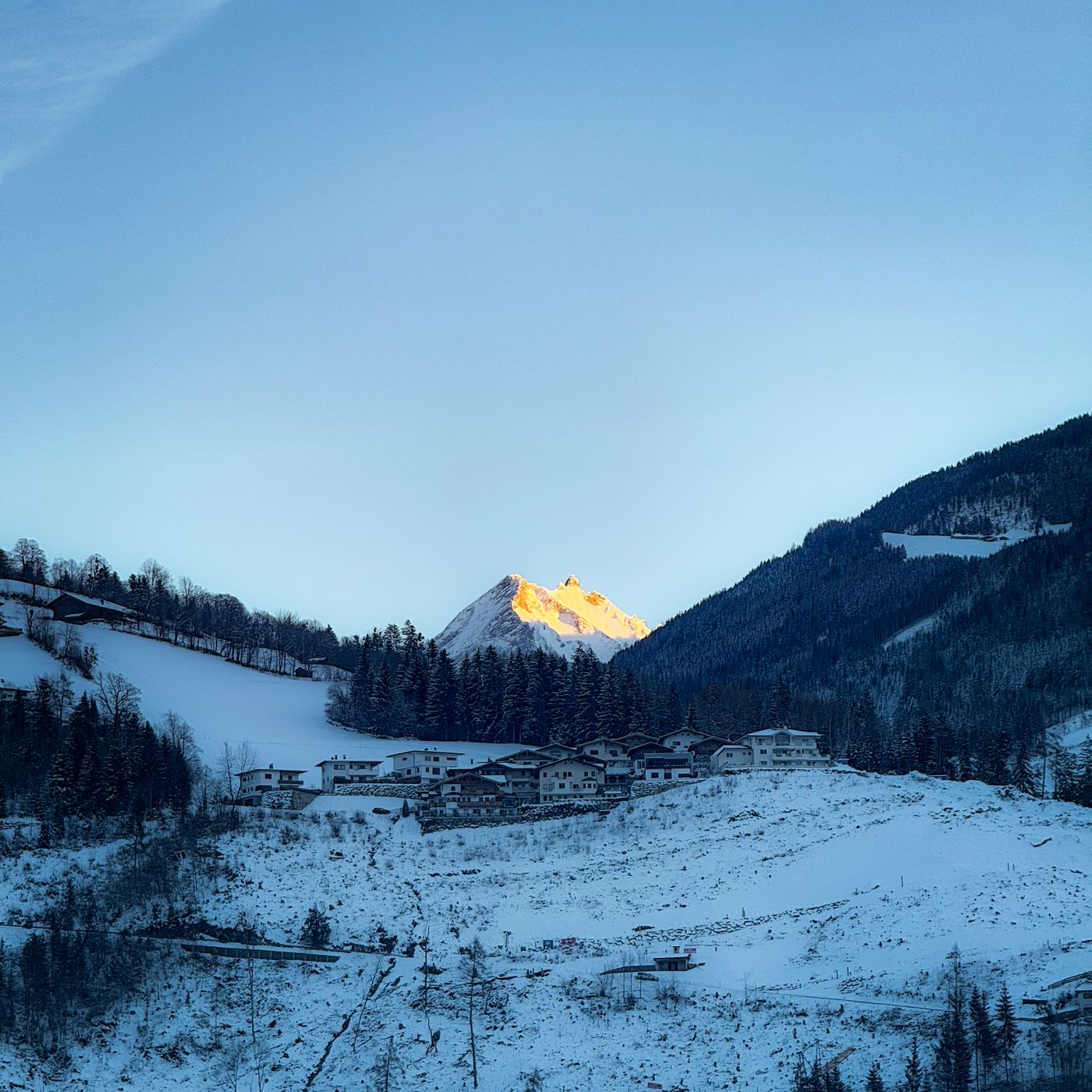
Winter in Tyrol, Austria — the country with the cheapest lift pass in this index. Photo: Moiz Afzal / Pexels
Score breakdown by criterion
Resort
Terrain /20
Snow /25
Access /20
Season /20
Transparency /15
Total
Zermatt
7
18
10
20
10
65
Val d'Isère
9
18
6
10
10
53
Courchevel
20
11
8
3
10
52
Verbier
9
16
12
0
10
47
Aspen Snowmass
2
18
20
0
0
40
Kitzbühel
4
7
12
3
10
36
St Moritz
1
14
0
0
10
25
Niseko
0
12
2
0
10
24
Whistler Blackcomb
1
16
6
0
0
23
Cortina d'Ampezzo
0
14
4
0
0
18
Three things fall out of the table. The first is that the biggest resort does not win: Courchevel takes a perfect 20 of 20 on terrain with 600 km of piste and loses the index on a 135-day season and no glacier, while Zermatt wins on 360 km and forty-seven more days of it. The second is that access is the most punishing criterion in the set, and it separates resorts that are otherwise close — Aspen Snowmass takes the full 20 with an airport 4.8 km from the lifts, while St Moritz, which has eight five-star hotels and six Michelin stars, scores zero on a 165-minute transfer from Zurich. The third is the transparency column. Seven of the ten publish a dated six-day pass. Three do not, and two of those three are the North American resorts.
Not one of these ten resorts publishes a peak-week nightly rate at a named five-star hotel. We tried roughly two dozen properties and booking channels across all ten — Zermatt's Seiler hotels, Cheval Blanc and Six Senses in Courchevel, Badrutt's Palace and the Kulm in St Moritz, W Verbier, The Little Nell in Aspen, the Four Seasons and Fairmont in Whistler, Park Hyatt in Niseko, Cristallo in Cortina. In every case the rate sits behind a booking widget that returns no published price, and where a static "from" figure did appear it was tied to an off-peak search window. For a luxury ski week it is the most directly useful number there is, and the industry does not publish it.
What a six-day lift pass actually costs in 2026/27
Among the seven resorts publishing a dated six-day adult pass, the range runs from EUR 213 at Kitzbühel to EUR 468 at Val d'Isère — a spread of more than double for the same product. The test applied here is simply whether a price is published, dated and attached to a named season, because a price you cannot find before you travel is not a price.
Two cautions. The Swiss and French figures are 2026/27 season prices published by the lift companies; St Moritz's CHF 376 is a 2025/26 figure, because no 2026/27 price was published when we checked, and it should not be compared with the others as though it were current. And the North American comparison is worse than the table can show: Aspen's published figures are USD 279 for one day and USD 1,953 for seven, against Zermatt's CHF 384 for six. Per skiing day that is roughly four times the Alpine rate. Which card you pay with matters more on a North American ski week than a European one.
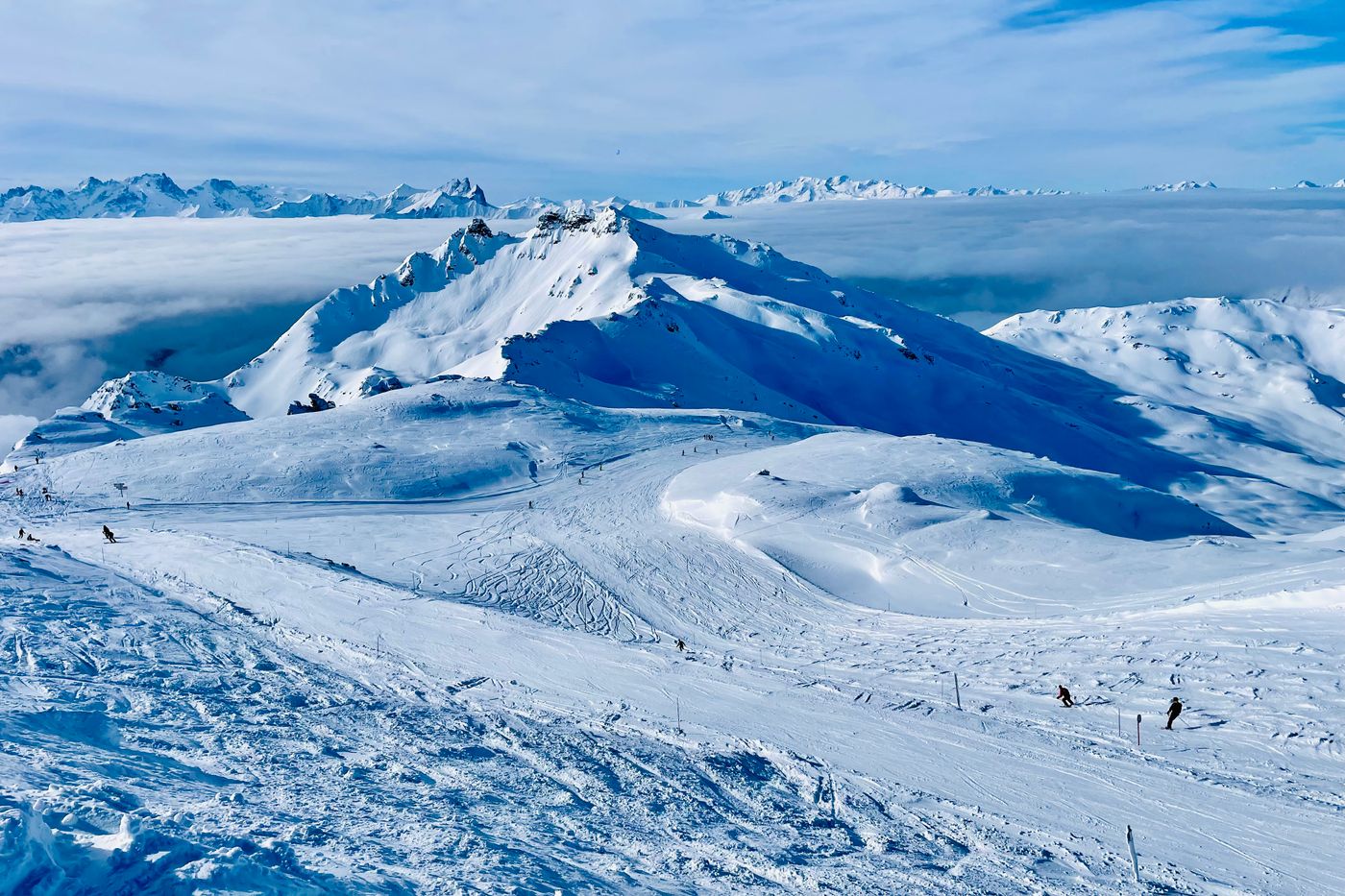
Skiers on a sunlit piste at Courchevel with peaks behind — 600 km of piste, the largest linked area in the world, and the shortest published season of the leading four. Photo: Ogy Kovachev / Pexels
Which ski resorts are closest to an airport
Aspen Snowmass is ten minutes and 4.8 km from its airport; St Moritz is 165 minutes and 229 km from Zurich. That is the widest access gap in the index and it moves scores by a full twenty points. The test is published driving time from the nearest airport with scheduled service, because transfer is the part of a ski week that people consistently under-budget.
#
Resort
Nearest airport
Transfer
Distance
Access score
1
Aspen Snowmass
Aspen/Pitkin County Airport (ASE)
10 min
4.8 km
20 of 20
2
Verbier
Sion Airport (SIR)
70 min
61 km
12 of 20
3
Kitzbühel
Salzburg Airport (SZG)
70 min
74 km
12 of 20
4
Zermatt
Sion Airport (SIR)
90 min
75 km
10 of 20
5
Courchevel
Chambéry-Savoie Airport (CMF)
105 min
110 km
8 of 20
6
Val d'Isère
Chambéry-Savoie Airport (CMF)
115 min
144 km
6 of 20
7
Whistler Blackcomb
Vancouver International Airport (YVR)
120 min
137 km
6 of 20
8
Cortina d'Ampezzo
Venice Marco Polo Airport (VCE)
135 min
148 km
4 of 20
9
Niseko
New Chitose Airport (CTS)
150 min
not published
2 of 20
10
St Moritz
Zurich Airport (ZRH)
165 min
229 km
0 of 20
The caution worth naming is that nearest is not always most useful. Zermatt's nearest airport is Sion at 90 minutes, but Sion has very limited scheduled service, so most travellers arrive via Geneva or Zurich and take considerably longer — the score reflects the published nearest-airport figure and the note in the record says so. Verbier at 70 minutes from Sion has the same caveat. Secondary airports that save hours covers the practical routing.
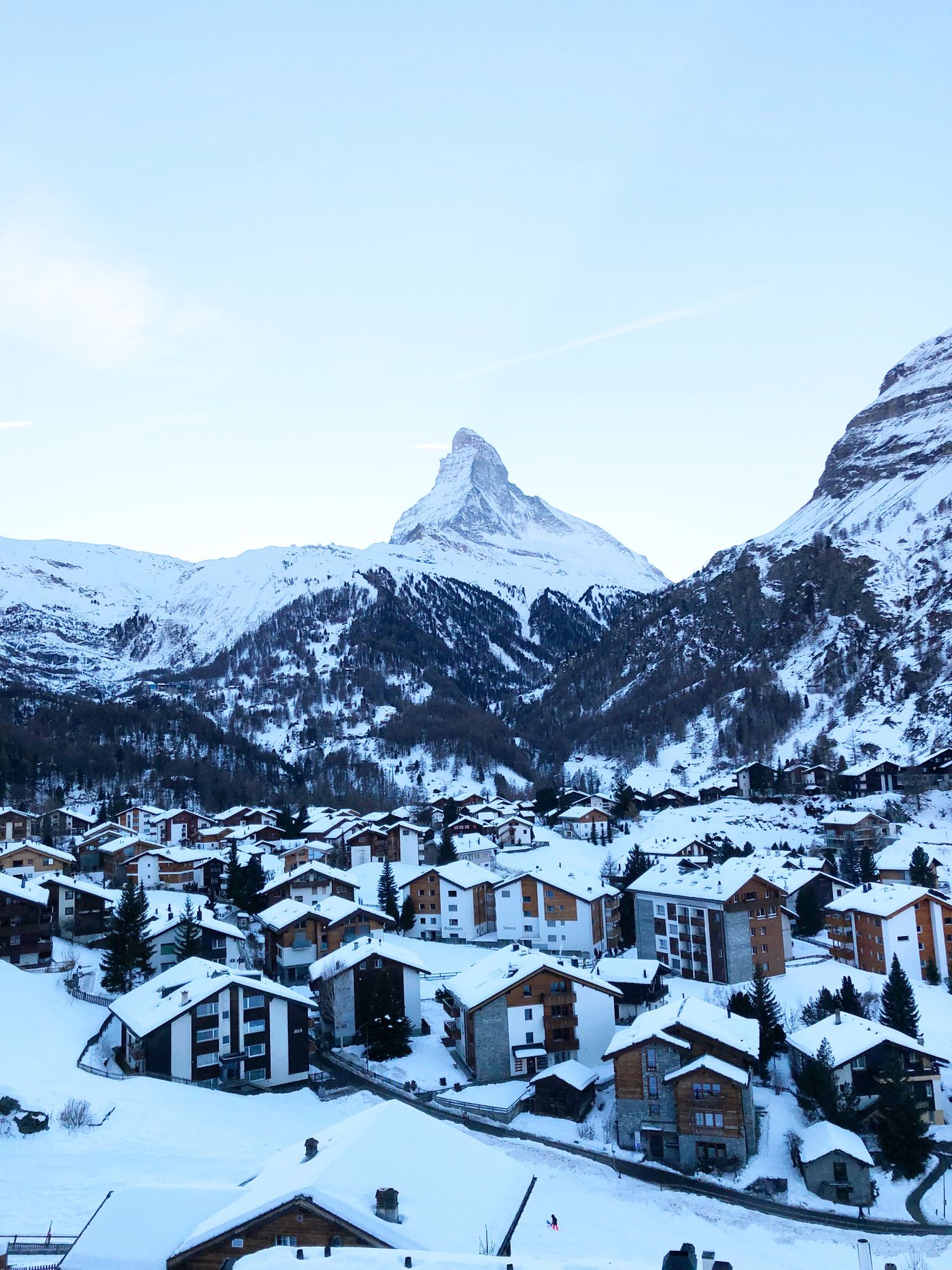
Aerial view of Zermatt village in winter with the Matterhorn behind — the longest published season in this index at 182 days. Photo: Leona Augusto / Pexels
Best ski holiday destinations 2026: which seasons run longest
Of the five resorts publishing both an opening and a closing date, Zermatt runs longest at 182 days, then Val d'Isère at 155, Courchevel at 135, Kitzbühel at 134 and Verbier at 127. The test is a published season window, not an operated one — several resorts here certainly run longer than they advertise, and we score what can be verified.
#
Resort
Opens
Closes
Days
Glacier
1
Zermatt
2026-11-01
2027-05-02
182
yes
2
Val d'Isère
2026-11-28
2027-05-02
155
yes
3
Courchevel
2026-12-04
2027-04-18
135
no
4
Kitzbühel
2026-12-05
2027-04-18
134
no
5
Verbier
2026-12-12
2027-04-18
127
yes
Five of the ten publish no season dates we could verify: Aspen Snowmass, St Moritz, Niseko, Whistler Blackcomb and Cortina d'Ampezzo. Each scores zero on this criterion as a result, and in every case that is a gap in what is published rather than a short season. It is also the cheapest gap on this page to close. Glacier skiing is the other half of the picture: Zermatt, Val d'Isère, Verbier, St Moritz and Whistler have it, which is what holds their snow scores up when snowfall alone would not. See when to visit Europe month by month for the wider calendar.
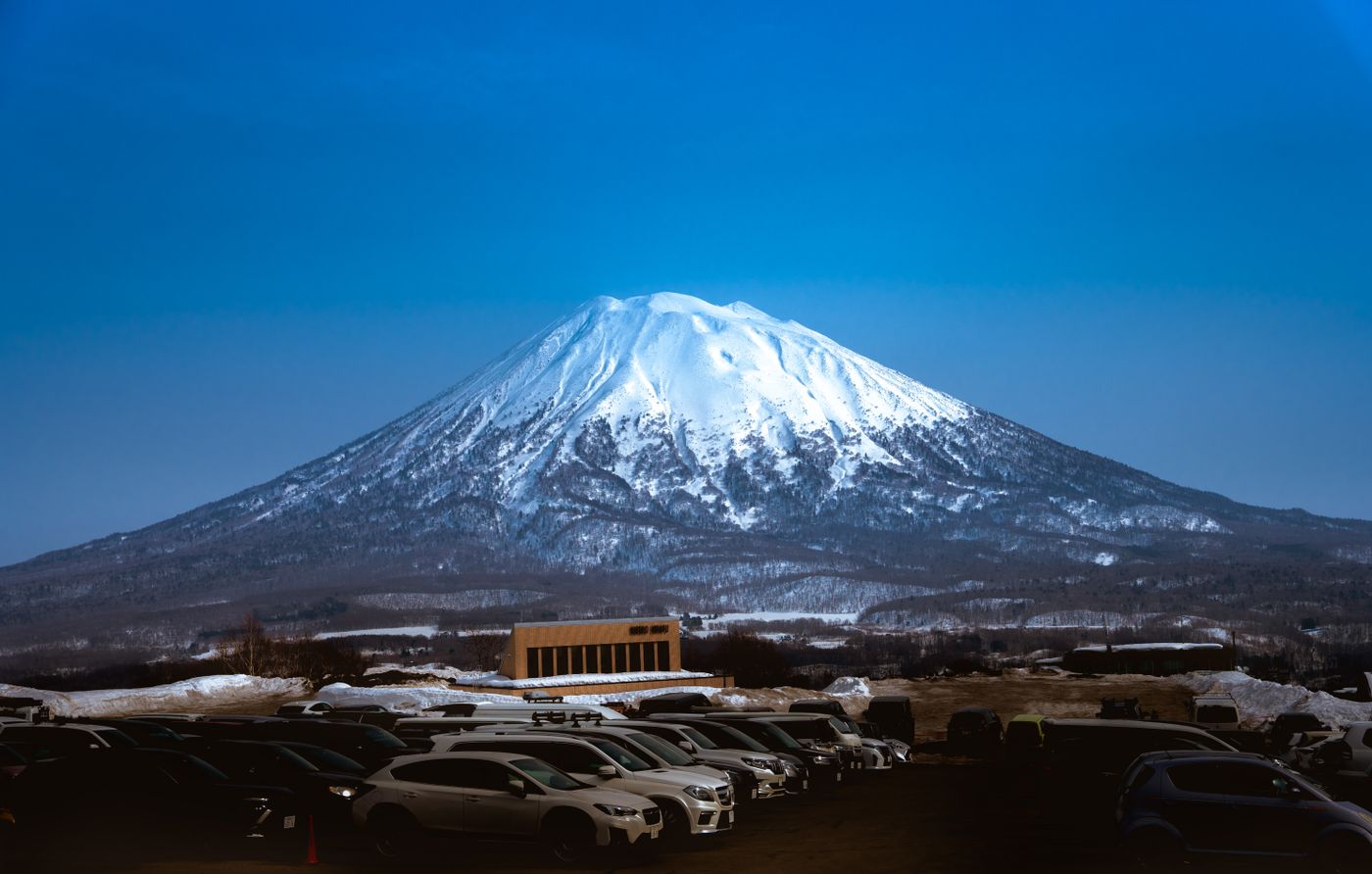
Snow-capped Mount Yotei above Niseko, Hokkaido, under a clear blue sky — 1,243 cm of average annual snowfall, the deepest record in this index. Photo: Morten H. Hansen / Pexels
Best countries for skiing, by what each one publishes
Switzerland takes the highest single score and the widest internal spread, France the largest terrain and the highest prices, Austria the cheapest pass in the index, and the two North American resorts the best snowfall and the worst price transparency. The test here is what each country's resorts actually publish, because that is what a traveller can check before booking.
Country
Resorts scored
Best score
Publishes a dated pass
What the data says
Switzerland
3
65/100
3 of 3
Highest single score in the index and the widest internal spread, 65 down to 25, almost entirely on transfer time
France
2
53/100
2 of 2
The largest terrain and the most expensive passes; both publish 2026/27 prices
Austria
1
36/100
1 of 1
The cheapest lift pass in the index at EUR 213 for six days, under half the French figure
United States
1
40/100
0 of 1
By far the best airport access anywhere here, and no published multi-day pass
Canada
1
23/100
0 of 1
The deepest published snowfall in North America at 787 cm, and no published multi-day pass
Japan
1
24/100
1 of 1
1,243 cm of snowfall, the most in the index, on the thinnest published record
Italy
1
18/100
0 of 1
Scores lowest, and every missing figure is a site we could not reach rather than a judgement
The pattern is regional and it is consistent. Every European resort in this index publishes a dated multi-day pass; neither North American resort does. Japan publishes a dated pass and almost nothing else. If you are choosing between continents rather than between resorts, that difference in what you can verify before you pay is worth more than a few points of score. Our mountain destinations index takes the same ground by scenery rather than by data.
The eight highest-scoring resorts in detail
1. Zermatt — 65/100
Aerial view of Zermatt village in winter with the Matterhorn behind — Photo: Leona Augusto / Pexels
360 km of piste · 3,899 m top lift · season 1 Nov to 2 May
Zermatt takes the index on season length and altitude rather than on size. It is the only resort here to score a
full 20 of 20 on season, on a published window of 1 November to 2 May — 182 days, forty-seven more than Courchevel — and
18 of 25 on snow reliability from a 3,899 m top station, year-round glacier skiing and 412 cm of average annual snowfall.
It loses ground on terrain, 7 of 20, because 360 km of piste and 52 lifts are simply smaller than the Trois Vallées, and on
access, 10 of 20, because the nearest airport is Sion at 90 minutes. Zermatt Tourismus
and Zermatt Bergbahnen publish a 2026/27 six-day adult pass at CHF 384,
which is the cheapest of the three Swiss resorts here. Four Michelin-starred restaurants sit in the village. The linked
Italian sector at Breuil-Cervinia is included in the higher pass tier.
2. Val d'Isère — 53/100
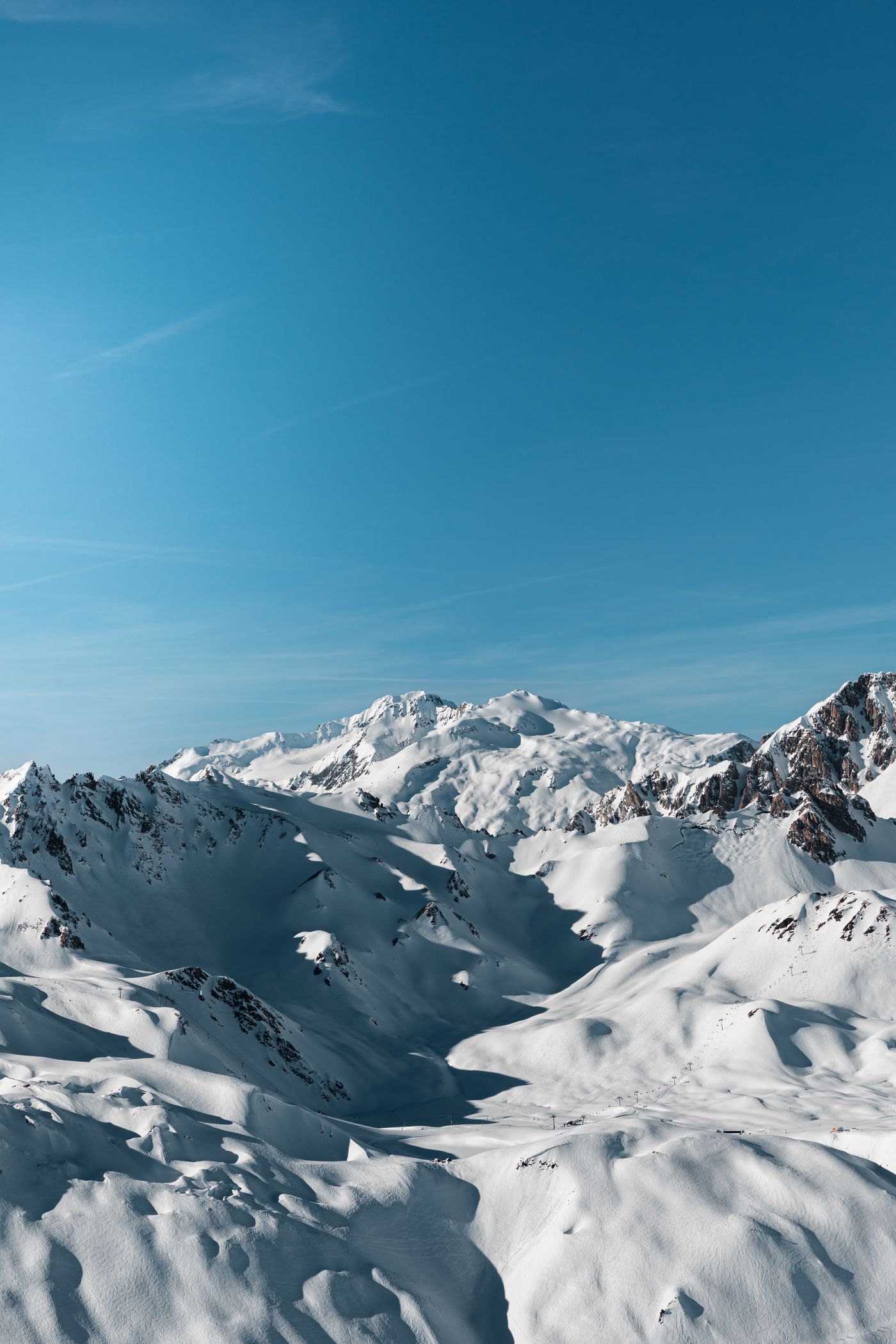
Snow-covered mountains under a clear blue sky at Val-d'Isère, France, in winter (photo taken 27 January 2024). — Photo: Ryan Klaus / Pexels
300 km of piste · 571 cm average snowfall · 5 five-star hotels
Val d'Isère has the best snow record of any Alpine resort in this index: 571 cm of average annual snowfall, a third
more than Courchevel's 418 cm and well ahead of Zermatt, which is the reason it scores 18 of 25 on reliability despite a
lower top station at 3,456 m. It shares the Espace Killy area with Tignes and publishes a 2026/27 six-day pass at EUR 468 —
the most expensive in this index, and more than double Kitzbühel's. Access is its weak mark at 6 of 20: Chambéry is 115
minutes and 144 km away. The season runs 28 November to 2 May, 155 days, second only to Zermatt.
Val d'Isère Tourisme lists five five-star hotels and one Michelin-starred
restaurant. Glacier skiing on the Pissaillas keeps the top of the season honest.
3. Courchevel — 52/100
Skiers on a sunlit piste at Courchevel with peaks behind — Photo: Ogy Kovachev / Pexels
600 km of piste · 159 lifts · 24 five-star hotels · 7 Michelin stars
Courchevel is the only resort in this index to take a full 20 of 20 on terrain, and it is not close: 600 km of
piste and 159 lifts as part of Les Trois Vallées, the largest linked ski area
in the world. It also carries the densest luxury stock here — 24 five-star hotels and seven Michelin stars, more than
Zermatt and St Moritz combined. What costs it the top position is time: a published season of 4 December to 18 April is
135 days, the shortest of any resort with a published window, worth 3 of 20, and with no glacier and a 3,230 m top station
snow reliability is 11 of 25, the weakest of the four leading Alpine resorts. The 2026/27 six-day Trois Vallées pass is
EUR 421. Chambéry is 105 minutes away. For where to stay, see our
European mountain chalets guide.
4. Verbier — 47/100
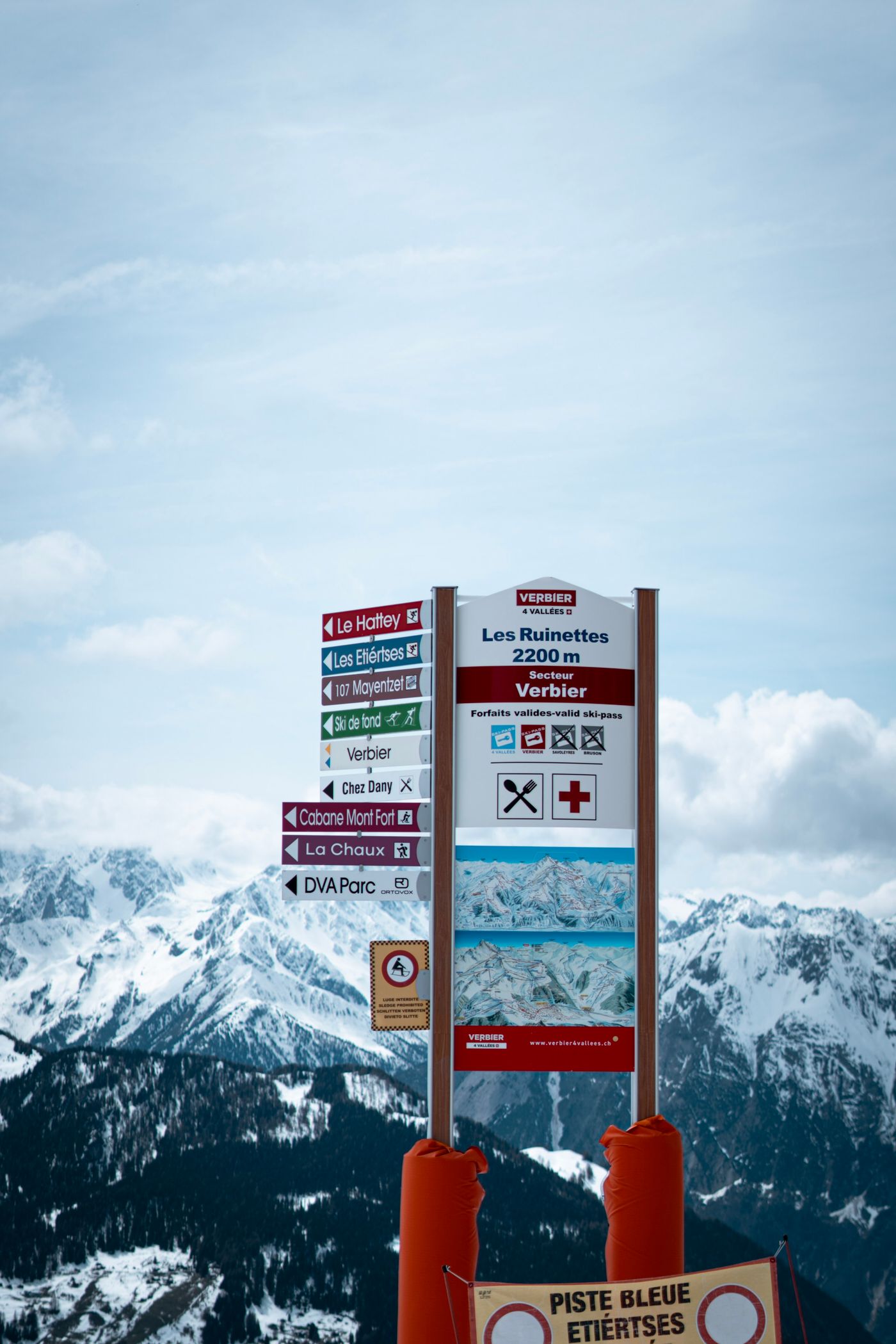
Winter view at Les Ruinettes, part of the Verbier ski area in Switzerland, with snow-covered mountains and ski signage. — Photo: Igor Vieira / Pexels
410 km of piste · 95 per cent snowmaking · 70-minute transfer
Verbier has the shortest transfer of any European resort in this index — 70 minutes and 61 km from Sion — which is
worth 12 of 20 on access and is the practical reason many people choose it over Val d'Isère. It also has the highest
snowmaking coverage recorded here at 95 per cent, and a 3,330 m top station with glacier skiing, for 16 of 25 on
reliability. The published season of 12 December to 18 April is only 127 days, the shortest in the index, and scores zero
on that criterion — a hard mark that the resort could move simply by publishing an earlier opening it already operates.
Verbier / Val de Bagnes Tourisme and
Téléverbier publish a 2026/27 six-day 4 Vallées pass at CHF 409. Three five-star
hotels and one Michelin star. The off-piste is the reason to come; see
our heli-ski operator index for the next step beyond it.
5. Aspen Snowmass — 40/100
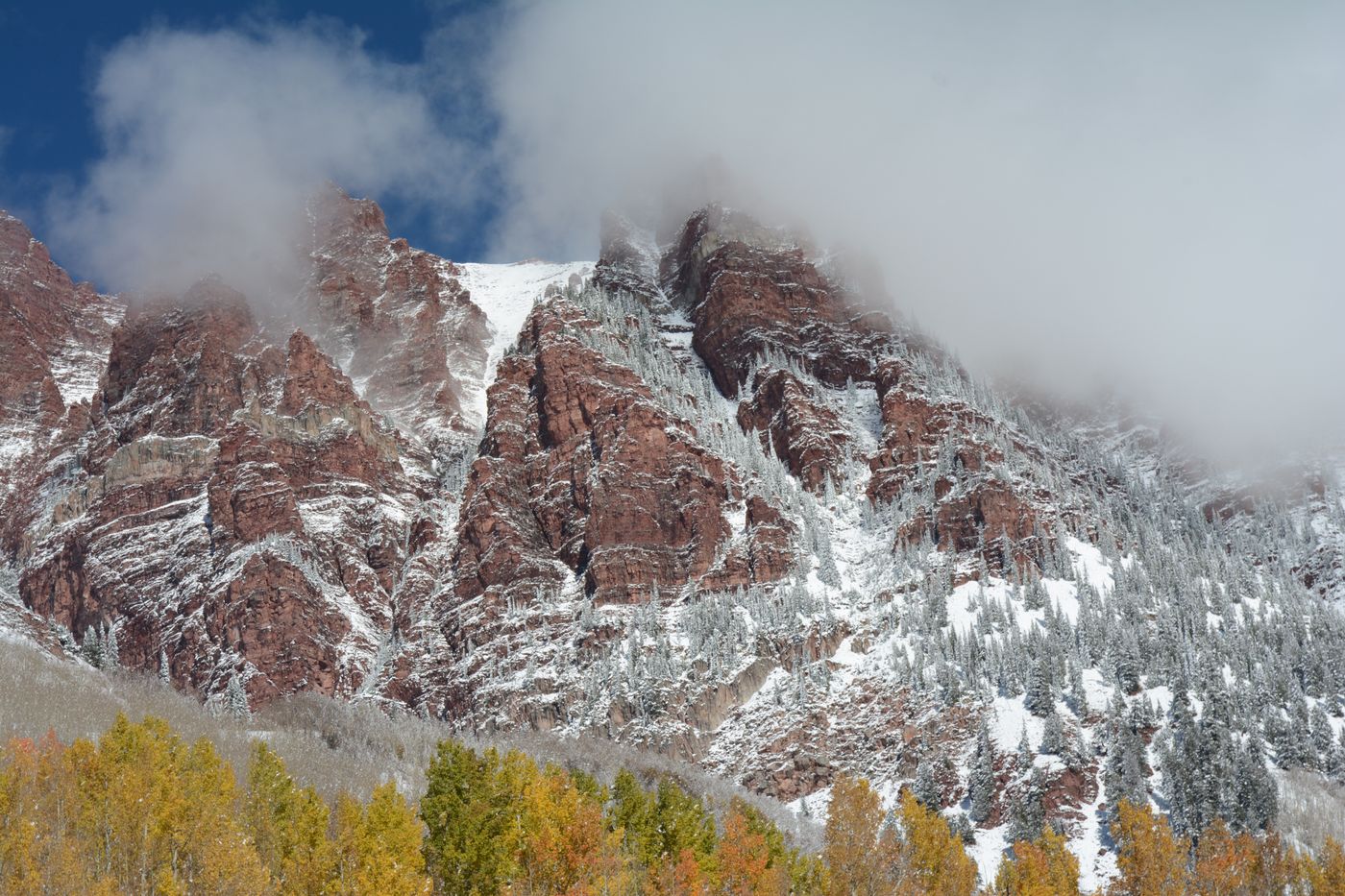
Snow-dusted Rocky Mountains with autumn foliage near Aspen, Colorado. — Photo: Jeff Wiles / Pexels
757 cm average snowfall · airport 4.8 km from the lifts · 10-minute transfer
Aspen Snowmass has the best airport access of any resort in the world that we have scored, and it is the single most
striking number on this page: Aspen/Pitkin County Airport is 4.8 km and ten
minutes from the lifts, against 229 km and 165 minutes for St Moritz. That is a full 20 of 20, the only resort here to take
the criterion outright. Snowfall of 757 cm gives 18 of 25. Where it falls away is transparency: neither
Aspen Skiing Company nor its shop publishes a six-day adult pass we could
verify — the shop blocks automated access — so it scores 0 of 15, and the only figures we could confirm are a 1-day ticket
at USD 279 and a 7-day at USD 1,953 for 2025/26. At roughly USD 279 per day against Zermatt's CHF 64, that is the widest
transatlantic pricing gap in this index. Its terrain score of 2 of 20 rests on lift count alone, for the reason given
above.
Not scorable on this record: season length. That criterion scores zero until a verifiable published source exists.
6. Kitzbühel — 36/100
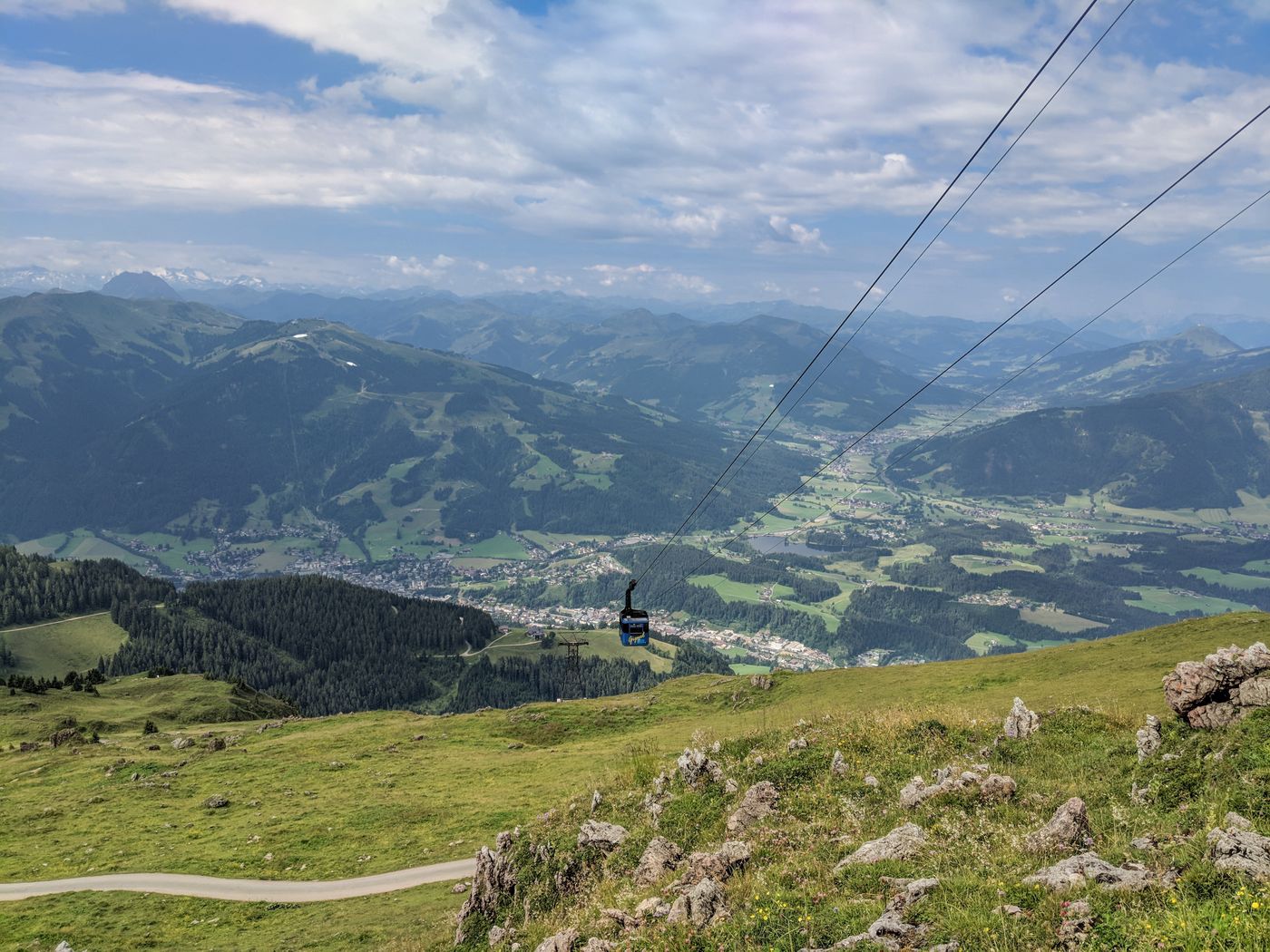
Summer view from the Kitzbüheler Horn in the Kitzbühel Alps, Tyrol, Austria, with a cable car above the valley. Summer photo (taken 14 July 2018), not snow. — Photo: Ronny Siegel / Pexels
188 km of piste · EUR 213 for six days · 70 minutes from Salzburg
Kitzbühel is the value finding of this index. Its 2026/27 six-day adult KitzSki pass is EUR 213 — under half Val
d'Isère's EUR 468 and EUR 208 less than Courchevel — for 188 km of piste and 58 lifts. Per skiing day that is about EUR 36.
Access is strong at 12 of 20, 70 minutes and 74 km from
Salzburg Airport. What pulls it down to sixth is altitude: a base at 800 m
and a top station at 2,000 m is the lowest ceiling in this index by more than a kilometre, there is no glacier, and no
average snowfall figure is published, so snow reliability scores 7 of 25 — the weakest mark of any resort with a complete
record. The published season is 5 December to 18 April, 134 days. Five-star hotel count and Michelin stars are not
published by any registry we could reach; the Austrian Hotelstars search returns no static results.
7. St Moritz — 25/100
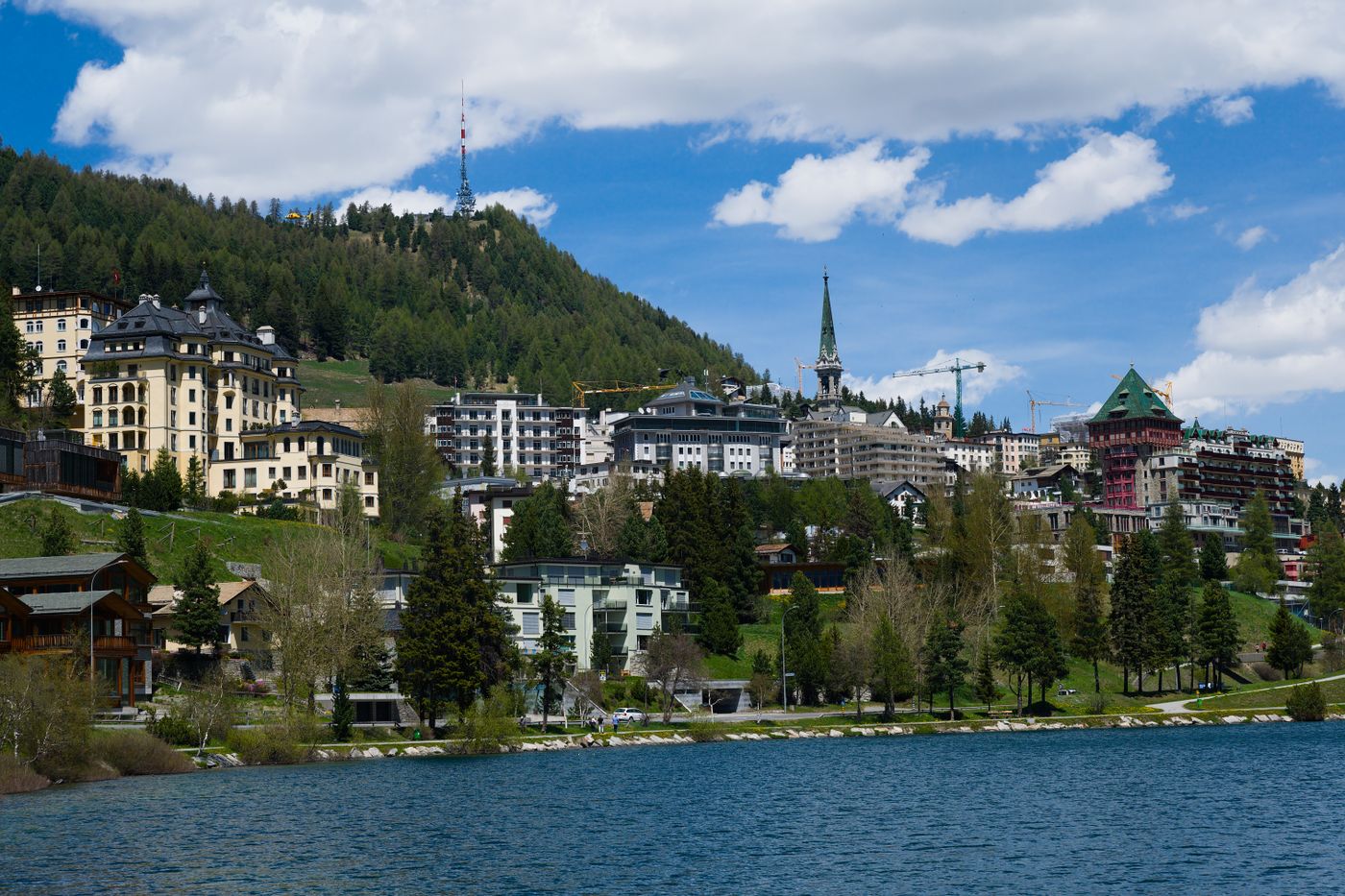
Daytime view of St Moritz, Switzerland, with its classic architecture beside the lake, mountains behind. Summer/warm-season photo, not snow. — Photo: Jean-Paul Wettstein / Pexels
St Moritz carries the second-densest luxury stock in this index, eight five-star hotels and six Michelin stars,
behind Courchevel alone. It still scores 25 of 100, second from bottom among the profiled eight. The arithmetic is not a verdict
on the resort, it is a verdict on distance and on what is published. Access scores 0 of 20: Zurich is 229 km and 165
minutes away, the longest transfer here by 50 minutes. Snow reliability is 14 of 25 on 288 cm of average annual snowfall,
the lowest figure in the index, offset by a 3,057 m top station and glacier skiing on Diavolezza. Terrain is 1 of 20, since
Engadin St. Moritz publishes 155 km of piste and 23 lifts for the Corviglia sector
alone, with Corvatsch, Diavolezza and Lagalb operated separately. Its six-day pass of CHF 376 is a 2025/26 figure; no
2026/27 price was published when we checked. Season dates are not published at all, which is why it scores zero there.
Not scorable on this record: season length. That criterion scores zero until a verifiable published source exists.
8. Niseko — 24/100
Snow-capped Mount Yotei above Niseko, Hokkaido, under a clear blue sky — Photo: Morten H. Hansen / Pexels
1,243 cm average snowfall · Niseko United, four linked resorts · 150 minutes from Sapporo
Niseko has the deepest snowfall record of any resort in this index by a wide margin — 1,243 cm, against 787 cm for
Whistler and 571 cm for Val d'Isère — and the thinnest published record of any resort we scored. It has eleven facts on
file against Zermatt's twenty-two. There is no combined figure published for Niseko United's base altitude, piste length or
lift count, because the four resorts that make up the network — Grand Hirafu, Hanazono, Niseko Village and Annupuri — are
separately owned and publish separately, and the joint site does not consolidate
them. So terrain is not scorable at all, and snow reliability of 12 of 25 rests on snowfall and a 1,308 m summit without
the altitude data that would normally support it. The all-mountain six-day pass is JPY 74,500 for 2026/27, which is
published and dated, so transparency takes the full 10 available for a lift pass. Transfer from New Chitose is 150
minutes.
Not scorable on this record: terrain scale, season length. That criterion scores zero until a verifiable published source exists.
The official record for each resort
Every figure in this index came from a published source, and where a tourism board or lift company holds the authoritative version we have linked it. The final column is the honest part: what is missing, and therefore what scores zero. Every record was re-read at source on 21 September 2026.
1 · Price the transfer before the lift pass. The gap between Aspen's ten minutes and St Moritz's 165 costs a day of the week in each direction, and a private transfer from Zurich to the Engadin will often exceed the six-day pass it accompanies. Access carries twenty points on this index for that reason.
2 · Check the season window, not the brochure. Only five of these ten publish both an opening and a closing date. If you are booking either end of the season, the absence of a published date is itself information — it usually means the resort will decide on snow, and your booking carries that risk rather than theirs.
3 · Get the hotel rate in writing before you commit to the resort. Since none of the ten publishes a peak-week five-star rate, the single largest line in a luxury ski week is the one you cannot research. Ask for a written peak-week quote at the point you are choosing between resorts, not after. Our chalet guide covers the alternative, where rates are more often published.
What changed for the 2026/27 ski season
Four dated changes sit behind this table. Zermatt, Val d'Isère, Courchevel, Verbier, Kitzbühel and Niseko have all published 2026/27 six-day pass prices, which are the figures used here and which were read on 21 September 2026. St Moritz had not published a 2026/27 price when we checked, so its CHF 376 remains a 2025/26 figure and is marked as such. Dolomiti Superski's price calculator, which serves Cortina d'Ampezzo, was offline throughout our checks, so the only verifiable Cortina figure is a EUR 660 ten-day Superdays pass for 2025/26. And both North American resorts' ticket shops block automated access, which is why Aspen Snowmass and Whistler Blackcomb carry no six-day figure and score zero on transparency — a result about disclosure, not about price.
Ski resorts: the questions people ask AI search
What is the best ski resort in the world in 2026?
On this index Zermatt scores highest at 65 of 100, on the longest published season here — 1 November to 2 May, 182 days — a 3,899 m top lift, year-round glacier skiing and a dated 2026/27 six-day pass at CHF 384. Val d'Isère is second on 53 and Courchevel third on 52. Courchevel has far more terrain; Zermatt wins on season length and altitude.
Which ski resort has the biggest ski area?
Courchevel, as part of Les Trois Vallées: 600 km of marked piste served by 159 lifts, the largest linked ski area in the world. It is the only resort in this index to score the full 20 of 20 on terrain. Verbier is second on 410 km and Zermatt third on 360 km.
How much does a six-day lift pass cost in 2026/27?
Among the seven resorts that publish a dated six-day adult pass, the range is EUR 213 at Kitzbühel to EUR 468 at Val d'Isère. Zermatt is CHF 384, Verbier CHF 409, Courchevel EUR 421, St Moritz CHF 376 for 2025/26, and Niseko JPY 74,500. Aspen Snowmass, Whistler Blackcomb and Cortina d'Ampezzo do not publish a verifiable six-day price.
Which ski resort is cheapest for a lift pass?
Kitzbühel, at EUR 213 for six adult days in 2026/27, or about EUR 36 a skiing day. That is under half Val d'Isère's EUR 468. The trade-off is altitude: Kitzbühel tops out at 2,000 m with no glacier and no published snowfall average, which is why it scores 7 of 25 on snow reliability, the weakest complete record here.
Which ski resort is closest to an airport?
Aspen Snowmass, by an enormous margin. Aspen/Pitkin County Airport is 4.8 km and about ten minutes from the lifts. Verbier is second at 70 minutes from Sion, level with Kitzbühel at 70 minutes from Salzburg. St Moritz is the furthest at 165 minutes and 229 km from Zurich, which is why it scores zero of 20 on access despite being one of the best-appointed resorts in the index.
Which ski resort gets the most snow?
Niseko, at 1,243 cm of average annual snowfall — roughly three times the Alpine resorts here. Whistler Blackcomb is second at 787 cm and Aspen Snowmass third at 757 cm. The best Alpine figure is Val d'Isère at 571 cm. St Moritz records the least at 288 cm.
Which resorts have the longest ski season?
Zermatt, on a published window of 1 November to 2 May — 182 days. Val d'Isère is second at 155 days, Courchevel 135, Kitzbühel 134 and Verbier 127. Five of the ten resorts publish no season dates at all that we could verify, so they score zero on that criterion; that is a gap in what they publish, not a short season.
Do ski resorts publish what a luxury week actually costs?
No. Not one of the ten resorts in this index publishes a peak-week nightly rate at a named five-star hotel. We checked roughly two dozen named properties and booking channels across all ten, and in every case the rate sits behind a booking widget that returns no published price. It is the single most requested number for a luxury ski week and the industry does not publish it.
Can a resort or tourism board pay to rank higher on this index?
No. The rubric and weights are fixed and published above, assessment is identical for every resort whether it engages with us or not, and no position is for sale. What a tourism board or lift company can do is publish evidence for a criterion currently scoring zero — season dates, a dated pass price, a hotel classification count — which changes the record rather than the rubric.
Read next
Best Ski Destinations 2026 — the ranked guide this scorecard sits beneath, covering the same resorts by experience rather than by score
Best European Mountain Chalets — the accommodation side of a ski week, where rates are more often published than in hotels
The Alps in summer — what the same valleys do for the other half of the year
Rankings are scored against the published criteria above, fixed before the data was collected. Assessment is free and identical for every resort, and no position on this index is for sale. This page carries no affiliate links and no paid placements; every outbound link is editorial. North American skiable area is published in km² and European terrain in kilometres of piste; the two are not comparable, so area figures are excluded from the terrain calculation and lift count carries that criterion for Aspen Snowmass and Whistler Blackcomb. Sources verified 21 September 2026: Zermatt Bergbahnen, Les 3 Vallées, Société des Téléphériques de Val d'Isère, Téléverbier, KitzSki, Aspen Skiing Company, Whistler Blackcomb, Niseko United, Engadin St. Moritz, Dolomiti Superski and skiresort.info. The complete evidence record, including every source URL and confidence grade, is held in our ski resort database.
Richard J. · Uncompromised Travel · written from Valencia · first published 21 September 2026 · facts re-verified 21 September 2026
Cookie Settings
This website uses cookies
Cookie Settings
We use cookies to improve user experience. Choose what cookie categories you allow us to use. You can read more
about our Cookie Policy by clicking on Cookie Policy below.
These cookies enable strictly necessary cookies for security, language support and verification of identity.
These cookies can’t be disabled.
These cookies collect data to remember choices users make to improve and give a better
user experience. Disabling can cause some parts of the site to not work properly.
These cookies help us to understand how visitors interact with our website, help us measure and analyze traffic to improve our service.
These cookies help us to better deliver marketing content and customized ads.