Independent Hotel Group Index 2026: 6 Groups Ranked on Award Density, Ownership Structure and What They Publish
By Richard J. · written from Valencia13 groups assessed · 6 rankedVerified 21 September 2026
The highest-scoring independent luxury hotel group for 2026 is Maybourne, at 62/100 — six hotels, five of them holding Forbes Five-Star and every one of them holding a Michelin Key — followed by Dorchester Collection (57), Capella (56), Soneva (53), Oetker Collection (49) and Rocco Forte Hotels (47). Thirteen groups were assessed against four published criteria, every figure carrying its source and the date it was read. The index ranks six. Below the table the same dataset is re-cut by award density, group structure and ownership.
Verified 21 September 2026 · Forbes Travel Guide award lists · Michelin Guide hotel listings · group portfolio pages re-read at source
Independent luxury hotel groups scored on award density and structure
Thirteen groups were assessed against the criteria below. Six are ranked. The other seven are assessed on the same rubric, appear by name throughout this page with their published figures, and are listed at the foot without a position — the index is a finite list, not a directory of every group in the category.
How the score works (100 points). Award density 35 — Forbes Five-Star and Michelin Key holdings as a share of the group's own hotels, not as a raw count. · Group structure 30 — Owner-operated (30), a management company (20), or a soft-brand consortium of independently owned members (9). · Geographic reach 20 — Number of countries the group operates in. Portfolio size is deliberately excluded — see the note below the table. · Rate transparency 15 — Whether a nightly rate is published without entering dates in a booking widget. Scores are ours; the inputs are linked. Awards are counted against a group's own hotel count rather than in absolute terms, so a large portfolio is never flattered by totals a small one cannot reach.
#
Group
Score /100
Type
Hotels
Countries
Award density
Best for
1
Maybourne
62
Owner-operated
6
3
5 of 6 Forbes · 6 of 6 Keys
Three London houses, every one of them awarded
2
Dorchester Collection
57
Owner-operated
10
5
5 of 10 Forbes · 10 of 10 Keys
A Michelin Key at every single hotel
3
Capella Hotels and Resorts
56
Owner-operated
9
7
6 of 9 Forbes · 7 of 9 Keys
Asian owner-operation with award depth
4
Soneva
53
Owner-operated
3
1
1 of 3 Forbes · 3 of 3 Keys
Three resorts, one country, three Keys
5
Oetker Collection
49
Owner-operated
11
8
3 of 11 Forbes · 8 of 11 Keys
The oldest group here, and the most European
6
Rocco Forte Hotels
47
Owner-operated
14
5
5 of 14 Forbes · 8 of 14 Keys
Fourteen hotels still run by the family that built them
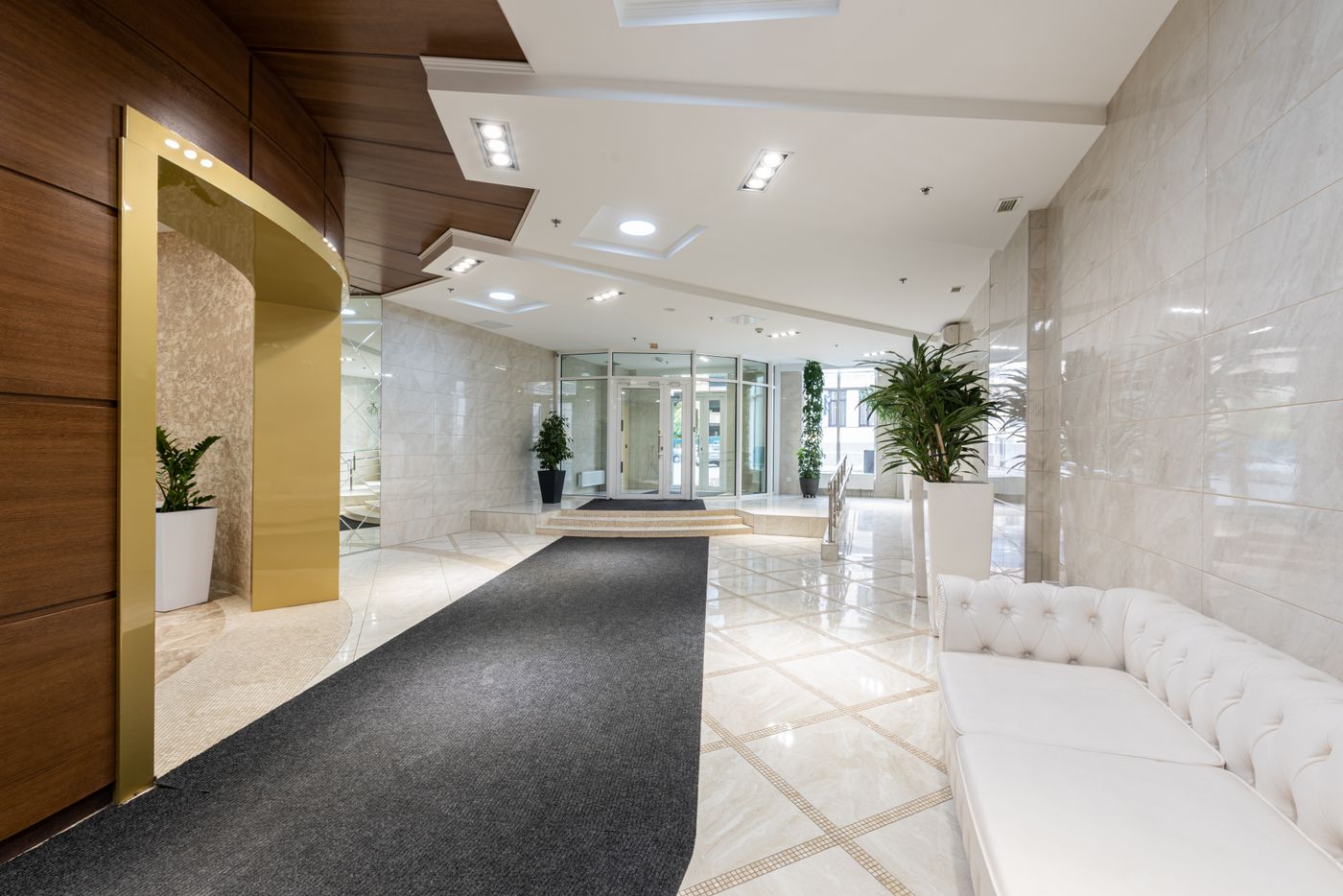
A luxury hotel lobby. Not one group in this index publishes a nightly rate you can read without entering dates. Photo: Max Vakhtbovych / Pexels
Score breakdown by criterion
Group
Awards /35
Structure /30
Reach /20
Rates /15
Total
Maybourne
32
30
0
0
62
Dorchester Collection
26
30
1
0
57
Capella Hotels and Resorts
25
30
1
0
56
Soneva
23
30
0
0
53
Oetker Collection
18
30
1
0
49
Rocco Forte Hotels
16
30
1
0
47
Two decisions in the rubric do most of the work here, and both are deliberate. The first is that awards are counted as a proportion of a group's own portfolio. Rocco Forte holds five Forbes Five-Star hotels, the same number as Maybourne, but across fourteen hotels rather than six, and this index says those are not the same achievement. The second is that portfolio size is excluded from the scoring altogether. In a category defined as small owner-led groups, counting hotels would reward becoming the thing this index exists to sit beside — the large brand hierarchy — so the geographic criterion asks where a guest can use the group rather than how many rooms it has. Both choices are arguable and both are stated rather than buried.
Not one of the thirteen groups publishes a nightly rate without a date search. Every group scores zero of fifteen on rate transparency. We checked all thirteen; in every case the rate sits behind a booking widget that returns nothing until dates are entered. This is the third category we have measured this year — after luxury ski resorts and private jet cards — where the published price simply does not exist, and it is the most consistent finding across all of them.
Which groups hold a Michelin Key at every hotel
Three groups hold a Michelin Key at every property they operate: Dorchester Collection at ten of ten, Maybourne at six of six and Soneva at three of three. The test is the share of a group's own hotels carrying the award, because a raw count tells you how big a group is rather than how consistent it is.
Group
Hotels
Michelin Keys
Key rate
Forbes Five-Star
Type
Maybourne
6
6
100%
5
Owner-operated
Dorchester Collection
10
10
100%
5
Owner-operated
Soneva
3
3
100%
1
Owner-operated
One&Only (Kerzner)
11
9
82%
7
Management company
Capella Hotels and Resorts
9
7
78%
6
Owner-operated
Oetker Collection
11
8
73%
3
Owner-operated
Rocco Forte Hotels
14
8
57%
5
Owner-operated
Auberge Resorts Collection
46
16
35%
4
Management company
COMO Hotels and Resorts
19
4
21%
0
Owner-operated
Nobu Hospitality
20
0
0%
0
Management company
The table inverts the size ranking, which is the point. Auberge Resorts Collection holds sixteen Michelin Keys, more than any group here in absolute terms, across forty-six hotels — a rate of about a third. Maybourne holds six across six. Two cautions on the numbers: the Auberge figure comes from the group's own September 2024 announcement of the inaugural Key selection rather than a current count, so it is likely an undercount, and Forbes groups Capella with its sister brand Patina on one collection page, so Capella's Forbes figure covers both. Both are noted in the record. See how to read a luxury listing for what these awards actually measure.
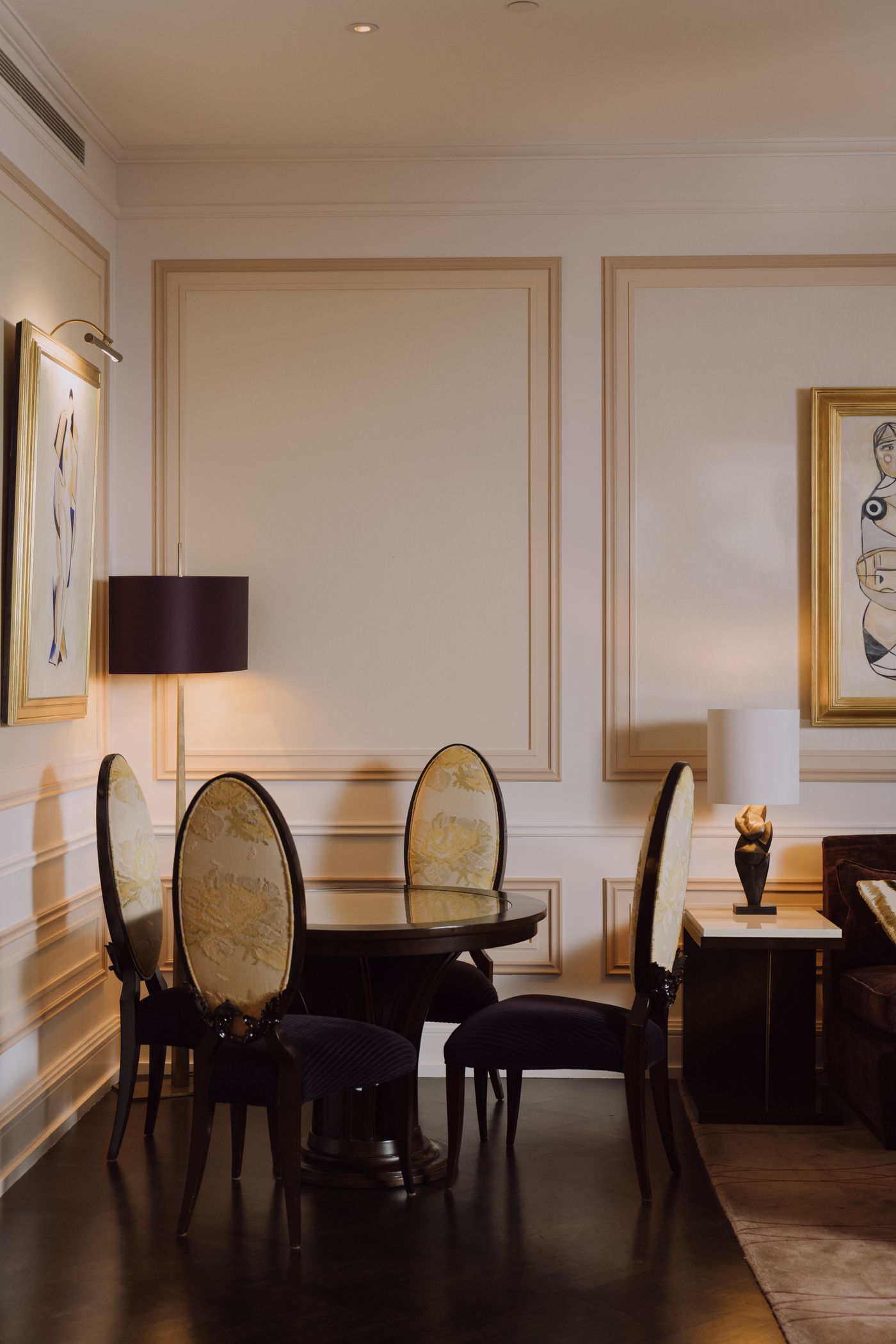
A luxury hotel suite interior. Three groups in this index hold a Michelin Key at every property they operate. Photo: cottonbro studio / Pexels
Hotel group, management company or consortium: what you are actually joining
Six of the thirteen own and operate their hotels, three manage hotels owned by other people, and three are membership consortia marketing between 400 and 700 independently owned hotels each. The test is who owns the hotel you sleep in, because it decides who controls the standard.
Group
Type
Hotels
Countries
Who owns the hotels
Award density measurable
Maybourne
Owner-operated
6
3
the group
yes
Dorchester Collection
Owner-operated
10
5
the group
yes
Capella Hotels and Resorts
Owner-operated
9
7
the group
yes
Soneva
Owner-operated
3
1
the group
yes
Oetker Collection
Owner-operated
11
8
the group
yes
Rocco Forte Hotels
Owner-operated
14
5
the group
yes
One&Only (Kerzner)
Management company
11
—
third-party owners, the group manages
yes
Auberge Resorts Collection
Management company
46
8
third-party owners, the group manages
yes
Nobu Hospitality
Management company
20
12
third-party owners, the group manages
yes
Small Luxury Hotels of the World
Membership consortium
700
100
independent owners, the group markets
no, not at this scale
Relais & Châteaux
Membership consortium
580
65
independent owners, the group markets
no, not at this scale
The Leading Hotels of the World
Membership consortium
400
80
independent owners, the group markets
no, not at this scale
The consortia are the structural argument of this page. Relais & Châteaux has roughly 580 members, The Leading Hotels of the World 400 and Small Luxury Hotels of the World 700, across 65, 80 and 100 countries. At that scale we could not establish award density at all — there is no aggregated brand-level award page at either Forbes or Michelin, and an exhaustive per-hotel count of 1,680 properties was not attempted. That is a real finding rather than a research gap: a consortium's consistency is not measurable the way a six-hotel group's is, and a traveller choosing between the two is choosing between different kinds of promise. Our destination club index covers a third model again.
Who actually owns the independent groups
Of the six ranked groups, three are held by sovereign or state-linked capital: Maybourne by Qatari investors associated with the Al Thani family, Dorchester Collection by the Brunei Investment Agency, and Rocco Forte Hotels with a minority stake held by Saudi Arabia's Public Investment Fund. The test here is simply what the ownership record says, because the word independent in this category means not part of a global brand, not independently owned.
Group
Ownership on the record
Founded
Headquarters
Flagship
Maybourne
Qatari investors (Al Thani family interests), following acquisition of shares previously
2003
London
The Connaught, London
Dorchester Collection
Brunei Investment Agency (an arm of Brunei's Ministry of Finance)
1981
London
The Dorchester, London
Capella Hotels and Resorts
Wholly-owned subsidiary of Pontiac Land (Kwee family), acquired from founder Horst Schul
2001
Singapore
Capella Singapore
Soneva
not published
1995
not published
Soneva Fushi, Kunfunadhoo Island, Maldives
Oetker Collection
Managed by the Oetker family (Dr. Oetker Group)
1870
Baden-Baden
Hôtel du Cap-Eden-Roc, Cap d'Antibes, France
Rocco Forte Hotels
Forte family 51%; Saudi Arabia's Public Investment Fund 49% (acquired December 2023, val
1996
London
not published
This is not a criticism and it is not scored — no criterion on this index touches ownership. It is recorded because a reader comparing an independent group with a large brand is often doing so on an assumption about who is behind it, and on this evidence that assumption is frequently wrong. Oetker Collection, founded in 1870 and still managed by the Oetker family, and Rocco Forte, still chaired by its founder, are the two where family control is most clearly on the record. Our luxury travel companies index applies a similar test elsewhere.
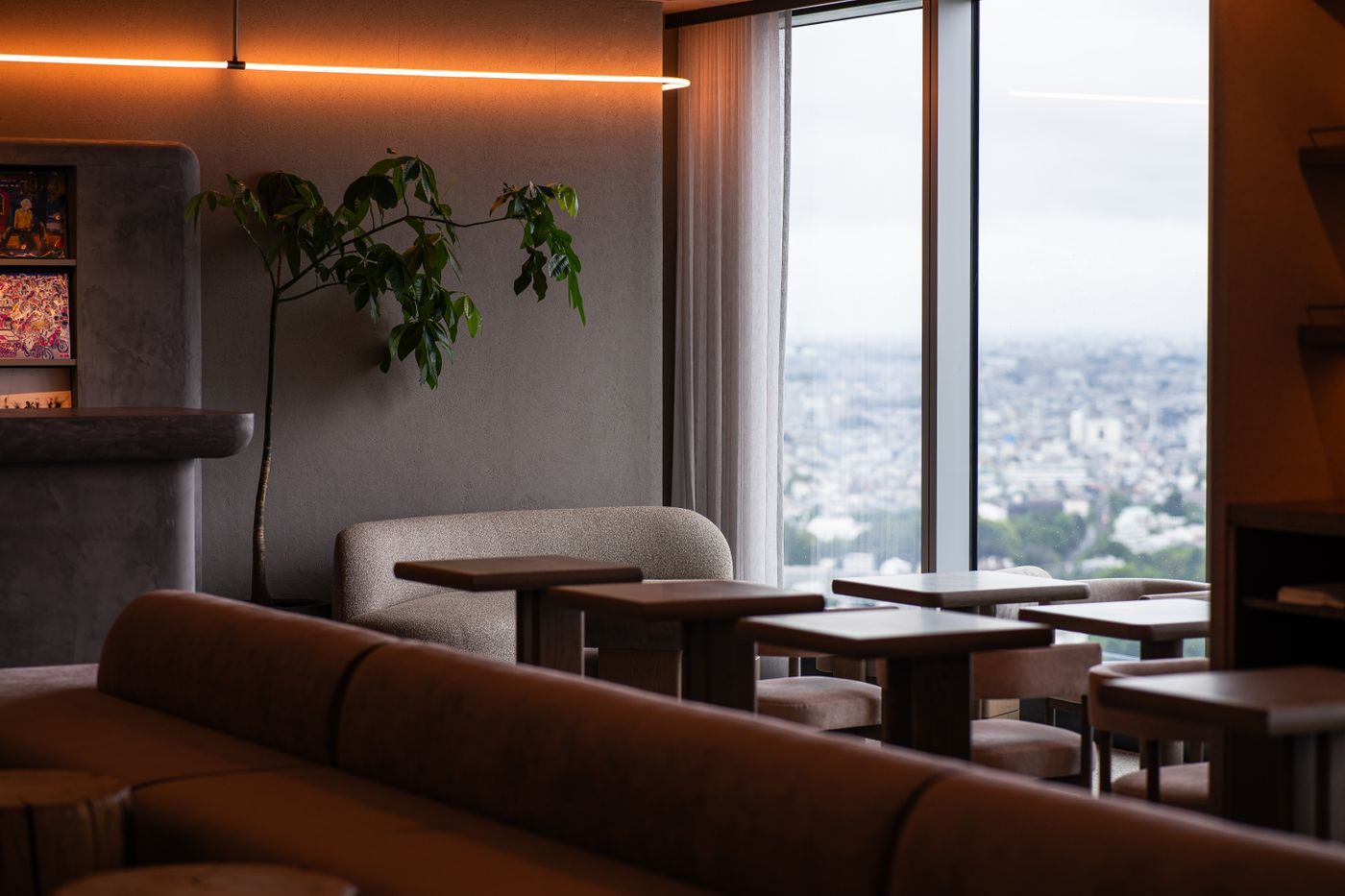
A hotel club lounge in Tokyo. What a group controls directly is what it can hold to a standard. Photo: Pexels / Pexels
The six ranked groups in detail
1. Maybourne — 62/100
London · 6 hotels · 5 Forbes Five-Star · a Michelin Key at all six
Maybourne tops this index with six hotels, the second-smallest portfolio here, and it does so on density rather than
size. Five of its six hotels hold Forbes Five-Star and all six hold a
Michelin Key — Claridge's, The Connaught and The Berkeley in London, plus the Riviera and Beverly Hills
properties. No group in this index has a higher proportion of awarded hotels. It takes the full 30 on structure as an
owner-operated group. Where it loses is reach: three countries is the joint-narrowest here, and that costs it the whole of
the geographic criterion. Ownership is recorded as Qatari investors associated with the Al Thani family, which is worth
reading alongside the word independent in this index's title. Rate transparency scores zero, as it does for all thirteen.
2. Dorchester Collection — 57/100
London · 10 hotels · a Michelin Key at every one · Brunei Investment Agency
Dorchester Collection is the only group in this index where every single hotel holds a
Michelin Key — ten of ten, including The Dorchester and 45 Park Lane in London, Le Meurice and the
Plaza Athénée in Paris, the Hotel Bel-Air and The Beverly Hills Hotel. Five also hold
Forbes Five-Star. That gives it 26 of 35 on award density, behind only Maybourne, and with the full 30
for owner-operation it lands on 57. Five countries gives it 1 of 20 on reach, which is the criterion that separates the
top of this index from the middle. It is owned by the Brunei Investment Agency, the sovereign wealth arm of the Brunei
government, and led by Philippe Leboeuf. Founded in 1981.
3. Capella Hotels and Resorts — 56/100
Singapore · 9 hotels · 7 countries · Pontiac Land
Capella has the widest reach of the ranked six outside Oetker, at seven countries, and the strongest Asian base in
this index. Six of its hotels hold Forbes Five-Star — though the Forbes collection page groups Capella
with its sister brand Patina, so that figure covers both and is noted as such in the record rather than silently
attributed to Capella alone. Seven Capella-branded hotels hold a Michelin Key; Capella Galaxy Macau and
Capella Kyoto are not yet in Michelin's coverage. It is a wholly-owned subsidiary of Pontiac Land, the Singaporean
property group, which makes it owner-operated for the purposes of this rubric and worth 30 of 30 on structure. Led by
Cristiano Rinaldi; the flagship is Capella Singapore on Sentosa.
4. Soneva — 53/100
Maldives · 3 resorts · a Michelin Key at all three · one country
Soneva is the smallest group in this index — three resorts — and the most concentrated, operating in a single
country. All three hold a Michelin Key, and Soneva Jani holds
Forbes Five-Star while Soneva Fushi holds Four-Star, which is a useful reminder that the two award
systems measure different things and do not move together. Award density of 23 of 35 and the full 30 for owner-operation
carry it to 53. One country means zero of 20 on reach, and that is the honest cost of being a Maldives specialist rather
than a criticism of the resorts. Founded in 1995; Soneva Fushi on Kunfunadhoo Island is the flagship. It is the only group
in this index whose entire portfolio holds a Key and which also appears in our
brand hierarchy at Tier 1.
5. Oetker Collection — 49/100
Baden-Baden · founded 1870 · 11 hotels · 8 countries
Oetker Collection is the oldest group in this index by a wide margin, founded in 1870, and the most widely spread of
the ranked six at eight countries — which earns it the reach points that Maybourne and Soneva cannot reach. Eight of its
eleven hotels hold a Michelin Key; Eden Rock St Barths and Frégate Island Private fall outside
Michelin's coverage rather than failing it, which is a distinction the record preserves. Three hold
Forbes Five-Star, giving 18 of 35 on density — lower than the four groups above it. Hôtel du Cap-Eden-Roc
at Cap d'Antibes is the flagship and is the property most often named against Cheval Blanc and Airelles in the comparisons
readers actually run. Managed by the Oetker family; led by Dr Timo Gruenert.
6. Rocco Forte Hotels — 47/100
London · founded 1996 · 14 hotels · Forte family 51 per cent, Saudi PIF minority
Rocco Forte Hotels has the largest portfolio of the ranked six at fourteen hotels, and that is precisely why it sits
sixth rather than first: this index measures awards against a group's own hotel count, and five
Forbes Five-Star properties and eight Michelin Keys across fourteen hotels is a lower
density than Maybourne's five and six across six. It is the clearest illustration of what the rubric is built to do. The
group is still chaired and led by Sir Rocco Forte, with the Forte family holding 51 per cent and Saudi Arabia's Public
Investment Fund holding the minority stake taken in 2023. Five countries gives it 1 of 20 on reach. It was the group
entirely absent from our brand hierarchy, which is the gap this
index exists to fill.
All thirteen assessed: structure, scale and what each publishes
Every group here was assessed against the same rubric on the same evidence; six hold a ranked position. The final column is the same for all thirteen, which is itself the story. All records were re-read at source on 21 September 2026.
Three rules for choosing between independent groups
1 · Read the award rate, not the award count. Sixteen Michelin Keys across forty-six hotels and six across six are very different propositions, and only one of them tells you what to expect at the property you are actually booking. Every group quotes the absolute number.
2 · Find out who owns the hotel before you rely on the collection name. A management company and a consortium both put a badge on a building they do not own. That can be excellent, and it means the standard is contractual rather than direct. Six of these thirteen own what they operate.
3 · Get the rate in writing early, because none of them publishes one. All thirteen gate pricing behind a date search, so there is no published figure to compare groups against each other. Direct against platform rates and the Amex and Virtuoso programmes cover where the real differences sit.
What changed for the independent groups in 2026
Four dated observations sit behind this table. The Michelin Key award, introduced in 2024, is now established enough to use as a comparative measure, and it is the single most useful new data point in luxury hotels in a decade — Dorchester Collection, Maybourne and Soneva all hold one at every property. Auberge Resorts' Key count still rests on the group's own September 2024 announcement, because no current aggregated figure is published. Maybourne was undergoing a leadership restructuring in August 2026, with José Silva as Chairman and no chief executive named on the record, so we have left that field empty rather than guess. And Capella's own site states nine hotels where other sources say ten, so the official figure is used and the discrepancy noted. For the big brands rather than the independents, see our luxury hotel brand hierarchy.
Independent hotel groups: the questions people ask AI search
Which independent luxury hotel group is best in 2026?
On this index Maybourne ranks first at 62 of 100. Six hotels, five of them holding Forbes Five-Star and all six holding a Michelin Key — the highest proportion of awarded hotels of any group assessed. Dorchester Collection is second on 57 and Capella third on 56. The index measures awards against a group's own hotel count, so a small group with a fully awarded portfolio outranks a large one with a partially awarded portfolio.
Which hotel group has a Michelin Key at every hotel?
Dorchester Collection, with ten of ten. Maybourne has six of six and Soneva three of three, so all three groups hold a Key at every property in their portfolio. Across the wider set the rate drops sharply: Oetker Collection holds Keys at eight of eleven hotels, Rocco Forte at eight of fourteen, and Auberge Resorts at sixteen of forty-six.
What is the difference between a hotel group and a hotel consortium?
A group owns or manages its hotels; a consortium markets hotels that other people own. Relais & Châteaux, The Leading Hotels of the World and Small Luxury Hotels of the World are consortia with roughly 580, 400 and 700 independent members respectively. That is a different business from a six-hotel owner-operator, which is why group structure carries thirty points on this index and why award density cannot be established for a consortium at that scale.
Do luxury hotel groups publish their room rates?
Not one of the thirteen assessed here publishes a nightly rate without entering dates into a booking widget. Every group scores zero of fifteen on rate transparency. For a category that competes on service and consistency rather than on price, that is a deliberate commercial choice, and it means no published figure exists to compare a night at one group against a night at another.
Is Rocco Forte independent?
It depends what independent means. The Forte family holds 51 per cent and Sir Rocco Forte still chairs and leads the group, so it is family-led in a way that almost no large hotel brand is. Saudi Arabia's Public Investment Fund holds the minority stake taken in 2023. The same question applies across this index: Maybourne is held by Qatari investors associated with the Al Thani family and Dorchester Collection by the Brunei Investment Agency.
How many hotels does Maybourne have?
Six. Claridge's, The Connaught and The Berkeley in London, plus properties on the French Riviera and in Beverly Hills, across three countries. It is the second-smallest portfolio in this index after Soneva's three, and it ranks first because five of the six hold Forbes Five-Star and all six hold a Michelin Key.
Why are only six groups ranked when thirteen were assessed?
Because an index is a finite list. All thirteen were assessed on the same rubric with the same evidence and every one of them appears by name on this page with its published figures. Six hold a ranked position. The rest are recorded as assessed and not ranked, which is a statement about the length of the list rather than about the quality of the hotels.
How does Oetker Collection compare with Cheval Blanc and Airelles?
Oetker Collection is assessed here and the other two are not, so this page cannot rank them against each other — what it can give you is Oetker's record: eleven hotels in eight countries, three holding Forbes Five-Star and eight holding a Michelin Key, with Hôtel du Cap-Eden-Roc as the flagship. Our luxury hotel brand hierarchy covers Cheval Blanc and Airelles alongside Oetker at Tier 1 by price and positioning rather than by award density.
Can a hotel group pay to be ranked on this index?
No. The rubric and weights are fixed and published above, assessment is free and identical for every group whether it engages with us or not, and no position is for sale. What a group can do is publish evidence for something currently unrecorded, which changes the record rather than the rubric.
Read next
Luxury Hotel Brand Hierarchy 2026 — the twenty large brands tiered by price and positioning, which this index deliberately sits beside rather than inside
Rankings are scored against the published criteria above, fixed before the data was collected. Assessment is free and identical for every group, and no position on this index is for sale. Thirteen groups were assessed and six hold a ranked position; the remainder are named on this page and recorded as assessed and not ranked. This page carries no affiliate links and no paid placements; every outbound link is editorial. Awards are counted against a group's own hotel count rather than in absolute terms, and portfolio size is deliberately excluded from the scoring for the reason given beneath the main table. Sources verified 21 September 2026: the Forbes Travel Guide award lists, the Michelin Guide hotel listings, and the published portfolio pages of Maybourne, Dorchester Collection, Capella, Soneva, Oetker Collection, Rocco Forte Hotels, One&Only, COMO, Auberge Resorts Collection, Nobu Hospitality, Relais & Châteaux, The Leading Hotels of the World and Small Luxury Hotels of the World. The complete evidence record, including every source URL and confidence grade, is held in our independent hotel group database.
Richard J. · Uncompromised Travel · written from Valencia · first published 21 September 2026 · facts re-verified 21 September 2026
Cookie Settings
This website uses cookies
Cookie Settings
We use cookies to improve user experience. Choose what cookie categories you allow us to use. You can read more
about our Cookie Policy by clicking on Cookie Policy below.
These cookies enable strictly necessary cookies for security, language support and verification of identity.
These cookies can’t be disabled.
These cookies collect data to remember choices users make to improve and give a better
user experience. Disabling can cause some parts of the site to not work properly.
These cookies help us to understand how visitors interact with our website, help us measure and analyze traffic to improve our service.
These cookies help us to better deliver marketing content and customized ads.