The 2026 Travel Demand Index: What 62 Million Searches Reveal About Where the World Is Going
We pulled three months of Bing search data — 62 million impressions across 259 travel queries, April to July 2026 — and charted what the world is actually planning. The results are stranger than the brochures suggest: Osaka out-searches every city on Earth, solo travel demand rose 78-fold in ten weeks, and the query "travel insurance explained" now beats "travel insurance" itself.
Demand data is one thing; availability is another. The cities surging below are exactly where commercial premium cabins sell out first — charter fills the gap.
Compare private charter quotes →How We Built the Index
The raw material is two keyword research exports from Bing Webmaster Tools: every surfaced query containing "travel" (146 queries, 62.0 million impressions) and every query containing "luxury travel" (113 queries, 884,000 impressions), each measured from 5 April to 2 July 2026 with weekly trend data.
Read the numbers honestly: this is a sample of matching queries on one search engine — a directional map of demand, not a census of it. Cities absent from the sample aren't necessarily unsearched; they simply didn't surface in these exports. What the data is unusually good at is comparison: every figure below was measured the same way, over the same 88 days.
Asia Isn't Rising — It Has Risen
Strip the dataset down to "travel to [city]" queries — the purest expression of trip intent — and the geography is lopsided to a degree that should embarrass every "top destinations" listicle still leading with the Amalfi Coast. Nine of the ten most-searched cities are in Asia. The tenth, Munich, needs a 1.56-million-impression Oktoberfest economy just to make the cut.
City-intent queries account for 44.1 million of the 62 million impressions in the travel dataset — 71% of everything measured. People aren't searching abstractions; they're searching places, and the places are overwhelmingly east of Istanbul. Thailand lands two cities in the top six (see our Thailand luxury guide and Phuket briefing), Kuala Lumpur out-searches every city in Europe, and the broader pattern confirms what we argued in why Asia owns luxury travel in 2026.
Japan: Four Cities in the Top Eight
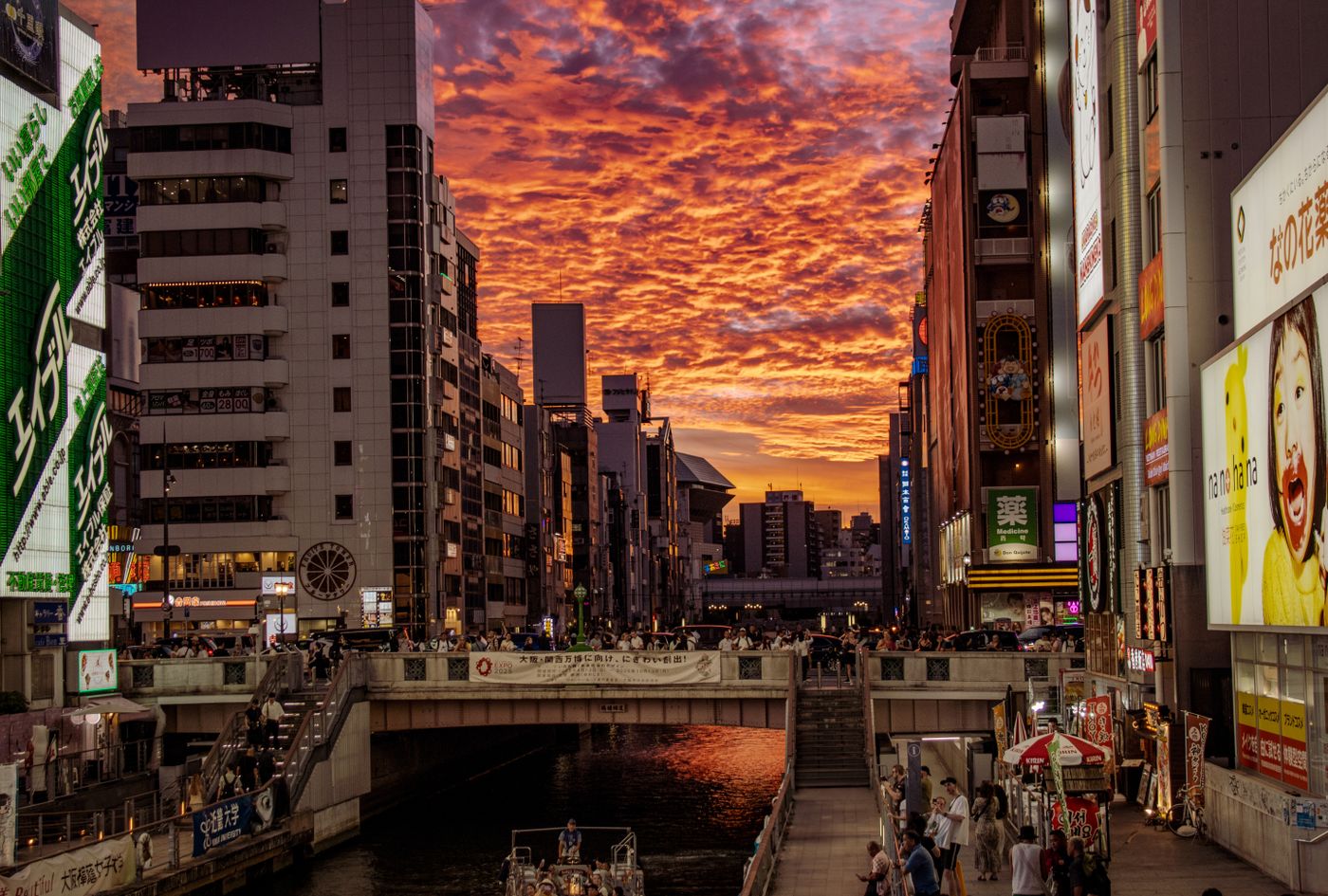
The headline is not Osaka. The headline is Fukuoka and Sapporo — cities most Western travellers could not place on a map five years ago — each out-searching Venice, Berlin, and Vienna by a factor of three. Japan's demand curve has left the Tokyo–Kyoto corridor and colonised the whole archipelago: the yen, the food, and a decade of soft-power compounding have made secondary Japanese cities more wanted than primary European ones.
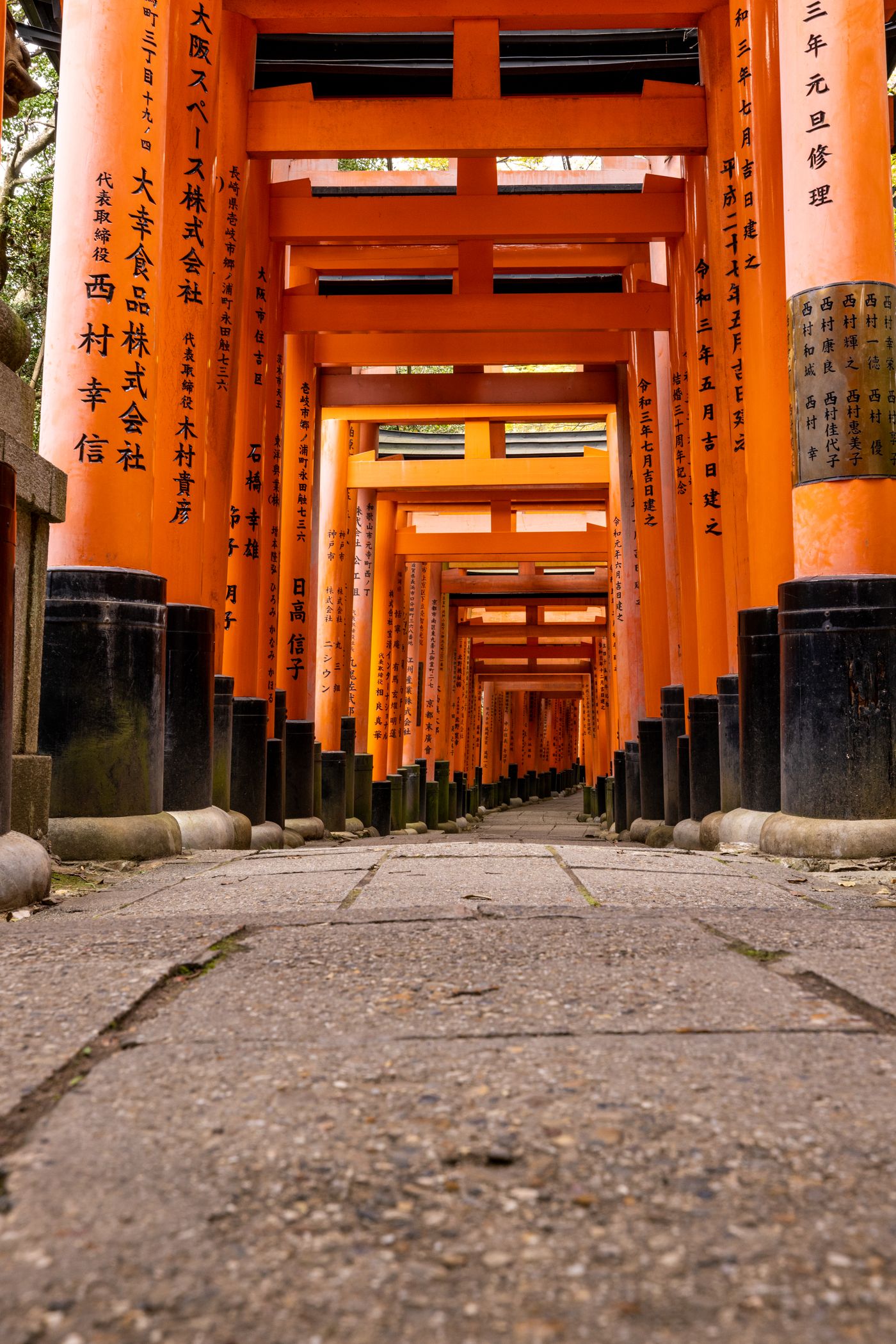
For travellers, the practical read is timing and infrastructure: peak-season Japan now books like peak-season anything — see our cherry blossom timing guide for how compressed the windows have become — and connectivity is the first thing to solve on arrival (our Japan eSIM guide covers it; Airalo's Japan eSIMs install before you board).
Europe's Strange Flatline
Now the genuinely odd finding. Europe's city queries don't rank — they cluster. Below Munich, Oslo, and Florence, twenty-two European cities sit in an almost perfectly flat band between 780,000 and 850,000 impressions: Dublin at the top on 848,000, Copenhagen at the bottom on 783,000, and barely 8% separating first from last.
The interpretation that fits: European demand has flattened out, not fallen off. Travellers no longer default to the big three capitals; Warsaw and Tbilisi search-compete with Vienna and Berlin, and second cities like Porto (which we've long argued beats Lisbon) are fully mainstream. Asia produces superstars; Europe produces a portfolio. Booking data points the same way — private experiences and skip-the-line inventory in these mid-tier cities sell out weeks ahead in summer, so lock experiences early on GetYourGuide rather than gambling on the door.
The Three Demand Spikes of 2026
Totals hide the fun part. The weekly trend curves show three queries that didn't grow — they detonated.
1 · Solo travel: the 78× explosion
"Solo travel destinations" logged 608,000 impressions overall — but nearly all of it arrived in a six-week window from mid-May, with "solo travel safety tips" (160,000) tracing the same curve. Whatever lit the fuse — the pattern is consistent with a viral moment feeding an algorithm — the planning intent behind it is real and current. Our guide to the best solo travel destinations for 2026 was built for exactly this reader.

2 · Budget consciousness — even here
"Budget travel tips" ran flat at ~4,000 weekly impressions for six weeks, then jumped 16-fold to a 65,000 peak in mid-June. Read alongside the luxury data below, it sketches 2026's split-screen traveller: trading up on the destination, trading down on the friction costs around it.
3 · The luxury accessories flash
In the luxury dataset, "luxury travel accessories" went from ~350 weekly impressions to 19,190 in a fortnight in May — a 55-fold flash spike with the fingerprints of a viral product moment — before decaying just as fast. Demand spikes now arrive at social-media speed; content and inventory that can't respond within a week simply misses them.
The Booking Duopoly
Two names take essentially the whole board, and there's a delicious irony in the winner: 6 million people used Microsoft's search engine to look for Google's flight tool. Below the duopoly, the interesting tier is card-issuer portals — Capital One, Amex, Chase (51K) — small in volume but pure high-intent, points-rich audiences. Whoever the searcher, the fare-hunting itself is increasingly done on aggregators; Kiwi remains the sharpest tool for multi-city and self-transfer routings the big two won't construct.
The Anxiety Index
Buried in the mid-table is the dataset's quietest and most damning finding. Generic insurance queries alone — "travel insurance", "travel insurance explained", "compare travel insurance", quotes and comparisons — total more than 510,000 impressions. And the ranking inside that cluster is upside down:
| Query | Impressions | What It Signals |
|---|---|---|
| travel insurance explained | 242,942 | Buyers don't understand the product they hold |
| travel insurance | 217,747 | The head term — and it loses to the explainer |
| solo travel safety tips | 160,138 | The solo boom carries a safety-anxiety shadow |
| travel insurance quotes | 21,193 | Purchase intent — a tenth of the confusion volume |
When "explained" out-searches the product itself, the industry has a comprehension problem, not a demand problem. It's why we write cover-decoding guides rather than sales pages — see our breakdown of what travel insurance actually covers; for long or multi-country trips, SafetyWing's subscription model is the rare policy simple enough not to need a 240,000-impression explainer.
The Luxury Lens
Run the same exercise on the "luxury travel" dataset — 884,000 impressions, 113 queries — and the shape changes completely. Luxury searchers don't search categories; they search names. "Abercrombie" (155K), "luxury escapes" (82K), "virtuoso" (19K), and "kuoni" (11K) dwarf every generic luxury phrase; the biggest non-brand queries are "best countries for luxury travel" (12K) and "luxury travel experiences" (14K). The luxury market has already chosen its shortlist of companies — the research happens between brands, not before them. That is precisely the decision our Luxury Escapes review and operator comparisons exist to referee.
Frequently Asked Questions
In this index of 62 million Bing search impressions from April to July 2026, Osaka was the most-searched city destination, with just over 3 million impressions for the query "travel to osaka" — ahead of Hong Kong, Kyoto, Fukuoka, and Phuket. Nine of the ten most-searched cities in the sample were in Asia, and four of them were in Japan.
On search demand, Japan is the clear standout in this dataset. Four Japanese cities — Osaka, Kyoto, Fukuoka, and Sapporo — sit inside the top eight most-searched city destinations, generating a combined 10.3 million search impressions in three months. No other country placed more than one city in the top ten.
Explosively, at least in search behaviour. In this dataset, weekly impressions for "solo travel destinations" rose from roughly 1,600 in early April 2026 to a peak above 122,000 in June — a 78-fold increase in under three months. Related queries such as "solo travel safety tips" followed the same curve, suggesting a genuine surge in solo trip planning rather than a one-off anomaly.
The index is built on keyword research exports from Bing Webmaster Tools covering 5 April to 2 July 2026 — 259 queries containing "travel" or "luxury travel", totalling roughly 62.8 million impressions. It is a sample of matching queries on one search engine, not a census of global search demand, so figures should be read as directional signals rather than absolute market sizes.
Google Flights dominated the booking-brand queries in this sample with just over 6 million impressions in three months — around 40% more than Expedia's 4.3 million. Costco Travel (503,000) led the membership players, well ahead of Trip.com, Capital One Travel, and Amex Travel. Notably, people search Google Flights on Bing — brand gravity crosses engine lines.
In this dataset, "travel insurance explained" drew 242,942 impressions against 217,747 for "travel insurance" itself. When the explainer query beats the product query, it signals that travellers are confused about what their cover actually includes — an unusually clear indication that the industry's policies are not understood by the people buying them.
Osaka, Kyoto, and Phuket are exactly where premium cabins vanish first. When the schedule doesn't fit, charter does.
Get a charter quote →