The best business class airlines in 2026, ranked and scored
Qatar Airways still has the best business class in the world in 2026, on 94 of 100 — but for the first time the reason is the lounge and the fleet coverage, not the seat. ANA's The Room FX, which entered service on the Boeing 787-9 in August 2026, is a wider bed than the Qsuite. Japan Airlines' A350-1000 suite is a better-finished cabin. What Qatar has that neither has is a Qsuite on every one of its 28 Airbus A350-1000s and roughly 70 per cent of its Boeing 777-300ERs, plus Al Mourjan at Doha. The twelve airlines below are scored on five published criteria, with every component printed so the weighting can be re-run against the way you actually travel.
94/100
41.5in wide
18/20 fleet
unscored
The 2026 ranking: 12 airlines scored
| # | Airline | Component scores | Score |
|---|---|---|---|
| 1 | Qatar AirwaysQsuite | seat 30/30 · sleep 19/20 · dining 14/15 · ground 14/15 · fleet 17/20 | 94 |
| 2 | ANAThe Room & The Room FX | seat 29/30 · sleep 20/20 · dining 14/15 · ground 12/15 · fleet 15/20 | 90 |
| 3 | Cathay PacificAria Suite | seat 27/30 · sleep 18/20 · dining 13/15 · ground 15/15 · fleet 15/20 | 88 |
| 4 | Japan AirlinesA350-1000 Business | seat 27/30 · sleep 18/20 · dining 14/15 · ground 12/15 · fleet 15/20 | 86 |
| 5 | Singapore Airlines2013 Business | seat 20/30 · sleep 16/20 · dining 15/15 · ground 15/15 · fleet 18/20 | 84 |
| 6 | EmiratesBusiness | seat 21/30 · sleep 16/20 · dining 13/15 · ground 14/15 · fleet 18/20 | 82 |
| 7 | Air FranceBusiness Suite | seat 25/30 · sleep 17/20 · dining 15/15 · ground 13/15 · fleet 11/20 | 81 |
| 8 | QantasBusiness Suite | seat 19/30 · sleep 16/20 · dining 13/15 · ground 15/15 · fleet 16/20 | 79 |
| 9 | British AirwaysClub Suite | seat 23/30 · sleep 15/20 · dining 11/15 · ground 12/15 · fleet 17/20 | 78 |
| 10 | DeltaDelta One Suite | seat 23/30 · sleep 15/20 · dining 11/15 · ground 13/15 · fleet 15/20 | 77 |
| 11 | Turkish AirlinesA350 Horizon / 787 Opal / 777 | seat 23/30 · sleep 16/20 · dining 15/15 · ground 14/15 · fleet 8/20 | 76 |
| 12 | UnitedPolaris Suite & Studio | seat 25/30 · sleep 15/20 · dining 11/15 · ground 12/15 · fleet 11/20 | 74 |
The top six, in detail
Qatar Airways — Qsuite — 94/100
The Qsuite is nine years old and still the only business class seat in the world that turns the four centre seats into a private room. Panels retract, doors close, and four people who are travelling together get a cabin nobody else can see into. Every one of the 28 Airbus A350-1000s has it, along with roughly 70 per cent of the Boeing 777-300ER fleet — about 80 widebodies in total. The gap is the rest: the remaining 777s and the Airbus A380 fleet, which flies a 2-2-2 business class that belongs to a different era. Qatar has been rotating the A380s in and out of service, and one turning up on your booking is the single biggest downside risk in premium long-haul today.
Al Mourjan at Hamad International is the reason the ground score holds at 14 of 15 — a genuinely large lounge with a restaurant rather than a buffet. Qsuite Next Gen, with 42 suites, launches on the Boeing 777-9 in the second half of 2026 and phases through 2027; it is not scored here because nobody has flown it. Qatar's own business class page lists current aircraft assignments.
ANA — The Room and The Room FX — 90/100
The best bed in business class, by measurement rather than opinion. The Room FX on the Boeing 787-9 converts to a berth up to 41.5 inches wide and 76.5 inches long — wider than several first class seats still flying. It does not recline: the backrest pre-reclines into a sofa position and you slide down into bed mode, which is unusual on first encounter and better on the second. Forty-eight seats in twelve rows, 1-2-1, alternating forward and rear-facing, a door at every seat, a 24-inch screen and Bluetooth audio.
It entered service in August 2026 with three aircraft due to be flying by the end of the year, against a fleet of 35 international Boeing 787-9s and 27 more on order. The original The Room on the Boeing 777-300ER remains the wider of the two — a twin-aisle fuselage gives it room the 787 cannot — and both take a full 20 of 20 for sleep, the only airline here that does. The deduction is on the ground: ANA's lounges at Haneda and Narita are competent rather than memorable, and 12 of 15 reflects that. ANA's business class page shows which aircraft carry which product.
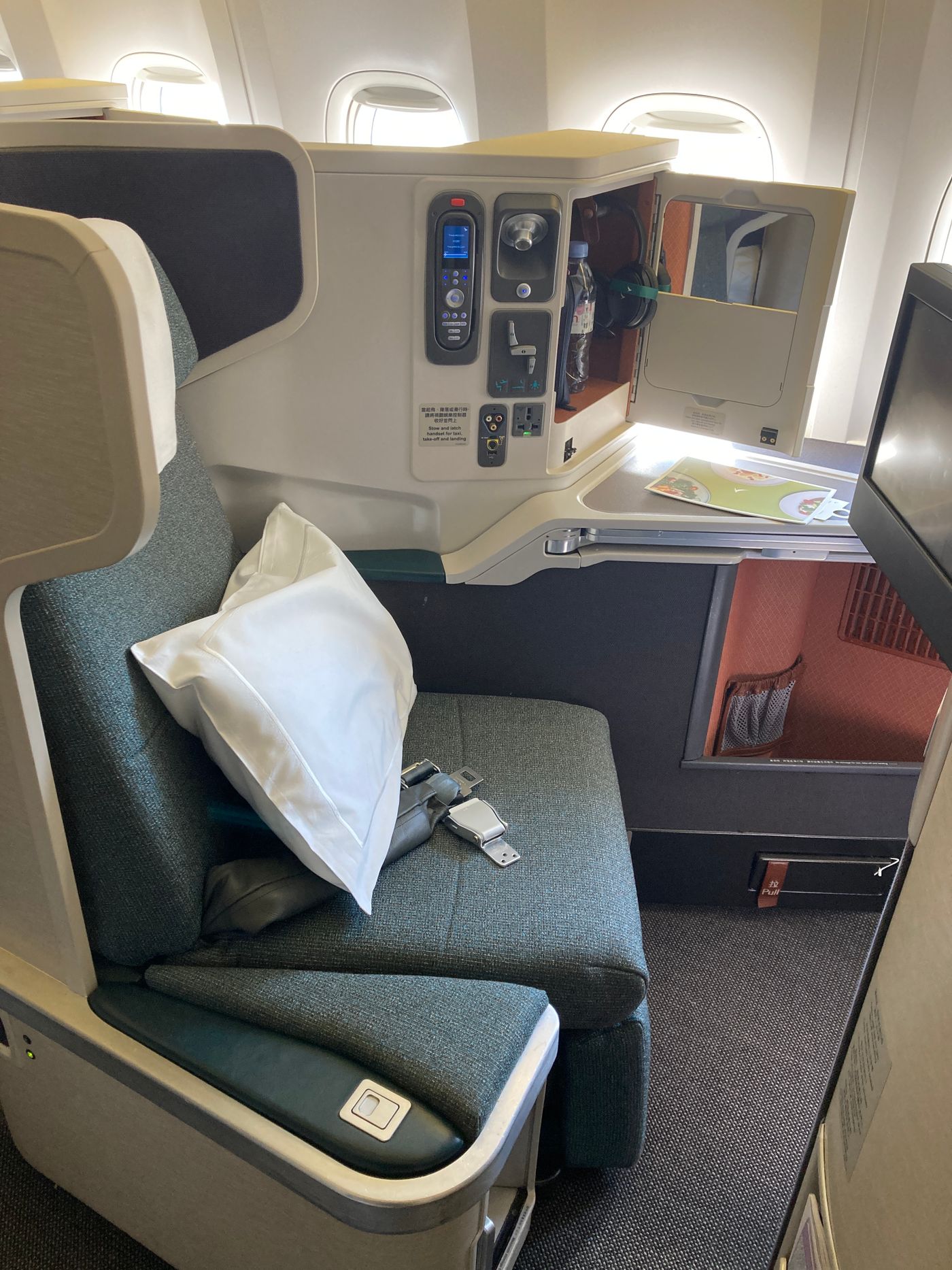
Cathay Pacific — Aria Suite — 88/100
The Aria Suite is the most complete new business class of the current cycle — a door, 1-2-1 direct aisle access, deep storage, and a cabin finished to a standard that makes the Boeing 777-300ER feel newer than it is. Forty-five suites per aircraft. The problem is arithmetic: 25 aircraft have it. Cathay's other 19 and 20 Boeing 777-300ERs, its 35 Airbus A350-1000s and five A350-900s, and the A330 fleet all fly the older Cirrus reverse-herringbone. That seat is still 1-2-1 with direct aisle access, which is why fleet consistency holds at 15 of 20 rather than collapsing — you are never in a bad seat on Cathay, just often not in the best one.
The rollout has followed the North American gateways: Vancouver, then San Francisco, then Los Angeles from 4 April 2026 and daily from 1 May, and it has since reached Perth. Ground takes a full 15 of 15 — The Pier and The Wing at Hong Kong International are the best pair of business class lounges any airline operates at a single airport. Check the aircraft before you book: AeroLOPA's Cathay seat maps distinguish the variants, and the Aria aircraft is the one coded 77J.
Japan Airlines — A350-1000 Business — 86/100
Fifty-four seats in 1-2-1, the Safran Unity platform, translucent panel doors, 24-inch 4K screens, a personal wardrobe and a communication panel outside the door so crew can reach you without opening it. It is the best-detailed business class cabin flying, and the only reason it sits behind Cathay is lounge and fleet reach. The A350-1000 serves Tokyo Haneda to New York JFK, London Heathrow, Los Angeles, Dallas Fort Worth and Paris.
The same suite is coming to the Boeing 787-9 — 11 existing Dreamliners retrofitted, plus ten new aircraft arriving between 2028 and 2031 — which will roughly double the number of routes you can plan around. Until then the rest of the long-haul fleet flies the older Sky Suite, which is good but not this. JAL's own seat page carries the specification.
Singapore Airlines — 2013 Business — 84/100
The highest-scoring airline here with the weakest seat, and the clearest illustration of why a single number is not enough. Singapore's long-haul business class dates to 2013. It has direct aisle access and a flat bed, but you flip the seat over to make the bed, you sleep at a slight angle with your feet in a cubby under the next passenger's console, and there is no door, no USB-C, no wireless charging and no Bluetooth. Twenty of 30 on seat and privacy is generous by 2026 standards.
Everything else is at the top of the ranking. Book the Cook is still the best pre-order dining in the sky and takes a full 15 of 15; the SilverKris lounges at Changi take another 15 of 15; and because the airline has been flying the same seat for thirteen years, you know exactly what you are getting on every aircraft — 18 of 20 for fleet consistency, the highest here alongside Emirates. Consistency and quality are different criteria, and Singapore is proof.
The replacement was confirmed delayed on 5 May 2026. The new Business Class now enters service in the first quarter of 2027 on the retrofitted Airbus A350-900 long-haul fleet, against an original target of the second quarter of 2026. The new First Class is a separate product on the seven Airbus A350-900ULRs — four suites in 1-2-1 with a convertible centre double — and has no confirmed entry-into-service date, with indications pointing at the second quarter of 2027. Forty-one A350-900s are in the retrofit programme in total, and the Boeing 777-9s will carry both products on delivery. Singapore's stated reasons were industry-wide supply chain constraints and a certification delay on one of the two new seats. Both cabins are due to be unveiled at a launch event in November 2026. The current cabin is what you fly until then.
Emirates — Business — 82/100
No door, no 1-2-1 on parts of the fleet, and 82 of 100 anyway — because the retrofit programme has done something no other airline here has managed. As of July 2026 Emirates had completed 100 aircraft in 44 months, 47 Airbus A380s and 53 Boeing 777s, against a US$5 billion programme covering 219 aircraft. Another 20 or so complete by December 2026. That is why fleet consistency takes 18 of 20: the odds of being put on an un-refurbished Emirates aircraft fall every month.
The seat itself is mid-table — a flat bed, 1-2-1 on the retrofitted 777s, no privacy door anywhere — and the A380 onboard bar is the compensating feature that no competitor has. From October 2026 the programme adds 4K OLED HDR10+ seatback screens and Safran's lightweight Z400 seat, which will matter more to the score in 2027 than it does now. Emirates' cabin features page is the reference for which aircraft has what.
Which business classes have doors in 2026
A closing door was a first class feature until Qatar put one on a business class seat in 2017. Nine of these twelve airlines now have one somewhere in the fleet, but only four have it on most of what they fly — and that difference is what the fleet consistency criterion measures.
| Airline | Door | On which aircraft | Everything else |
|---|---|---|---|
| Qatar AirwaysQsuite | ✓ Yes | All 28 A350-1000s, ~70% of 777-300ERs | Older 777s and the A380 fly 2-2-2 |
| ANAThe Room / The Room FX | ✓ Yes | 777-300ER and, from Aug 2026, 787-9 | Three 787-9s flying by end-2026 |
| Japan AirlinesSafran Unity | ✓ Yes | A350-1000 | Translucent panel doors; 787-9 retrofit from 2028 |
| British AirwaysClub Suite | ✓ Yes | 93 widebodies — 78% of the LHR long-haul fleet | The rest still fly 2-4-2 Club World |
| Cathay PacificAria Suite | ● Partly | 25 of the 777-300ERs | Everything else: Cirrus 1-2-1, no door |
| Air FranceSafran Versa | ● Partly | ~half of the 40 777-300ERs | A350s and 787s on the older seat |
| DeltaDelta One Suite | ● Partly | Most A350 and A330neo flights | 767s have no door |
| Turkish AirlinesCollins Horizon | ● Partly | A350-900 only | 787-9 Opal no door; 777 is 2-3-2 |
| UnitedPolaris Suite | ● Partly | Elevated 787-9 only — doors unlocked Aug 2026 | Rest of fleet: 2016 Polaris, no door |
| Singapore Airlines2013 Business | ✗ No | — | New seat with door due Q1 2027 |
| EmiratesBusiness | ✗ No | — | Retrofit adds screens and a new seat, not a door |
| QantasBusiness Suite | ✗ No | — | Sliding doors arrive with the A350-1000ULR in 2027 |
What changed in 2026 — and what is still coming
Four things actually happened in 2026, and one thing conspicuously did not.
United unlocked its doors. The Polaris suites on the Elevated Boeing 787-9 shipped with privacy doors fitted but unusable — the design was still awaiting regulatory approval when the aircraft entered service. United began activating them in August 2026, aircraft by aircraft, and only on the Elevated configuration. The same aircraft carries eight Polaris Studio suites: larger than a standard Polaris seat, lie-flat, direct aisle access, an ottoman a companion can sit on, and a 4K screen. San Francisco to Singapore, which launched in April 2026, and San Francisco to London are the routes to look for.
ANA put The Room FX into service on the Boeing 787-9 in August 2026 — the widest business class bed flying, and the first mainstream business class seat that does not recline.
Cathay extended the Aria Suite to Los Angeles from 4 April 2026, weekly at first and daily from 1 May, its third North American gateway after Vancouver and San Francisco.
Singapore Airlines slipped to 2027. Confirmed on 5 May 2026: the new Business Class moves to the first quarter of 2027 from a planned second quarter of 2026, and the separate new First Class on the seven Airbus A350-900ULRs has no confirmed date at all. Supply chain constraints, and a certification delay on one of the two seats.
And Turkish Airlines' Crystal Business Class still has not flown. Unveiled in 2024, promised for 2025, then for 2026: as of September 2026 no paying passenger has sat in one. The specification is strong — 42 suites, 1-2-1 staggered, a sliding door at every seat, 22-inch screens, wireless charging, marble finishes — and none of it is scored here, because scoring a product nobody can book is how rankings stop being useful. First delivery of Crystal-fitted Airbus A350s is expected around November 2026; the Boeing 777 retrofits are 2027 and 2028 work.
Still coming: Qatar's Qsuite Next Gen on the Boeing 777-9 in the second half of 2026, phasing through 2027, with 42 suites per aircraft. Delta's new Delta One Suite on the Airbus A350-1000 in early 2027, with a closing door, a bed extended three inches in bed mode to about 6.5 feet, and a 24-inch 4K screen. Qantas's A350-1000ULR, whose flight-test programme logged a 24-hour-24-minute, 23,100-kilometre sector in July 2026 — a distance record for a commercial aircraft. Qantas takes delivery of the first airframe, named Vega, in April 2027, puts seats on sale in February 2027, and opens daily non-stop Sydney to London in October 2027. The Business suites are the first Qantas has fitted with a sliding door, alongside an adjustable divider between the alternating centre seats, an 80-inch flat bed and a full dining table.
Best business class by route
| Route | Pick | Why, and the caveat |
|---|---|---|
| Europe to the Gulf and onward Asia | Qatar Airways | Qsuite on an A350-1000 is guaranteed; on a 777 it is roughly 70/30 |
| Europe or North America to Japan | ANA or Japan Airlines | The Room FX and the A350-1000 Unity suite are the two best seats on the route |
| North America to Hong Kong | Cathay Pacific | Aria on the 77J variant only — check the aircraft, not the airline |
| Transatlantic from London | British Airways | Club Suite on 78% of the Heathrow long-haul fleet; the 2-4-2 is the risk |
| Transatlantic from Paris | Air France | Only on a retrofitted 777-300ER: JFK, LAX, MIA, SFO |
| US west coast to Singapore | United | SFO–SIN flies the Elevated 787-9 with working doors since Aug 2026 |
| Europe or the US to Australia | Qantas or Singapore Airlines | Neither has a door until 2027; both score well on everything else |
| Anywhere via Dubai | Emirates | Consistent rather than exceptional — and improving monthly |
When it goes wrong: your rights are the same in business
One practical note that applies to every airline on this list. On any flight departing an EU or UK airport, and on any flight into the EU on an EU carrier, a business class ticket carries exactly the same EU261 rights as an economy one: compensation is set by flight distance, not by fare, and long-haul delays over four hours are worth €600. A business class fare buys a better seat, not a better claim — and the airlines that score highest here are no less likely to be delayed. Our EU261 claim company comparison scores the five firms on fee and court record, and shows what the do-it-yourself route is worth against each of them. AirHelp is the largest of them and the one with the widest jurisdictional reach.
Paying for it: points before cash
Business class is the cabin where points work hardest, because the cash fare is high enough to make the redemption worth planning around and the award space is wide enough that planning is possible. Transferable points from a premium card programme are the practical route: they move to whichever airline has space rather than locking you into one carrier.
The useful transfer paths for the top of this ranking are narrower than they look. Qatar Qsuite is bookable with Avios, American AAdvantage miles and Alaska Mileage Plan. ANA's The Room comes through Virgin Atlantic Flying Club or ANA Mileage Club, and Virgin's rates on ANA are among the best value in the business. Japan Airlines goes through Alaska and the other Oneworld partners. Cathay's Aria Suite is an Asia Miles or Avios redemption — but the aircraft sub-fleet matters more than the award chart, because 25 aircraft carry it and about a hundred do not.
The constraint is almost never the balance. It is award availability on the specific airframe with the good seat. Our points guide covers the transfer routes in detail, and the card comparison covers which cards earn the transferable currencies. If lounge access is part of why you are buying the card rather than the ticket, the lounge access index scores the seven cards on that alone.
Frequently asked questions
What is the best business class airline in 2026?
Qatar Airways, on 94 of 100. The Qsuite is still the only business class seat that turns four middle seats into a genuine private room with a closing door, it is on all 28 Airbus A350-1000s and roughly 70 per cent of the Boeing 777-300ER fleet, and Al Mourjan at Doha is one of the two or three best business class lounges in the world. ANA is second on 90 and has the better bed — The Room FX on the Boeing 787-9 measures up to 41.5 inches wide and 76.5 inches long, which is wider than most first class seats were a decade ago. Cathay Pacific is third on 88. The gap between Qatar and the rest is narrower than it was in 2024, because Qsuite Next Gen has not launched yet and everyone else has been retrofitting.
Which business class airlines have suites with doors in 2026?
Nine of the twelve airlines scored here have a door on at least one product, but only four have it on most of what they fly. Qatar Qsuite, ANA The Room and The Room FX, Japan Airlines on the A350-1000, and British Airways Club Suite on 93 aircraft — 78 per cent of the Heathrow long-haul fleet — are the four you can plan around. Cathay Pacific has the Aria Suite on 25 Boeing 777-300ERs and the older door-less Cirrus seat on everything else. Air France has the Safran Versa suite on roughly half its 40 Boeing 777-300ERs. Delta has a sliding door on the A350 and A330neo but not the 767. Turkish has one on the A350 only. United has one on the Elevated Boeing 787-9 and nowhere else. Singapore Airlines, Emirates and Qantas have no door on any long-haul business class seat today.
Which airline has the widest business class seat?
ANA. The Room FX, which entered service on the Boeing 787-9 in August 2026, converts to a bed up to 41.5 inches wide and 76.5 inches long. It does not recline in the conventional sense — the backrest pre-reclines into a sofa position and you slide down into bed mode rather than tipping backwards. The original The Room on the Boeing 777-300ER is close behind and remains the widest seat on a twin-aisle of that generation. Both alternate forward- and rear-facing in a 1-2-1 layout, both have a door, and both take a full 20 of 20 for sleep in this scoring — the only airline here that does.
What is the difference between first class and business class in 2026?
Less than it was, and on some airlines nothing at all. A 2026 business class suite on Qatar, ANA or Japan Airlines gives you a closing door, direct aisle access, a flat bed over six feet, a 24-inch screen and dine-on-demand — the specification of an international first class cabin from around 2015. What first class still buys is floor area, a separate cabin with a much better crew ratio, a wardrobe you can stand at, and in a handful of cases a bed separate from the seat. The honest test is whether the fare multiple, usually two to three times the business fare, buys that much more. Our first class versus business class comparison works through it, and the first class ranking scores the cabins that are left.
What changed in business class in 2026?
Four things. United activated the privacy doors on its Elevated Boeing 787-9 Polaris suites in August 2026 — they had been fitted but unusable since launch while the design waited on regulatory approval. ANA put The Room FX into service on the Boeing 787-9 in August 2026, with three aircraft due to be flying by year end. Cathay Pacific extended the Aria Suite to Los Angeles from 4 April 2026, daily from 1 May, its third North American gateway. And Singapore Airlines confirmed in May 2026 that its new Business Class slips to the first quarter of 2027, from a planned second quarter of 2026. Still to come: Qatar's Qsuite Next Gen on the Boeing 777-9 in the second half of 2026, and Turkish Airlines' Crystal Business Class, which has still not carried a paying passenger.
Which is the best business class to Asia and Australia?
To Japan, ANA and Japan Airlines on their own metal — The Room and the A350-1000 Safran Unity suite are the two best hard products flying those routes, and both beat any European or American carrier serving Tokyo. To Hong Kong and onward Asia, Cathay Pacific on a 777-300ER with the Aria Suite, with the caveat that only 25 aircraft have it, so the flight number matters more than the airline. To Southeast Asia from Europe, Qatar Airways via Doha on a Qsuite aircraft. To Australia, Qantas and Singapore Airlines both score well without having the best seat — Qantas on 79 and Singapore on 84 — and neither has a door. Qantas's A350-1000ULR, whose Business suites are the first the airline has fitted with a sliding door, does not open Sydney to London until October 2027.
How do I fly business class using points and miles?
Transferable points from a premium card programme are the practical route, because they can be moved to whichever airline has award space rather than locking you into one carrier. Qatar Qsuite is bookable through Avios, American AAdvantage and Alaska Mileage Plan; ANA The Room through Virgin Atlantic Flying Club and ANA Mileage Club; Japan Airlines through Alaska and Oneworld partners. The constraint is almost never the points balance — it is award availability on the specific aircraft with the good seat. Our points guide covers the transfer routes, and the card comparison covers which cards earn the transferable currencies.
Has Turkish Airlines' Crystal Business Class started flying?
No. As of September 2026 no Turkish Airlines aircraft has carried a paying passenger in Crystal Business Class, despite the product being unveiled in 2024 and originally promised for 2025. The airline expects the first newly delivered Airbus A350s with Crystal to arrive around November 2026, with Boeing 777 retrofits in 2027 and 2028. What Turkish actually flies today is three different products: the Collins Horizon seat on the A350-900, which does have a door and direct aisle access; the Stelia Opal on the Boeing 787-9; and a 2-3-2 layout on the Boeing 777 that leaves five of every seven passengers without direct aisle access. That spread is why Turkish takes 8 of 20 on fleet consistency and finishes 11th here despite the best catering in the ranking.
When is a private jet cheaper than business or first class?
The arithmetic turns at roughly four to six passengers on shorter sectors. A light jet between European cities typically runs €9,000 to €16,000 for the aircraft, so six people at €1,500 to €2,700 each is competitive with a flexible business fare on the same route, and the door-to-door time saving is real. On long-haul it rarely works: a transatlantic heavy jet is a different order of cost and business class on a Qsuite or The Room is a genuinely good night's sleep. The comparison is worked through in our private jet versus first class cost analysis.
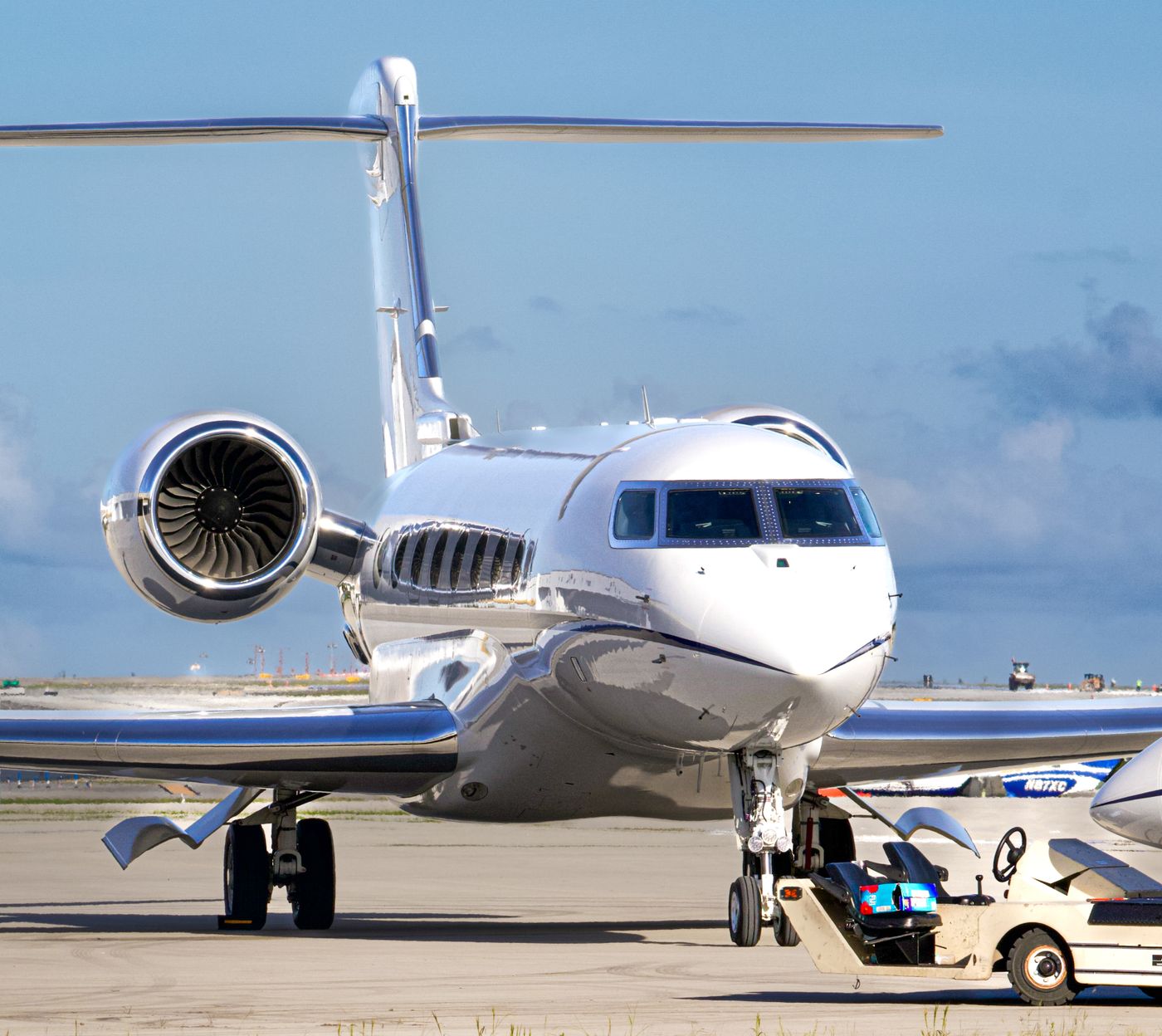
Four or more travelling together? Price the alternative
On short and medium sectors with four to six passengers, a light jet at €9,000 to €16,000 for the aircraft compares directly with flexible business fares on the same route, and the door-to-door saving is real. On long-haul it rarely does — which is the whole argument for a Qsuite or The Room.
Compare a private charter quote →