Bali Luxury Villa Guide 2026: Ubud, Uluwatu, Canggu and Seminyak Honestly Compared
The single biggest Bali mistake is treating the island as one place. Ubud, Uluwatu, Seminyak, Canggu and Nusa Dua are five genuinely different holidays, and choosing the wrong one is the difference between the best week of your year and a frustrating one. This is where to actually stay in 2026 — the five areas, the hotels that earn the money, and when a private villa beats all of them.
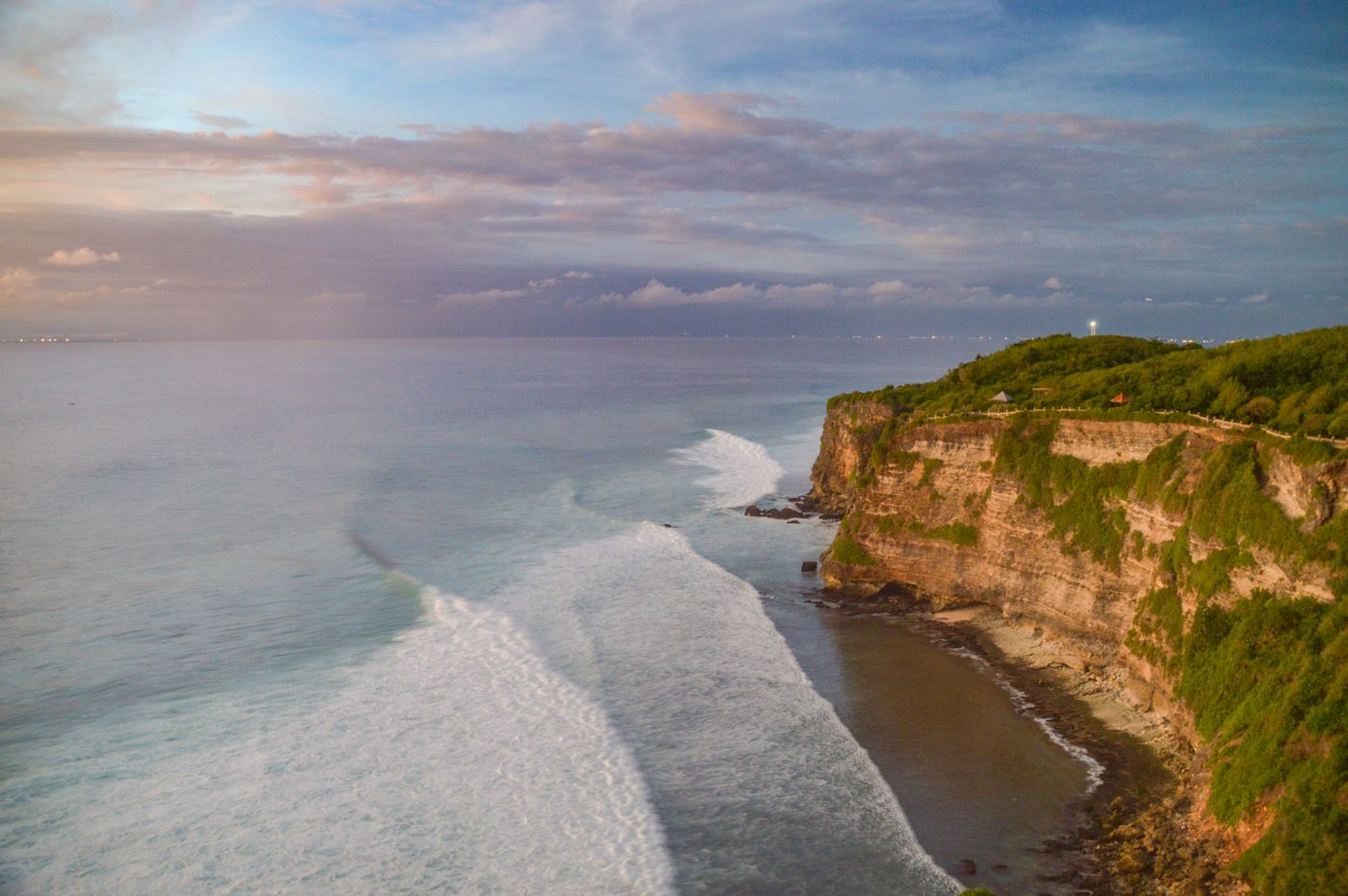
The five Bali areas, honestly
The five luxury-relevant areas of southern and central Bali are genuinely different holidays. Below is the honest read on each, and the Google Maps pin for anyone who wants to see how far apart they actually are — which is the part most itineraries get wrong.
| Area | Character | Best for | Avoid if | From DPS |
|---|---|---|---|---|
| Ubud | Jungle, rice terraces, art, wellness | Cultural immersion, couples, wellness | You want beach access | ~90 min |
| Uluwatu | Clifftop drama, world-class surf, sunsets | Drama, design, seclusion, surfers, honeymoons | You want a walkable village | ~60 min |
| Seminyak | Beach clubs, dining, shopping, social | Couples, friend groups, beach-club fans | You want quiet | ~30 min |
| Canggu | Younger, surf and cafe culture, villa-led | Creatives, longer stays, families with teens | You want grand-hotel polish | ~45 min |
| Nusa Dua | Gated resort enclave, calm swimming beach | Families with young children, peace | You want local flavour | ~20 min |
For stays of eight nights or more, split the trip: three to four nights in Ubud, four to six on the coast. The drive between them is 75 minutes to two hours and the two experiences are different enough that doing both is genuinely the right answer. Under seven nights, pick one and stay put — and read our Bali pre-arrival checklist before you book anything.
Ubud — jungle, art, wellness
Ubud sits in central Bali, an hour and a half inland from the airport, surrounded by rice terraces and rainforest river valleys. It is the cultural heart of the island and the area where the spiritual and wellness sides of Bali still dominate over the beach-resort side. The luxury hotels are built along the Ayung River valley, and the experience is jungle immersion rather than beach access.
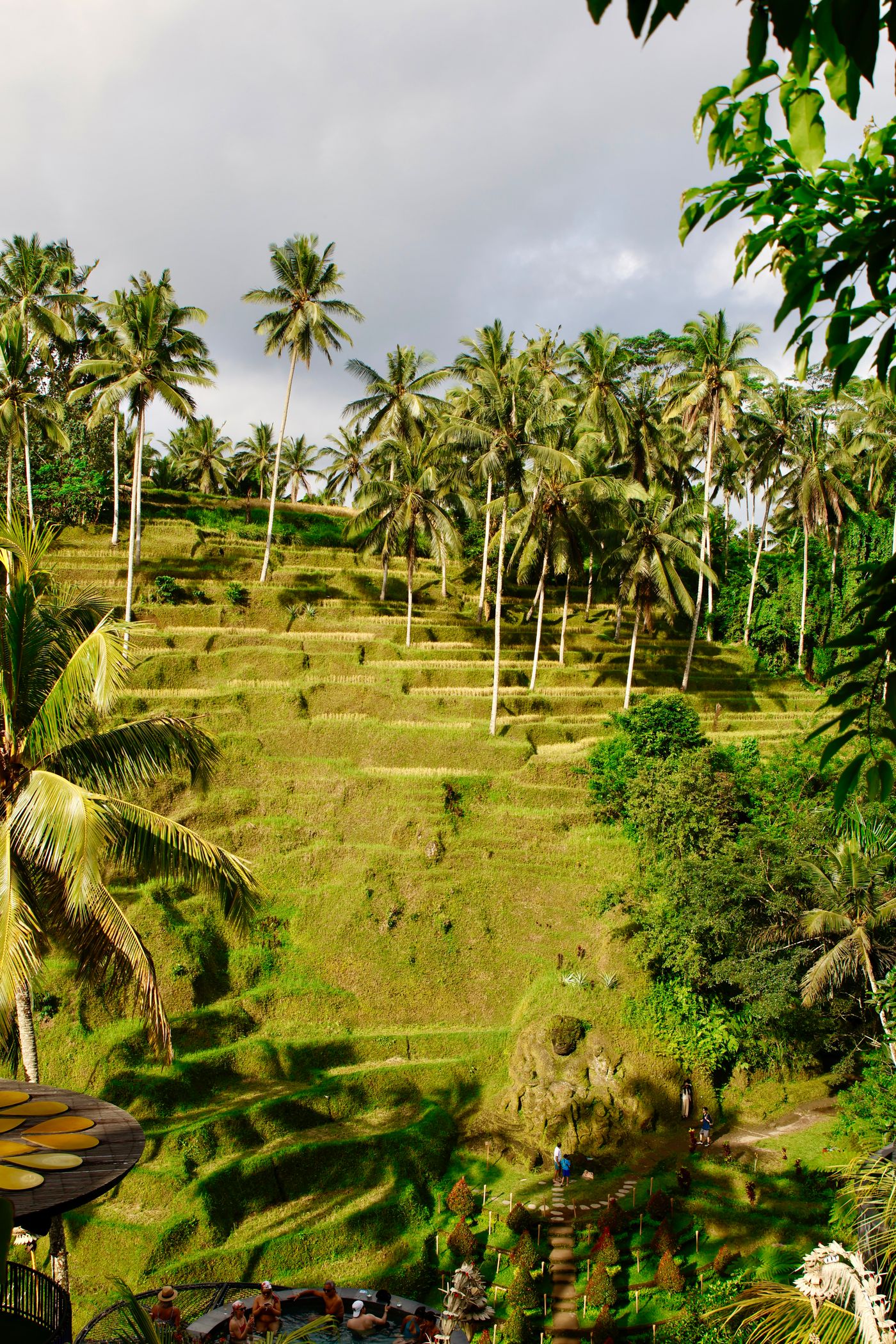
What Ubud delivers: rice-terrace and river-gorge settings, world-class spas, the strongest art and craft culture on the island, and a pace that genuinely changes how you sleep. What it does not deliver is beach — Ubud is 90 minutes from swimmable coast, so if the trip needs sand every day, this is the wrong base.
One gradient matters enormously. Ubud town itself, around the Palace and the Monkey Forest, is busy and increasingly congested. The villages outside it — Sayan, Kedewatan, Payangan, Tegallalang, Keliki — are where the top hotels actually sit, and they remain genuinely quiet. When booking anything described as "Ubud", check the real location: Four Seasons Sayan is in Sayan and Amandari is at Kedewatan, and those fifteen-minute drives are the whole difference between the two Ubuds.
Uluwatu — clifftop drama
Uluwatu occupies the southern tip of the Bukit peninsula, an hour south of the airport, on limestone cliffs above the Indian Ocean — Bulgari measures its own clifftop at 160 metres. It is the most dramatic landscape in Bali and the area that has attracted the most ambitious recent hotel investment.
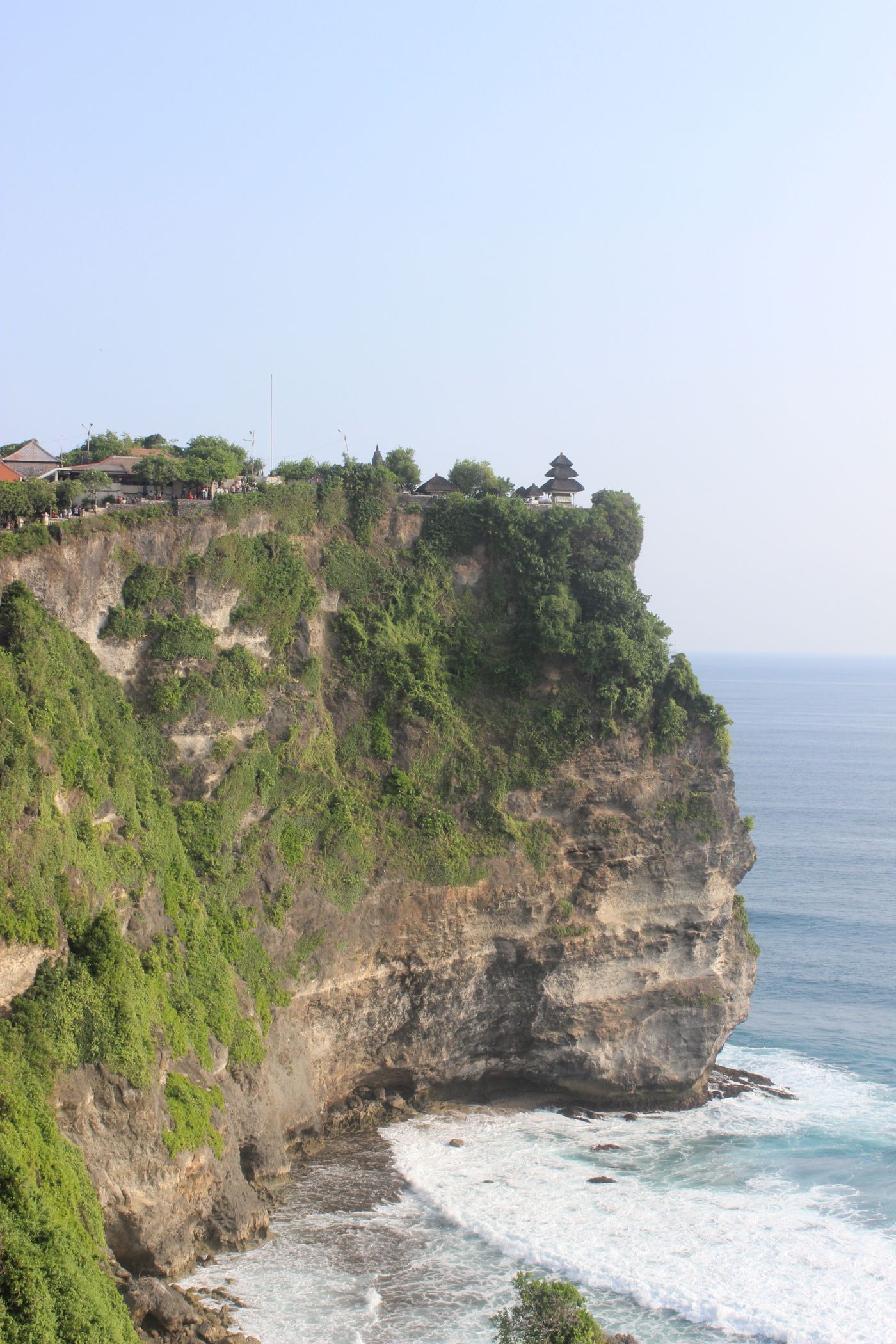
What Uluwatu delivers: the best ocean and sunset views in Bali, the most consistent surf on the island for advanced surfers (Uluwatu, Padang Padang, Bingin), and a genuinely secluded clifftop atmosphere. What it does not deliver: casual beach access — most beaches require a steep stair descent — a walkable village, or the gentle swimming conditions small children need. You commit to your hotel here; every dinner out is a 10 to 30-minute drive.
The trade-off is worth naming plainly. Uluwatu has the most spectacular hotels in Bali and the least spontaneity. If you want to wander out to a warung, book Canggu or Seminyak instead.
Seminyak — beach club energy
Seminyak sits 30 minutes north of the airport on the southwestern coast, and it is the original luxury beach area of the island: the most developed, the most social, and the most international. The dining, shopping, beach clubs and nightlife operate at a level travellers from Sydney, Singapore and London recognise immediately.
What Seminyak delivers: the best beach club scene on the island (Potato Head, Ku De Ta, La Brisa, Mrs Sippy), dense dining, real shopping, walkable streets between hotels and restaurants, and a sunset beach culture that defines the area. What it does not deliver: privacy, seclusion, or the "real Bali" many travellers arrive looking for.
Accommodation skews to beachfront five-star hotels — The Legian Seminyak, The Oberoi Beach Resort, Hotel Indigo Bali Seminyak Beach — and to standalone villa rentals, of which Seminyak has the island's densest supply. If you want a social, dining-led beach holiday, this is exactly right. Book the Seminyak beachfront hotels on Agoda, which consistently carries the deepest Indonesian inventory and the best rates in the region.
Canggu — younger, surf-led
Canggu sits just north of Seminyak and has become, over five years, the defining "younger luxury" area of Bali. The aesthetic is surf, creative and cafe-driven, with a real long-stay and creative-industry community alongside the traditional luxury base. It is materially less dressy than Seminyak and more focused on surf, yoga and long breakfasts than on bottle service.
What Canggu delivers: the best cafe and breakfast culture in Bali, the strongest beginner and intermediate surf, an emerging restaurant scene, and rice-paddy views that still feel discoverable. What it does not deliver: the polish of Seminyak's grand hotels or the drama of the Uluwatu cliffs. Traffic on the Batu Bolong road is real and the area is in active transition from secret to crowded.
Luxury accommodation here is villa-dominated rather than hotel-dominated — standalone houses with pools, staff and gardens, typically two to five bedrooms, which suits couples and small groups who want privacy and their own kitchen. The exception is Regent Bali Canggu on Jalan Pantai Batu Bolong, IHG's luxury flag in the area and the one branded option that competes with the villas.
Nusa Dua — resort enclave
Nusa Dua is the gated resort enclave on Bali's southeastern coast, 20 minutes from the airport, built in the 1980s as a contained luxury tourism zone with its own road network and beach. It has the calmest swimming water in southern Bali, the most family-organised resort infrastructure, and the least exposure to traffic.
What Nusa Dua delivers: a safe, calm swimming beach — effectively the only one in the south — the most family-ready resorts on the island, and a 20-minute airport transfer. Aman Villas at Nusa Dua sits here, as do St Regis Bali, Mulia and the Apurva Kempinski. What it does not deliver is any sense of being in Bali. The enclave format means you are inside a gate the whole time: no village to walk to, no market, no accident of discovery. It is a holiday in Bali rather than a Bali holiday.
That makes it right for two specific profiles: families with children under eight who need safe swimming and structured kids' clubs, and travellers who want a beach resort and do not much mind which country it is in. For everyone else, the other four areas deliver more.
The hotels that matter
Not an exhaustive list — the shortlist of properties where the experience justifies the trip and the price. Facts below were read at each property's own site on 8 September 2026; nightly figures are indicative editorial bands for a one-bedroom pool villa in dry season, not live quotes.
Bulgari Resort Bali Uluwatu
The most architecturally dramatic hotel in Bali, on a 160-metre limestone clifftop with one- and two-bedroom villas and three- and five-bedroom mansions, all with private pools. The dining is unusually serious for a resort: Il Ristorante by Niko Romito, Sangkar, a pizza bar by Pier Daniele Seu, and The Bvlgari Bar at sunset, which is one of the great Bali hours.
Four Seasons Resort Bali at Sayan Ubud
Cocooned in the Ayung river valley outside Ubud, with the most distinctive arrival in Bali: a curved bridge across the river onto a lotus pond that is also the lobby roof. Accommodation runs from Family Suites to one-bedroom villas, riverfront villas and the Royal Villa, many with private pools. The right answer for travellers who want the Ubud jungle at Four Seasons service consistency.
Amandari Ubud
Aman's Ubud property, designed after a traditional Balinese village on the lip of the Ayung River gorge, with one of the most atmospheric pools in Asia. Note the name: there is no hotel called "Aman Ubud" — Aman's three Bali properties are Amandari near Ubud, Amankila on the east coast at Manggis, and Aman Villas at Nusa Dua. Listings using "Aman Ubud" mean Amandari.
Capella Ubud Ubud
Twenty-two one-bedroom tents and one two-bedroom lodge, each with its own private pool, set in rainforest north of Ubud and designed by Bill Bensley as a tribute to nineteenth-century explorers. Tent categories run Keliki, Valley, Forest and Terrace. The right answer for anyone who wants something that is genuinely not a hotel room — the tented-camp format has no real equivalent in Asia.
Alila Villas Uluwatu Uluwatu
The most architecturally celebrated hotel in Bali, designed by Singapore's WOHA Architects and the first resort in Indonesia to reach the highest level of EarthCheck Best Practice Building Planning and Design certification. Every villa has a private pool and a large footprint. Service is less polished than Bulgari's; the architecture and the cabanas over the ocean are the experience here.
Six Senses Uluwatu Uluwatu
Cliff Pool Villas, ocean-facing Sky Suites and a four-bedroom Presidential Villa, high above Bali's southernmost surf breaks, with the most serious wellness programme in Uluwatu. The one that matters commercially: Six Senses is part of IHG, so unlike Bulgari, Four Seasons or Aman it is bookable and creditable inside a mainstream points programme.
IHG has quietly built the deepest luxury footprint in Bali of any group: Six Senses Uluwatu, InterContinental Bali Resort at Jimbaran, InterContinental Bali Sanur, Regent Bali Canggu, Hotel Indigo Bali Seminyak Beach and Kimpton Suntaya Bali Ubud, listed as opening. That is five of the six areas in this guide inside one programme. Bulgari, Four Seasons, Aman and Capella are cash bookings. If you are sitting on a balance, check the IHG Bali portfolio before paying rack rate elsewhere, and see our luxury hotel brand hierarchy for where each of these sits.
Private villas — when they win
Bali is the best standalone private villa destination in Asia. The rental market is mature, the service standard at the top end is genuinely high, and the value per dollar is materially better than equivalent space at a luxury hotel. For a group of six to ten, a villa is almost always the right answer over a block of hotel rooms.
What you actually get
A typical villa at the $1,500 to $4,000 a night tier includes three to five bedrooms, a meaningful private pool, full housekeeping, a private chef who shops daily and cooks every meal at no cost beyond groceries, a villa manager or butler, a driver and car for daily use, and full grounds maintenance. The model is fundamentally unlike a hotel: the staff are yours alone, the schedule is yours, and the menu is built round your group. Our guide to what a luxury villa actually includes sets out what to check before you book.
Where the best villas are
The Uluwatu cliff for drama and ocean views. Canggu and Pererenan for the younger aesthetic and beach-path access. Seminyak for walkable beach clubs combined with private staff. Ubud for jungle immersion. All four have genuinely strong inventory, which is unusual — most destinations have one good villa area, not four.
When a villa beats a hotel, and when it does not
The villa wins for groups of six or more, for stays of five nights and up where you will actually use the chef, for families who want flexible meal and bed times, and for anyone who specifically wants no other guests. The hotel wins for couples on shorter stays, for travellers who want multiple restaurants, a full spa and a kids' club, and for first-time visitors who want the safety net of branded service. We argue that trade-off out in full in villa vs hotel.
Where to book a villa without gambling on the photos
The risk with Bali villas is not price, it is honest representation — the gap between the listing and the house. Plum Guide vets properties for build quality, service and accuracy rather than listing everything, which is the specific problem worth paying to solve here. Worth it for stays of five nights or more; see how it compares in our Plum Guide vs Le Collectionist vs The Thinking Traveller assessment.
Browse vetted Bali villas on Plum Guide →When to go in 2026
| Window | Conditions | Crowds | Verdict |
|---|---|---|---|
| April | Dry season settling in | Building | Good — soft entry, decent rates |
| May – June | Dry, calm, less humid | Moderate | Best value Pick |
| July – August | Dry, peak European and Australian holidays | High | Crowded, peak rates — book early |
| September – October | Dry, calmer, post-summer | Moderate | Best overall Pick |
| November | Wet season onset, mostly sunny | Light | Good — value rates, gentle risk |
| Mid-Dec – mid-Jan | Wet but warm, holiday peak | Sold out | Holiday rates — book months ahead |
| February – March | Wettest period | Light | Lowest rates, real weather risk |
The wet season is less punishing than the calendar implies: most days bring several hours of sun broken by short, heavy downpours, and rates fall well below dry-season peak. For how Bali fits against the rest of the region, see the best time to visit Southeast Asia month by month.
Getting to Bali
Bali is served by Ngurah Rai International Airport (DPS) at Denpasar, the island's only airport. It is at the southern end: 20 minutes to Nusa Dua, 30 to Seminyak, 45 to Canggu, 60 to Uluwatu, 90 to Ubud.
From Europe
There are no direct flights from Europe to Denpasar. The standard routings are via Singapore, Doha, Dubai or Hong Kong, and total journey time from London or Paris is 16 to 18 hours including the connection. Premium cabins make that distance civilised and economy does not — our ranking of the best business class airlines covers the carriers that actually fly the route, and the jet lag protocols matter more on a seven-hour time shift than most people expect.
From the US and Asia
From the US East Coast the sensible routings are via Doha, Dubai or Tokyo, 22 to 26 hours in total; from the West Coast via Hong Kong, Singapore, Tokyo or Taipei, 18 to 22 hours. Within Asia, Singapore is the closest major hub at 2 hours 45 minutes, Hong Kong 4 hours 30, Bangkok 4 hours, Tokyo 7 hours, Sydney 6 hours. Bali also pairs naturally into a longer regional trip — see our 14-day Southeast Asia itinerary, the Singapore and Thailand guides.
Private aviation
Denpasar handles any private jet, but the route from Europe is genuinely long for charter: direct from London or Paris needs an ultra-long-range aircraft such as a Global 7500 or Gulfstream G650ER. From the Gulf it is a 6 to 8-hour sector. The common structure among travellers who use both is commercial first or business as far as Singapore, then a short charter on to Denpasar of under two hours. For what any of that actually costs, see our ultra-long-range jet cost per hour and charter prices by route.
Getting around once you land
Bali has no rail and no meaningful public transport for visitors. Every hotel arranges cars; most villa rentals include a driver. Pre-booking the airport transfer is worth it on arrival day, when DPS is chaotic and the queue for a metered taxi is long. For the islands — Nusa Penida, the Gilis, Lombok — the fast boats are the practical route, and for onward travel through Java they are the only sane one.
Two more worth reading before you go: our Denpasar airport pickup guide, and the best way to book activities in Asia — the platforms differ more in Indonesia than they do in Europe. On connectivity, what an eSIM actually costs will save you the airport SIM counter, and SafetyWing coverage decoded explains what a tropical-Asia policy does and does not cover.
Frequently asked questions
Where should I stay in Bali for the first time?
Pick by what you want from the trip, not by ranking lists. Ubud (jungle, rice terraces, wellness, art) suits travellers who want cultural and creative immersion. Uluwatu (clifftop, dramatic ocean, surf) suits travellers who want drama and seclusion. Seminyak (beach clubs, dining, shopping) suits couples and friend groups who want a social beach scene. Canggu (younger, surf, cafe culture) suits creative travellers and families with teenagers. Nusa Dua (gated resort enclave, calm beach) suits families with young children. The mistake is treating Bali as one place — the five areas are genuinely different holidays.
How much does a luxury villa or hotel in Bali cost in 2026?
Entry-level luxury pool villas at the top brands start around 700 to 1,200 US dollars a night. The top tier — Bulgari Resort Bali, Four Seasons Sayan, Amandari, Capella Ubud, Alila Villas Uluwatu, Six Senses Uluwatu — runs roughly 1,500 to 3,500 US dollars a night for a one-bedroom pool villa in dry season. Standalone private villa rentals of three to six bedrooms with full staff run roughly 1,500 to 5,000 US dollars a night for the best properties on the Uluwatu and Canggu coast. These are indicative editorial bands, not live quotes; check current rates before you plan around them.
When is the best time to visit Bali?
April to October is the dry season. Within it, May, June and September are the strongest months — dry, less crowded, better rates. July and August are dry but crowded with European and Australian school holidays. November to March is the wet season, and it is less catastrophic than the calendar suggests: most days bring several hours of sunshine punctuated by short tropical downpours, and rates fall well below dry-season peak. Christmas and New Year are a sharp peak inside the wet season — book top properties months ahead.
Should I split my Bali stay between Ubud and the coast?
For stays of eight nights or more, almost always yes. The classic split is three to four nights in Ubud followed by four to six nights on the coast at Uluwatu, Canggu or Seminyak. The two deliver completely different versions of Bali, and trying to do both from one base means spending half the trip in a car. Allow roughly 90 minutes to two hours between Ubud and Uluwatu and 75 to 90 minutes between Ubud and Seminyak, traffic depending. A common pairing is Four Seasons Sayan or Capella Ubud followed by Bulgari, Alila Villas or Six Senses in Uluwatu.
Is Bali safe for families with young children in 2026?
Yes, with the usual tropical-Asia caveats. Tap water is not drinkable — use bottled water for drinking and tooth-brushing. Mosquito-borne illness exists but is uncommon at resort level; use repellent. The resorts in Nusa Dua, Ubud and Uluwatu run extensive children's programmes and families are a large part of their guest profile. The real constraint with young children is the flight: 16 to 18 hours from Europe including a connection, plus the time-zone shift, which is why stays of ten nights or more make the trip worth making.
Which Bali hotels are bookable on hotel loyalty points?
IHG has the deepest luxury footprint in Bali: Six Senses Uluwatu, InterContinental Bali Resort at Jimbaran, InterContinental Bali Sanur Resort, Regent Bali Canggu, Hotel Indigo Bali Seminyak Beach, and Kimpton Suntaya Bali Ubud, which is listed as opening. Alila Villas Uluwatu sits inside Hyatt. Four Seasons Sayan, Bulgari Resort Bali, Amandari and Capella Ubud are independent or single-brand and are not part of a points programme, so they are cash or travel-adviser bookings.
Is there an Aman hotel in Ubud?
Yes, but it is called Amandari, not Aman Ubud. Aman has three properties in Bali: Amandari at Kedewatan above the Ayung River gorge near Ubud, Amankila on the coast at Manggis beneath Mount Agung in east Bali, and Aman Villas at Nusa Dua on the southern peninsula. There is no property named Aman Ubud, and listings using that name are usually referring to Amandari.
How does Bali compare to the Maldives for luxury travellers?
They are different products. The Maldives is a single-resort, ocean-only experience built around the overwater villa, and it works best for couples on a five to seven-night escape. Bali is a varied destination with jungle, mountains, beach, food and a real local context outside the resort gate, and it rewards eight to fourteen nights. The Maldives is materially more expensive per night at the top tier; Bali delivers comparable luxury for less. Many travellers alternate between the two.