The 2026 Private Jet Card Index: True Cost-Per-Hour Across NetJets, VistaJet, Flexjet, Wheels Up & XO
The 2026 Index — at a glance
The pitch behind every jet card is the same: pay upfront, lock the rate, fly when you want. The reality is that fully-loaded hourly costs across the five major programmes vary by more than 60% on the same mission, contract terms hide variables that make headline rates almost meaningless, and the right answer for a traveller flying 50 hours a year is often the wrong answer for one flying 25. This Index scores all five — NetJets, VistaJet, Flexjet, Wheels Up and XO — runs the maths across four flying scenarios, and tells you which one wins for which traveller and why.
NetJets curtailed new Card and lease sales on 31 July 2026. The programme ranked first here still operates, and fractional shares remain on sale, but the 25-hour Card that sits in the entry column below is closed to new buyers. Existing Card owners may purchase a renewal card, and existing 25-hour lessees may take another lease or convert to a card. NetJets has not published the change on its own site. It is the second such pause — card sales were also suspended in August 2021 and resumed in March 2023.
The practical consequence for anyone reading this Index to buy rather than to benchmark: Flexjet is the only top-three programme currently selling a 25-hour card to a new customer. The scores below are unchanged, because availability is not one of the three scored dimensions — but it decides what you can actually buy this quarter.
- Methodology — how the five programmes are scored
- The 2026 Index ranking table
- The four scenarios — and what each programme actually costs
- 1. NetJets — the institutional standard
- 2. VistaJet — the global asset-free leader
- 3. Flexjet — the closest NetJets competitor
- 4. Wheels Up — the comeback story
- 5. XO — the dynamic-pricing membership
- When charter beats every card
- The verdict by traveller type
- Frequently asked questions
Methodology — how the five programmes are scored
Scoring framework
Each programme is scored on three weighted dimensions totalling 100. Cost transparency (25) — how completely the published rate captures the all-in cost, whether ferry fees apply, and whether fuel surcharges are itemised. Operational quality (40) — fleet age, safety certification, crew tenure, peak-day availability guarantees, recovery aircraft policy and cabin consistency. Contract flexibility (35) — minimum commitment, cancellation terms, hour rollover, aircraft interchange and the fee structure for changes. Component scores are published against every programme below, so the weighting can be re-run against your own priorities. Sources: operator websites accessed September 2026 — NetJets, VistaJet, Flexjet, Wheels Up and XO — together with Private Jet Card Comparisons for card pricing and programme changes, and Elite Traveler 2026 pricing guides. Where a figure is the operator's own claim rather than an independently verified one, it is described that way in the text. Rankings are scored against published criteria. Partners are labelled.
The 2026 Index ranking table
| Rank | Programme | Score | Components | Light jet/hr | Mid-size/hr | Heavy/hr | Min entry |
|---|---|---|---|---|---|---|---|
| 1 | NetJets | 87 | cost 20/25 · operations 38/40 · flexibility 29/35 | $8,600 | $11,500 | $16,000+ | 25hr / $215K · closed to new buyers |
| 2 | VistaJet | 84 | cost 19/25 · operations 37/40 · flexibility 28/35 | — | $15,000 | $18–25K | 25hr / 3yr commit |
| 3 | Flexjet | 79 | cost 20/25 · operations 34/40 · flexibility 25/35 | $8,532 | $11,200 | $15,500+ | 25hr / $198K + FET |
| 4 | Wheels Up | 68 | cost 18/25 · operations 26/40 · flexibility 24/35 | $8,500 | $12,200 | $14,800+ | $200K deposit |
| 5 | XO | 61 | cost 8/25 · operations 28/40 · flexibility 25/35 | Dynamic | Dynamic | Dynamic | $100K deposit |
On the basis of these numbers. The two light-jet figures are quoted all-in, because the programmes do not quote them the same way and comparing them as published is misleading. NetJets prices its entry Card275 at $215,000 for 25 hours, or $8,600 an hour, including the 7.5% US federal excise tax. Flexjet prices its 25-hour Phenom 300 card at $198,425 plus FET, which is $213,307 all-in, or $8,532 an hour. Earlier versions of this page carried $8,300 and $7,937 side by side and described both as tax-inclusive; that was wrong, and the gap between the two programmes is roughly $68 an hour rather than the several hundred it appeared to be. The mid-size and heavy columns are 2026 fixed-card rates from operator quotes obtained in April and May 2026 and have not been re-quoted since — treat them as a planning range of that vintage, not a live rate.
VistaJet publishes no light-jet rate because its fleet has no light jet in it: VistaJet lists super-midsize, long-range and super-long-range aircraft from Bombardier, Gulfstream, Embraer, Cessna and Dassault, and the smallest cabin it sells sits above the light-jet class. XO uses dynamic pricing rather than fixed hourly rates, which makes a like-for-like hourly comparison impossible — the 8 of 25 on cost transparency is that penalty, and it is the single lowest component score in the Index.
The four scenarios — and what each programme actually costs
The Index figures above are useful for ranking but they hide the variable that decides whether a programme is worth it for you: the mix of routes, peak-day demand and total annual hours. Below are four scenarios drawn from representative buyer profiles, with the maths run for each major programme. Numbers are approximate and exclude personal taxes, but they reflect the order-of-magnitude differences accurately.
Scenario 1 — the 25-hour traveller
Profile: a US-based executive flying 25 hours a year, mostly East Coast with the occasional transcontinental. A mix of light jet and mid-size missions, mostly weekday business travel booked five to ten days ahead. Minimal peak holiday flying.
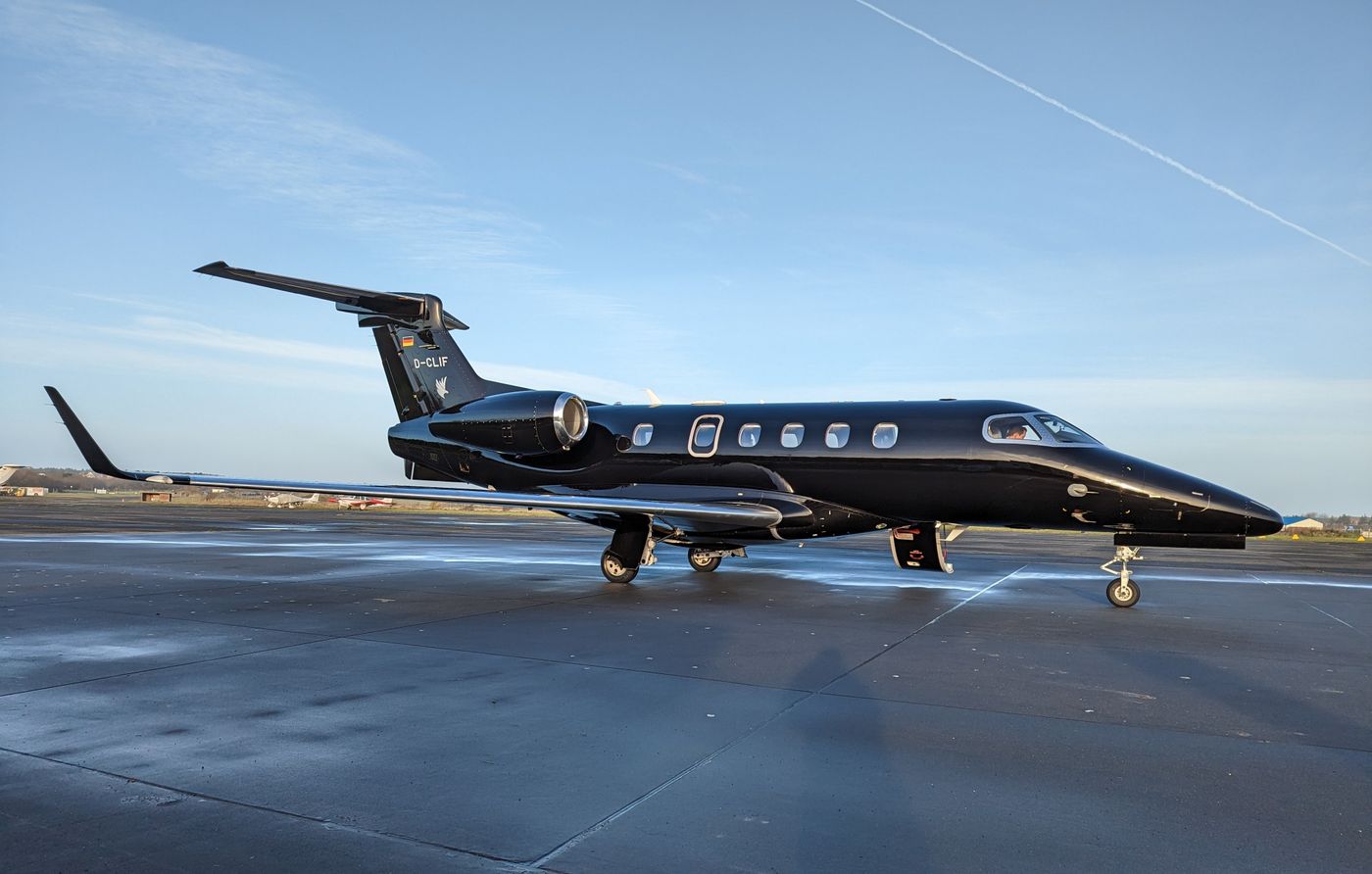
NetJets Card275 (Phenom 300): $215,000 all-in ($8,600/hr, FET included) — closed to new buyers
Flexjet 25hr (Phenom 300): $198,425 + 7.5% FET = $213,307 ($8,532/hr all-in)
VistaJet VJ25 (Challenger 350): ~$375,000 ($15,000/hr × 25hr, three-year commitment)
The 25-hour traveller is the most misadvised segment in private aviation. The card looks cheaper than charter on paper, but the hidden costs are the three-year commitment for VistaJet, the loss of optionality on Flexjet, and the fact that 25 hours rarely gets fully used in year one. Note too that the NetJets line above is a benchmark rather than an option: that card is not currently sold to new buyers, which leaves Flexjet as the only light-jet card in this scenario a new customer can actually sign. Our verdict: book on-demand charter for the first twelve months while you validate actual usage. Cross 25 hours in year one, then revisit a card.
Scenario 2 — the 50-hour traveller
Profile: an HNW family with two homes, Aspen and Palm Beach, flying 45 to 55 hours a year on light to mid-size missions. Peak-day demand at Christmas, New Year and through ski season. Some transatlantic for a European summer.
NetJets 50hr Card (mid-size): ~$575,000
Flexjet Mid-size 50hr Card: ~$560,000
VistaJet VJ25 + 25 add-on: ~$750,000 (three-year commitment)
This is the sweet spot for jet cards. The Aspen and Palm Beach family hits peak-day demand exactly when on-demand charter inflates and availability tightens, which is the problem a card is structurally designed to solve. NetJets or Flexjet wins by $80K to $100K against a year of charter, and guaranteed availability on Christmas Eve is worth real money. Our verdict: a NetJets or Flexjet card, depending on which fleet matches the missions.
Scenario 3 — the 100-hour international flyer
Profile: the founder of a global business flying 100 hours a year, predominantly long-range — New York to London, London to Singapore, Dubai to New York. Peak-day demand low, trips booked seven to fourteen days ahead.
VistaJet Program (Global): ~$20,000/hr × 100hr = $2,000,000 (no ferry fees)
NetJets long-range Card: ~$1,800,000 (limited international ferry exposure)
This is where VistaJet's no-ferry-fee structure starts to dominate. On a New York to Singapore round trip the empty positioning legs alone can cost $200,000 with charter; VistaJet's pricing model removes that line entirely. NetJets is competitive on cost but its international footprint is US and Europe-led, and Singapore and Dubai are operationally weaker. Our verdict: the VistaJet Program for genuinely intercontinental flyers above 75 hours a year; NetJets remains the better answer for predominantly US operations.
Scenario 4 — the 200-hour family office
Profile: a family office flying 200+ hours a year across multiple aircraft sizes, multiple destinations and multi-passenger needs. The conversation has shifted to fractional or full ownership.
Year-1 all-in (200hr): ~$1.2M + $180K + $940K = $2.32M
Year-2 onward: $180K + $940K = $1.12M/yr ($5,600/hr effective)
NetJets card (200hr, mid-size): ~$2.3M/yr ($11,500/hr fixed)
Above 150 to 200 hours a year on a single aircraft size, fractional becomes mathematically superior to a card on a five-year horizon: the upfront capital amortises across cheaper hourly rates from year two onward. Below that threshold, depreciation drag and the fixed management fee outweigh the saving. Our verdict: NetJets fractional at this volume, supplemented by a card for off-fleet missions.
1. NetJets — the institutional standard
Component scores: cost transparency 20/25 · operational quality 38/40 · contract flexibility 29/35
NetJets is the programme every other programme is measured against. It invented fractional ownership under Richard Santulli, was sold to Warren Buffett's Berkshire Hathaway in 1998 for $725 million, and remains the institutional standard for US corporate aviation. The entry product is the 25-hour Card275, priced at $215,000 or $8,600 an hour inclusive of federal excise tax when the lineup was re-cut in January 2025; NetJets sold that card under the Marquis Jet banner until 2021, having bought the company from its founders in 2010. Fractional shares on Phenom 300 light jets, Citation Latitude mid-size jets and Challenger 650 large-cabin aircraft scale up from there.
Availability, as of this Index. NetJets told its sales organisation on 31 July 2026 that it was curtailing new jet card sales and restricting lease sales, both the 25-hour and the 50-hour products, to concentrate on what it called its core business of shared ownership. In August it confirmed that existing card owners may buy a renewal card and existing 25-hour lessees may start another lease or convert to a card. Fractional shares are unaffected. Nothing about this appears on netjets.com, so a prospect reading the operator's own site would not know the entry product had closed — which is a cost-transparency problem as much as an availability one, and it is reflected in the 20 of 25 rather than a higher mark. It is also not the first time: card sales were suspended in August 2021 and did not resume until March 2023.
What it does best: peak-day availability is real. NetJets puts its daily movements at around 1,400 flights across a fleet it gave as 868 aircraft in August 2026, and it is the scale of that fleet that absorbs the days everyone wants to fly — Thanksgiving, Christmas Eve, the Friday of Memorial Day. Its recovery aircraft policy is the strongest in the industry. If your assigned aircraft is delayed you get a similar or better aircraft at no surcharge. The US and European footprint is unmatched, the fleet is well maintained, crew tenure is high and the cabin experience is consistent. That is what 38 of 40 on operational quality looks like.
Where it falls short: international operations outside Europe and the Americas are weaker than VistaJet's. Demand has outrun supply to the point where the entry card is no longer sold at all to new buyers, which is a harder version of the inventory pressure the programme has carried since 2021. Pricing is opaque to non-customers — quotes are issued only after a sales conversation, which is what holds cost transparency to 20 of 25. And the structure favours buyers willing to commit to fractional or a 50+ hour card; small-ticket buyers get less attention than VistaJet would give the same profile.
2. VistaJet — the global asset-free leader
Component scores: cost transparency 19/25 · operational quality 37/40 · contract flexibility 28/35
VistaJet is the structurally different proposition in this Index. It does not own light jets and does not sell fractional shares; it sells the Program membership on its own fleet, which VistaJet lists as spanning Bombardier, Gulfstream, Cessna, Embraer and Dassault aircraft from super-midsize to super-long-range, at a fixed hourly rate with guaranteed availability anywhere in the world on 24 hours' notice. The customer profile is global: founders, family offices and corporates whose missions are intercontinental.
What it does best: the no-ferry-fee structure. On a New York to Singapore round trip with a non-intercontinental operator, repositioning the aircraft empty between legs can add $150,000 to $300,000. VistaJet has eliminated that line, and has made the fleet investment to support it globally. Cabin consistency is the strongest in the industry — the silver-and-red livery is identical in Singapore, Lagos and São Paulo, and cabin host training is centralised.
Where it falls short: there is no light-jet option. If your missions are predominantly US domestic or short-hop European, VistaJet is structurally the wrong fit, because the smallest aircraft is a Challenger 350-class super-midsize and you pay those rates whether you need them or not. The three-year commitment on VJ25 locks you in before you have validated your usage pattern, and Program pricing is custom-quoted with no published rate card. It does publish a charter from-price of $11,000 per hour, which is more than three of the other four give you, and it is why the programme takes 19 of 25 on cost transparency rather than less. Note the wording, though: it is a from-price on charter, not a Program rate, and VistaJet's own membership pages give the same $11,000 without the per-hour qualifier. Treat it as a floor, not a quote.
3. Flexjet — the closest NetJets competitor
Component scores: cost transparency 20/25 · operational quality 34/40 · contract flexibility 25/35
Flexjet is the second-largest fractional operator in the US behind NetJets, and on most operational measures it is genuinely competitive. The 97% customer retention rate Flexjet publishes is a meaningful tell: buyers who joined are not leaving, which is rare in any subscription business and rarer still in private aviation, and the company puts 35% of its customers at ten years or more of tenure. It gives its combined revenue as $4.6bn at year-end 2025 across 340 aircraft and more than 3,000 customers. The fleet is younger on average than NetJets', and cabin standards on the Praetor 500 and the European Legacy 500 card products are excellent.
What it does best: the entry-level 25-hour card on a Phenom 300 at $198,425 is the lowest published light-jet card in this Index — and, since NetJets stopped selling its own, the only one of the top three a new buyer can actually purchase. The headline gap is smaller than it looks: Flexjet quotes that number before federal excise tax, so the all-in figure is $213,307 against NetJets' $215,000, a difference of about $1,700 across 25 hours rather than the $10,000 a straight comparison of the published numbers suggests. This page previously drew the larger conclusion and it was wrong to. The Red Label upgraded-interior tier is meaningfully better than NetJets' standard cabin on equivalent aircraft, and the cabin host training and onboard food and beverage programme is widely rated slightly ahead of NetJets at the equivalent tier. Publishing that entry number is why Flexjet ties NetJets at 20 of 25 on cost transparency despite scoring lower overall.
Where it falls short: fleet scale is smaller than NetJets — 340 aircraft against 868 — so peak-day availability has more flex in it, and the European card programme covers fewer airports than NetJets Europe. On the balance-sheet question this Index used to raise: the abandoned 2022 SPAC listing is no longer the most recent word on it. In July 2025 an investor group led by L Catterton put $800m of equity into Flexjet, reported at the time as taking roughly a fifth of the company at a valuation near $4bn. That is a materially stronger position than the 2022 picture, though it is still a private capital structure against Berkshire Hathaway's balance sheet, which is the comparison that holds operations to 34 of 40 rather than 38.
4. Wheels Up — the comeback story
Component scores: cost transparency 18/25 · operational quality 26/40 · contract flexibility 24/35
Wheels Up went through a public near-collapse in 2023 and was rescued by an investor consortium led by Delta Air Lines. The rebuild has been slow but real: the legacy jets and the King Air turboprop fleet have been retired ahead of schedule, and what remains is a single-digit-type controlled fleet of Phenom 300 and Challenger 300 aircraft — more than 40 of them as of the second quarter of 2026, with the company targeting more than 50 by year end. That is a far smaller operation than the several-hundred-aircraft figure that circulated during the pre-restructuring years, and an earlier version of this page carried that stale number. The smaller fleet is the point: utilisation and cabin consistency both improve when there is one light jet and one super-midsize rather than eleven types. As of 2026 it is competitive again, but it is not the institutional standard, and the 2023 history will reasonably influence buyer confidence for years.
What it does best: it publishes a number, which two of the four programmes above it do not. Signature, the membership Wheels Up launched in September 2025 and the only tier it currently markets, states a minimum $200,000 pre-paid deposit and a monthly fee, with a choice of dynamic or fixed-rate pricing plans; legacy tiers are supported for existing members rather than sold. Signature passed 1,200 members in the second quarter of 2026 and premium memberships now account for more than half the active base. For a buyer who cannot forecast usage precisely, the deposit-and-draw structure is more forgiving than a committed-hour block. The Delta partnership produces some unusual benefits including elite-status matching and integration with commercial Delta One bookings.
Where it falls short: peak-day availability remains weaker than NetJets, recovery times are slower, and cabin consistency is the lowest of the major programmes because the post-restructuring fleet is more heterogeneous. That is 26 of 40 on operations, the second-lowest here, and the number that will move first if the fleet reaches its stated target. The 2023 recovery is not yet far enough in the rear-view to claim full institutional confidence; we expect Wheels Up to climb this Index over 2027 and 2028 if the rebuild continues.
5. XO — the dynamic-pricing membership
Component scores: cost transparency 8/25 · operational quality 28/40 · contract flexibility 25/35
XO is the membership-and-deposit product within the Vista Global family, and it works differently from every other programme in this Index: no fixed hourly rate, no committed-hour block, no guaranteed-availability contract. The deposit structure is published, contrary to what earlier versions of this page said: XO lists three tiers — $100,000 for XO Membership and $250,000 for XO Reserve, each with a $995 annual fee, and $500,000 for XO Corporate with no annual fee — all refundable, with a sixty-day refund window. What is not published, and cannot be, is what a year of flying costs, because members then book at dynamic prices through the XO app that vary by aircraft availability, route demand and date. For some travellers — particularly those flying heavily on dense routes between major US metros — XO produces real savings. For others the variable pricing is impossible to budget against.
What it does best: app-based booking is genuinely better than the call-and-quote experience of NetJets, Flexjet and VistaJet. Confirmations come through in minutes rather than hours. Empty-leg shared flights occasionally produce single-digit-thousand fares on routes that would cost $15,000+ on a card. And the network is the largest aggregated one in this Index: XO puts it at more than 2,000 hand-selected aircraft across all cabin classes, of which the Vista Members' fleet — the super-midsize-and-up core it controls directly — is over 200. An earlier version of this page gave 2,450, a figure that dates from 2022 and that XO no longer uses. If empty legs are the appeal, compare it against the dedicated empty-leg platforms before you deposit six figures to reach them.
Where it falls short: dynamic pricing is structural, not a bug — and it is the wrong product for any traveller who needs to commit to a budget in advance, who flies on peak holidays, or who needs guaranteed availability on specific dates. The 8 of 25 on cost transparency is not a penalty for hiding the entry price, which XO publishes more completely than NetJets or Flexjet do; it is a penalty for the thing a buyer actually needs to know. Every other programme here lets a prospect multiply a rate by their hours and get a number. XO does not, and no amount of deposit disclosure changes that.
When charter beats every card
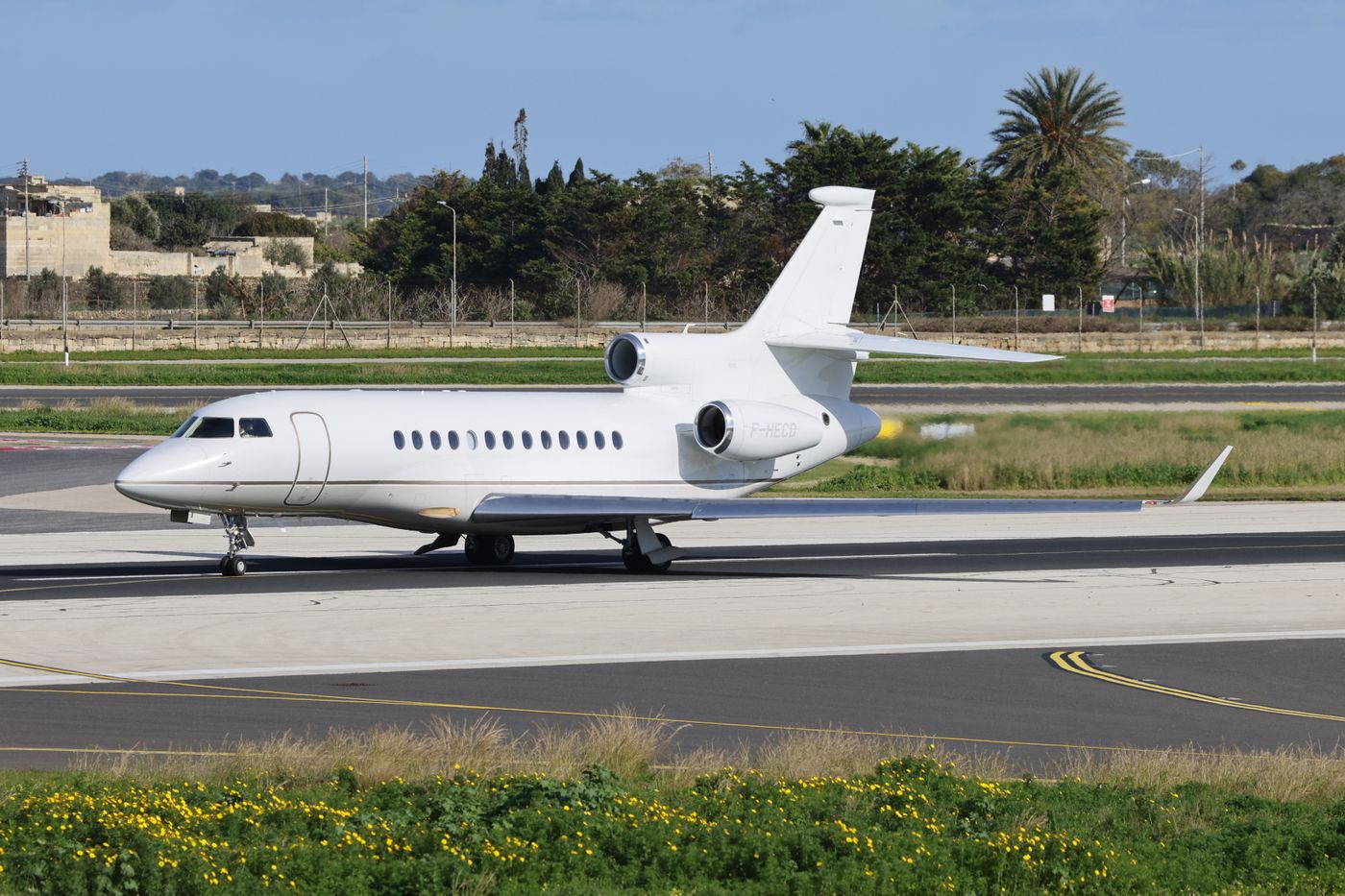
The honest read on this entire Index is that it does not apply to most travellers reading it. Below 25 hours a year, every programme here is overkill — and the unused hours, the three-year commitments and the upfront deposits represent a real economic loss against booking on-demand charter trip by trip.
The break-even between on-demand charter and a fixed-rate card sits at roughly 25 to 35 hours a year for light and mid-size missions, and 35 to 50 hours for heavy and long-range. Below those thresholds, on-demand charter through a curated broker — one that compares across operators, finds empty-leg opportunities and quotes inclusive of fuel, FET and ferry fees — wins on total cost in almost every case. Our guide to the fees a charter quote omits covers what to interrogate, and cost per hour by aircraft class gives the baseline to measure any card against.
The most under-discussed angle is the option value of not committing. A 25-hour card is a $200,000 lock-in. If your usage is wrong by even five hours, the wasted capital is meaningful. Charter preserves the option to fly less, to use different aircraft sizes for different missions, and to switch providers if service slips. For travellers in the nought-to-35-hour band, that optionality is worth a higher per-hour price. Price the actual route you fly most, on the aircraft you would actually take, before you price a card against it — our guide to reading a charter quote sets out what a comparable number has to contain.
The maths test worth running on your own situation: if you cannot honestly say you will fly more than 35 hours in the next twelve months, the card is the wrong product. Validate actual usage with charter for one year, then re-run the numbers against a card or a fractional share.
The verdict by traveller type
| Profile | Best fit | Why |
|---|---|---|
| Under 25 hr/yr, flexible | On-demand charter | Card economics fail below the threshold; charter preserves optionality |
| 25–50 hr/yr, US-focused, peak holidays | Flexjet card — NetJets closed to new buyers | Peak-day availability is real and it matters here, but only one of the two is currently sellable |
| 50–100 hr/yr, predominantly US | Flexjet card, or a NetJets fractional share | Fleet scale and the recovery aircraft policy decide it — NetJets is reachable only through fractional while card sales are curtailed |
| 50+ hr/yr, intercontinental | VistaJet Program | No ferry fees on long routes is mathematically dominant |
| Variable usage, app-first preference | XO membership | App booking and empty-leg access, at the cost of budget certainty |
| 150+ hr/yr, single aircraft size | NetJets fractional + a supplemental card | The five-year maths favours fractional above this threshold |
If you want the wider access-model question — card versus membership versus fractional versus ownership — rather than a comparison between cards, that is a different page: private jet membership programmes compared covers the same operators from the access-model angle, and buy versus charter runs the crossover at the top end. This Index will be refreshed quarterly. The Q4 2026 update will re-quote the mid-size and heavy hourly rates, which currently date from April and May 2026; take a view on whether NetJets' card curtailment is permanent enough to change the ranking rather than only the availability note; and reconsider the Index's scope, which at five programmes leaves out at least one operator publishing a more complete rate card than anything scored here.
Frequently asked questions
What is a private jet card and how does it differ from fractional ownership?
A private jet card is a prepaid block of flight hours — typically starting at 25 hours — at a fixed hourly rate with guaranteed availability and no asset ownership. Fractional ownership requires an upfront purchase of a share of an aircraft (typically a sixteenth, an eighth, or a quarter), which depreciates, plus a monthly management fee and an occupied hourly rate. Jet cards have no depreciation risk, no resale exposure, and no management fees, but the hourly rates run 15% to 35% higher than the equivalent fractional position over a five-year term. The break-even between the two falls around 75 to 100 flight hours per year.
What does NetJets cost in 2026?
The entry product is the Card275: 25 hours on a Phenom 300 at $215,000, or $8,600 an hour inclusive of the 7.5% US federal excise tax, as priced when NetJets re-cut its card lineup in January 2025. NetJets curtailed new card and lease sales on 31 July 2026, so for a new buyer that price is now a benchmark rather than an offer; existing card owners may purchase a renewal card and existing 25-hour lessees may take another lease or convert to a card. In Europe the equivalent card is quoted from about €178,900 for 25 hours over 290 days. A 1/16th NetJets fractional share on a Phenom 300 light jet runs roughly $700,000 upfront, with a $12,000 monthly management fee and a $2,300 hourly occupied rate plus around $1,000 fuel variable, producing an annualised cost near $300,000 or $6,000 per hour. Mid-size jets such as the Citation Latitude run roughly $1.2M for a 1/16th share with annual operating cost around $423,000, or $8,000 per hour. Heavy and long-range jets like the Challenger 650 run upward of $16,000 per hour.
How much does VistaJet cost?
VistaJet's VJ25 jet card starts at 25 hours per year on a three-year commitment. The Challenger 350 programme runs around $15,000 per hour. Larger Global aircraft programmes run between $18,000 and $25,000 per hour. The full VistaJet Program is aimed at flyers doing 50 to 1,000+ hours annually, with bespoke contracts including long-flight discounts and custom payment schedules. It publishes a charter from-price of $11,000 per hour, which is more transparency than most of this Index offers. VistaJet also does not charge ferry fees on positioning legs, which is structurally meaningful on transcontinental and intercontinental routes and is the single reason it wins our 100-hour international scenario outright.
Below how many flight hours per year is on-demand charter cheaper than a jet card?
For most travellers flying under 25 hours per year on routes that do not require guaranteed-availability windows, on-demand charter through a curated broker is meaningfully cheaper than any jet card or membership. The break-even is roughly 25 to 35 hours per year for light to mid-size aircraft, and around 35 to 50 hours per year for heavy and long-range aircraft, depending on route patterns and how much repositioning the operator can amortise across other flights. Below those thresholds, charter wins on cost; above them, the guarantees of a card or programme start to earn their premium.
Are private jet card hourly rates inclusive of fuel and federal excise tax?
It depends on the programme, and the difference is large enough to reverse a comparison. NetJets prices its Card275 at $215,000 for 25 hours, or $8,600 an hour, with the 7.5% US federal excise tax included. Flexjet prices its 25-hour Phenom 300 card at $198,425 plus FET, which is $213,307 all-in, or $8,532 an hour. Compared as published, Flexjet looks roughly $16,500 cheaper; compared all-in, the gap is about $1,700. VistaJet quotes a fixed hourly rate that often excludes specific operational variables. Charter brokers and smaller jet card operators often quote a base rate that excludes fuel, FET, and ferry fees, which can add 15% to 25% to the headline number. Always demand a fully-loaded, all-in quote in writing before comparing programmes.
How is XO different from a traditional jet card?
XO, part of the Vista Global family, does not use a fixed hourly rate or a committed-hour block the way NetJets, VistaJet and Flexjet do. It publishes its deposit tiers — $100,000 for XO Membership and $250,000 for XO Reserve, each with a $995 annual fee, and $500,000 for XO Corporate with no annual fee, all refundable within sixty days — and members then book flights through the XO app at dynamic prices that vary by aircraft availability, route demand and date, closer to how airline fares fluctuate than the fixed-rate model of a traditional card. That gives XO members access to more than 2,000 aircraft, of which the Vista Members' fleet is over 200, and occasionally strong empty-leg pricing, but it also means a year's flying cannot be forecast in advance. That is why XO scores 8 of 25 on cost transparency, the lowest single component score in this Index: the deposit is disclosed, the cost of using it is not.
What happens to unused jet card hours?
It varies by programme and it is where a lot of money quietly disappears. Most cards attach an expiry to the block — commonly 12 to 36 months — after which unflown hours are forfeited or refundable only at a penalty. Some programmes allow rollover if you buy a further block before expiry, which converts an expiry into a commitment. Ask three questions in writing before signing: what is the expiry, is the unused balance refundable and on what terms, and does rollover require a new purchase. On a $200,000 card, five unflown hours is real money, and it is the most common way a 25-hour buyer ends up paying more per flown hour than charter would have cost.
Which jet card has the best cancellation and change terms?
Contract flexibility carries 35 of the 100 points in this Index precisely because it is where the programmes differ most and where buyers look least. NetJets scores 29 and Flexjet 25 on that dimension; XO scores 25 for a different reason, since dynamic booking means there is less to cancel out of. The variables worth comparing line by line are the recall window before a flight, the fee for a change inside it, whether the aircraft category can be swapped mid-contract, and what a peak-day booking costs to move. We compare those terms across programmes in our guide to jet card cancellation policies.
Three questions decide this, and none of them is the headline rate.
Ask what the quoted hourly rate includes and whether federal excise tax sits inside or outside it; ask what happens to hours you do not fly and whether rollover requires a fresh purchase; and ask what a peak-day change costs. Every programme here answers those three differently, and the answers move the real cost by more than the rate card does.
Compare the contract termsRead next
- Private jet membership programmes compared — the access-model question
- Jet card cancellation policies compared for 2026
- Empty-leg platforms compared — where the cheap hours actually are
- Private jet charter hidden fees — what to interrogate before signing
- Private jet cost per hour — the all-in number across classes
- How to read a private jet charter quote