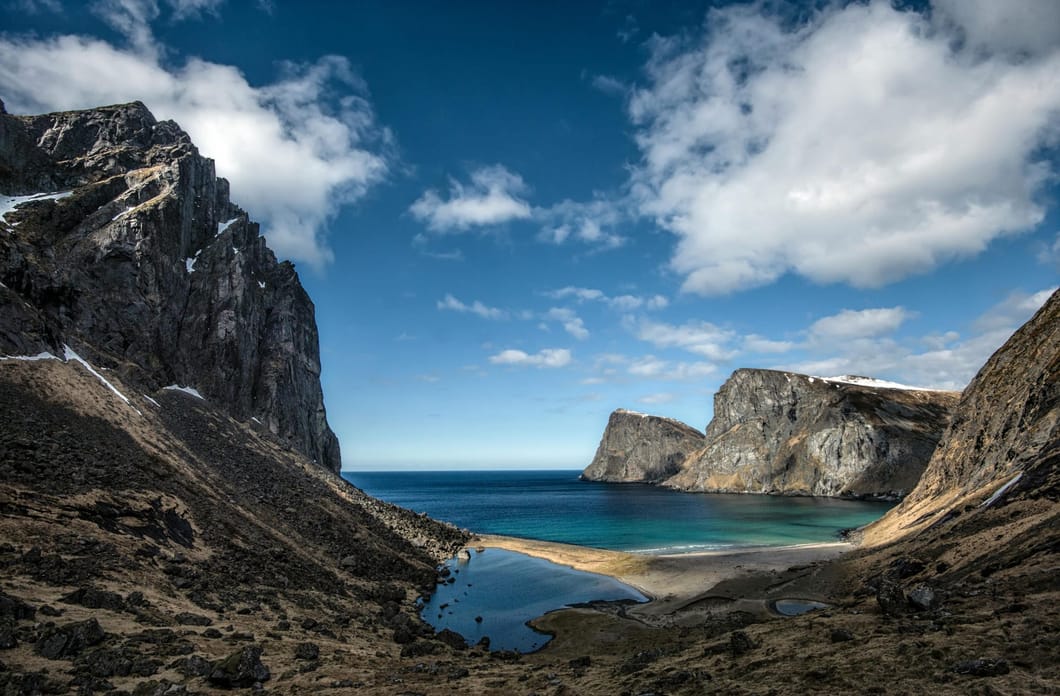
Four countries, four entirely different sailing experiences. Norway's fjords demand respect. Sweden's archipelagos reward patience. Denmark offers easy, cultural cruising. Finland's island maze is for serious navigators only.
By Richard J. · Last reviewed April 2026
This site earns commission when you book through our links. Our editorial positions are formed independently — operators are recommended because they merit it, not because of commercial relationships.
Scandinavia offers some of the most extraordinary sailing in the world and some of the most demanding. The Norwegian fjords are among the great natural spectacles of the planet. The Swedish archipelagos contain more islands than most countries have towns. Denmark's island waters are approachable, cultural, and deeply rewarding. Finland's coastline will test the most experienced sailors. What connects them is the light — the Scandinavian summer hands you nearly unlimited daylight. Arrivals at midnight with full visibility. Sunsets that last two hours. The particular beauty of golden light on water at eleven in the evening. For sailors who have only ever known the Mediterranean, the Nordic summer is a different category of experience.
Bergen, Stavanger, Tromsø, Stockholm, and Copenhagen are all served by private charter — and for a Scandinavia where the best weeks fill in advance, arriving on your own schedule rather than at the mercy of airline connections matters. JetLuxe covers Northern European routes with same-day availability.
Request a Charter Flight — JetLuxeThe most important thing to understand about Scandinavian chartering is that these four countries do not offer the same experience at different latitudes. They offer fundamentally different sailing environments requiring different skills, different mindsets, and suiting different kinds of charterers. Choosing Scandinavia is one decision. Choosing which Scandinavia is another.
Norway's fjords are geological spectacles — valleys carved by glaciers and flooded by the sea, creating walls of rock rising hundreds of metres directly from calm water. Sailing into Geirangerfjord, a UNESCO World Heritage Site, with waterfalls dropping from cliffs above you and the fjord narrowing to a fraction of its mouth width, is an experience that cannot be replicated anywhere else. This is the reason people choose Norway.
The demand is real. Norway's western coast is directly exposed to North Sea lows that can arrive with little warning. Deep in the fjords the conditions are calm and protected; on the outer coast between fjords they are not. Tidal navigation and familiarity with archipelago sailing are essential. The charter fleet is limited and the season short — roughly June to September, with July and August providing the most reliable weather.
The compensation for the difficulty is extraordinary. Whales in the waters off Lofoten. The midnight sun above the Arctic Circle in June. Red-painted fishing villages built on stilts over the water. Hiking from your anchorage to a plateau from which you can see fifty nautical miles of fjord and mountain. Norway rewards the prepared.
Sweden has three great archipelago sailing regions: the Stockholm Archipelago on the east coast (approximately 30,000 islands, rocks and skerries), the Bohuslan coast on the west from Gothenburg to the Norwegian border, and the St Anna Archipelago to the south of Stockholm. Together with Finland's Åland Islands, they form the largest archipelago in the world by island count.
Stockholm's archipelago begins 30 minutes from the city centre and extends 60 nautical miles east into the Baltic. The inner archipelago has lush wooded islands with summer houses, village quays, and restaurants. The outer archipelago is raw granite — smooth worn rock, sparse vegetation, seals on the skerries, and the kind of solitude that makes you understand why Swedes have a word (lagom) for exactly the right amount of everything.
The navigation is demanding. The charts show channels between rocks that require constant attention; running aground is a genuine risk for the careless. Skippered charters are strongly recommended for first-time visitors to Swedish waters.
Denmark is the most accessible Scandinavian charter destination and the most underrated. The country has 444 islands, of which 368 are uninhabited, and you are never more than 50 kilometres from the sea. The waters around Funen — the South Funen Archipelago and the Fyn island group — offer sheltered Baltic sailing with manageable winds, frequent and well-spaced marinas, and the kind of half-timbered fishing villages that look precisely as Denmark is supposed to look.
Denmark is also significantly cheaper than Norway, Sweden, or Finland — around 20 to 30% lower than the Norwegian market. It serves as both a destination in its own right and a gateway: Gothenburg and the Swedish west coast are a short hop north; the German Baltic a day's sail south.
Copenhagen is one of the great sailing cities in Europe, with Nyhavn — the colourful 17th-century harbour quarter — accessible directly from the water. Ærø, a small island in the South Funen Archipelago, has cobblestone streets and a boat-building tradition that has survived into the present day. Bornholm, the easternmost Danish island in the Baltic, has dramatic cliffs, sand beaches, and a food culture that punches far above the island's size.
Finland's southwest archipelago, concentrated between Turku and the Åland Islands, is the most navigationally demanding charter area in Scandinavia. The water is full of rocks both above and below the surface. The buoyage system uses barrel markers that are not always easily visible. One skilled sailor at the helm and a second doing nothing but navigation is the standard recommendation from operators.
For those with the skills, it is one of the most rewarding sailing areas in Europe — a stillness, a granite-and-forest character, a sense of genuine remoteness even when Helsinki is a few hours' sail away. The sauna culture is central to Finnish sailing life: most islands have a wood-fired sauna accessible to visiting boats, and the sequence of sauna, cold water plunge, and a quiet evening on deck is the definitive Finnish sailing experience.
The Åland Islands — a Swedish-speaking autonomous region of Finland sitting between Turku and Stockholm — are the most practical entry point for the Finnish archipelago from Sweden. One-way charters from Stockholm or the reverse are possible with some operators, making the Stockholm–Åland–Turku passage a genuinely rewarding multi-country itinerary.
Norway has over 1,000 named fjords along its coastline, but the charter market concentrates around five primary regions. Bergen, on the western coast, is the natural gateway to the most celebrated fjord sailing in the world.
The most photographed fjord in Norway. 15 kilometres long with walls rising over 1,400 metres, the Seven Sisters and Bridal Veil waterfalls dropping from the cliffs. The entry from Sunnylvsfjord involves a turn into a narrow passage that opens into the full drama of the inner fjord. Access from Ålesund, approximately three hours' sail from Bergen.
Norway's longest fjord at 205 kilometres, reaching 1,308 metres depth at its deepest point. The Nærøyfjord, its narrowest arm (UNESCO-listed), is only 250 metres wide at its most compressed. The Flåm valley at the eastern end allows access by the famous Flåm Railway. The foundation of most week-long Norwegian charter itineraries.
Lysefjord, accessible from Stavanger, is home to Preikestolen (Pulpit Rock) — a flat-topped cliff 604 metres above the fjord, reachable by a four-hour hike. Hardangerfjord, east of Bergen, is Norway's second-longest fjord and the centre of the country's fruit-growing region. Less trafficked by cruise ships than Sognefjord or Geirangerfjord.
The most remote and dramatic charter area in Norway. The Lofoten archipelago sits above the Arctic Circle, with granite peaks rising directly from the sea. Resident sperm whales, orca pods in winter, and puffin colonies in summer. The midnight sun is fully operational in June and July. One of the most singular sailing experiences in European waters.
The primary charter base for western Norway. The Bryggen Hanseatic Wharf is a UNESCO World Heritage site. Bergen is a city of seven mountains with excellent restaurants, a world-class fish market, and the funicular to Mount Fløyen. From Bergen, the Sognefjord, Hardangerfjord, and the longer passage to Geirangerfjord are all within a week's sailing range.
Norway's oil capital and gateway to Lysefjord. Stavanger has a remarkable restaurant scene for a city of its size — Michelin-starred RE-NAA and Sabi Omakase among them. The old town (Gamle Stavanger) has 173 original wooden houses from the 18th and 19th centuries. A less-trafficked alternative to Bergen, with direct access to southern Norwegian fjords.
A week in the Stockholm Archipelago typically starts from Saltsjöbaden, a 30-minute drive from central Stockholm, and works progressively east into the outer archipelago before returning. The inner islands have character — summer houses, small shops, ferries connecting communities with no road access — but the outer islands are the point. Smooth granite, absolute quiet, water cold enough to shock you properly, and a sunset that takes two hours to complete.
Sandhamn, the hub of Swedish east-coast sailing, sits at the outer edge of the archipelago. The village has a long sailing tradition — the Stockholm Race and the Gotland Race both finish here — and the quays fill with racing boats in summer. Arriving at Sandhamn at eight in the evening with the light still golden and finding a table at a quayside restaurant is the Stockholm Archipelago at its most satisfying.
Sweden's west coast — the Bohuslan region from Gothenburg north to the Norwegian border — is a different character entirely: granite skerries, pink and grey rock worn smooth by ice, small fishing villages with painted boathouses. Marstrand, a fortified island town, is the most famous stop on this coast. In the waters between Gothenburg and Oslo, you are sailing through a continuous gallery of coastal Nordic life that has changed very little in the last century.
Charter operators with Scandinavian fleets consistently report more serious groundings per season in Sweden and Finland than in any other European sailing area. The rocky archipelago channels require constant attention; departing from the marked fairway, even briefly, can put you directly on rock. Many rocks are submerged at sailing depths but not marked. A reliable chartplotter with current Scandinavian charts is not optional — it is the minimum preparation. For first-time visitors to either country, a skippered charter is the correct choice.
Getting from the airport to the marina in Bergen, Stavanger, Gothenburg, or Turku is not straightforward — taxis are expensive and public transport is slow. Pre-booking a private transfer through GetTransfer means a fixed price, a waiting driver, and no negotiating at arrivals.
Book a Marina Transfer — GetTransferDenmark suits charterers who want the Nordic experience without the navigational intensity of Norway, Sweden, or Finland. The South Funen Archipelago — the waters between Funen and the small islands to its south — offers sheltered Baltic sailing with well-maintained marinas rarely more than 10 to 15 nautical miles apart, naturally suited to relaxed cruising with cultural stops ashore.
The circumnavigation of Funen is approximately 200 nautical miles and takes around ten days at a comfortable pace, passing through Svendborg (a lively sailing town on Funen's south coast), the island of Ærø (cobblestone streets, excellent seafood, one of Denmark's most photographed harbours at Ærøskøbing), Sønderborg with its old town, and back via the Little Belt. This is an itinerary that rewards stopping: every harbour has a story and every island a character it has been developing for centuries.
Copenhagen as a charter destination deserves mention on its own terms. The city is remarkable from the water — the Øresund crossing, the approach through the harbour past the Opera House and Nyhavn, the ability to dock within walking distance of the best restaurants in Northern Europe. A charter that uses Copenhagen as either start or end point adds a city-break dimension that most Scandinavian sailing cannot match.
Scandinavian charters run 20 to 30% higher than equivalent Mediterranean charters across all four countries. The season is shorter (roughly eight effective weeks versus five months in the Mediterranean), the fleet is smaller, and operating costs in Norway and Sweden are materially higher. The value proposition is not about price — it is about access to experiences that simply do not exist in warmer waters.
Northern European flights are more delay-prone than Mediterranean routes — and missing a Scandinavian charter embarkation has real consequences when the fleet is small and the season is short. AirHelp claims compensation on your behalf for qualifying delays and cancellations, with no upfront cost.
Protect Your Charter Flights — AirHelpThe midnight sun is not a marketing phrase. At Bergen's latitude (60°N) the sun sets around 11:30 PM at midsummer and rises again at 4:30 AM. At Tromsø (69°N) the sun does not set at all between late May and late July. In the Stockholm Archipelago, midsummer nights are a deep twilight rather than full darkness — light enough to navigate safely, bright enough to read on deck at midnight.
Practically, this changes everything about how you plan a sailing day. The usual Mediterranean calculation — depart by 9 AM, be in port by 4 PM — does not apply. You can sail at any hour. Arrivals at 10 PM are routine. The question is not whether there is light but whether you and your crew have the energy to keep going.
The flip side is that the weather window closes quickly. September in Scandinavia is not August. The Norwegian coast can see its first serious autumn storms in late August. Plan the core of any Scandinavian charter for the last two weeks of June through the first three weeks of August if certainty matters.
Bergen, Oslo, Stockholm, Gothenburg, Copenhagen, Helsinki, and Turku are all served by direct flights from major European hubs. Getting to Lofoten requires a connection via Oslo or Tromsø and advance planning for the summer peak period.
The charter fleet reality in Scandinavia is important to understand before booking. The fleets are smaller than the Mediterranean, the vessels are typically older on average, and the best boats in the best areas book out fast. Week 29 (mid-July) in Sweden and the first two weeks of August in Norway are the peak weeks — they fill months in advance for quality vessels. Anyone planning a Scandinavian charter for summer 2026 should be booking now.
The practical advice is to book through a broker with established Scandinavian relationships rather than a generic platform. Local knowledge about which bases suit which experience level is worth having before committing to a vessel and a region.
Sailing in Lofoten or the Finnish archipelago puts you a long way from the nearest hospital. Standard EU health cards have limits on rescue and repatriation costs. SafetyWing's travel medical cover works anywhere, including remote Arctic waters, on a flexible rolling basis.
Travel Medical Cover — SafetyWingFlying to Bergen, Stavanger, Tromsø, or Stockholm for your charter? JetLuxe covers Northern European private charter routes with same-day availability.
Charter a Flight — JetLuxeWe use cookies to improve user experience. Choose what cookie categories you allow us to use. You can read more about our Cookie Policy by clicking on Cookie Policy below.
These cookies enable strictly necessary cookies for security, language support and verification of identity. These cookies can’t be disabled.
These cookies collect data to remember choices users make to improve and give a better user experience. Disabling can cause some parts of the site to not work properly.
These cookies help us to understand how visitors interact with our website, help us measure and analyze traffic to improve our service.
These cookies help us to better deliver marketing content and customized ads.