Portugal is not one sailing destination — it is four, each requiring a different kind of trip, a different level of experience, and a different mindset. Understanding which one you want is the whole decision.
By Richard J. · Last reviewed April 2026
This site earns commission when you book through our links. Our editorial positions are formed independently — operators are recommended because they merit it, not because of commercial relationships.
Portugal sits at the edge of Europe facing the open Atlantic — the country that launched the age of sail, whose explorers mapped the world's coastlines before anyone else. That maritime DNA shows in everything: the quality of the marinas, the seamanship culture, the instinct for the sea that runs through the fishing villages and the ports. The Algarve is sheltered, spectacular, and forgiving. The Azores are mid-Atlantic, volcanic, and inhabited by sperm whales. Lisbon adds history and architecture. Madeira is subtropical and accessible year-round. Four entirely different propositions sharing one coastline.
Faro, Lisbon, Funchal, and Ponta Delgada are all served by private charter — and with four different departure airports for four different sailing regions, flying privately means choosing the right airport for your destination rather than the one with the cheapest scheduled connection. JetLuxe covers all Portuguese routes.
Request a Charter Flight — JetLuxeEach of Portugal's sailing regions has its own character, its own demands, and its own rewards. The decision about where to charter is also a decision about what kind of sailor you are and what kind of trip you want.
Portugal's most popular charter region. The south coast runs 155 kilometres from Cabo de São Vicente in the west to the Rio Guadiana on the Spanish border. Protected from Atlantic swells by the headland at Sagres, the Algarve offers calm, clear water, extraordinary golden limestone cliffs, hidden sea caves accessible only by boat, and three world-class marinas at Lagos, Portimão, and Vilamoura. Winds are gentle and predictable — Force 2–4 most of the season, rising to a pleasant Force 5 in the afternoon. This is the place for long hot days, excellent anchorages, fresh seafood, and the kind of sailing that reminds you why you started.
The unmissable experience is the Benagil Cave — a sea cave with a collapsed roof that creates a natural amphitheatre open to the sky, accessible only by water. Arrive by your own tender early in the morning before the tourist boats arrive. No amount of description prepares you for it.
Lisbon is one of the great sailing cities in Europe. The Tagus estuary gives access to six marinas, the 25 de Abril bridge, the Belém Tower, and the Monument to the Discoveries. Cascais, 30 kilometres west along the coast, has a modern marina with 600 berths and an old town atmosphere that rewards an evening ashore.
The sailing here is more demanding than the Algarve. Consistent thermal winds of Force 3–5 strengthen to Force 6 on summer afternoons, and the open Atlantic coast north of Cascais requires more respect than the sheltered south. This is a genuinely rewarding ground for competent crews who want to combine exceptional culture with real seamanship. The Sintra coastline — a UNESCO World Heritage landscape of palaces, forests, and cliffs — is unforgettable from the water.
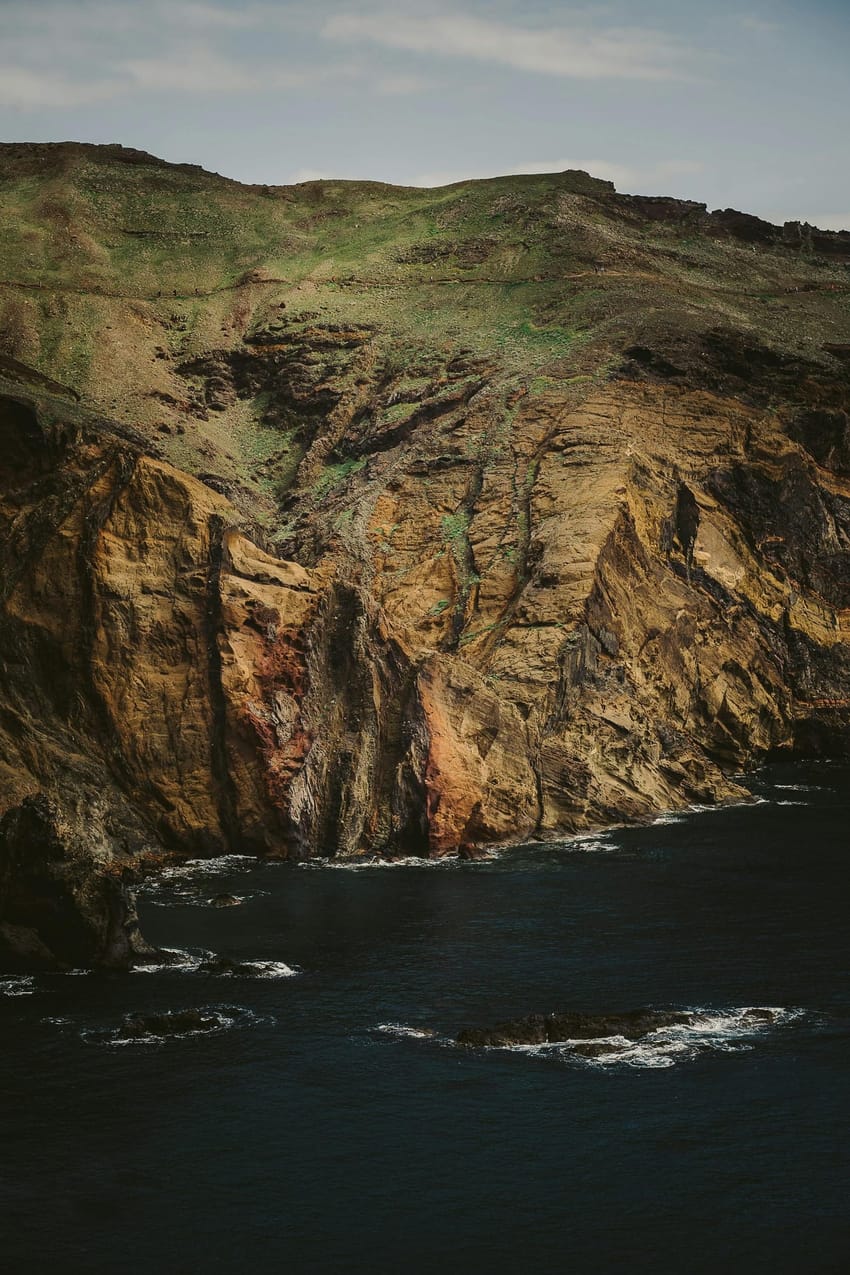
Madeira rises dramatically from the Atlantic approximately 500 nautical miles southwest of Lisbon, closer to the African coast than the European. The island is a volcanic wall — 1,862 metres at its highest — dropping straight into deep water on all sides. There are no anchorages in the conventional sense; Madeira is a destination for day charters and coastal cruising rather than a multi-day anchoring itinerary.
What it offers is exceptional: a subtropical climate with air and water temperatures rarely below 18°C even in winter, reliable northeast trade winds, and a coastline of sea cliffs, volcanic rock formations, and marine life including dolphins and migrating sperm whales. Porto Santo, the smaller island 40 nautical miles northeast, has a nine-kilometre sand beach and makes a natural overnight destination. The uninhabited Desertas Islands, a nature reserve to the southeast, are home to monk seals.
The Azores sit 1,400 nautical miles west of Lisbon in the middle of the North Atlantic — nine volcanic islands strung across 600 kilometres of open ocean, the waypoint for every transatlantic sailor since Columbus. This is the best-kept secret in European sailing and the most demanding of Portugal's charter destinations.
The waters are genuine Atlantic — oceanic swells of 1.5–2.5 metres between islands, variable winds from Force 3–6 in summer, and inter-island passages that require both offshore experience and proper planning. The reward is proportional to the commitment: sperm whales are resident year-round, blue and humpback whales pass through seasonally, and each island has a distinct character shaped by its volcanic geology. The Azores are not a place for passive charterers. They are a place for sailors who want to remember where they went.
The Algarve's three principal marinas each serve a different section of the coast and suit different itinerary approaches. The entire south coast is navigable in a week without rushing, with overnight stops at each marina and anchorages at the beaches between them.
East of Vilamoura, the character of the coast changes dramatically. The Ria Formosa Natural Park — a 60-kilometre lagoon system of sandbanks, tidal channels, and barrier islands — is one of the most important wetland ecosystems in Europe and one of the most beautiful places to sail in Portugal. The towns of Olhão and Tavira have a different atmosphere from the western Algarve: less touristic, more genuinely Portuguese, with North African architectural influences and the best seafood on the coast.
The nine Azores islands divide into three geographical groups. Understanding the groups is the first step in planning an itinerary, because the distances between groups are significant and the most rewarding sailing concentrates in the central cluster.
The largest island and home to Ponta Delgada, the Azores' capital and main arrival airport. Crater lakes at Sete Cidades and Furnas, geysers, hot springs, and the volcanic landscape that defines the Azores' identity. Good charter base for the eastern group.
The southernmost and oldest island, with a distinctive clay-coloured landscape and the Azores' warmest, sunniest microclimate. The natural harbour at Vila do Porto is modest but serviceable. Worth a stop for its unhurried pace.
The hub of Azorean sailing culture. Horta Marina is one of the most famous anchorages in the Atlantic sailing world — the traditional stopping point for transatlantic crossings since the days of the clippers. Peter's Café Sport has been serving sailors since 1918. The marina walls are covered in paintings left by passing crews. Base here for the central group.
The most dramatic island in the Azores. Montanha do Pico rises 2,351 metres directly from the sea — the highest point in Portugal. The lava-field vineyards around the coast are UNESCO World Heritage-listed. Resident sperm whales in the deep channel between Pico and Faial. Lajes do Pico is the former whaling capital.
A long, narrow ridge of volcanic rock with fajas — flat lava tongues extending into the sea — creating natural swimming pools and small communities accessible only by sea or precarious cliff paths. Wild, little-visited, and unforgettable. The cheese is extraordinary.
Home to Angra do Heroísmo, a UNESCO World Heritage city and one of the finest preserved 16th-century port towns in the world. A patchwork of green pastures bounded by stone walls. Algar do Carvão, a lava tube open to the public, is unique in Europe.
The flattest and most gentle island in the Azores — a relief after the verticality of Pico and São Jorge. Traditional windmills, the Furna do Enxofre volcanic lake, and a pace of life that has barely changed in a century.
The most remote island in the central Atlantic archipelago, 200 nautical miles west of Faial. Covered in hydrangeas in summer, with waterfalls descending directly into the sea and crater lakes that are genuinely among the most beautiful landscapes in Europe. The passage from Faial requires careful weather planning. Worth every mile.
The smallest and most remote island in the Azores — 17 square kilometres, fewer than 500 inhabitants, and a single road. The entire island is essentially the rim and crater of a single volcano, with a lake at the bottom. One of the most singular destinations in the Atlantic.
Inter-island passages in the Azores are genuine offshore sailing. The eastern group to the central group is 150+ nautical miles. The western group is 200 nautical miles from Faial. Ocean swells of 1.5–2.5 metres are normal; strong wind events are possible even in summer. Bareboat charter requires a valid ICC or national licence plus documented offshore experience. Skippered charters are strongly recommended for those without regular Atlantic sailing backgrounds.
The Azores are mid-Atlantic — the western islands sit 200 nautical miles from the nearest significant medical facility. Standard EU health cards have real limits on offshore rescue and repatriation costs. SafetyWing covers international travellers anywhere, including mid-Atlantic passages, on a flexible rolling basis.
Travel Medical Cover — SafetyWingMadeira's topography determines the sailing. The island rises steeply from the sea with no sheltered bays on the southern coast and dramatic sea cliffs on the north. There is no traditional anchoring culture — the water is too deep close to shore. Charters from Funchal are day trips and coastal cruises rather than overnight passages, with the exception of the Porto Santo and Desertas Islands runs.
The most rewarding day itinerary heads west along the south coast past the dramatic lava cliffs at Cabo Girão (the second-highest sea cliff in Europe at 580 metres), rounding the western tip at Ponta do Pargo, and returning via the quieter north coast if conditions allow. Porto Santo deserves a dedicated overnight trip — a manageable half-day sail in good conditions with northeast trades behind you, and a satisfying test of seamanship. The island's nine-kilometre beach is a complete contrast to Madeira's volcanic drama: flat, sandy, warm, and largely deserted outside Portuguese holiday periods.
Portugal does not apply VAT to bareboat charter in the same way as some Mediterranean countries, which makes it genuinely good value relative to comparable destinations in Greece or Croatia. These are base rates for the vessel only — end-cleaning, marina fees, fuel, and provisioning are additional on every charter.
Getting to the Azores often involves a connection via Lisbon, and inter-island SATA flights have a disruption rate higher than most European routes. Missing an Azores embarkation with a bareboat charter waiting is a real financial exposure. AirHelp claims compensation on your behalf for qualifying delays and cancellations, with no upfront cost.
Protect Your Flights — AirHelpThe Algarve is the most forgiving destination year-round. Spring arrives in January, summers are long and warm at 25–27°C, and even winter maintains average temperatures around 16°C. July and August are the most reliable for consistent sun and manageable winds. The summer afternoons on the west coast can produce gusty sea breezes — Force 5–6 — that require attention, but these are predictable and temporary.
The central coast around Lisbon and Cascais has stronger prevailing winds — the Nortada, a reliable northerly that blows at 15–25 knots on summer afternoons — which makes for exhilarating sailing but requires a capable crew. Mornings are typically calm; plan to be in harbour or at anchor by early afternoon if the Nortada is forecast.
The Azores have the most variable conditions. The July–August window is the most stable, with settled high-pressure systems producing calm passages and warm water. The Azores High — the pressure system that bears the archipelago's name — can bring days of glassy calm in summer; a mixed blessing for sailors who prefer wind.
The question to ask before chartering in Portugal is not where you want to go — it is what kind of sailing you want to do.
If you want reliable sun, calm water, spectacular coastal scenery, easy provisioning, and a forgiving environment for mixed-experience groups, the Algarve delivers all of this consistently. It is one of the best-value, most beginner-friendly charter destinations in Western Europe. The coast between Lagos and Tavira is genuinely beautiful, and the Ria Formosa section east of Faro is among the most distinctive coastal landscapes on the continent.
If you want genuine Atlantic sailing with real wildlife encounters, volcanic landscapes that belong to no other sailing destination in Europe, and the particular satisfaction of reaching a place that takes genuine commitment to reach, the Azores deliver all of this — provided you have the experience the passage conditions demand. A sperm whale surfacing twenty metres from the boat, in the channel between Faial and Pico, at sunset, with the black pyramid of Montanha do Pico on the horizon — that is not available anywhere else in European waters.
Madeira sits between these two extremes: genuinely accessible, dramatic and rewarding, but with a different charter format — day charters and island excursions rather than multi-day passage-making. It suits charterers who want exceptional day sailing combined with a world-class island destination on shore.
Licences. A valid ICC or equivalent national boating licence is required for all bareboat charters in Portugal. For the Azores, skippered charters are genuinely the better option regardless of licence status unless you have significant offshore experience.
Getting there. Lisbon and Faro (Algarve) are both well-served from across Europe and directly from North America. Funchal (Madeira) has direct flights from most major European hubs. Ponta Delgada (São Miguel, Azores) has direct flights from Lisbon, Boston, and several European cities. Horta (Faial) has direct flights from Lisbon. Domestic island-hopping in the Azores is handled by SATA Inter Ilhas — confirm connections in advance as schedules are limited.
Food and drink. Do not underestimate Portugal's food. The Algarve cataplana (a copper-domed stew of clams, prawns, and fish) is reason enough to sail there. Grilled sardines at a quayside restaurant. Percebes (barnacles) in the Azores, harvested from the lava rocks. A glass of Pico wine — grown in UNESCO-listed vineyards barely above sea level, the only wine in the world aged in proximity to both the Atlantic and an active volcano.
Many Portugal charter guests combine a land stay with their time on the water — a few nights in a villa near Lagos before embarking, or an apartment in Lisbon at either end. Plum Guide curates Portugal's best short-stay properties with a quality threshold that matches the charter standard.
Find a Portugal Stay — Plum GuideFlying to Faro, Funchal, or Ponta Delgada for your charter? JetLuxe covers all Portuguese routes with same-day availability.
Charter a Flight — JetLuxeWe use cookies to improve user experience. Choose what cookie categories you allow us to use. You can read more about our Cookie Policy by clicking on Cookie Policy below.
These cookies enable strictly necessary cookies for security, language support and verification of identity. These cookies can’t be disabled.
These cookies collect data to remember choices users make to improve and give a better user experience. Disabling can cause some parts of the site to not work properly.
These cookies help us to understand how visitors interact with our website, help us measure and analyze traffic to improve our service.
These cookies help us to better deliver marketing content and customized ads.