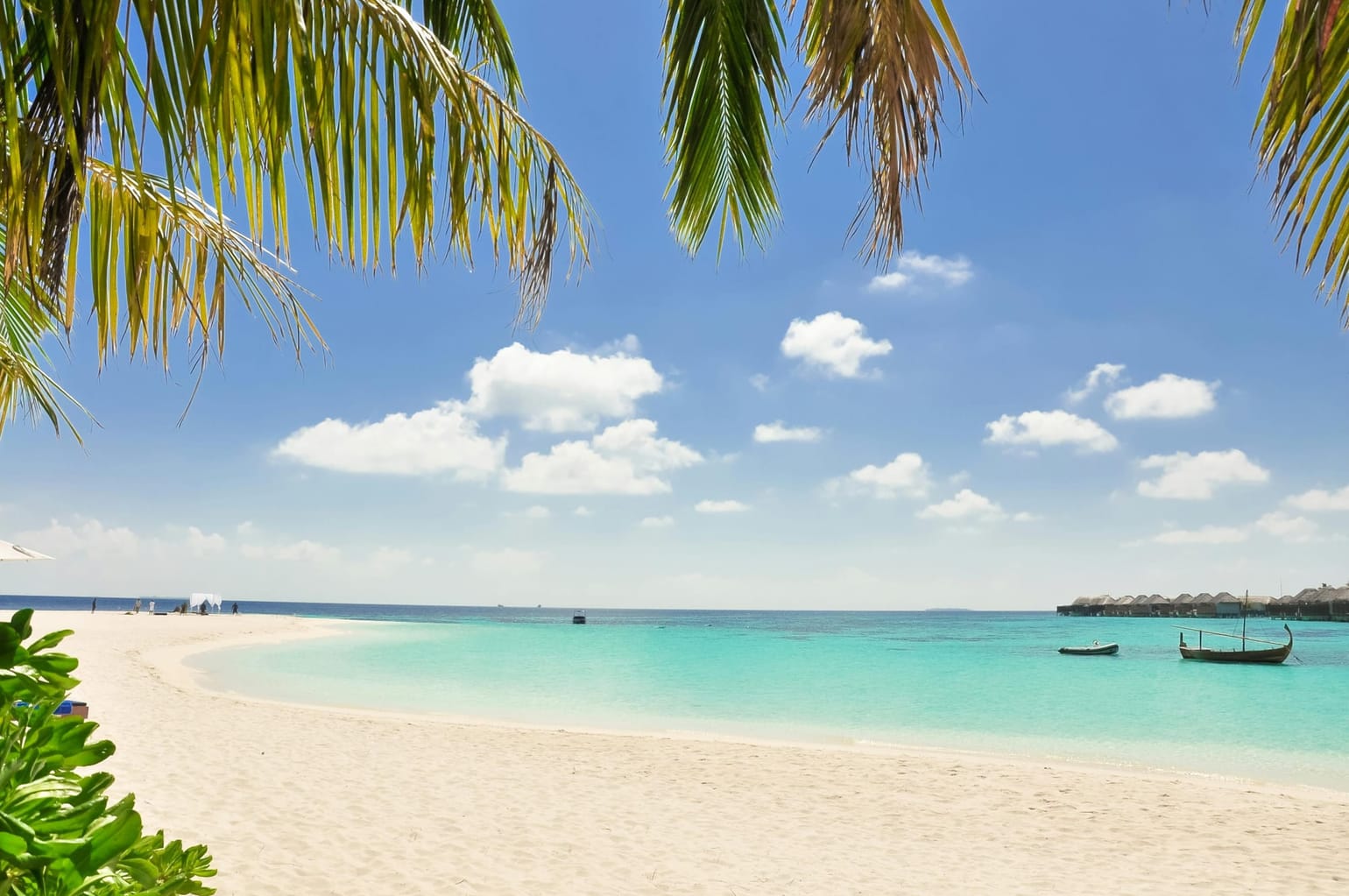
Two entirely different propositions sharing the same ocean. The Maldives for world-class diving, whale sharks, and the flattest country on earth. The Seychelles for ancient granite islands, endemic wildlife, and the most beautiful beaches in the world.
By Richard J. · Last reviewed April 2026
This site earns commission when you book through our links. Our editorial positions are formed independently — operators are recommended because they merit it, not because of commercial relationships.
The Indian Ocean contains two of the most coveted charter destinations in the world — and they share almost nothing except the ocean they float in. The Maldives is the flattest country on earth, a 1,200-island coral archipelago barely above sea level, where the experience is almost entirely oceanic: the world's finest reef diving, whale sharks year-round, manta ray aggregations that number in the hundreds. The Seychelles is ancient granite rising dramatically from the same ocean — the oldest exposed rock in the tropics, shaped by geological time into the most distinctive island scenery anywhere in the world. Choosing between them is not a question of which is better. It is a question of what the charter is for.
Malé and Mahé are long-haul destinations where private aviation removes the exhausting connection via a Gulf hub. For a charter that costs this much, arriving fresh matters. JetLuxe operates Indian Ocean routes including connections from Europe and the Middle East.
Request a Charter Flight — JetLuxeThe Maldives is one of the world's great marine environments, and almost nothing else. The islands themselves — flat, low, palm-fringed, barely distinguishable from each other above the waterline — are the platform from which you access what is below it. World-class reef diving with extraordinary visibility. Whale sharks so reliably present in South Ari Atoll that responsible in-water encounters are a near-certainty. Manta ray feeding aggregations at Baa Atoll's Hanifaru Bay — one of the largest concentrations of manta rays on earth during the right season. Hammerhead shark schools. Channel drift dives through passes in conditions that rival the Tuamotus.
The overwater bungalow is the Maldives' signature resort format because the scenery is in the water, not the land. The same logic applies to a private charter: the yacht is the platform, and the programme each day is built around what's beneath the hull. If you are not a diver or serious snorkeller, the Maldives is still extraordinary — the water colour, the sandbank picnic, the star visibility at anchor far from any shore — but the marine dimension is where it genuinely has no equal.
The Maldives is a Muslim country with cultural distinctions that affect the charter experience. Alcohol is available on licensed charter vessels and resort islands but not on local inhabited islands. Most private charter guests stay predominantly aboard and at uninhabited atolls, which shapes a more self-contained experience than the Seychelles.
The Seychelles offers a genuine sailing experience in the traditional sense: varied anchorages with distinct characters, landfalls that reward going ashore, a landscape that changes completely between islands, and a sequence of stops that combine marine encounters with cultural texture, endemic wildlife, and scenery that has no equivalent in the tropical world. The distances between the main Inner Islands — Mahé, Praslin, La Digue — are short enough to sail comfortably in a morning, leaving afternoons for exploration.
The Seychelles granite is the defining feature. The Inner Islands are not coral atolls but ancient continental peaks — Precambrian granite, among the oldest exposed rock on earth, shaped by hundreds of millions of years of erosion into smooth, enormous boulders that tumble into turquoise water. Beaches form in the crevices between them. The most photographed is Anse Source d'Argent on La Digue: a sequence of pink-grey granite formations with a white sand beach between them and a shallow lagoon beyond, in colours that appear processed even in unedited photographs. It genuinely looks like this.
Ashore, the Seychelles rewards curiosity. The Vallée de Mai on Praslin is a UNESCO World Heritage primeval palm forest. Giant Aldabra tortoises roam Curieuse Island, accessible by tender. The bird life includes species found nowhere else on the planet, including the Black Paradise Flycatcher on La Digue. These are the stops that make the Seychelles a destination rather than a backdrop.
The Maldives' 26 atolls divide into northern and southern groups, with Malé Atoll at the centre as the primary entry point and charter base. Each atoll has its own character and its own marine specialities — the Maldives is a destination where planning the route around wildlife targets (whale sharks, manta rays, hammerheads) produces materially better results than a generic atoll-hopping itinerary.
Home to Hanifaru Bay — a UNESCO Marine Protected Area and the site of one of the largest manta ray feeding aggregations on earth. From July to November, hundreds of manta rays and occasional whale sharks gather in the bay to feed. In-water encounters are strictly regulated (snorkelling only, with a guide) which preserves both the experience and the animals.
The Maldives' most reliable whale shark destination. Whale sharks are present year-round in the waters around South Ari, concentrating particularly around Dhigurah Island, where responsible swim-with encounters have been conducted for decades. The local whale shark population is well-studied and individually identified.
The Maldives' finest channel diving destination, largely remote from resort development. Fotteyo Kandu is regularly cited as one of the best dives in the Maldives: a channel with strong currents that bring eagle rays and hammerhead sharks in significant numbers. One of the least-crowded premium dive destinations in the archipelago.
The primary charter base with the capital Malé and the international airport. Dive sites include Banana Reef, Maaya Thila, and HP Reef — among the Maldives' most celebrated. Best used as an embarkation point before moving to less-trafficked atolls south, as this is the busiest diving in the archipelago.
Addu (Seenu), Fuvahmulah, and Gnaviyani — the Maldives' least visited and most rewarding for serious divers. Fuvahmulah is famous for tiger shark aggregations at its single pass, a concentration of large predators unmatched in the Indian Ocean. Accessible via Gan International Airport, bypassing Malé entirely.
The Maldives has some of the finest surf breaks in the Indian Ocean: Cokes (Thulusdhoo), Sultans, Honky's, and Pasta Point are accessible only by boat. Dedicated surf charter operators run itineraries around the break calendar and swell windows, with the core season running February to October.
The Seychelles divides clearly between Inner Islands and Outer Islands. The Inner Islands — the 41 granitic islands centred on Mahé, Praslin, and La Digue — offer the most varied and accessible sailing in the group, with short passages, numerous anchorages, and a combination of wildlife, beaches, and culture that makes a week feel genuinely full. Most charter guests focus on the Inner Islands for a week, sometimes adding Desroches (in the Amirantes group, 130 miles southwest of Mahé) for a remote atoll experience at the edge of the inner archipelago.
The largest island and primary embarkation point. Eden Island Marina accommodates superyachts up to 120 metres. Victoria's covered market is the correct first morning stop: local fish, tropical fruit, spices. The Morne Seychellois National Park covers the island's mountainous interior with endemic bird life. Over 65 beaches; Beau Vallon and Anse Intendance are the most celebrated.
Praslin's Vallée de Mai is one of only two places on earth where the Coco de Mer palm grows in its natural state. The UNESCO-listed reserve contains palms up to 800 years old producing nuts that weigh up to 25kg. Anse Lazio, on Praslin's north coast, is consistently ranked among the finest beaches in the world.
La Digue has almost no cars — ox carts and bicycles serve most transport needs. Anse Source d'Argent is framed by enormous smooth granite formations creating pools and inlets of extraordinary colour. It has been photographed on more magazine covers than any other beach. The Veuve Nature Reserve protects the last significant population of the Black Paradise Flycatcher — a bird that exists only on La Digue.
A Marine National Park and the site of the Seychelles' main Aldabra giant tortoise conservation programme. Several hundred tortoises roam the island freely. The mangrove system on the island's interior is one of the most intact in the inner archipelago. Anchor in Anse St José, tender ashore, and spend a morning with the tortoises.
Two uninhabited islands between Praslin and La Digue with excellent anchorages and some of the finest snorkelling in the inner archipelago. Giant wrasse move between the granite formations. The beaches on both islands are completely undeveloped — the kind of stop that doesn't appear on resort itineraries because there is no resort.
130 miles southwest of Mahé. Desroches is a flat coral island with a small resort, excellent flats fishing (bonefish, permit, triggerfish), and complete isolation. Alphonse Atoll, further south, is one of the Indian Ocean's finest fishing destinations. The passage from Mahé requires a capable vessel and an overnight at sea.
The outer atolls of the Maldives and the Seychelles Outer Islands are among the most remote sailing destinations in the world. Standard health cover has significant limits on Indian Ocean medical evacuation and repatriation. SafetyWing covers international travellers anywhere, including mid-ocean passages, with no fixed end date.
Travel Medical Cover — SafetyWingThe Indian Ocean's geography makes a combined Maldives and Seychelles charter entirely feasible as a two-week programme, using the vessel for one destination and flying between. The Maldives and Seychelles are approximately 2,000 miles apart — not a passage-making distance for a charter yacht, but a four-to-five-hour flight that connects efficiently through the Gulf or directly on some routes.
A two-week programme that spends the first week in the Maldives — South Ari Atoll for whale sharks, Baa Atoll if the manta season aligns, a channel dive at Vaavu — and the second week in the Seychelles, sailing the inner islands from Mahé through Praslin and La Digue to the Sister Islands, delivers two of the Indian Ocean's defining experiences without forcing a comparison between them. They are not interchangeable; they complement each other specifically because they are so different.
The practical arrangement requires careful flight routing and usually a broker with relationships in both destinations. The vessels will be separate charters — different boats, different crews — which is the correct approach given how different the charter format is in each location.
Data roaming in the Maldives and Seychelles is expensive, and connectivity matters when coordinating between the vessel, transfers, and shore excursions. An Airalo Indian Ocean eSIM activates before you fly and covers both countries on a single plan.
Get an Indian Ocean eSIM — AiraloMany Indian Ocean charters are bookended by land stays — a few nights in a villa on Mahé before embarking, or on Praslin afterwards. Plum Guide curates the Seychelles' best short-stay properties with a quality standard that matches the charter itself.
Find a Seychelles Stay — Plum GuideFlying to Malé or Mahé for your charter? Private aviation removes the Gulf hub connection and puts you there directly. JetLuxe operates Indian Ocean routes.
Charter a Flight — JetLuxeWe use cookies to improve user experience. Choose what cookie categories you allow us to use. You can read more about our Cookie Policy by clicking on Cookie Policy below.
These cookies enable strictly necessary cookies for security, language support and verification of identity. These cookies can’t be disabled.
These cookies collect data to remember choices users make to improve and give a better user experience. Disabling can cause some parts of the site to not work properly.
These cookies help us to understand how visitors interact with our website, help us measure and analyze traffic to improve our service.
These cookies help us to better deliver marketing content and customized ads.