Personal security for high-net-worth travellers: the honest 2026 guide
Most high-net-worth travellers are best protected by pre-booked transport, information discipline and careful hotel choice rather than bodyguards: executive protection costs $1,500 to $5,000 or more a day and is warranted only for travellers with a public profile or a specific threat, and kidnap and ransom cover for non-hazardous travel costs about $2,000 a year for a $5 million limit. Personal security at the high-net-worth tier is the travel topic most likely to be sold by fear and least likely to be discussed honestly. This guide is the operational reality — where protection is warranted, where it is theatre, and how to think about actual risk rather than sales-driven anxiety. Most wealthy travellers need thoughtful planning rather than visible protection. A small minority need both.
Verified 27 September 2026 · US State Department and UK Foreign Office advisories · Global Peace Index 2026 · K&R pricing re-read at The Coyle Group and Insurance Business
non-hazardous travel
- 1. The honest threat model for wealthy travellers
- 2. Destinations where security actually matters
- 3. When executive protection is warranted
- 4. K&R insurance — what it covers and who needs it
- 5. Ground transport as the core security measure
- 6. Hotel security — what to actually verify
- 7. Digital security and targeting exposure
- 8. Private aviation as security infrastructure
- 9. Family members and the weakest link
- 10. Express kidnapping and urban street risk
- 11. What to do when something goes wrong
- 12. The failure modes wealthy travellers repeat
- What changed in 2025 and 2026
- Frequently asked questions
1. The honest threat model for wealthy travellers
Before spending on security, understand what you are actually protecting against. The threats to luxury travellers, in rough order of actual frequency:
Opportunistic theft
By far the most common incident. Pickpocketing in tourist areas, hotel room theft, bag-snatch in outdoor dining, vehicle break-ins. The loss is typically moderate — watches, cash, bags — and the threat to personal safety is low. Prevention is situational awareness, pre-booked transport, and not displaying valuables unnecessarily. No protection detail addresses this risk better than common-sense behaviour.
Targeted theft and burglary
Less common, more serious. Criminals target specific individuals based on displayed wealth, social media exposure, or identifiable accommodation. The Kim Kardashian Paris incident in 2016 remains the canonical example — a wealthy traveller targeted because her location and valuables were traceable through social media. On 23 May 2025 a Paris court convicted eight of the ten defendants; the ringleader, Aomar Aït Khedache, was sentenced to eight years with five suspended, and none of the eight was sent back to prison, NPR reported. This category is prevented by information hygiene and accommodation security, not by visible protection.
Express kidnapping
Short-duration abduction for immediate cash extraction. Real in specific urban environments (see section 10). Not a meaningful risk in most luxury destinations. Prevention is entirely transport-based — pre-booked, verified drivers rather than street taxis or rideshares in high-risk cities.
Ransom kidnapping
The Hollywood version of travel risk. Real in specific high-risk jurisdictions (parts of Mexico, Colombia, Venezuela, Nigeria, Haiti, some African regions) but extremely rare in luxury leisure destinations. Prevention is destination avoidance, not ransom insurance.
Targeted violence
Vanishingly rare for wealthy travellers unless the traveller has a specific public profile or ongoing threat. Real for some business travellers in specific jurisdictions. Not a meaningful leisure travel risk in almost any luxury destination.
Digital targeting and fraud
Increasingly the dominant real risk. Account takeovers, SIM swap attacks, travel-timing exploitation (criminals targeting residences when the owner's location is public), and business email compromise targeting executives on travel. This is a significant risk and the one most under-addressed by traditional security spending.
It now crosses into physical danger. In May 2025 two crypto investors were arrested in New York, accused of holding an Italian man captive in a Manhattan townhouse to get his bitcoin password, and French police arrested 20 people over kidnapping plots targeting crypto investors and their families, CBS News reported. Anyone whose crypto holdings are publicly known should treat that as a physical risk as well as a digital one.
The honest framing: most luxury travellers significantly overestimate physical threats and significantly underestimate digital and informational threats. Security spending is often misallocated to visible physical protection when the actual risk is somebody scraping Instagram and targeting the empty house.
2. Destinations where security actually matters
The honest destination categorisation:
Low-risk luxury destinations
Switzerland, Monaco, Iceland, Japan, Singapore, New Zealand, Bhutan, most Mediterranean islands, most Alpine resorts, most small Caribbean islands (particularly the British Overseas Territories), the Maldives. Violent crime against tourists is genuinely rare, policing is adequate, and visible security is unnecessary and counterproductive. Dedicated protection at these destinations is either anxiety theatre or a specific response to a specific individual threat, not a response to the destination.
The Global Peace Index 2026, published on 15 June 2026, supports the core of this list: Iceland ranks first for the 19th year running, followed by New Zealand, Switzerland, Slovenia, Ireland, Austria, Portugal, Singapore, Finland and Japan.
Moderate-risk destinations
Most major European capitals (pickpocketing and scam risk is real, violent crime remains low for tourists staying in good areas). Major US cities (situational awareness in specific neighbourhoods matters). Dubai and most Gulf destinations (very low crime but specific legal risks for foreigners). Most of Southeast Asia at the luxury tier. Thoughtful behaviour is sufficient; professional protection is unnecessary.
Elevated-risk destinations
Parts of Mexico (specific cities and regions have genuine targeted crime risk; Mexico City and resort areas are lower-risk; the US State Department advisory dated 29 May 2026 rates Mexico Level 2 overall but Level 4, Do Not Travel, for Colima, Guerrero, Michoacán, Sinaloa, Tamaulipas and Zacatecas). Parts of Brazil (São Paulo and Rio have significant street crime risk). Parts of South Africa (Cape Town is generally fine in tourist areas but specific neighbourhoods and times require care; Johannesburg is different). Istanbul and Turkey remain safer than their reputation but require awareness. Egypt outside resort areas. These destinations benefit from local security advice, pre-booked transport, and good accommodation choices — not necessarily from imported protection details.
High-risk destinations
Venezuela, Haiti, much of the Sahel, Eastern DRC, Yemen, Syria, Libya, Afghanistan. Wealthy leisure travel to these destinations is extremely rare and should not be attempted without specific professional guidance. No amount of protection makes these destinations low-risk; they make the risk manageable.
For any specific trip, check the US State Department travel advisories and the UK Foreign Office travel advice when you book and again before you leave; both are revised as conditions change.
3. When executive protection is warranted
Executive protection is the right answer for specific people in specific situations, and the wrong answer for most wealthy travellers.
When protection is warranted
The traveller has genuine public profile (CEO of a major public company, public political figure, known family office principal, high-profile entertainment figure). The traveller or family has received specific credible threats. The traveller is travelling to a destination where the profile matters (rather than one where the profile is unknown). The traveller is conducting business meetings, not leisure travel — protection works better when the traveller's movements are predictable enough to plan around. Children are travelling and the family has received threats directed at children specifically.
When protection is not warranted
The traveller is wealthy but not publicly identified. The destination is a low-risk luxury destination. The threat concern is general anxiety rather than specific intelligence. The travel is entirely leisure and the traveller wants normal movement flexibility. Protection is sought as a status signal rather than a functional measure.
What competent protection looks like
Advance work — the protection team arrives before the principal, surveys venues, identifies exits, verifies the route. Discretion — the officers do not look like security at a beachfront lunch; they look like staff or fellow guests. A layered approach — primary officer close to the principal, secondary officer covering the wider environment, a driver who is also trained. Intelligence — the team has current information on local threats, not yesterday's briefing. Professional memberships and accreditations (ASIS International membership and its CPP or PSP certifications, plus specific executive protection training certifications) matter more than former-military CVs.
What protection theatre looks like
Large numbers of visibly armed or visibly aggressive officers at venues where this is unnecessary and attention-attracting. No advance work — officers arriving with the principal and reacting to surprises. Language and behaviour that makes other guests uncomfortable. Officers who seem more concerned with performing security than providing it. Services that cost more to make the principal feel important than to keep the principal actually safer.
Cost reality
Credible executive protection runs $1,500 to $5,000+ per day depending on team size, destination, and profile. A two-officer team at a low-profile destination is the lower end; a full team with vehicles and advance support in a complex urban environment is the upper end. The cost is significant enough that it should be spent for genuine reasons, not vague ones.
Security providers for high-net-worth individuals and business travel
If protection or crisis support is warranted, these are the established names, listed alphabetically. None paid to appear here; the right one depends on whether you need people on the ground, a crisis line or a medical evacuation.
| Company | What it provides |
|---|---|
| Control Risks | Kidnap, extortion and threat response, alongside wider security risk consulting. |
| Crisis24 (part of GardaWorld) | Risk intelligence and crisis response, including kidnap-for-ransom response and medical evacuation. |
| Global Rescue | Personal memberships covering field rescue, medical evacuation and security assistance. |
| International SOS | Medical and security assistance, travel risk management and executive protection. |
| Pinkerton | Physical and executive protection, investigations and security consulting. |
| S-RM | Crisis response for kidnap, extortion and other security incidents. |
4. K&R insurance — what it covers and who needs it
Kidnap and ransom insurance is a niche product sold by specialist underwriters through Lloyd's of London syndicates and a handful of major insurers including AIG, Chubb, and Hiscox. Demand is rising: in March 2026 Patti Clement of HUB Private Client told Insurance Business she was binding at least one K&R policy every other day for wealthy families.
What it covers
Ransom payments to recover a kidnapped insured. Fees for professional response consultants (such as Control Risks, S-RM and Crisis24, part of GardaWorld) who manage the negotiation and coordinate with authorities. Costs incurred during the incident including legal fees, medical care for the victim, rest and rehabilitation. Lost earnings during the incident. Policies typically have aggregate limits per incident ranging from $1 million to $25 million+, with annual aggregate limits separately structured.
The confidentiality clause
Every K&R policy contains strict confidentiality requirements. The existence of the policy must not be disclosed to anyone outside a defined need-to-know circle. The reason is direct: publicly known K&R coverage raises the likelihood of kidnap attempts. A policy whose existence is common knowledge is a policy that has failed its purpose before any incident.
Who should consider K&R cover
Corporate executives with responsibility for business in high-risk jurisdictions. High-net-worth individuals with significant business or investment exposure in countries with active kidnap-for-ransom industries. Public figures whose profile creates specific exposure. Family offices managing assets for principals with complex risk profiles. Most leisure travellers — including most wealthy leisure travellers — do not need personal K&R coverage. The risk profile does not justify the premium.
Annual cost
Personal K&R cover costs far less than its reputation suggests. A $5 million policy for non-hazardous international travel typically costs around $2,000 a year, and solid individual executive policies are available for under $1,000, according to The Coyle Group's pricing guide, updated in August 2026. The premium is driven far more by geographic exposure than by the policy limit: multinational companies with operations in high-risk destinations pay $12,000 to $50,000 or more a year. Corporate policies for multinational firms are structured differently and priced on portfolio exposure.
5. Ground transport as the core security measure
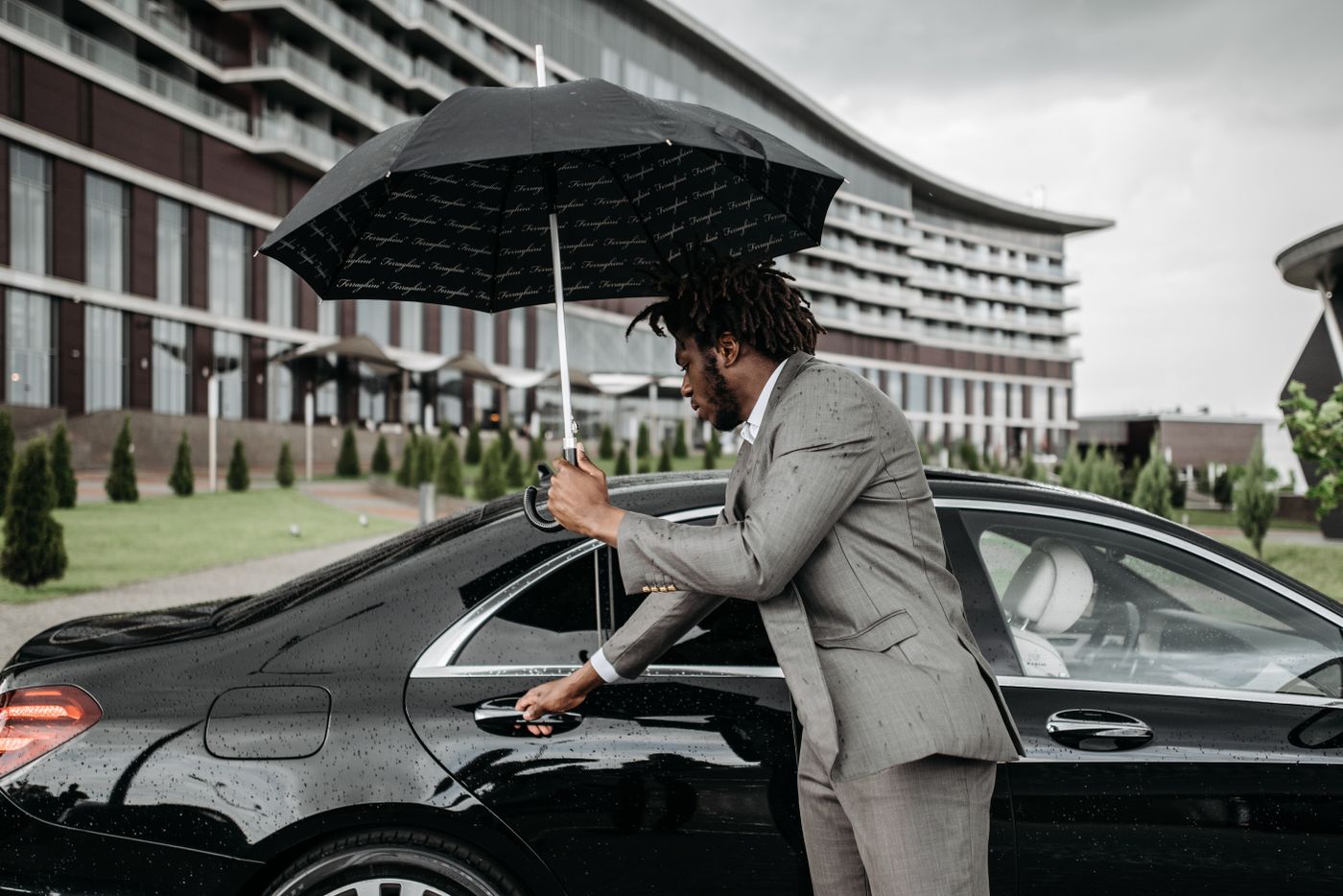
The single most effective security measure available to most wealthy travellers is not armed protection — it is pre-booked, verified ground transport. More than any other single measure, this reduces exposure to the most common real threats.
Why transport is the core measure
Express kidnapping occurs almost exclusively in unregistered or casually hired transport. Street-taxi robbery is a risk in specific cities. Rideshare vehicles in unfamiliar cities introduce vetting questions about the driver and vehicle. Airport transfers via unverified drivers are a common target for opportunistic theft — the driver knows you are carrying valuables, has your itinerary, and knows the route to the hotel.
What pre-booked transport provides
A verified driver with identification. A vehicle known to the booking provider with insurance and regulatory compliance. A known pickup protocol — the driver holds a sign with your name, meets at a specified point, and the pickup is logged by the booking system. A clear cost agreed in advance, eliminating the fare-dispute or upgrade-scam dynamic. Accountability — if something goes wrong, there is a record and a company to pursue.
Which service to book depends on the city and the airport. Our luxury airport transfer comparison sets fixed-price Welcome Pickups against GetTransfer's bidding marketplace and the hotel's own car.
The honest upgrade
In destinations with elevated street crime risk, upgrading to a private car with a local driver for the duration of the stay is more effective than any alternative. The driver learns your patterns, knows where you are staying, and provides a reliable pickup from any location. Cost is modest compared to the risk reduction for travellers who would otherwise be hailing taxis in unfamiliar neighbourhoods.
6. Hotel security — what to actually verify
Hotel security varies dramatically. The marketing does not tell you which hotels have thought seriously about guest safety and which have not. The questions that do tell you:
The physical security questions
Is there 24-hour manned security on site, or only during specific hours? Are guest-room floors accessible only via keyed lift (common in business hotels, less common in small boutique properties)? Are there security cameras at entry points, corridors, and public areas? Is the perimeter of the hotel (particularly pool areas and beachfront access) secured or open? What is the protocol if a guest reports a suspicious person or incident — what happens in the first five minutes?
The procedural security questions
How does the hotel handle visitor registration — can anyone walk up to a guest room, or is access controlled? How are room keys managed if lost — what is the re-keying protocol? Does the hotel share guest information with third parties (airport transfer companies, tour operators) and if so, how is that controlled? Is the hotel safe actually the safest place for valuables — and if not, does the hotel offer secure storage with different controls?
How much a hotel may share, and with whom, depends on where it is. Our hotel check-in privacy guide covers the EU's GDPR limits and the much looser practice at US hotels.
The bathroom balcony and lock check
Experienced travellers check the room on arrival. Does the door lock engage properly and is it a deadbolt? Is there a secondary lock or chain? Do the balcony doors lock? Is the balcony accessible from adjacent rooms or from the exterior? Are the windows secure on ground-floor or low-level rooms? These checks take two minutes and have prevented real incidents.
The hotel-safe reality
Hotel safes are designed to deter casual theft by housekeeping staff. They are not secure against determined theft because most hotel safes have override codes that front desk can use. For serious valuables — watches not being worn, jewellery, cash in quantity, backup passports — the only honest options are to carry them with you, leave them in a bank safe deposit box, or leave them at home. Hotel safes are for convenience, not security.
The law points the same way. In the UK, the Hotel Proprietors Act 1956 limits a hotel's liability for a guest's lost or stolen property to £50 per item and £100 in total, unless staff were at fault or the property was handed to the hotel for safe custody.
7. Digital security and targeting exposure
The most under-addressed security risk for wealthy travellers is digital targeting. The patterns are well-understood by criminals and poorly understood by many travellers.
The information that targets you
Social media posts with location data (including photos geotagged at your current location). LinkedIn activity showing you at a specific conference or event. Email out-of-office replies stating the dates of your trip — effectively telling anyone who emails you that your home is empty. Public calendar data. Credit card transaction notifications visible on unlocked phones. Hotel staff who learn your routine and mention it to the wrong person.
What actually reduces exposure
Post travel content after you return, not during the trip. Disable automatic geotagging on social media apps. Use an out-of-office message that does not state dates or destinations — "I have limited email access" is sufficient. Treat calendar data as confidential — do not share calendars with anyone whose own security you cannot verify. On public Wi-Fi, use a reputable VPN to prevent network-level observation of your activity.
A VPN does not protect against every digital risk, but it prevents network-level surveillance and makes targeted interception harder. Combined with good device hygiene (up-to-date OS, strong passcodes, biometric locking) it closes the most common digital attack surfaces available on travel Wi-Fi.
Our NordVPN, Surfshark and Proton VPN comparison covers which service to choose, and our guide to VPN protection on hotel and airport wifi covers the set-up.
The SIM swap risk
SIM swap attacks — where a criminal convinces your mobile carrier to port your number to a new SIM, then uses it to intercept SMS-based two-factor codes — are a significant risk for wealthy travellers whose phone numbers are discoverable. The honest protection is to remove SMS as a second factor from any account where alternative methods exist (authenticator apps, hardware keys like YubiKey). If you have significant financial accounts secured only by SMS codes, you have a meaningful security gap.
The scale is documented. The FBI's Internet Crime Complaint Center received 1,611 SIM swapping complaints in 2021, with losses of more than $68 million, against 320 complaints and about $12 million across 2018 to 2020, according to its February 2022 public warning. In the US, rules the FCC adopted in November 2023 require carriers to use secure authentication before moving a number to a new SIM or a new carrier, and to tell the customer when it happens. Carrier rules help, but taking SMS out of your two-factor set-up is the fix you control.
8. Private aviation as security infrastructure
Private aviation is frequently sold as time savings and comfort. It is also, for travellers with specific exposure, among the most effective physical security measures available.
What private aviation reduces
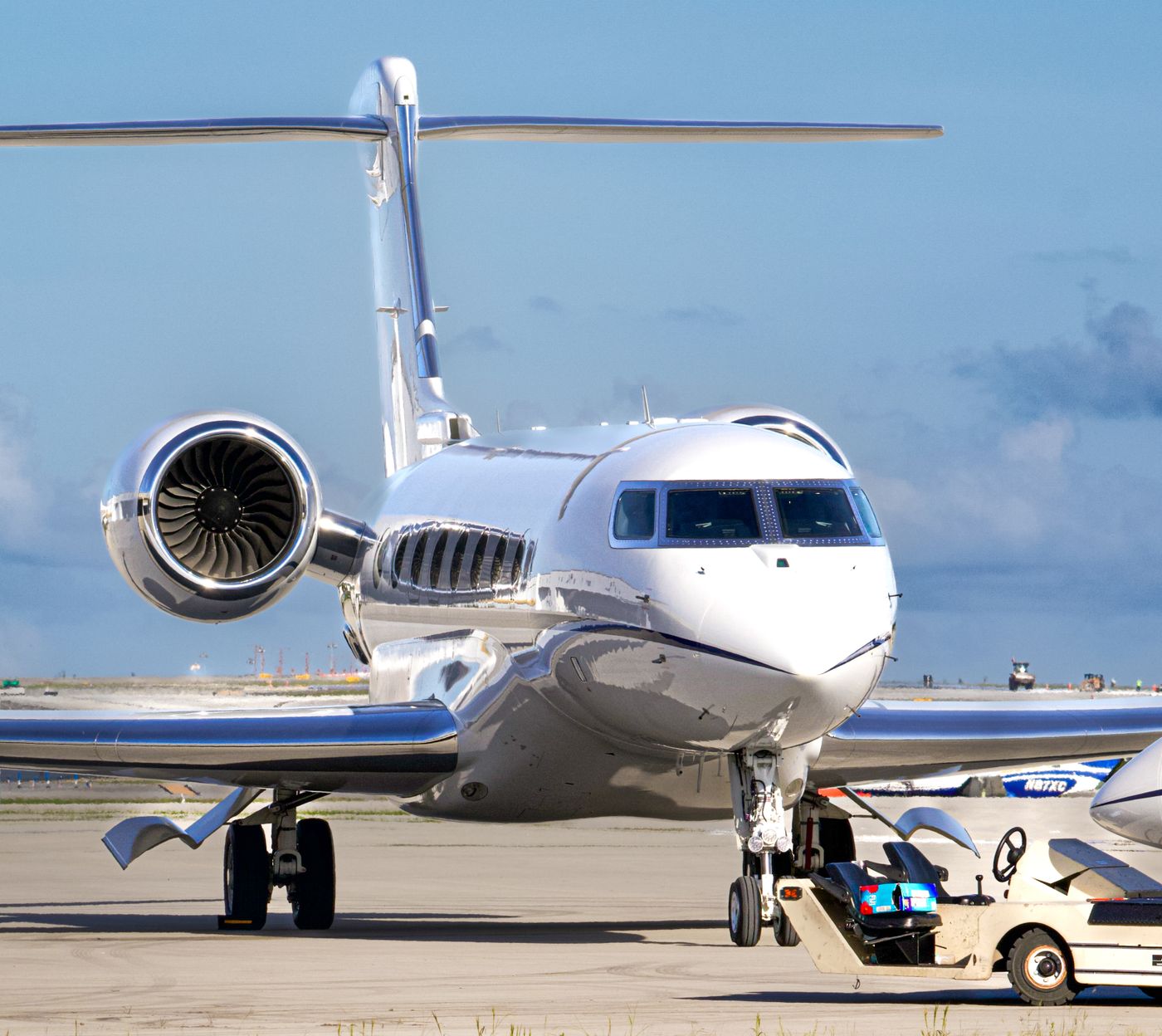
Observed airport movements. A commercial passenger's arrival is visible in terminal corridors; a private passenger's arrival is not. The passenger manifest is not public and is not indexed anywhere externally searchable. Ground-side transitions can be arranged at the aircraft steps — the passenger moves from aircraft to secure vehicle without passing through a public terminal area. Destination flexibility — an aircraft can divert or change destination at short notice, which a commercial reservation cannot.
The aircraft is less private than the passenger. Its identity and position are broadcast over ADS-B and appear on public flight-tracking sites unless the operator enrols it in the FAA's LADD or PIA privacy programmes, and even those hide it only partly. Our private jet privacy guide explains where charter privacy fails.
The FBO environment
Fixed-base operators at major airports provide a controlled environment. Access to the ramp is limited, identification is verified, and the physical layout is engineered for discretion. For travellers whose main security concern is being observed or intercepted, the FBO environment is a significant reduction in exposure relative to commercial terminals.
For travellers who fly scheduled, the nearest equivalent is a private terminal at a commercial airport. Our private terminal index covers PS at Los Angeles and The Windsor at Heathrow, among others.
9. Family members and the weakest link
A protection plan that covers the principal but ignores family members is a protection plan with a structural gap. Criminals targeting principals frequently target family instead, because family members are less protected and more emotionally valuable.
The children exposure
Children's social media activity is frequently less controlled than adults'. Children at international schools often have visible patterns — specific schools, specific extracurricular activities, specific neighbourhoods. School pickup times are predictable in a way adult movements are not. For families with genuine exposure, children's security arrangements are more important than the principal's.
The spouse and extended family problem
Spouses who post travel content when the principal does not. Adult children travelling independently while the principal is abroad. Elderly parents whose routines are unchanged. Any of these can be the softer target that changes the threat dynamic for the whole family.
What actually works
Family-wide information hygiene discipline, maintained consistently. Shared understanding of when and how to discuss travel plans. Controlled access to calendar and location data across family devices. For families with specific threat profiles, coordinated security planning rather than individual-by-individual arrangements. The family is a unit, and its security is only as strong as the least protected member.
10. Express kidnapping and urban street risk
Express kidnapping — short-duration abduction for immediate cash extraction — is the form of physical risk most commonly underestimated by wealthy travellers to specific urban destinations.
Where it happens
Mexico City (specific neighbourhoods and times; many luxury travellers visit without incident, but the risk is real enough that pre-booked transport is the baseline). São Paulo (specific areas and outside tourist zones at night). Caracas (genuinely high risk — most wealthy travellers avoid). Parts of Colombia (Bogotá has improved significantly but remains elevated). Some South African urban areas. Occasionally in other high-crime urban environments worldwide.
The scenario
The traveller takes a street taxi or casual rideshare. The driver diverts or stops in a controlled area where accomplices join. The victim is taken on a tour of ATMs and forced to withdraw daily maximums from multiple accounts, and to surrender valuables and credit cards. Duration is typically two to six hours. Physical violence occurs but is usually limited to intimidation — the criminals want efficient extraction, not a complicated police investigation.
Prevention is transport
Express kidnapping is almost entirely preventable by not taking unvetted transport. Pre-booked cars with verified drivers, hotel-arranged transport, and (in high-risk environments) a local fixed driver for the duration of the stay eliminates the attack surface. No amount of executive protection on foot matters if the traveller then takes a street taxi at 2am. The transport decision is the decision.
The underlying principle: in the destinations where physical security actually matters for leisure travellers, the answer is almost always ground transport discipline rather than protection details. Walking is fine. Driving yourself is fine. Getting into the wrong car is not.
11. What to do when something goes wrong
A brief response playbook, because the moment something happens is the moment planning becomes useless.
Theft without confrontation
Secure yourself first — move to a populated, well-lit area. Report to local police within 24 hours if the loss is significant — an official report is required for most insurance claims. Report to your insurer. Cancel cards immediately. If documents were taken, contact your embassy for emergency replacements. If the loss includes items with tracking (AirTag, Find My), note the location data but do not attempt recovery — confronting thieves escalates risk.
Robbery with threat or violence
Comply. Hand over valuables. Your personal safety is worth more than any object. Do not resist, do not argue, do not chase the attacker. As soon as safe, move to a secure location and contact police and your embassy. Seek medical assessment even if you think you are unhurt — adrenaline masks injuries. Contact your insurer and your family.
Digital compromise
Change passwords on all critical accounts immediately from a clean device. Contact your financial institutions to freeze any accounts potentially compromised. Enable or verify multi-factor authentication on everything. If the compromise involved SIM swap, contact your mobile carrier and request a full account security review. Document everything for reporting and claims purposes.
Emergency contacts that matter
Embassy or consulate of your home country. Your insurer's emergency assistance line. Your evacuation membership, if you have one. A trusted family member or executive assistant at home who can act on your behalf. Your bank's fraud line. These numbers should be in your phone, in a written list separate from your phone, and known by at least one travel companion.
Two government resources are worth using before you go. US citizens can enrol each trip in the State Department's Smart Traveler Enrollment Program so the nearest embassy can reach them in an emergency. British travellers should read the destination page of the FCDO's foreign travel advice before departure.
12. The failure modes wealthy travellers repeat
Confusing visibility with security
Visible security is sometimes necessary but is rarely sufficient and often counterproductive. The protection that works is almost always the protection nobody notices.
Spending on protection and ignoring information hygiene
A family that pays for executive protection but posts real-time travel content on Instagram is protecting the wrong surface. Information exposure is the primary attack vector for most modern incidents.
Buying anxiety rather than managing risk
Paying for security theatre because it feels reassuring is a common failure mode. Ask what specific risk the spending addresses. If the answer is vague, the spending is likely theatre.
Under-insuring the medical risk that is actually more likely
Wealthy travellers frequently obsess about kidnap and ignore the far more likely risk of a medical emergency in a remote destination. The medical cover (an evacuation membership such as Global Rescue, plus travel medical insurance that works where you are going) is the cheaper and more likely-to-be-used investment. Our travel disruption recovery playbook covers what to do when a medical emergency happens abroad.
Protecting principals while ignoring family
Covered above. The weakest link is the threat vector. Family security is family-wide or it is incomplete.
The underlying principle: security is an honest conversation about specific risk and specific response. Most of it is not about protection details or armoured vehicles. It is about pre-booked transport, information discipline, thoughtful accommodation choices, and not confusing status signals with safety.
What changed in 2025 and 2026
Five dated developments affect the advice on this page: a verdict in the robbery it cites, kidnappings aimed at crypto holders, rising demand for K&R cover, a new Mexico advisory and a new peace ranking.
- 23 May 2025. A Paris court convicted eight of the ten defendants in the 2016 Kim Kardashian robbery; the ringleader, Aomar Aït Khedache, received eight years with five suspended (Al Jazeera).
- May 2025. Crypto "wrench attacks" made headlines in New York and France: two crypto investors were arrested over the captivity of an Italian man in a Manhattan townhouse, and French police arrested 20 people over plots against crypto investors and their families (CBS News).
- 16 March 2026. Insurance Business reported K&R demand surging among high-net-worth families, with one HUB Private Client broker binding at least one policy every other day.
- 29 May 2026. The US State Department's Mexico advisory puts Mexico at Level 2 overall and six states at Level 4, Do Not Travel: Colima, Guerrero, Michoacán, Sinaloa, Tamaulipas and Zacatecas.
- 15 June 2026. The Global Peace Index 2026 ranked Iceland the world's most peaceful country for the 19th year running, ahead of New Zealand, Switzerland, Slovenia and Ireland.
Frequently asked questions
Do wealthy travellers actually need executive protection?
It depends entirely on the traveller's profile and destination. For most wealthy travellers to well-policed luxury destinations (Monaco, Swiss Alps, Mediterranean Spain, Caribbean luxury islands), dedicated executive protection is unnecessary and often counterproductive — it attracts attention rather than preventing incidents. For travellers with genuinely elevated risk profiles (public-figure status, ransom history in the family, business activities creating specific threats) or travelling to genuinely high-risk destinations, professional protection is warranted. The honest question is whether your threat profile justifies the cost and the attention protection attracts.
What is kidnap and ransom insurance and who actually needs it?
K&R insurance (sold by Lloyd's syndicates and specialist underwriters including AIG, Chubb, and Hiscox) covers ransom payments, consultant fees, and response costs in the event of kidnapping. Policies are typically sold to corporations for executives travelling to high-risk countries, but high-net-worth individuals with specific exposure (business in high-risk jurisdictions, public profile, family history of threats) can purchase personal policies. The existence of the policy is confidential and should remain so. Premiums are lower than often claimed: a $5 million policy for non-hazardous international travel typically costs around $2,000 a year, while multinational companies with operations in high-risk destinations pay $12,000 to $50,000 or more. Most leisure travellers do not need K&R coverage. Business travellers to genuinely high-risk countries (parts of Mexico, Colombia, Nigeria, Venezuela, some African regions) routinely do.
Are hotel safes actually safe?
Hotel safes deter casual theft but should not be treated as secure storage for anything valuable. Most hotel safes can be opened by staff using override codes. Hotels are legally limited in their liability for items stored in rooms, including safes: in the UK, the Hotel Proprietors Act 1956 caps it at £50 per item and £100 in total unless staff were at fault or the property was handed to the hotel for safe custody. Serious valuables — watches not being worn, jewellery not being worn, cash in quantity, backup passports, hard drives — should travel with you in carry-on or be left in a bank safe deposit box. The honest rule: if you would mind losing it, do not leave it in a hotel room.
What is express kidnapping and where does it happen?
Express kidnapping is a short-duration abduction — typically hours rather than days — where the victim is forced to withdraw cash from ATMs, hand over valuables, or provide credit card PINs. It is distinct from traditional ransom kidnapping and is significantly more common. It occurs in some Latin American cities (parts of Mexico City, São Paulo, Caracas, some Venezuelan cities), parts of South Africa, and occasionally in other high-crime urban areas. The risk is highest for travellers taking unregistered taxis or walking alone in areas outside tourist zones at night. Pre-booked transport and staying in secure areas substantially reduces exposure.
How do I verify a hotel's actual security before booking?
Ask specific questions rather than reading marketing. Does the hotel have 24-hour security staff on site, or only a night receptionist? Are room floors accessible only via keyed lift, or via open stairs? Is the pool area accessible from outside the property? Are there security cameras in corridors and at entry points? What is the hotel's protocol if a guest reports a suspicious person in the corridor? Hotels that answer these questions confidently are hotels that have thought about security. Hotels that deflect have not.
Is private security discretion actually possible?
Yes, and it is what competent executive protection looks like. Good protection is invisible — a driver who is also trained, a secondary vehicle maintaining a discreet following distance, a protection officer who looks like a personal assistant, advance work that has already checked venues before the principal arrives. Obvious protection (dark suits, earpieces, visible firearms in venues that do not require them) is either theatre or a deliberate deterrent signal — both attract the attention they are supposedly managing.
What are the best security solutions for high-net-worth business travellers in the US?
Start with the measures that prevent most incidents: pre-booked transport with verified drivers, no real-time posting or dated out-of-office replies, hardware security keys or authenticator apps instead of SMS codes, and hotels with keyed lift access. Beyond that, the established providers are Crisis24 (part of GardaWorld), Control Risks and International SOS for risk intelligence and crisis response, Global Rescue for evacuation membership, and Pinkerton for executive protection; a credible protection detail typically costs $1,500 to $5,000 or more a day. Kidnap and ransom cover is written by Hiscox, Chubb, AIG and Lloyd's syndicates and costs far less than often assumed for non-hazardous travel: around $2,000 a year for a $5 million limit. US citizens travelling abroad can also enrol each trip in the State Department's Smart Traveler Enrollment Program.