How to claim EU261 compensation in 2026 — step by step
Filing an EU261 claim yourself takes about thirty minutes and keeps 100 per cent of the €250 to €600 the airline owes you. You need three documents, one firm letter — template below, with a copy button — and the patience to chase one reply. The three-hour threshold survived the 2026 reform, so the rules below are the rules that apply to your flight. Check what you are owed first, then follow the eight steps. No lawyer, no claims company, no fee.
over 3,500 km
vs €390 at 35%
646–12, July 2026
free
Step 0: check what you are owed
Why airlines count on you not doing this
Roughly nine in ten eligible passengers never claim, and airlines budget for that. The process is deliberately dull: a form buried four menus deep, a reply that takes six weeks, a first answer that is often a templated “extraordinary circumstances” rejection. Every stage is designed to make you give up, because your giving up is worth €250 to €600 to them, per seat, per disruption.
Here is the counter-fact. EU261 is one of the most passenger-friendly consumer laws ever written. The amounts are fixed by Regulation (EC) 261/2004, so there is nothing to negotiate. The burden of proof sits on the airline, not on you. Free enforcement bodies exist in every EU country for carriers that stall. You do not need legal skill. You need the sequence below.
The eight steps
Confirm what you are owed
Use the checker above. The bands are fixed and the 2026 reform left them alone: €250 under 1,500 km, €400 for 1,500 to 3,500 km and for all intra-EU flights over 1,500 km, €600 beyond 3,500 km — halved to €300 on long-haul where you arrived under four hours late. UK261 mirrors this in sterling at £220, £350 and £520. Full band detail: EU261 amounts explained.
Claim against the operating airline, not the one that sold the ticket
If you booked a Lufthansa codeshare flown by Eurowings, your claim is against Eurowings. The operating carrier is on your boarding pass. Getting this wrong adds a month of dead time, and it is the single most common do-it-yourself error.
Assemble the evidence pack — ten minutes
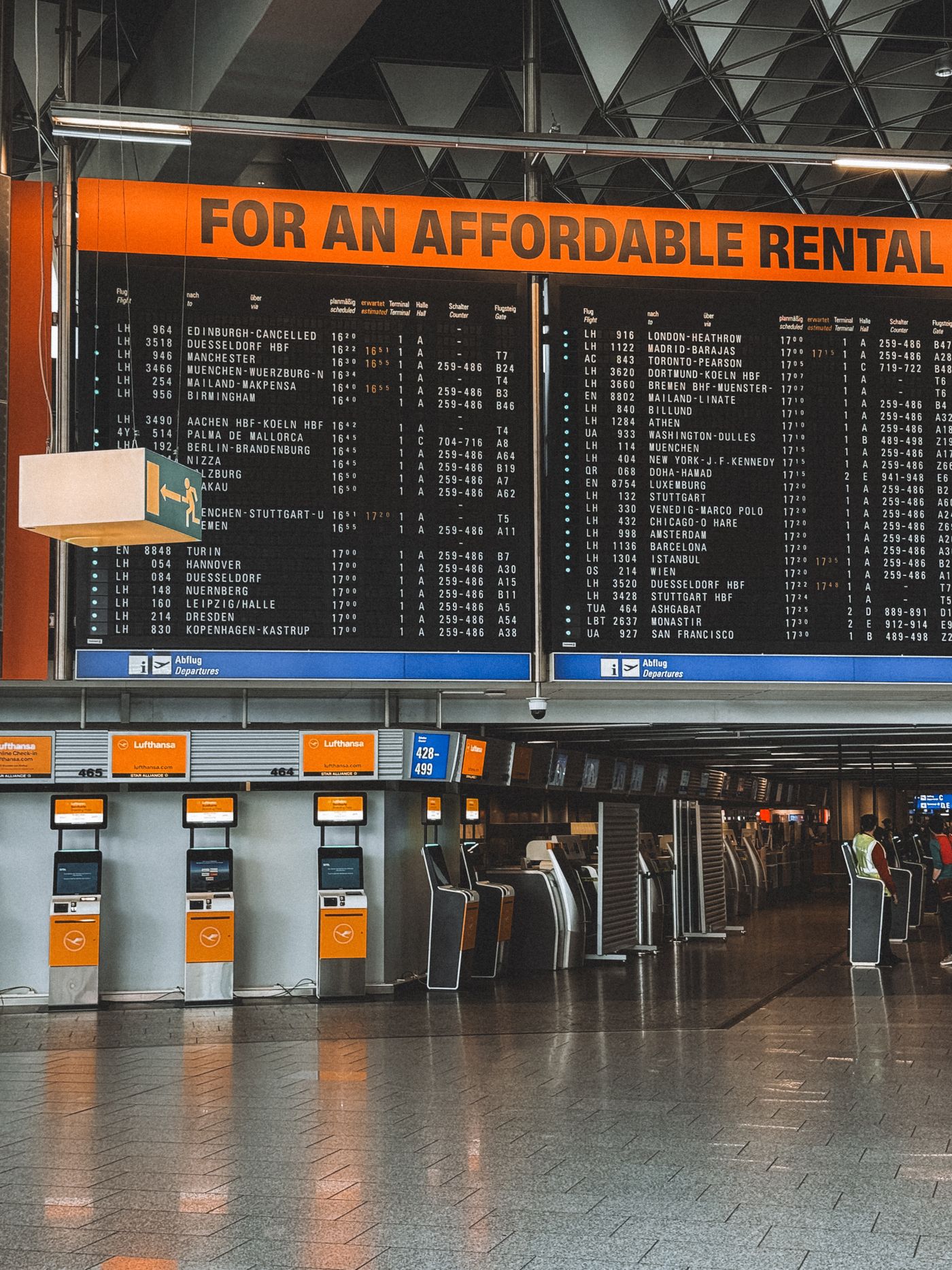
You need three things: the booking confirmation, the boarding pass or check-in email, and proof of the disruption — the airline’s own delay notification, a screenshot from Flightradar24 or FlightAware for your flight number and date, or a photograph of the departures board. Add receipts for meals or hotels the disruption forced on you; those are reclaimable on top of the compensation, not instead of it. Photograph everything into one folder before it expires from your inbox.
Send the letter
Use the airline’s official claims form where one exists, because it creates a case number, and paste this as the complaint text. Otherwise email it to customer relations and send a copy by recorded post. Replace the bracketed parts:
Firm, specific, no drama. The Sturgeon citation and the burden-of-proof sentence tell the claims desk you know the law, and those two lines alone move you out of the “will give up” pile.
The waiting game, and when to chase
Well-run carriers reply in fourteen to thirty days; most take thirty to sixty; the worst take a hundred and twenty. Chase in writing at four weeks, referencing your case number and your thirty-day deadline. Silence is a strategy — treat a second month of it as a rejection and move to step seven.
Decode the rejection — three scripts
“Extraordinary circumstances.” Reply: “Please specify the exact circumstance and provide evidence of the reasonable measures taken. Technical faults (van der Lans, C-257/14) and strikes by your own staff (Krüsemann, C-195/17) do not qualify.” Airlines drop a large share of rejections when asked for proof. Both judgments are on the Court’s own record: van der Lans and Krüsemann. The full list of what counts: extraordinary circumstances explained.
The voucher offer. Reply: “I decline the voucher. Article 7 compensation is payable in money; I will accept only bank transfer.” Vouchers reset nothing and usually expire.
“Knock-on delay from an earlier flight.” Reply: “Rotational knock-on effects are within your operational control and are not extraordinary.” That one sentence answers the industry’s favourite excuse.
Escalate — free first, then cheap
Every EU state runs a national enforcement body that handles EU261 complaints at no cost; the official list is linked from the European Commission’s air passenger rights page. File where the disruption happened. Findings are not always binding, but airlines settle rather than accumulate regulator complaints. Beyond that: small claims court, typically €30 to €100 and usually recovered, or the European Small Claims Procedure for cross-border cases under €5,000.
Know your hand-off point
Be honest about where your patience ends. If the airline has rejected you twice and you will not go to court, do not abandon the claim — that is the airline’s winning scenario. Hand it to a no-win-no-fee service instead: AirHelp takes it from exactly this point, litigates where needed, and keeps 35 per cent only on success. €390 of a €600 claim beats the €0 of a drawer full of correspondence. How the services compare on fee and court record: AirHelp vs AirAdvisor vs Flightright vs Compensair vs Skycop.
What the 2026 reform changed — and when
The 2004 regulation was reopened for the first time in twenty-two years, and the central fight was the three-hour threshold. The Council pushed to raise it well above three hours, which by one industry estimate would have stripped the right from 60 to 70 per cent of passengers who currently qualify. Parliament refused. Negotiations deadlocked in early June 2026, then produced a provisional deal in the middle of that month.
The European Parliament adopted the text on 7 July 2026 by 646 votes to 12, with 3 abstentions. The Council gave final clearance on 13 July 2026. The three-hour threshold survives. Compensation stays at €250, €400 and €600 by distance. Airlines did win one concession: on the longest routes they may halve the payment where they reroute you to your final destination or where the arrival delay does not exceed four hours.
None of it is live yet. The regulation enters into force twelve months and twenty days after publication in the Official Journal, which puts the practical start in the second half of 2027. Until then, every claim runs on the rules described on this page.
What arrives with it, when it arrives: a guaranteed free personal item and cabin bag, with ticket prices shown inclusive of hand-luggage costs; children under fourteen seated next to an accompanying adult at no charge; rerouting within three hours after a cancellation; an end to no-show clauses, so an airline can no longer cancel your return because you skipped the outbound; an explicit duty on airlines to tell passengers how to claim; and — the one to diarise — a nine-month window to submit a claim.
Primary sources, if you want to check any of this rather than take it from us: the Parliament’s own announcement, the Council’s final clearance, and the recorded vote.
How long you have
Two regimes, and which one applies depends on when you flew.
Flights now, and every past flight: national limitation law
The current regulation sets no claim deadline of its own, so the limitation period of the country where you would sue governs. These are the most commonly applied figures.
| Where you would sue | Deadline | Note |
|---|---|---|
| England and Wales | 6 years | 5 years in Scotland |
| France | 5 years | — |
| Spain | 5 years | — |
| Germany | 3 years | runs to 31 December of the third year |
| Italy | 2 years | — |
| Netherlands | 2 years | interrupt it in writing to extend |
Flights from the second half of 2027: nine months
The reformed regulation replaces that patchwork with a single nine-month window to submit your claim to the airline. It is a large simplification and, for anyone in England and Wales, a very large reduction — from six years to nine months. It does not apply retrospectively.
If you have read this far and still will not file it
No judgement — that is precisely the passenger the airlines’ process is built to produce. Then take the thirty-minute version of the three-minute decision: run your flight through AirHelp’s checker, sign, and forget about it. You will keep 65 per cent of something instead of 100 per cent of nothing, and our comparison of the five claim companies scores them on fee, court record and jurisdictional reach so you pick the right one rather than the first one.
Related rights worth knowing either way: cancellations, denied boarding, missed connections, and the post-Brexit picture in EU261 vs UK261.
Frequently asked questions
How do I claim EU261 compensation myself?
Confirm eligibility first: you arrived at your final destination three or more hours late, or the flight was cancelled with less than fourteen days' notice, or you were denied boarding — and the flight departed an EU or UK airport, or arrived at one on an EU or UK carrier. Gather your booking confirmation, boarding pass and evidence of the disruption, then send a written claim to the operating airline citing Regulation (EC) 261/2004 and requesting payment within fourteen days. Escalate to the national enforcement body if refused. It is free and takes about thirty minutes.
Did the 2026 EU261 reform change the three-hour rule?
No, and that was the central fight. The Council pushed to raise the compensation threshold well above three hours, which would have removed the right from an estimated 60 to 70 per cent of passengers who currently qualify. Parliament held the line. The reform was adopted by the European Parliament on 7 July 2026 by 646 votes to 12 with 3 abstentions, and given final clearance by the Council on 13 July 2026. The three-hour threshold survives, and compensation stays at €250, €400 and €600 by distance.
When do the new EU261 rules actually apply to my flight?
Not yet. The regulation enters into force twelve months and twenty days after publication in the Official Journal, which puts the practical start in the second half of 2027. Every flight you are claiming for today falls under the 2004 rules, including the national limitation periods that let you go back years. Claim under today's rules for today's flights.
How long do I have to claim EU261 compensation?
Today, it depends on national limitation law rather than the regulation: six years in England and Wales, five in Scotland, France and Spain, three in Germany, two in Italy and the Netherlands. A disruption from several years ago is often still claimable. That changes once the reformed regulation applies in the second half of 2027, which introduces a nine-month window to submit a claim to the airline. If you have old claims sitting in a drawer, the sensible move is to file them under the current rules rather than wait.
How long does the airline have to respond to an EU261 claim?
There is no EU-wide statutory deadline under the current rules, but thirty to sixty days is the normal range and well-run carriers reply within fourteen to thirty. Chase in writing after four weeks, referencing your case number. If you have had silence or a refusal after two months, escalate to the national enforcement body, which is free, or to court. The reformed regulation adds an explicit obligation on airlines to give passengers clear compensation instructions after a disruption.
What documents do I need for an EU261 claim?
Three essentials: your booking confirmation, your boarding pass or check-in email, and evidence of the disruption — the airline's own delay notification, a flight-tracker screenshot for your flight number and date, or a photograph of the departures board. Add receipts for meals, transport or hotels the disruption forced on you; those costs are reclaimable in addition to the compensation, not instead of it.
What if the airline rejects my EU261 claim?
Ask for evidence. The burden of proof sits with the carrier: it must prove both the extraordinary circumstance and the reasonable measures it took to avoid the disruption. Technical faults do not qualify, following van der Lans (C-257/14), and nor do strikes by the airline's own staff, following Krüsemann (C-195/17). Decline vouchers and insist on bank transfer, because Article 7 compensation is payable in money. If the rejection stands, complain to the national enforcement body for free, use small claims court, or hand the case to a no-win-no-fee service.
Do I need a lawyer or a claims company to claim EU261?
No. The amounts are fixed by law, the burden of proof is on the airline, and free enforcement bodies exist in every EU country, so a first claim needs no professional help at all. Claims companies earn their 35 to 50 per cent fee only in the case where you genuinely will not file or fight yourself — they are a paid shortcut, not a requirement. On a €600 long-haul claim, doing it yourself keeps €600; handing it to a service at 35 per cent keeps €390.
What else did the 2026 reform change?
Several things that take effect with the rest of the regulation in the second half of 2027. Passengers get a guaranteed free personal item and a cabin bag, and ticket prices must be displayed with hand-luggage costs included. Children under fourteen must be seated next to an accompanying adult at no extra charge. Airlines must offer rerouting within three hours after a cancellation, and can no longer deny boarding on a return leg because the passenger did not take the outbound — the so-called no-show clause. Airlines may also halve compensation on the longest routes where they reroute the passenger to the final destination or the arrival delay does not exceed four hours.