Business Travel Credit Cards Compared on Lounge Access in 2026
Seven premium cards get you into airport lounges in 2026, and the differences between them are no longer about how many lounges — they are about who comes in with you, and what it costs. Capital One removed free guests and free authorized-user access on 1 February. Amex now requires Centurion guests to be on your flight, from 8 July. Chase still lets two people in free, which is why it tops the scoring at 84 of 100 despite Amex owning the bigger network. The grid below compares all seven on the five things that actually differ; the paid programmes beneath it are for everyone the US card market does not serve.
- The seven cards, scored out of 100
- The comparison: seven cards, five differences
- The five differences that decide it
- Lounge programmes without a card: Priority Pass, DragonPass, Plaza Premium
- The lounge networks behind the cards, as of September 2026
- By home airport: who covers where you fly
- By traveller profile
- The honest recommendation
The seven cards, scored out of 100
| # | Card | Fee | Component scores | Score |
|---|---|---|---|---|
| 1 | Chase Sapphire ReservePersonal | $795 | network 22/30 · guests 25/25 · Priority Pass 18/20 · cost 12/15 · extra cardholder 7/10 | 84 |
| 2 | Sapphire Reserve for BusinessBusiness | $795 | network 22/30 · guests 25/25 · Priority Pass 18/20 · cost 12/15 · extra cardholder 4/10 | 81 |
| 3 | Amex PlatinumPersonal | $895 | network 30/30 · guests 12/25 · Priority Pass 16/20 · cost 9/15 · extra cardholder 7/10 | 74 |
| 4 | Amex Business PlatinumBusiness | $895 | network 30/30 · guests 12/25 · Priority Pass 16/20 · cost 9/15 · extra cardholder 4/10 | 71 |
| 5 | Capital One Venture X BusinessBusiness | $395 | network 15/30 · guests 14/25 · Priority Pass 16/20 · cost 15/15 · extra cardholder 8/10 | 68 |
| 6 | Citi Strata ElitePersonal | $595 | network 4/30 · guests 18/25 · Priority Pass 18/20 · cost 11/15 · extra cardholder 9/10 | 60 |
| 7 | Capital One Venture XPersonal | $395 | network 15/30 · guests 6/25 · Priority Pass 9/20 · cost 15/15 · extra cardholder 8/10 | 53 |
Read the components, not just the total. Amex Platinum takes a perfect 30 of 30 on network and still finishes third, because a lounge you pay $50 a head to enter — and, since July, can only enter with someone on your own flight — is worth less than a smaller network you walk into with your family for nothing. Equally, Capital One Venture X takes a perfect 15 of 15 on cost and finishes last, because February 2026 removed almost everything that made it a card for two people. If you always travel alone, strike the guest column out and Venture X moves to third on $395. That is the honest use of a scored table: it is a starting point you are supposed to argue with.
The comparison: seven cards, five differences
Fees and policies verified against each issuer's own card page on 6 September 2026. No card issuer is a commercial partner of this site and issuer links below are plain, unaffiliated links.
| Card | Fee | Own lounges | Guests, own lounges | Guests, Priority Pass | Extra cardholder | Airline lounges |
|---|---|---|---|---|---|---|
| Amex PlatinumPersonal | $895 | Centurion (~30) + Global Lounge Collection 1,550+ | $50 each; 2 free after $75k spend; same flight only from 8 Jul 2026 | Lounge-only membership; guests per Priority Pass terms | $195 per Additional Card | Delta Sky Club, 10 visits/yr flying Delta |
| Amex Business PlatinumBusiness | $895 | Centurion + Global Lounge Collection 1,550+ | Same Centurion rules as personal | Lounge-only membership | Employee cards: no-fee option; lounge access not included | Delta Sky Club, 10 visits/yr flying Delta |
| Chase Sapphire ReservePersonal | $795 | Sapphire Lounge by The Club (9 open) | 2 free, no spend threshold; $27 each after | 2 free; $27 each after | $195 per authorized user, full access | None |
| Sapphire Reserve for BusinessBusiness | $795 | Sapphire Lounge by The Club (9 open) | 2 free; $27 each after | 2 free; $27 each after | Employee cards free but no lounge access — they enter as your guests | None |
| Capital One Venture XPersonal | $395 | Capital One Lounges (5) + Landings (2) | $45 adult / $25 child; 2 free after $75k spend (since 1 Feb 2026) | None free; $35 each (since 1 Feb 2026) | $125 per authorized user, up to four | None |
| Venture X BusinessBusiness | $395 | Capital One Lounges (5) + Landings (2) | $45 adult / $25 child; 2 free after $75k spend | 2 free — kept on the business card | $125 per additional cardholder | None |
| Citi Strata ElitePersonal | $595 | None — Priority Pass 1,500+ | n/a | 2 free; authorized users included | Authorized users get Priority Pass | 4 Admirals Club passes/yr flying American |
Read the grid by the column that describes your life, not by the fee. A solo consultant living at DFW and a family of four flying out of Boston would rank these seven cards in nearly opposite orders — and both would be right.
The five differences that decide it
Difference 1Who comes in with you — 25 of the 100 points
This is the whole 2026 story. Chase gives two free guests at Sapphire Lounges and at Priority Pass lounges, on both the personal and business Reserve, and takes the full 25. Amex charges $50 a guest at Centurion unless you put $75,000 a year through the card — and from 8 July the guest must be on your flight, which is 12 of 25. Capital One, which used to be the generous one, now charges $45 an adult and $25 a child at its own lounges and $35 a head at Priority Pass on the personal card: 6 of 25, the lowest score on the page. A couple visiting a lounge four times a year pays $0 with Chase, $200 with Amex, $180 with Capital One.
Difference 2What a second cardholder costs — 10 points
Amex and Chase both charge $195 per authorized user, and both give that user full lounge access. Capital One charges $125 — cheaper, and the only one that prices lounge access separately from the card itself. The business cards are the trap: the Sapphire Reserve for Business and the Business Platinum issue employee cards for nothing, but employees get no lounge access of their own. They enter as your guests, which sends you straight back to Difference 1, and it is the entire three-point gap between each business card and its personal twin.
Difference 3Whose network sits at your airport — 30 points, the heaviest
Centurion has roughly 30 locations and the most major-hub coverage, which is a clean 30 of 30. Sapphire Lounges are at nine airports (22), Capital One Lounges at five plus two Landings (15), and Citi has no network of its own at all (4). Priority Pass is at 1,900+ lounges and experiences but with no quality floor, which is why it is scored separately at 20. The by-airport table below is the only honest way to apply this criterion: a Sapphire Lounge you never fly through is worth nothing to you, whatever it scores here.
Difference 4Airline lounges
Only two of the seven open an airline's own lounge: the two Platinums, with 10 Delta Sky Club visits a year when flying Delta, and Citi Strata Elite, with four Admirals Club passes a year when flying American. Neither Chase card nor either Capital One card opens an airline lounge. For an airline-loyal traveller, the cobrand cards — Delta Reserve at $650, AAdvantage Executive at $595, United Club Card at $695 — beat all seven on that one dimension, which is why this page scores general-purpose cards and points you at the cobrands separately.
Difference 5Price, and what the fee is really buying — 15 points
$395 buys Venture X and a solo traveller's lounge life, and a perfect 15 on cost efficiency. $595 buys Citi's Priority Pass with guests and four Admirals visits. $795 buys the Sapphire network and the best guest policy. $895 buys Centurion. The fee gap between Chase and Amex is $100 a year — one Centurion guest visit every six months. The gap between Capital One and Chase is $400 — which the $300 Capital One travel credit closes on its own, before the guest fees reopen it.
Lounge programmes without a card: Priority Pass, DragonPass, Plaza Premium
Every card above is a US product. A reader in London, Singapore, Sydney or Valencia cannot hold any of them — and a US reader who flies mostly through secondary airports may not want to. The paid programmes are the honest alternative, and they are the same programmes the cards bundle.
Prices from each programme's own site, 6 September 2026; DragonPass tiers as last published (July 2025) — check the app before buying.
| Programme | Unlimited tier | Entry tier | Guests | Network | Best for |
|---|---|---|---|---|---|
| Priority Pass | Prestige $469/yr | Standard $99/yr + $35 a visit · Standard Plus $329 with 10 visits | $35 each | 1,900+ lounges and experiences, 143 countries | The frequent flyer everywhere the card networks are not |
| DragonPass | Prestige US$399/yr | Classic US$99 with 1 visit · Preferential US$219 with 8 | US$31 each | Strong in Asia-Pacific and the Gulf; includes Plaza Premium | Asia-based travellers; anyone whose bank bundles it |
| Plaza Premium passes | None — pay per visit | 2 visits $99 · 5 visits $199 · 10 visits $379 | Passes are shareable | Plaza Premium's own lounges; up to 3 hours a visit | Occasional flyers through Plaza Premium hubs (Hong Kong, London, Dubai) |
| LoungeKey | Not sold direct | Bank-issued only (Collinson) | Set by the issuing bank | Largely the Priority Pass estate | Whoever's premium bank card already carries it |
The arithmetic is simple. Priority Pass Prestige at $469 is $326 less than a Sapphire Reserve and gets you the same Priority Pass lounges — but not the nine Sapphire Lounges, not two free guests, and none of the card's travel credits. That is the own-network criterion in one sentence: if you fly through Sapphire or Centurion airports, the card wins; if you fly through everywhere else, buy the programme and keep the difference.
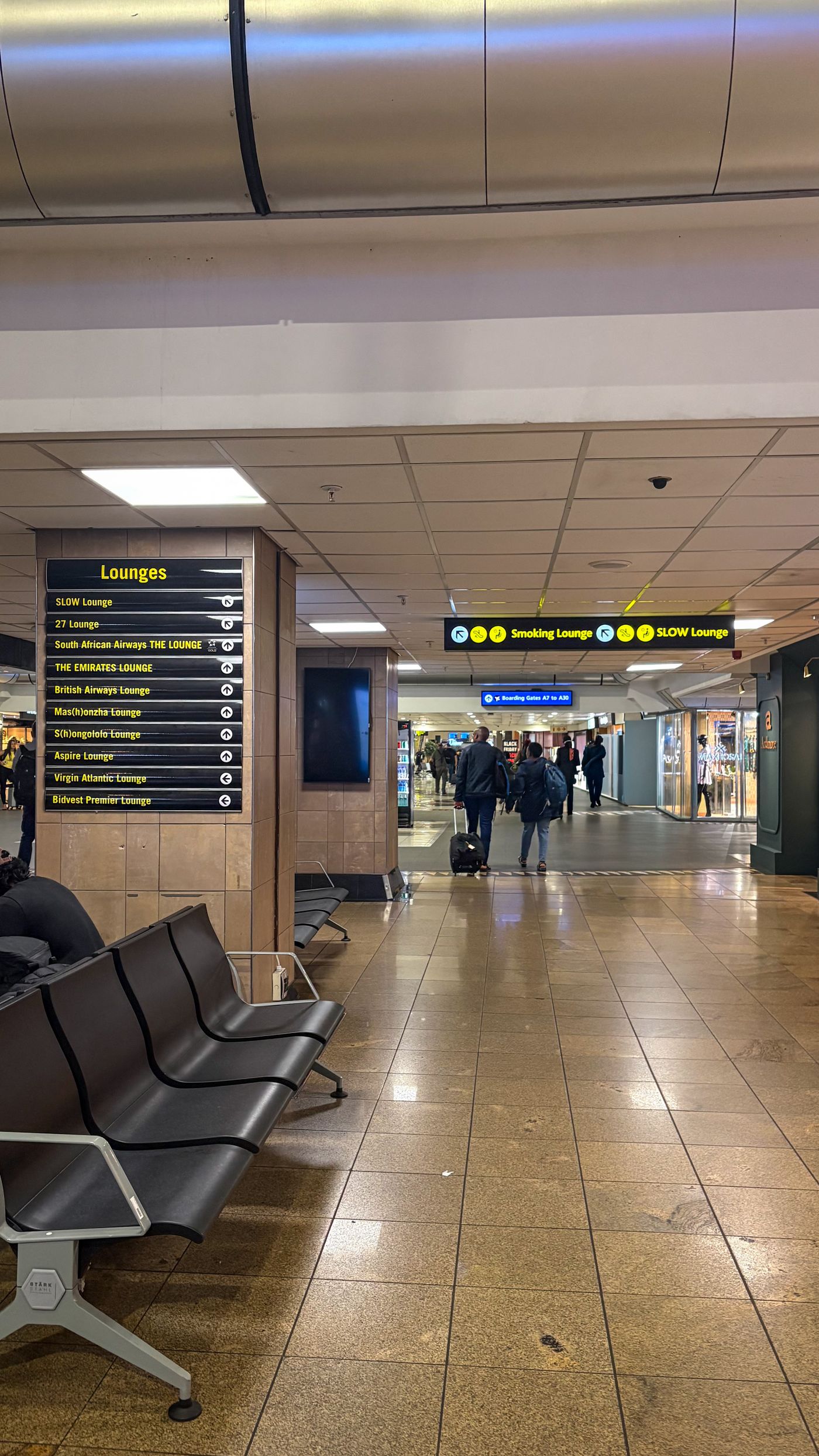
The lounge networks behind the cards, as of September 2026
Amex Centurion Lounges
Roughly 30 lounges at most major US hubs plus London Heathrow, Hong Kong and others; Atlanta scheduled to open in 2026. Chef-led food, full bar, shower suites at the larger sites — still the quality benchmark, and a clean 30 of 30 on network. Access through Platinum, Business Platinum and Centurion cards, unlimited visits, three hours before departure. From 8 July 2026 guests must be on the same flight as the cardholder and connecting passengers may enter no more than five hours before departure. Guests $50; two free after $75,000 spend in a calendar year.
Chase Sapphire Lounges by The Club
Nine open: Boston, Dallas Fort Worth (Terminal D), Las Vegas, New York JFK (Terminal 4), New York LaGuardia (Terminal B), Philadelphia, Phoenix, San Diego and Washington Dulles. Los Angeles is expected late 2026 or early 2027, Miami in 2028; Hong Kong closed in January 2026. Access through the Sapphire Reserve, the Reserve for Business and the J.P. Morgan Reserve, with two free guests.
Capital One Lounges and Landings
Five lounges — Dallas Fort Worth, Denver, Las Vegas, New York JFK (Terminal 4) and Washington Dulles — plus Landings, the smaller food-and-drink format, at LaGuardia and Reagan National. Charlotte is announced with no date. Access through Venture X and Venture X Business primary cardholders; since 1 February 2026 authorized users pay $125 a year for it and guests pay $45 an adult, $25 a child, unless the account spends $75,000 a year.
Priority Pass
The network every card bundles, at 1,900+ lounges and experiences. Quality runs from the excellent (Plaza Premium at Hong Kong, the Aspire lounges at Heathrow, Singapore Changi) to the barely-better-than-the-gate at US secondary airports. Use it as the everywhere-else layer, not the plan. Note the Amex version is lounge-only: no Priority Pass restaurants or Minute Suites, which is the four-point gap between Amex's 16 and Chase's 18 on that criterion.
Airline lounges through cards
Delta Sky Club: 10 visits a year for Platinum and Business Platinum holders flying Delta the same day. Admirals Club: four passes a year for Citi Strata Elite holders flying American. United Club and Alaska Lounge: only through their own cobrand cards.
By home airport: who covers where you fly
| Airport | Centurion | Sapphire Lounge | Capital One | Priority Pass |
|---|---|---|---|---|
| New York JFK | Yes | Yes (T4) | Yes (T4) | Multiple |
| New York LGA | Yes | Yes (Terminal B) | Landing only | Yes |
| Los Angeles LAX | Yes | Expected late 2026 / early 2027 | No | Multiple |
| Miami MIA | Yes | Expected 2028 | No | Yes |
| Dallas Fort Worth DFW | Yes | Yes (Terminal D) | Yes (Terminal D) | Yes |
| Denver DEN | Yes | No | Yes (Concourse A) | Yes |
| Washington Dulles IAD | No | Yes (Concourse A) | Yes (Main Terminal) | Yes |
| Washington Reagan DCA | Yes | No | Landing only | Yes |
| Atlanta ATL | Opening 2026 | No | No | Yes |
| Las Vegas LAS | Yes | Yes (T1, Concourse C) | Yes (T1, Concourse D) | Yes |
| Boston BOS | No | Yes (B–C connector) | No | Yes |
| Phoenix PHX | Yes | Yes (T4) | No | Yes |
| London Heathrow LHR | Yes (T3) | No | No | Multiple |
| Hong Kong HKG | Yes | Closed Jan 2026 | No | Multiple |
Two airports changed the answer this year. Dallas Fort Worth now has all three card networks under one roof, which makes it the one hub where the Sapphire Reserve's guest policy beats the Platinum outright. And Washington Dulles has a Sapphire Lounge and a Capital One Lounge but no Centurion — a Platinum holder based there is paying $895 for Priority Pass and Delta visits, and should score the network criterion at close to zero for themselves.
The lounge is a holding cell. The flight is the substance
Lounge access optimisation matters most for travellers who spend meaningful time in commercial terminals — a problem private charter solves by removing the commercial terminal entirely. For groups of four or more on multi-city European or US routings, the charter maths is increasingly within range of premium commercial, and the time saved usually exceeds the annual lounge value the card delivers.
Compare a private charter quote →By traveller profile
Amex Platinum — and strike the guest column out of the scoring, which lifts it above the Sapphire Reserve for you specifically. Centurion at most US hubs plus Heathrow and Hong Kong, 10 Delta visits, Priority Pass as the fallback. The $895 only works if the lifestyle credits also fire for you — see the honest maths.
Chase Sapphire Reserve, 84 of 100 and a full 25 on guests. Two free guests at Sapphire Lounges and at Priority Pass, no spend threshold. The saving against Centurion's $50 a guest is the largest single number on this page for a family of four.
Capital One Venture X at $395 — last on the table at 53, but a perfect 15 on cost, and the guest column that sinks it is the one a solo traveller never uses. The $300 travel credit nearly pays the fee. Add a partner and the maths flips to Chase immediately.
Buy the programme, not the card: Priority Pass Prestige at $469 or DragonPass Prestige at US$399. UK and European premium cards are compared in our UK and Europe guide.
The honest recommendation
At Centurion airports, alone: Amex Platinum. It owns the network outright at 30 of 30, and the guest penalty that costs it first place does not apply to you.
With family, anywhere Sapphire is: Chase Sapphire Reserve — highest scoring at 84, and if your airport is Dallas Fort Worth, Boston or Dulles it beats the Platinum on lounges outright.
Solo and price-sensitive at a Capital One airport: Venture X, eyes open about what happens the day you bring someone. It is last on the table for a reason, and the reason is guests.
Business cards: the business versions match the personal ones on your own access and fail on your team's — a flat three points on the extra-cardholder criterion, every time. Employee cards on the Reserve for Business and Business Platinum carry no lounge access; Venture X Business at least keeps two free Priority Pass guests, which is the whole 15-point gap between it and the personal Venture X. If the point is getting colleagues in, price authorized users on the personal cards instead.
Everyone the US card market does not serve: Priority Pass Prestige or DragonPass Prestige, and spend the $300–400 you saved on the flight.
Lounge access is one input to the card decision, not the primary one. The broader comparison is in our best luxury travel credit cards 2026; the head-to-head in Amex Platinum vs Chase Sapphire Reserve; and the status angle in cards that fast-track hotel elite status. For the cabin the lounge is waiting for, see the best first-class airlines of 2026.
Frequently asked questions
Which credit card has the best airport lounge access in 2026?
It depends whether you mean the broadest access or the best overall value, and in 2026 those are two different cards. The American Express Platinum has the broadest network by a distance — roughly 30 Centurion Lounges plus a 1,550-lounge Global Lounge Collection, Priority Pass Select, and 10 Delta Sky Club visits a year flying Delta — and takes a full 30 of 30 on network in this scoring. But it scores 74 of 100 overall, behind the Chase Sapphire Reserve on 84, because Amex charges $50 a guest and, since 8 July 2026, requires guests to be on your flight. The Sapphire Reserve gives two free guests at both its own nine Sapphire Lounges and at Priority Pass lounges with no spend threshold. Amex Platinum is $895 a year; the Sapphire Reserve is $795.
What are the lounge access differences between business travel credit cards?
Four differences decide it in 2026. Guests: Chase Sapphire Reserve gives two free guests at Sapphire Lounges and Priority Pass lounges; Amex charges $50 a guest at Centurion Lounges unless you spend $75,000 a year; Capital One charges $45 an adult and $25 a child at its lounges since February 2026. Extra cardholders: Amex and Chase charge $195 per authorized user; Capital One charges $125 for lounge access; the Sapphire Reserve for Business and Business Platinum issue employee cards for nothing but do not give them lounge access. Networks: Centurion has the most locations, Sapphire has nine, Capital One has five lounges and two Landings. Price: $395 for Venture X, $595 for Citi Strata Elite, $795 for the Sapphire Reserves, $895 for both Platinums.
What changed about Capital One Venture X lounge access in February 2026?
Effective 1 February 2026, three major changes took effect on the Capital One Venture X personal card. First, authorized users no longer receive complimentary lounge access — each authorized user can be enrolled for lounge access at $125 per year (up to four authorized users). Second, guest access at Capital One Lounges costs $45 per adult and $25 per child aged 2 to 17, with free guest access (up to 2 guests) only available to primary cardholders who spend $75,000 or more on the card in a calendar year. Third, complimentary Priority Pass guest access was eliminated entirely on the personal Venture X card; guests at Priority Pass lounges now cost $35 per visit. The Venture X Business retained two complimentary Priority Pass guests per visit, which is why it scores 68 in this index against the personal card's 53.
What is the new July 2026 Amex Centurion Lounge restriction?
Effective 8 July 2026, Amex Centurion Lounge guests must be travelling on the same flight as the cardholder, and layover access is limited to within five hours of the connecting flight; standard access remains three hours before departure. Cardholders can no longer bring non-flying family or friends into the lounge while waiting for their own flight, nor use a Centurion Lounge many hours ahead of a connection. The $50-per-guest fee continues, and the $75,000 annual spend threshold that unlocks up to two complimentary Centurion guests remains in place. It is the single biggest reason the Platinum scores 12 of 25 on guest policy against the Sapphire Reserve's 25.
Does the Chase Sapphire Reserve still allow free guests at Sapphire Lounges?
Yes. The Chase Sapphire Reserve allows two complimentary guests per visit at Chase Sapphire Lounges with no spend threshold, and two free guests at Priority Pass lounges, with $27 per additional guest. This is the most generous guest policy of any major credit-card lounge programme in 2026 and the reason it takes a full 25 of 25 on that criterion and finishes first overall on 84. The Sapphire Lounge network has nine open locations: Boston, Dallas Fort Worth, Las Vegas, New York JFK, New York LaGuardia, Philadelphia, Phoenix, San Diego and Washington Dulles, with Los Angeles expected in late 2026 or early 2027 and Miami in 2028.
Which credit card is best for families travelling together for lounge access?
The Chase Sapphire Reserve is structurally the strongest family-traveller card for lounge access in 2026. Two free guests at Sapphire Lounges and at Priority Pass lounges means a family of three or four enters together at no extra cost — against Amex's $50 per Centurion guest unless the cardholder spends $75,000 a year, or Capital One's $45 per adult and $25 per child since February 2026. The constraint is geography: nine Sapphire Lounge cities today, which is why it takes 22 of 30 on network against the Platinum's 30. For families based outside them, the choice is Amex Platinum with the $75,000 threshold, or accepting per-guest fees at lounges visited infrequently.
Is it better to buy a Priority Pass or DragonPass membership than to hold a premium card?
For anyone outside the US card market, or anyone who wants lounges without an $800 card, yes. Priority Pass Prestige costs $469 a year for unlimited visits across 1,900+ lounges and experiences, with guests at $35; DragonPass Prestige is US$399 for unlimited visits with guests at US$31; Plaza Premium sells passes from $99 for two visits, each up to three hours. None of them opens a Centurion, Sapphire or Capital One Lounge, which are the reason to hold the card and the whole of the own-network criterion. If you fly through those networks' airports, the card wins; if you fly through everywhere else, the programme is cheaper and simpler.
Should I get a dedicated airline credit card just for lounge access?
It depends on your airline loyalty pattern. For travellers loyal to a specific airline who would use the lounge frequently, the dedicated airline cobrand cards typically deliver better single-alliance lounge access than general-purpose premium cards. The Delta SkyMiles Reserve American Express ($650 annual fee) delivers full Delta Sky Club access. The Citi AAdvantage Executive World Elite Mastercard ($595) delivers full Admirals Club access. The United Club Card ($695) delivers unlimited United Club access. For travellers who fly multiple airlines, a general-purpose premium card with multiple lounge network access is the more flexible choice — which is what this index scores.
The lounge is the second-best place to wait. The first is not having to wait
For groups of four or more on multi-city European, US or transatlantic routings, private charter is increasingly within range of premium commercial — and the time saved usually exceeds the annual lounge value the card delivers. The lounge matters most when you have to be in the commercial terminal at all.
Compare a private charter quote →- The best luxury travel credit cards in 2026: the honest comparison
- Amex Platinum vs Chase Sapphire Reserve 2026: after the big refresh
- Are premium travel credit cards worth it in 2026? The honest maths
- Best premium travel credit cards for UK and European travellers in 2026
- The airport lounge access wars of 2026