We may earn a commission if you book through links on this page.
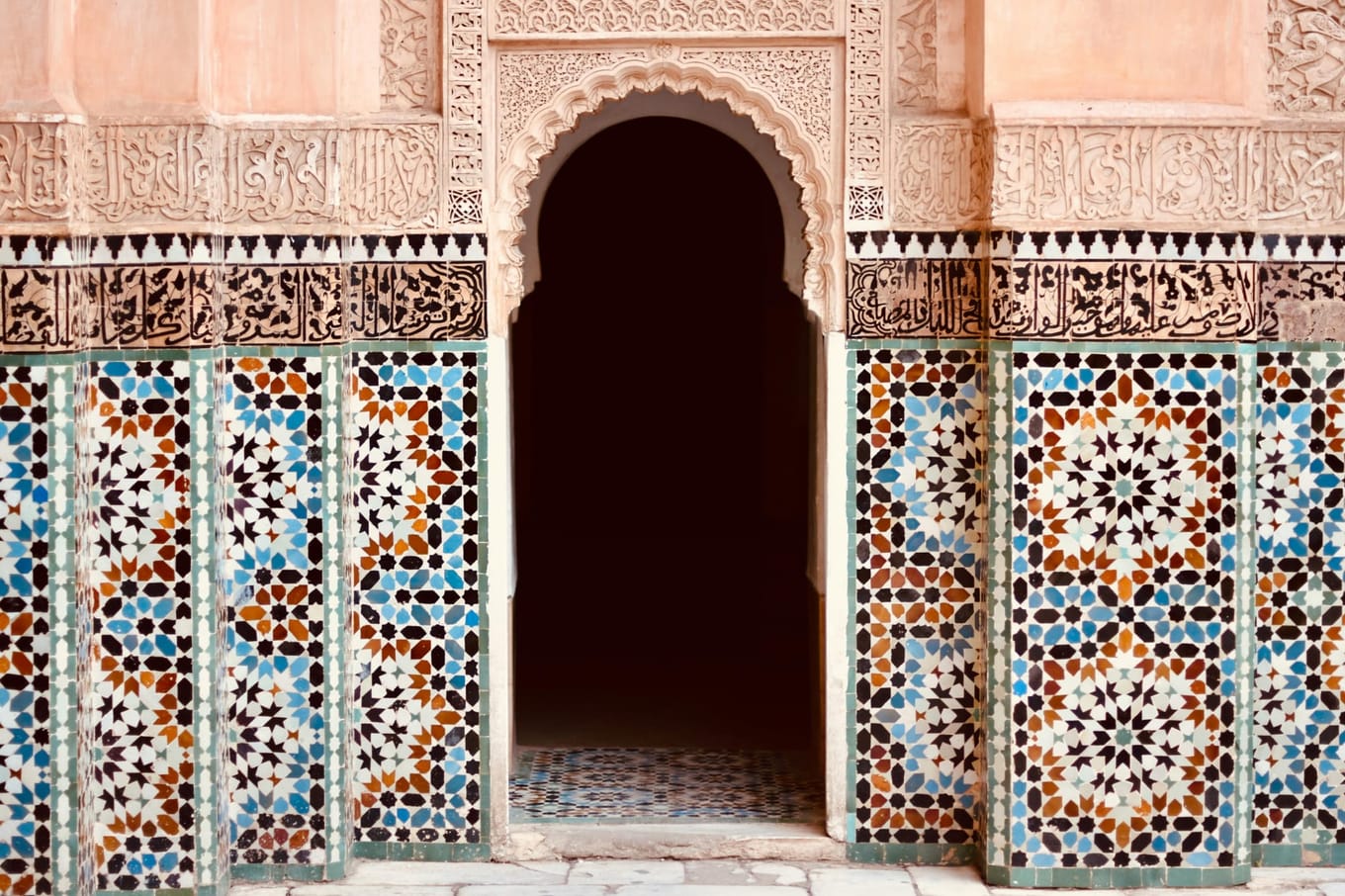
A riad is not a hotel with a courtyard. It is an architectural inversion — a blank exterior wall with a door set into it that opens into something entirely unexpected. Carved plasterwork, painted zellige tiles, cedar ceilings, the sound of a fountain in a courtyard where orange trees grow. From outside, nothing. From inside, everything.
Marrakech has hundreds of riads, dozens of genuinely extraordinary ones, and a gap between the best and the merely marketed that matters enormously. This guide covers where in the city to base yourself, what separates a serious riad from a photogenic disappointment, and what needs to be arranged before you arrive.
The walled old city is where the real riad experience lives. Staying here means navigating narrow derbs (alleyways) to reach your door, the call to prayer at dawn, the sounds of the city around you at all hours. For most travellers, this is the right choice — proximity to the Djemaa el-Fna, the souks, the monuments, and the restaurants that have made Marrakech one of the world's great short-break destinations. The trade-off is that the Medina's most desirable riads are small — typically four to eight rooms — and can feel intimate to the point of snug if you need significant personal space. Booking.com carries strong Medina riad inventory with neighbourhood filtering.
The palm grove on the city's northern edge — 15–20 minutes from the Medina by taxi, a different world in terms of scale. The Palmeraie is where Marrakech's resort hotels and large estate properties sit. La Mamounia is technically Medina-adjacent but Palmeraie in spirit — a grand hotel on a scale that a Medina riad cannot replicate. The Palmeraie is the right choice for travellers who need large pool terraces, extensive grounds, spa infrastructure, and quiet that the Medina cannot reliably provide. The trade-off is that the city's most interesting experiences require a taxi.
The French-built new town outside the Medina walls — wider streets, contemporary restaurants, the city's art galleries and design boutiques. Not the traditional Marrakech experience but more navigable for those who find the Medina's density overwhelming. Some good boutique hotels here that offer a Marrakech base at more accessible prices than prime Medina riads. Suitable for travellers who want Marrakech as one stop on a wider Morocco itinerary rather than as the destination itself.
Marrakech's greatest strength as a base is what it gives access to beyond the city. The Atlas Mountains (two hours), Essaouira on the Atlantic coast (three hours), the desert towns of Ouarzazate and Zagora (day or overnight), the Sahara itself with an advance-planned excursion. G Adventures runs small-group Morocco itineraries that use Marrakech as a hub and extend into the Atlas and south — a strong option for travellers who want the country beyond the city structured properly. Trafalgar also covers Morocco comprehensively for those who prefer a guided format.
The price range for a Marrakech riad spans from €80 per night for a restored townhouse with questionable plumbing to €2,000+ for an entirely private estate with a pool, staff, and a chef. The factors that separate the genuinely worth-it from the merely photogenic are consistent:
Authenticity of the restoration. The best riads were restored by architects and craftsmen who understood what they were working with — traditional techniques, appropriate materials, plasterwork executed by tadelakt specialists rather than approximated with paint. The difference is visible the moment you enter.
Scale of the rooms relative to the price. Some Medina riads are spectacular in their courtyards and have rooms the size of a standard hotel double. Know what you're buying — ask for room dimensions and ceiling heights if space matters.
Exclusivity of the property. A riad rented exclusively — no other guests — is a categorically different experience from a shared guesthouse. For groups of four or more, a private riad rental is almost always the right approach and is often cost-competitive with individual rooms at a hotel of equivalent quality.
The staff and breakfast. In a serious Moroccan riad, breakfast is not a hotel buffet. It is a spread of msemen flatbreads, argan oil, amlou (almond and argan paste), fresh juices, mint tea made properly, and pastries from a nearby bakery. This is one of the great hotel breakfasts in the world when done correctly. When done carelessly it is just bread and jam. Ask in advance what breakfast involves.
March to May and October to November are the optimal windows — warm, manageable for Medina exploration, and at good value. The city operates year-round, which distinguishes it from Mediterranean destinations, but summer heat (40°C+) is genuinely uncomfortable for walking the souks. December and January are cool — sometimes cold in the evenings — but the city is beautiful and considerably quieter than peak season.
Marrakech Menara Airport (RAK) receives direct flights from London (Heathrow, Gatwick, Stansted), Paris, Madrid, Amsterdam, and multiple other European hubs. Flight time from London is approximately three hours — one of the best short-haul luxury city break options from northern Europe in terms of travel time relative to cultural distance. Private charter into RAK is available through Villiers for groups wanting direct service from smaller departure airports.
A riad is a traditional Moroccan townhouse built around a central courtyard — blank from the street, extraordinary inside. What makes a good one: the quality of the restoration, room scale (some conversions are cramped), location within the Medina, and staff. A riad rented entirely is a fundamentally different experience from sharing with other guests.
The Medina for immersion and the most authentic riad experience — everything within walking distance, the city around you. The Palmeraie for space, resort facilities, and quiet. Most serious first-time visitors choose the Medina.
Yes. Marrakech is a well-established international luxury destination. The main considerations are standard for any dense urban environment — awareness in crowded souks, avoiding unofficial guides. A reputable riad will brief guests on specifics. It is not a risk destination in any meaningful sense for well-prepared travellers in quality properties.
March to May and October to November are optimal — warm, manageable, good value. Summer (June to August) brings extreme heat (40°C+) that makes Medina exploration uncomfortable. December and January are cool and quiet. The city operates year-round unlike Mediterranean destinations.
A quality hammam, a licensed private Medina guide, and dinner at the better restaurants (Le Jardin, Dar Moha, Nomad) should all be pre-arranged. Atlas Mountains day trips and Sahara overnights require advance booking to ensure quality operators rather than last-minute alternatives.
We use cookies to improve user experience. Choose what cookie categories you allow us to use. You can read more about our Cookie Policy by clicking on Cookie Policy below.
These cookies enable strictly necessary cookies for security, language support and verification of identity. These cookies can’t be disabled.
These cookies collect data to remember choices users make to improve and give a better user experience. Disabling can cause some parts of the site to not work properly.
These cookies help us to understand how visitors interact with our website, help us measure and analyze traffic to improve our service.
These cookies help us to better deliver marketing content and customized ads.