Monaco expat life 2026: the honest guide
Zero personal income tax is real. The world's most expensive property is real. The number of people it actually works for is much smaller than the marketing suggests — here is who Monaco is right for, and why.
2 km² · ~38,000 residents · €57,569/m² average · €500k min deposit · ~€10m practical net worth
Monaco is the right answer for non-French UHNW individuals with about €10 million or more in net worth who want to live in Monaco for its combination of zero tax, exceptional safety, Mediterranean lifestyle and concentrated wealth-management infrastructure — and whose family structure accommodates the housing constraint and Monaco's limited schooling.
It is the wrong answer for UK non-doms below €10m (the Italy €200,000 flat tax or UAE Golden Visa produces better economics), for French nationals (excluded by the 1963 treaty), for anyone who needs metropolitan variety, and for families with multiple teenagers.
Monaco is two square kilometres of land wedged between France and the Mediterranean, home to roughly 38,000 residents. It has levied zero personal income tax since 1869 (except on its French residents), the highest residential property prices in the world, and the strictest practical barrier to entry of any wealth-migration destination in Europe. The tax proposition is real. The lifestyle proposition is real. The number of people for whom Monaco is actually the right answer is much smaller than the marketing material suggests.
- The reality of two square kilometres
- Residency: requirements and process
- The housing cost that defines everything
- The tax proposition (and its French exception)
- What daily life actually looks like
- Schooling: the constraint families underestimate
- What disappoints expats about Monaco
- Who Monaco is actually right for
- Monaco vs the alternatives
- Scouting Monaco properly
- Frequently asked questions
The reality of two square kilometres
Monaco is smaller than Central Park. You can walk end to end in about 40 minutes. Everything else follows from that.
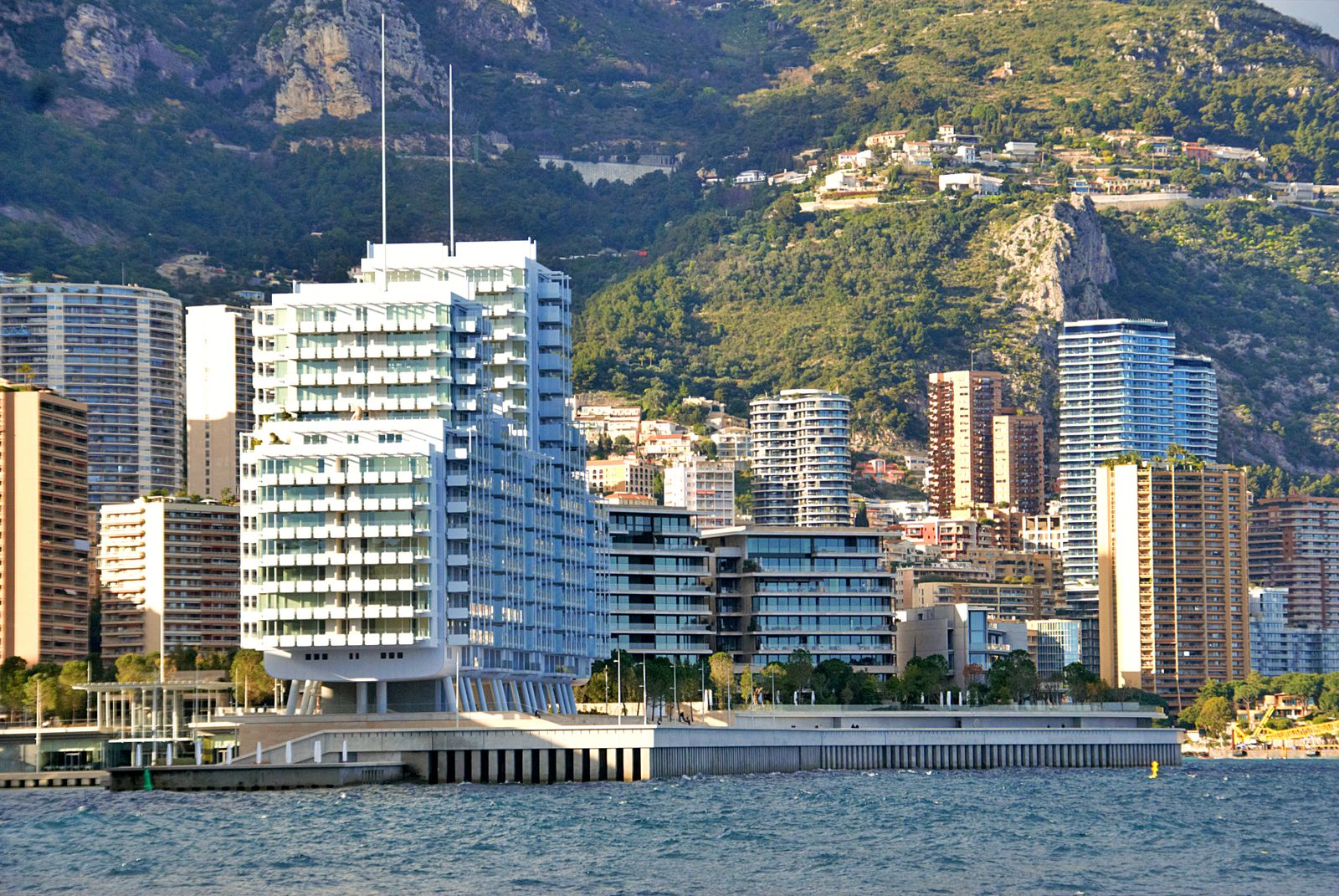
The principality's roughly 38,000 residents — UN mid-2026 estimate of 38,087 — live almost entirely in high-rise residential towers, because the underlying land is constrained by steep topography rising from the Mediterranean to the French Alps within 2.02 km². Roughly 30 percent of residents are French (excluded from the tax regime by treaty), around 20 percent are Italian, and the remaining half is spread across more than 140 other nationalities, with significant British, Swiss, American, Russian and Middle Eastern communities. Only around 10,500 residents are actually Monégasque nationals.
Monaco operates as a constitutional monarchy under the Grimaldi family, which has ruled since 1297. Prince Albert II is the head of state. The legal system is French civil law with Monaco-specific modifications. Monaco is a UN member state but not an EU member — it is inside the Schengen area via the 1963 French Customs Convention, which extends French border arrangements to Monaco's territory. It doesn't participate in the EU single market the way France or Italy do.
Residency: requirements and the actual process
You need Monaco accommodation, a €500,000 Monaco bank deposit, a clean record and — if you're non-EU — a French long-stay Type D visa before you even apply.
Monaco residency is administered by the Direction de la Sûreté Publique, the principality's public-security directorate, at 3 Rue Louis Notari, Monaco-Ville. The application requires four categories of evidence: proof of Monaco accommodation (ownership or a long-term lease), proof of sufficient financial means, a clean criminal record from every country of prior residence in the past five years, and genuine intent to make Monaco your primary residence.
Non-EU/EEA/Swiss nationals must obtain a French long-stay Type D visa from the French consulate in their country of origin before applying to the Sûreté Publique — Monaco does not issue its own visas. This is the most-missed step in the process and adds two to four months to the overall timeline. EU/EEA nationals apply to the Sûreté Publique directly.
The accommodation requirement is the barrier most applicants underestimate. Monaco property prices are the highest in the world, which means the practical minimum investment to establish accommodation starts at roughly €3–5 million for a modest one-bedroom in a serious address. Rentals exist but the market is thin and long-term rents are proportional to purchase prices — around €114 per square metre per month on average as of early 2026, so a 100 m² family apartment runs roughly €11,000–€12,000 monthly.
The financial means requirement is stated as €500,000 deposited with a Monaco bank. In practice, top-tier private banks in Monte Carlo now typically require €1 million to €2 million to open a relationship with a non-resident. Once the account is set up, the bank issues an attestation bancaire — the specific document the residency application requires. The bank deposit itself is a modest component of the practical barrier; housing drives the effective minimum net worth for a family relocation to Monaco to approximately €10 million or above.
Processing runs 3–6 months from complete-application submission. Residency is granted first as a one-year carte temporaire, renewed annually, then as a three-year carte ordinaire after three years of residence, and finally as a ten-year carte privilégiée after ten years. Monaco citizenship (as distinct from residency) is granted only by sovereign ordinance and is extremely rare — do not plan around it.
The Prince's Government's official portal for residence permit applications is monservicepublic.gouv.mc. Fees: €80 for first-time issue of the temporary card, €100 for the three-year ordinary card, €160 for the ten-year privileged card. Non-EU applicants apply first for the French Type D visa via france-visas.gouv.fr.
The housing cost that defines everything
Average €57,569 per square metre. Larvotto tops €71,000. A serious family apartment starts around €5.5 million. This is the number that decides whether Monaco is viable for you.
Every serious conversation about Monaco relocation returns to housing. The latest IMSEE Property Market Observatory, published February 2026, records an average price of €57,569 per square metre across all Monaco districts in 2025, on 493 transactions worth a total of €5.9 billion — a historical record.
The district breakdown from IMSEE (2025 figures):
| District | Avg €/m² (2025) | YoY change | What sits here |
|---|---|---|---|
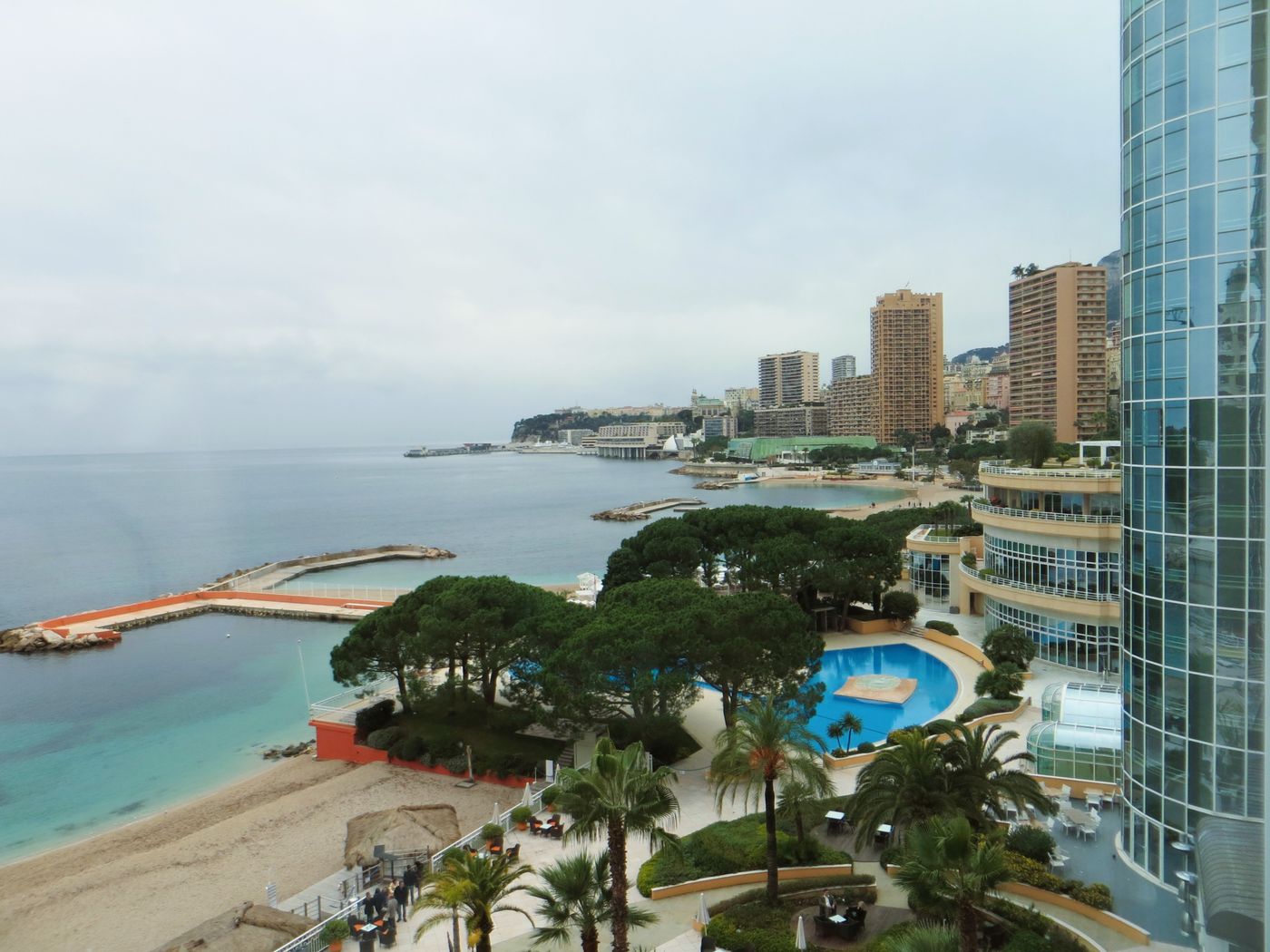
| Larvotto | €71,167 | +2.2% | Beachfront, Le Meridien, ultra-luxury new-builds |
| Monte-Carlo | €54,009 | +4.8% | Casino, Carré d'Or, largest transaction volume |
| Fontvieille | €52,518 | +4.5% | Family-oriented, heliport, sought by young families |
| La Condamine | ~€51,000–54,000 | Stable | Port Hercules, everyday commerce |
| Jardin Exotique | €45,168 | +38% (decade) | Hillside, more moderate — still world-unmatched |
| Les Moneghetti | €43,797 | Modest | Older stock, entry point relatively speaking |
| Carré d'Or (micro) | €60,000–€120,000 | Trophy-driven | Historic Monte-Carlo core; hypercar tier of property |
In practical numbers: a 100 m² two-bedroom in a serious address runs €5.5–10 million to purchase as a minimum, with better properties reaching €15 million. A 200 m² family apartment in a prime district runs €15–25 million. A genuinely high-end penthouse (300+ m² with sea views and quality finishes) starts around €25 million and rises into the €50–100 million range for the best addresses. Seven Monaco transactions surpassed €100 million in 2024. These are purchase prices, not rental equivalents.
Rental yields are structurally low. Gross yields sit around 2.87 percent in 2026, net yields at 2.5–3 percent. That's fine if you're buying to live; it's poor if you're expecting the property to pay for itself.
Monaco advisors typically recommend Monaco property represent no more than 30–50 percent of total net worth to maintain reasonable liquidity. A €5 million apartment on €10 million of net worth is 50 percent concentration in a single illiquid asset with a narrow buyer pool. That is the actual floor for a serious family relocation — not the €500,000 bank deposit the residency application suggests.
The tax proposition (and its French exception)
Zero personal income tax, zero capital gains, zero wealth tax, zero inheritance tax between direct family — for non-French nationals only. The 1963 treaty is not negotiable.
Monaco imposes no personal income tax on residents who are not French nationals. This applies to employment income, investment income, dividends, interest, capital gains on personal investments, and most other personal income categories. Monaco has been a zero-income-tax jurisdiction since Prince Charles III abolished it in 1869. There is no wealth tax. There is no inheritance tax on transfers between direct descendants (spouse and children); transfers to other beneficiaries face rates between 8 and 16 percent depending on relationship. There is no capital gains tax on Monaco real estate when sold by individuals holding property for personal use.
Monaco does levy a business profits tax (Impôt sur les Bénéfices, or ISB) at 25 percent on companies deriving more than 25 percent of revenue from outside Monaco — this is the specific mechanism through which Monaco taxes operating business activity while leaving personal investment returns untaxed. VAT at 20 percent (harmonised with France under the customs convention) applies to goods and services. Property transfer taxes apply to real estate at rates up to 4.5 percent.
French nationals are specifically excluded from Monaco's zero personal income tax regime under the 1963 France-Monaco bilateral tax treaty. French citizens who become Monaco residents are treated by France as if they were French tax residents for worldwide-income purposes. This is a permanent structural feature of the France-Monaco relationship — it is not going away.
For qualifying non-French nationals, the effective personal tax rate on internationally diversified assets is close to zero, versus 45 percent at the UK top marginal rate, 43 percent in Italy at the top marginal rate, or 38–42 percent in France. Annual tax savings for an applicant with €2 million of foreign investment income can exceed €800,000 to €900,000 per year versus UK residency, and the savings compound dramatically.
Two caveats that catch applicants. First, Monaco participates in the OECD Common Reporting Standard and has exchanged financial-account information with partner jurisdictions since 2018 — there is no banking secrecy benefit. Second, the tax residency certificate that formally exits your home country's tax system requires 183 days of Monaco presence per year, more than the 90-day threshold for administrative renewal. Split-year residency doesn't work.
What daily life actually looks like
A village pretending to be a city. Exceptional safety, world-class services in a narrow range, and everyone knows everyone within a month.
Monaco daily life is shaped by three things: the small physical size, the concentration of wealth within that geography, and Monaco's exceptional public-safety investment. Here is what that produces.
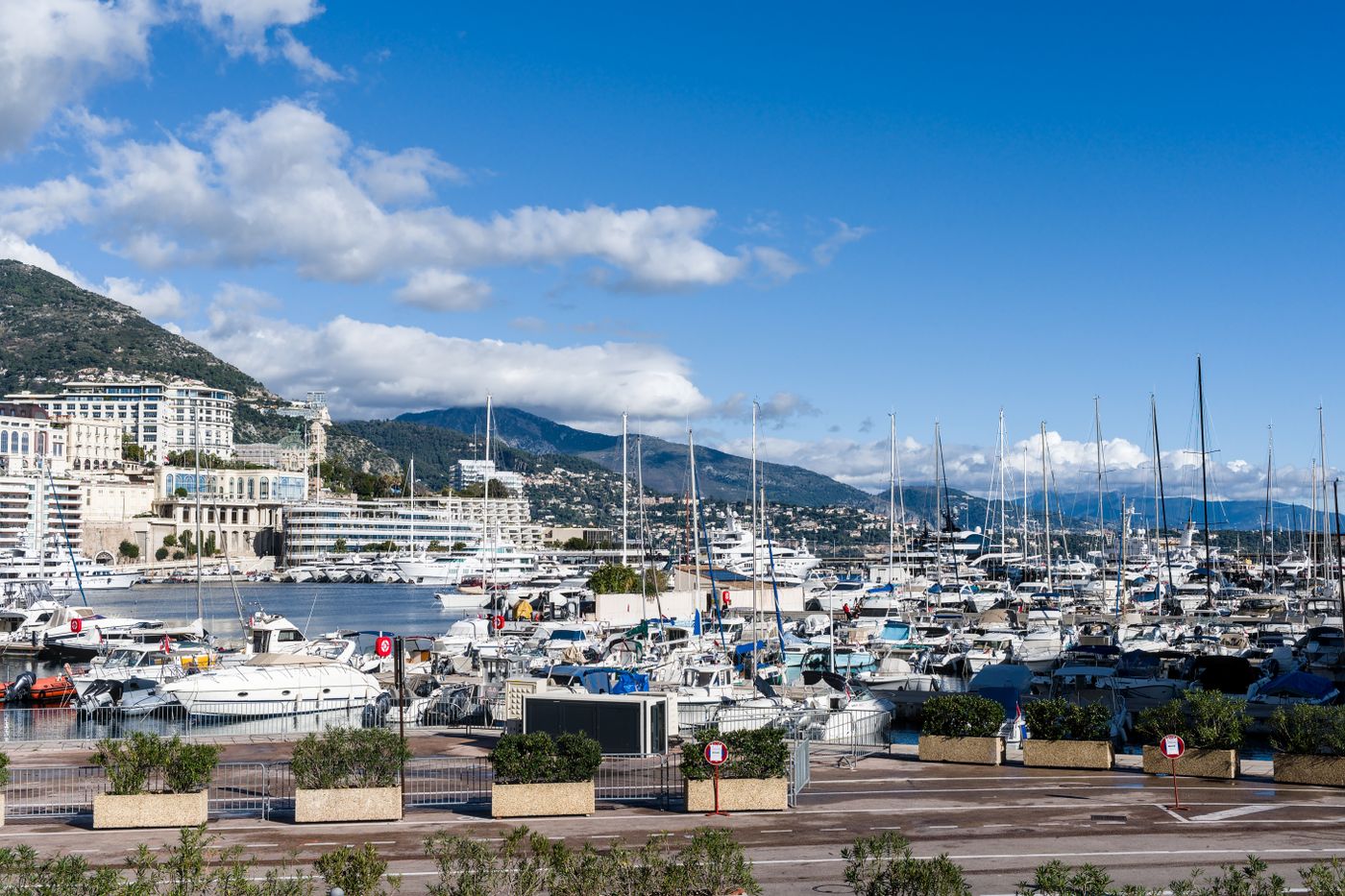
Movement is on foot or by short transfer. The principality is small enough that walking from one district to another typically takes 15–40 minutes. Monaco operates a compact bus network — six regular routes plus express and night lines, €1.50–€2 per ride — used primarily by commuters from France rather than by residents. Roughly 80 public lifts and escalators are free and run 24 hours, linking the steep terrain between districts. Car ownership is common but parking is constrained. Monacair and BLADE operate helicopter shuttles to Nice Côte d'Azur every 15–30 minutes throughout the day, from roughly €180 per seat one way, seven minutes flight time. Serious Monaco residents use them consistently — an hour of Riviera A8 traffic compounds.
Safety is the most defining lived feature after the tax. Monaco has the highest police-to-resident ratio in the world — roughly one officer per 60 residents — supported by pervasive CCTV coverage and one of the lowest crime rates in Europe. Residents leave valuables visible in cars, walk alone at night without concern, and treat the public space as effectively secure. For applicants coming from jurisdictions where personal security is a real concern, this is a meaningful lived benefit that does not show up in tax comparisons.
Services are world-class but narrow. Monaco has excellent private banking, medical care at the Centre Hospitalier Princesse Grace (Monaco's sole public hospital, 845 beds, 21 medical specialisms, robotic surgery and a Novalis Truebeam particle accelerator), Michelin-starred restaurants, and luxury retail — but the range of each is constrained by the small population. There are fewer restaurants in Monaco than in a single Paris arrondissement. Residents who want variety in dining or cultural amenities travel to Nice, Cannes, or Milan for the weekend. The small-village aspect is simultaneously its charm and its constraint.
Social life is small and networked. With ~38,000 residents across 140+ nationalities, Monaco's expat social scene is tight, gossip travels quickly, and the same faces appear at charity galas, yacht club events and private dinners. Applicants who want anonymity or social invisibility will not find it in Monaco. Applicants who enjoy concentrated high-society networking find Monaco unusually efficient — you can meet everyone you need to meet in a single dinner at the Hôtel de Paris.
Comprehensive international cover for the transition
Monaco residency requires proof of health insurance covering the applicant and family. Residents eventually enrol in Monaco's local system (Caisses Sociales de Monaco) but the application needs private international cover for the transition period. SafetyWing's global policy handles this cleanly.
Get a quote → Visit SafetyWing ↗Schooling: the constraint families underestimate
One primary international school with ~850 places. Fees €27,000–€34,400 per child. Families with multiple teenagers often end up boarding elsewhere.
Schooling is the specific constraint most families underestimate when considering Monaco with school-age children. Monaco has a small number of schools serving the resident population, and capacity is genuinely limited.
The International School of Monaco (ISM) is the primary international option — an IB continuum school (PYP, MYP, DP, CP), bilingual English-French, ages 3–18, moved into a new purpose-built campus (Le Testimonio II, 43 Avenue Princesse Grace) in August 2024. It has around 850 students across all ages, drawn from more than 60 nationalities, in partnership with King's College School Wimbledon. Published 2025/26 fees range from €27,000 for Classes 1–3 to €34,400 for Classes 10–13, with 10–20 percent reductions for third, fourth and fifth children. Applications are accepted up to three years in advance and 2026/27 admissions are already closed at the time of writing.
For French-language education, the Lycée Albert Premier and a handful of other French-system schools provide secondary education through baccalauréat. The French system is well-regarded but requires working French fluency, which most non-French expat children do not have initially.
The practical implication: Monaco is significantly easier to make work for pre-school and early primary children than for older children with established schooling patterns. Many families send teenagers to boarding school in the UK or Switzerland for secondary education, with weekend commutes back. If you have multiple school-age children, verify ISM place availability before committing to Monaco residency — the school admissions horizon is longer than the residency permit process.
What disappoints expats about Monaco
Three things: the small-town feeling, the property illiquidity, and how badly Monaco is set up for families with school-age children.
The small-town feeling. Monaco is marketed as a global wealth centre, and the marketing is accurate at the level of concentrated capital. What the marketing understates is how small and village-like the day-to-day experience is. 38,000 residents is fewer than a small English county town. The same people appear at the same events. The restaurants, shops and services are the same ones you used yesterday. Applicants expecting cosmopolitan variety at London, Paris or New York scale find Monaco disappointing because it is a village dressed as a city, not an actual city.
Property illiquidity. Monaco property is the world's most expensive and among the world's least liquid. Transaction volume is low (about 493 sales across the whole principality in 2025), holding periods are long, and the buyer pool for any given property is narrow. Applicants who purchase expecting an easy exit if plans change find that Monaco property is closer to a long-term commitment than a tradeable asset. Price discovery is opaque and operates through a small group of specialist agents.
Constraints on families. Monaco was historically optimised for older wealthy residents without school-age children, and this is still visible in day-to-day infrastructure. Playgrounds are limited. Family-oriented recreation is constrained by geography. School places are tight. Some families relocate instead to nearby Roquebrune-Cap-Martin or Beausoleil — French towns bordering Monaco where French schools and family amenities are more accessible — while carefully structuring cross-border arrangements to preserve Monaco tax residency. This works, but it is not what the marketing sells.
None of these are reasons not to move to Monaco for the right applicant. They are reasons to understand what you are buying before you commit.
Who Monaco is actually right for
Non-French UHNW with €10m+, an adult or very-young-child family structure, and genuine appetite for the specific Monaco way of life. Four profile fits, four wrong-fits — bluntly.
The internationally-mobile non-French UHNW individual
British, Italian, Swiss, American, Middle Eastern or other non-French national whose income is primarily portfolio-driven (dividends, capital gains, interest) rather than salary or active operating business. Tax savings versus UK/Italy/France run into seven figures per year. Monaco lifestyle is a genuine want, not a reluctant compromise.
The family with pre-school or early-primary children
Monaco works well for families whose children are young enough that the ISM capacity constraint hasn't yet become binding, and who have time to reassess as schooling needs mature. Many families later shift teenagers to UK/Swiss boarding — plan for it early rather than being surprised.
The safety-first relocator
For applicants leaving jurisdictions where personal security is genuinely at issue, Monaco's police ratio (~1 per 60 residents), CCTV coverage and small enforceable geography deliver an environment that is functionally unmatched in Europe. This benefit is real and does not appear in tax comparisons.
The concentrated-network networker
Applicants who enjoy meeting the same 500 people at every event and building deep long-term relationships within a small, wealthy, international community find Monaco unusually efficient. If you like being able to see everyone who matters in one evening at the Hôtel de Paris, this is the point.
UK non-doms below €10m net worth
The Monaco housing cost concentrates too much of your wealth into a single illiquid asset. Italy's €200,000 flat tax on foreign income or the UAE Golden Visa produces better lifetime economics at a fraction of the cost of living. See our guides to Italy's flat tax and UAE Golden Visa vs Dubai residency.
French nationals
French citizens who move to Monaco remain taxed by France on worldwide income under the 1963 bilateral treaty. The tax proposition simply does not apply to you. Non-tax reasons to live in Monaco (lifestyle, safety, proximity to family in France) may still make sense, but do not budget for tax savings.
Families with multiple teenagers
If you have two or three teenagers with established educational patterns, ISM cannot always accommodate you and the French system is a genuine hurdle. Switzerland (Geneva, Zug, Lausanne international schools), Italy (Milan, Rome) or London (if you accept UK tax) will fit your family structure more easily.
The metropolitan variety-seeker
Monaco has excellent things, but not many of each. If you want a city where you can eat somewhere new every week for a year, walk 40 minutes and be in a totally different neighbourhood culture, or step into a business ecosystem with real depth, Dubai, London, Milan, Zurich or Singapore will suit you far better. Monaco is a village, and by design.
Monaco vs the alternatives that actually compete
Italy flat tax and UAE Golden Visa are the two closest real competitors. Switzerland is the family alternative. Here is how they line up.
| Monaco | Italy €200k flat tax | UAE Golden Visa | Switzerland (lump-sum) | |
|---|---|---|---|---|
| Personal income tax | 0% (non-French) | €200,000 flat on foreign | 0% | Negotiated (~€150k+) |
| Wealth tax | None | Foreign covered by flat tax | None | Cantonal (varies) |
| Practical min net worth | ~€10m | ~€3–5m | ~€1–3m | ~€5–10m |
| Housing cost (family apt) | €5–15m purchase | €1–4m in Milan/Rome | €1–3m in Dubai | €3–8m Zug/Geneva |
| Schooling for teens | Tight | Strong intl schools | Very strong | Excellent |
| Safety | Exceptional | Good, city-variable | Very high | Very high |
| Metropolitan variety | Village | World-class cities | Global city (Dubai) | Small cities |
| Schengen access | Yes (via France) | Yes (EU member) | No | Yes (Schengen) |
| French nationals eligible? | No (treaty) | Yes | Yes | Yes |
Monaco wins on tax and safety. Italy wins on lifestyle-per-euro and family flexibility. UAE wins on cost-of-entry and schooling capacity. Switzerland wins on family infrastructure. The right answer depends on what you actually value — and if you have to think about it for longer than a page, Monaco is probably not your answer.
Scouting Monaco properly before you decide
Rent for a month before you buy anything. Fly private into Nice, transfer by helicopter, base yourself in Monaco or Cap-Martin, and test the actual daily grind — not the marketing.
Anyone spending €10 million on a life decision should stress-test it first with a proper 4–6 week scouting trip. Rent a serviced apartment in Monte-Carlo or Fontvieille (not a hotel — you need to grocery-shop, use the healthcare, get bored). Meet several private banks. See at least ten properties across different districts. Sit in on an ISM open day if you have children. Then decide.
For the helicopter transfer itself, book direct — Monacair and BLADE are the two operators on the 7-minute Nice–Monaco route, with seat fares from around €180 and private charter from around €1,200. No affiliate on either — just book direct.
Frequently asked questions
Monaco cost is dominated by housing. The average residential price is now €57,569 per square metre (2025 IMSEE data, published February 2026), rising to €71,167 in Larvotto and €54,009 in Monte-Carlo. A 100 m² family apartment in a serious address runs approximately €5.5m to €10m to purchase, or roughly €11,000 to €12,000 per month to rent — Monaco is the world's most expensive place to rent residential property. Daily living costs run 25–35 percent above Paris. International School of Monaco fees for 2025/26 are €27,000 to €34,400 per child. The practical minimum annual household budget for a serious Monaco expat family is €500,000 to €1 million per year, almost entirely driven by housing.
Monaco residency requires proof of Monaco accommodation (ownership or a long-term lease — no short cuts), a minimum €500,000 deposit with a Monaco bank plus a bank reference letter (private banks typically expect €1m or more in practice), a clean criminal record from every country of previous residence, comprehensive health insurance, and genuine intent to make Monaco your primary residence. Non-EU nationals must first obtain a French long-stay Type D visa from the French consulate in their country of origin — Monaco does not issue its own visas. Applications are then submitted in person to the Direction de la Sûreté Publique at 3 Rue Louis Notari. Total processing time runs 3–6 months. French nationals are excluded from Monaco's zero income tax regime by the 1963 France-Monaco tax treaty and are taxed by France on worldwide income.
For non-French nationals genuinely resident in Monaco, yes — zero personal income tax (in place since 1869), zero capital gains tax on personal investments, zero wealth tax, and zero inheritance tax on transfers to direct descendants (spouses and children). Monaco levies a business profits tax (ISB) of 25 percent on companies deriving more than 25 percent of revenue from outside Monaco. VAT at 20 percent applies (harmonised with France under the 1963 customs convention). Property transfer duties apply on real estate transactions. Monaco participates in the OECD Common Reporting Standard and exchanges tax information with more than 80 jurisdictions — there is no banking secrecy benefit. The zero tax requires actually living in Monaco; the authorities scrutinise residency claims where home-country tax authorities challenge them.
Monaco works for non-French ultra-high-net-worth individuals with net worth above approximately €10 million whose family structure accommodates the constraints and who want to live there for reasons beyond pure tax. The specific fit: non-French nationality, wealth sufficient to absorb the housing cost without concentrating portfolio in a single illiquid asset, adult family structure or very young children rather than teenagers with established schooling patterns, and appetite for a small, networked social environment. Monaco is the wrong answer for UK non-doms below €10m (Italy €200,000 flat tax or UAE Golden Visa produces better economics), for applicants who need major-metropolitan variety, for applicants wanting anonymity (Monaco is a village), for French nationals (excluded from the tax benefit by treaty), and for families with multiple teenagers whose schooling demands exceed the International School of Monaco's roughly 850-student capacity.
Yes, and the presence requirement is a real one. For administrative renewal of the temporary carte de séjour, the Direction de la Sûreté Publique expects at least three months of physical presence per year, with stricter expectations at the ordinary and privileged card stages. For the Monaco tax residency certificate — the document needed to formally exit your home country's tax system — the threshold is 183 days per year. Monaco enforces these requirements more strictly than most comparable jurisdictions and will withdraw permits where genuine residence cannot be demonstrated. Digital nomads or split-year residents shopping for zero tax without moving properly should look elsewhere.
Almost certainly not, and applicants should not plan around it. Monaco citizenship is granted only by sovereign ordinance of the Prince and is extremely rarely awarded to naturalised applicants, even after decades of continuous residence. The formal minimum is ten years of continuous legal residence, but approvals are discretionary and typically require exceptional integration and demonstrated ties to the Principality. What you can achieve after ten years is the carte privilégiée — a ten-year renewable residence permit that functions as the practical equivalent of long-term residency but does not confer citizenship, voting rights in Monegasque elections, or the right to hold reserved Monegasque state housing. Monaco is not a citizenship-by-investment jurisdiction.
Not sure if Monaco is right for you?
Every serious relocation starts with an honest audit of what you actually want out of the move. Our comparison of the top non-dom destinations for 2026 is the place to start if you're not certain Monaco fits.
Compare the alternatives →