Philippines Luxury Travel 2026: Amanpulo, El Nido, Boracay and the Country with 7,641 Reasons to Visit
The Philippines remains the most under-marketed luxury archipelago in Southeast Asia. The country of 7,641 islands contains genuinely world-class private-island resorts (Amanpulo on Pamalican, the Aman flagship holding a Michelin Key), the powdered-sugar beaches of Boracay, the limestone-karst lagoons of El Nido and Coron in Palawan, and dive sites including Tubbataha Reef that consistently rank in global top-ten lists. Visa-free entry for 30 days for most Western passport holders, English as the working language across hospitality, and a hospitality culture that Filipinos call "hospitality with heart" combine to produce one of the most rewarding luxury trips in Asia.
In this guide
- Why the Philippines in 2026
- Manila: the capital's luxury hotel collection
- Amanpulo: Pamalican Island and Asia's private-island standard
- El Nido and Palawan: the karst-and-lagoon archipelago
- Boracay: Shangri-La and the white-sand reset
- Cebu, Mactan and Bohol: diving and city escape
- Siargao: surf, Nay Palad, and the new frontier
- Diving: Tubbataha, Apo Reef, and the Coron wrecks
- Practical logistics: visas, transport, health, payment
- How to plan a luxury Philippines trip
- Frequently asked questions
Why the Philippines in 2026
The Philippines has spent the last fifteen years quietly developing one of the deepest private-island and resort collections in Asia, but the country remains notably less marketed than Thailand or Indonesia for luxury travel. That structural under-marketing is the traveller's advantage. The country delivers world-class private-island experiences (Amanpulo on its own Pamalican Island, holder of a Michelin Key in the Michelin Guide hotel selection), one of the most distinctive karst-and-lagoon archipelagos in the world (El Nido and Coron in Palawan), and the entire Tubbataha Reef Natural Park UNESCO World Heritage Site for divers willing to make the liveaboard journey. The 2026 trip-friction profile is excellent: visa-free entry for 30 days covers UK, US, Canada, Australia, New Zealand, all EU member states, Japan, Singapore and Hong Kong; English is universal at the hotel and tourism-operator level; and Manila's main international gateways (NAIA, Clark, and increasingly Cebu-Mactan) offer growing direct connections from London, Doha, Dubai and the Asian hubs.
The practical setup is straightforward but the Philippines specifically rewards careful preparation. Trip and medical insurance is non-negotiable at this price level — SafetyWing covers trip cancellation, medical evacuation, and the diving-specific incidents that matter if anything goes wrong in remote Palawan or Tubbataha. (Medical evacuation from a Palawan island to Manila or Singapore can run into five figures; the SafetyWing premium of approximately $56 per four-week period is the most asymmetric insurance bet in Southeast Asian trip planning — our full assessment is in Is SafetyWing worth it in 2026?) For mobile data on arrival at Manila NAIA or Cebu, Airalo and Yesim both offer Philippines eSIMs from approximately $4–$8 for 1–3GB — activated before landing, no airport queue, working from the moment you land. Cross-check international flight pricing into Manila through Kiwi.com's multi-city engine before locking in — the Philippine carriers (Philippine Airlines, Cebu Pacific) often surface better business-class fares than the European or Middle Eastern alternatives on indirect routings.
Manila: the capital's luxury hotel collection
Manila is the entry point to nearly every Philippines luxury trip and rewards at least 1–2 nights as a city stop in its own right. The Makati and Bonifacio Global City (BGC) commercial districts hold the strongest hotel collection; For the full circuit — and what to leave out — our Manila guide ranks the capital's attractions in order of merit. Print or save offline copies of your hotel address and onward flight details before arrival — NordVPN on public airport WiFi is a sensible precaution given the volume of phishing activity at the major Asian hubs.
The Peninsula Manila & Raffles Makati
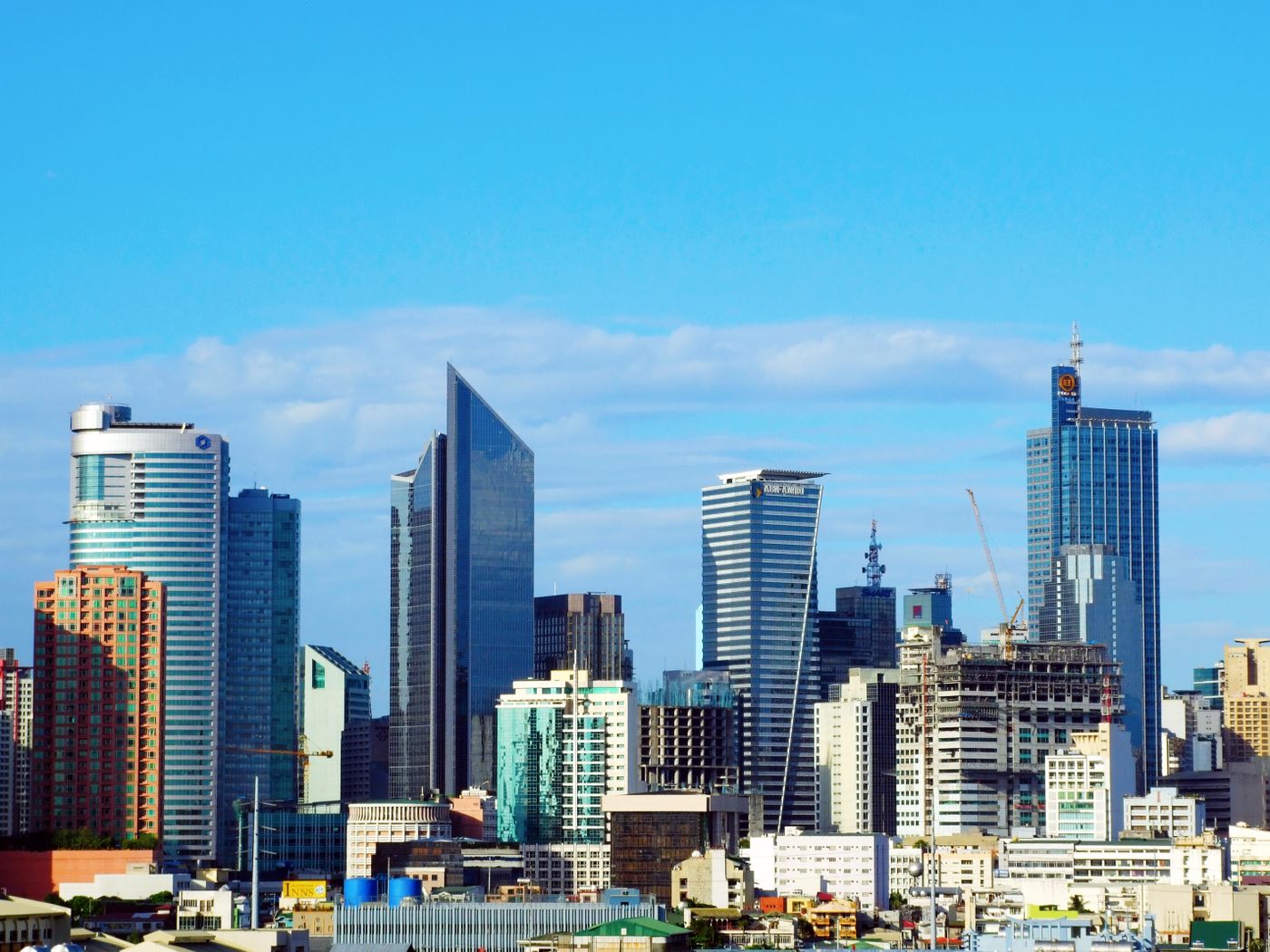
The Peninsula Manila remains the most prestigious hotel in the country — a long-running flagship anchoring Makati's commercial centre, with the Sunday brunch at Spices regarded as a Manila institution. Raffles Makati occupies the Raffles Residences tower with 32 suites (every accommodation is a suite, all with personal butler service) and is the boutique luxury alternative for travellers prioritising privacy over scale. Rates from approximately PHP 18,000–PHP 60,000 per night at either. Pre-book Manila experiences (the Intramuros walking tour, the National Museum, the Ayala Museum) via GetYourGuide — the heritage walks particularly reward a private guide who can explain the Spanish-American colonial layers.
Shangri-La The Fort & Fairmont Makati
Shangri-La The Fort anchors the contemporary Bonifacio Global City district with Manila's strongest hotel pool and Asian-fusion dining at HEAT. Fairmont Makati delivers the Accor luxury flagship in the city with extensive club-floor amenities. Conrad Manila (closer to the bay and the cultural complex) is the third strong international flagship in Manila. Check recent guest experience signals for specific dates through the Tripadvisor Manila hotels listing when picking between the multiple Manila five-star options. For travellers preferring residential rentals over hotels (particularly for stays over 4 nights or for families), Plum Guide covers a small but vetted Manila collection in Makati and BGC.
Manila airport transfers are critical to plan ahead — the city's notorious traffic can turn a 12km journey into 90 minutes. Pre-booked private transfers via GetTransfer or Welcome Pickups from NAIA to Makati/BGC run approximately PHP 1,500–PHP 3,500 and save the airport-taxi queue. For domestic flights onward to Palawan, Boracay or Cebu, the four NAIA terminals are confusingly separated; double-check the departure terminal the day before. Confirm your travel insurance covers the inter-island domestic flight portion — SafetyWing's Nomad Insurance covers schedule disruption on domestic legs that contributes to a missed onward connection.
Amanpulo: Pamalican Island and Asia's private-island standard
Amanpulo — on its own Pamalican Island in the Cuyo Archipelago between Palawan and the Visayas — is the flagship Aman resort in the Philippines and remains one of the most exclusive private-island experiences globally. The island is reachable only by Amanpulo's own scheduled private flights from Manila: guests are met at Ninoy Aquino International Airport, taken to the resort's private lounge and hangar, and flown to Pamalican's own airstrip in a 14-seat twin-engine turboprop in approximately 70 minutes. Round-trip airfare runs in the region of USD 700–800 per adult, with private charter on request. The resort comprises 42 thatched-roof casitas and 18 villas modelled on the traditional Filipino bahay kubo, each within walking distance of the island's beach stretches. Amanpulo holds a Michelin Key in the Michelin Guide hotel selection and is a long-running fixture of the Condé Nast Traveler Gold List and Travel + Leisure World's Best awards.
New Jungle Breakfast experience and full Wellness Studio
The 2026 programme adds a new Jungle Breakfast experience set within the island's tropical interior, alongside the fully operational new Wellness Studio (advanced weight room, cardio studio, expanded Pilates facilities). The signature beachfront casitas remain at the core of the offering — private patios, large outdoor showers, and direct beach access; villas add private pools with butler and chef service. Rates from approximately USD 2,500–USD 12,000 per night.
The Amanpulo experience is fundamentally different from the El Nido resort cluster — the island is a single-resort destination operated as one cohesive property, versus the smaller multi-resort El Nido archipelago. The right framing is to plan Amanpulo as the headline luxury retreat in a longer Philippines itinerary, typically following 2–3 nights in Manila and preceding or following the more active Palawan exploration. A complimentary car transfer from Manila airport to Amanpulo's private lounge is provided for same-day flight connections, so the routing is genuinely seamless. SafetyWing's coverage for the small-aircraft transfer leg specifically is worth verifying before departure (it is included in the standard Nomad Insurance, but confirm the precise terms for charter-class flights).
Coordinate private aviation across the archipelago
The Philippines is genuinely an aviation country — the only practical way to combine Manila with Palawan, Boracay, Cebu or Siargao is by air, and commercial connections routinely cost entire days. Our charter partner surfaces quotes and empty-leg inventory across Manila (MNL), Clark (CRK), Cebu (CEB), Bohol-Panglao (TAG), Caticlan (MPH), Puerto Princesa (PPS), El Nido (ENI) and Siargao (IAO) — useful for travellers combining three or four regions in one trip.
Compare Philippines charter quotes →El Nido and Palawan: the karst-and-lagoon archipelago
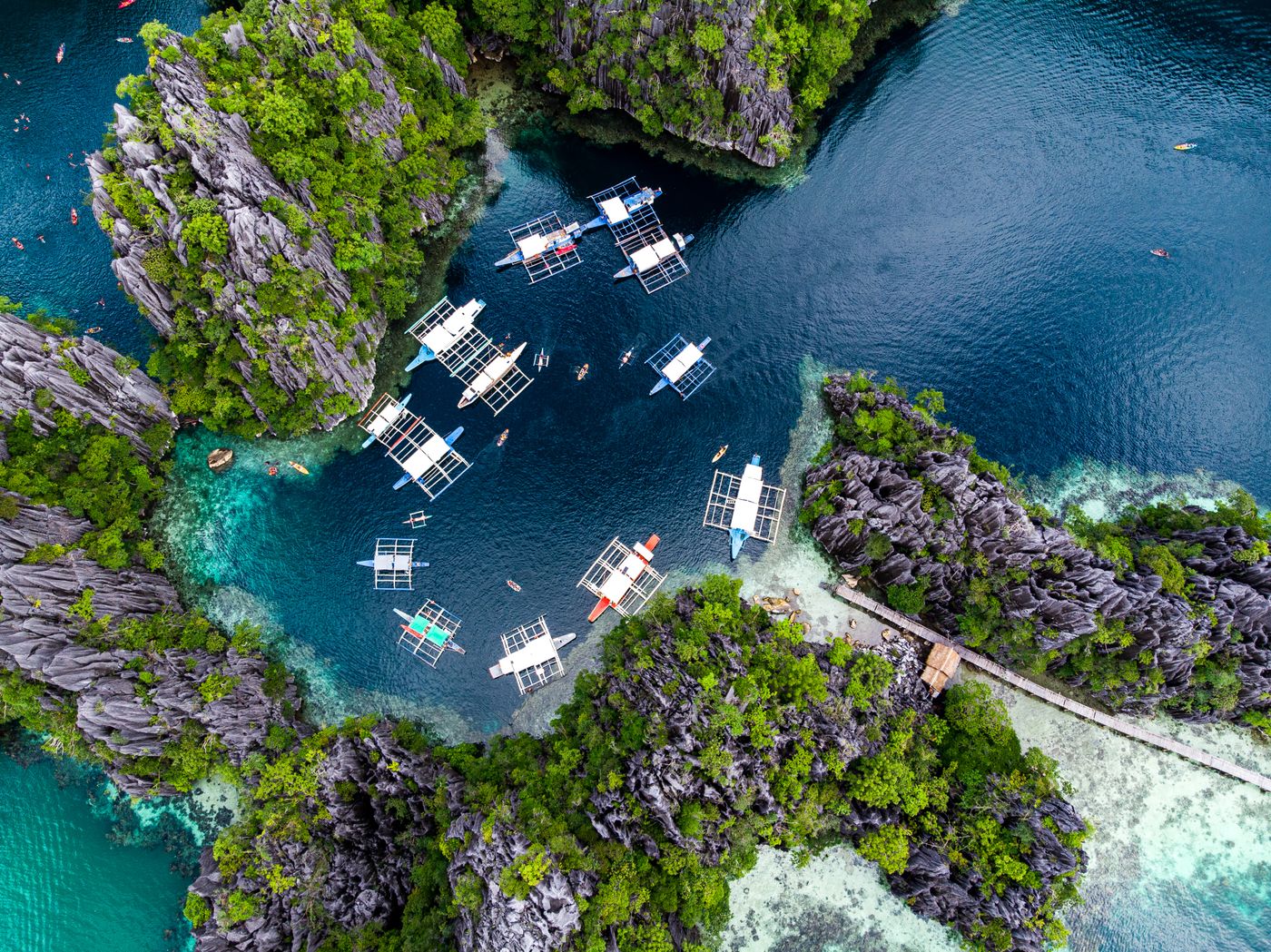
Palawan — the long thin island province extending from Mindoro southward toward Borneo — is the Philippines' most cinematically dramatic landscape. The Bacuit Bay around El Nido contains 45 limestone-karst islands, hidden lagoons accessible only at certain tides, and the Big Lagoon and Small Lagoon that have become the country's most photographed natural sites. Coron in northern Palawan adds the underwater dimension — the WWII Japanese wrecks and Mount Tapyas above the town. The El Nido Resorts group operates four properties across separate islands in Bacuit Bay; Cauayan Island Resort and a small number of independent boutique properties round out the higher-end accommodation.
Pangulasian Island by El Nido Resorts
Pangulasian remains the crown jewel of the El Nido Resorts portfolio — a private island within Bacuit Bay with 42 beach villas and pool villas, the Amianan Restaurant (with a 2026 reimagined menu emphasising sustainable Palawan sourcing), and a new beach bar lounge for sunset cocktails. The Lagen Island, Miniloc Island and Apulit Island sister resorts offer different price points and stylistic variations on the El Nido Resorts formula. Rates from approximately USD 850–USD 3,500 per night. Pre-book island-hopping tours through GetYourGuide for the Big Lagoon/Small Lagoon/Hidden Beach circuits.
Cauayan Island Resort & Huma Island Resort and Spa
Cauayan Island Resort is the boutique private-island alternative to the El Nido Resorts group — a smaller property with beachfront and over-water villas around an infinity pool. Huma Island Resort (in the Coron area, technically outside El Nido) offers a similar private-island luxury format with strong diving access. Rates from approximately USD 600–USD 2,500 per night.
Practical Palawan logistics matter. The closest airport to El Nido is Lio Airport (ENI) with direct flights from Manila on AirSwift (1 hour 15 minutes); Puerto Princesa Airport (PPS) is the larger alternative with a 5-hour land transfer to El Nido. Sea transfers from the mainland to the El Nido Resorts islands run 30–90 minutes depending on which property. For travellers wanting maximum privacy and time-efficient routing, private charter flights from Manila or Clark direct to Lio Airport are bookable via the charter comparison above. Mobile signal on the El Nido islands is intermittent at best; an Airalo or Yesim eSIM working off the resort WiFi covers most needs, but plan for a meaningful disconnection during the island stay (this is generally a feature rather than a bug for travellers seeking restorative luxury).
For independent island-hopping outside the El Nido Resorts framework, GetYourGuide handles small-group and private boat charters covering Tour A (Big Lagoon, Secret Lagoon, Shimizu Island), Tour B (Snake Island, Pinagbuyutan), and Tour C (Hidden Beach, Matinloc Shrine, Helicopter Island), with private guide options. The Underground River near Sabang (UNESCO listed, one of the New7Wonders of Nature) is best as a day trip from Puerto Princesa — entry tickets bookable via Tiqets. Operator quality varies materially within the area — our GetYourGuide vs Klook vs Tiqets comparison covers which platform vets which category best.
Boracay: Shangri-La and the white-sand reset
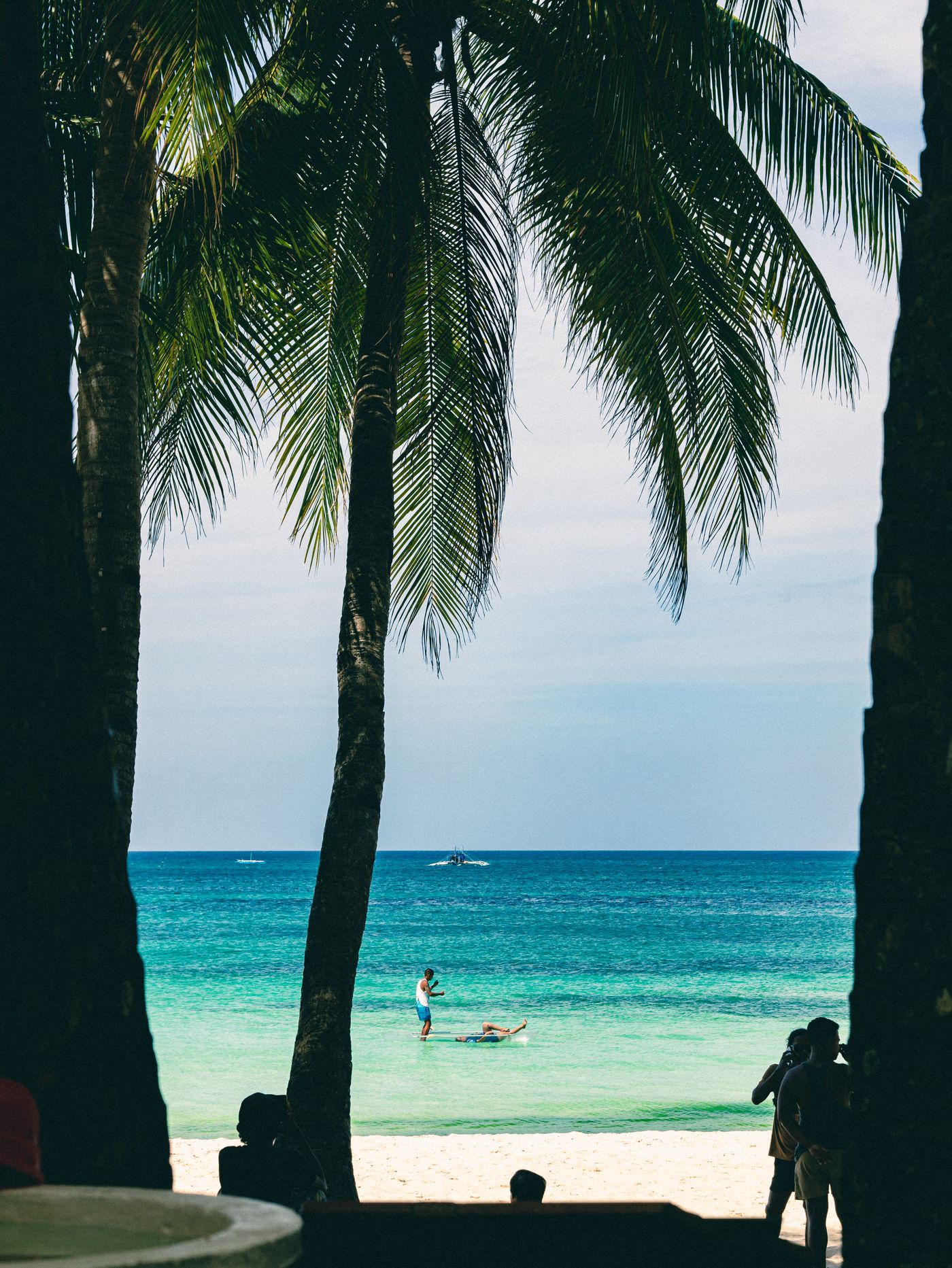
Boracay — the 10km-long island in the central Philippines with what is consistently ranked among Asia's top beaches — underwent a forced 6-month rehabilitation closure in 2018 that materially upgraded the island's environmental profile and the quality of the luxury offerings. The post-rehabilitation Boracay is structurally a different destination: cleaner, less developed at the budget end, with a more concentrated luxury cluster anchored by Shangri-La Boracay on the island's northern coastline away from White Beach's main strip.
Shangri-La Boracay Resort & Spa
Shangri-La Boracay is the most established luxury property on the island — 219 rooms and villas set in a sheltered bay on the pristine northern coastline within an eco-reserve, fronting two secluded beaches, with the strongest spa programme on the island (Chi, The Spa, a detached spa-village complex on its own rocky peninsula). Arrival is its own small luxury: guests are met at the Mabuhay Lounge in Caticlan and taken by private speedboat directly to the resort in under 30 minutes. Rates from approximately USD 400–USD 2,500 per night. Pre-book the Boracay island-hopping circuit (Crystal Cove, Crocodile Island, Magic Island cliff diving) and sunset sailing on the traditional paraw outrigger via GetYourGuide.
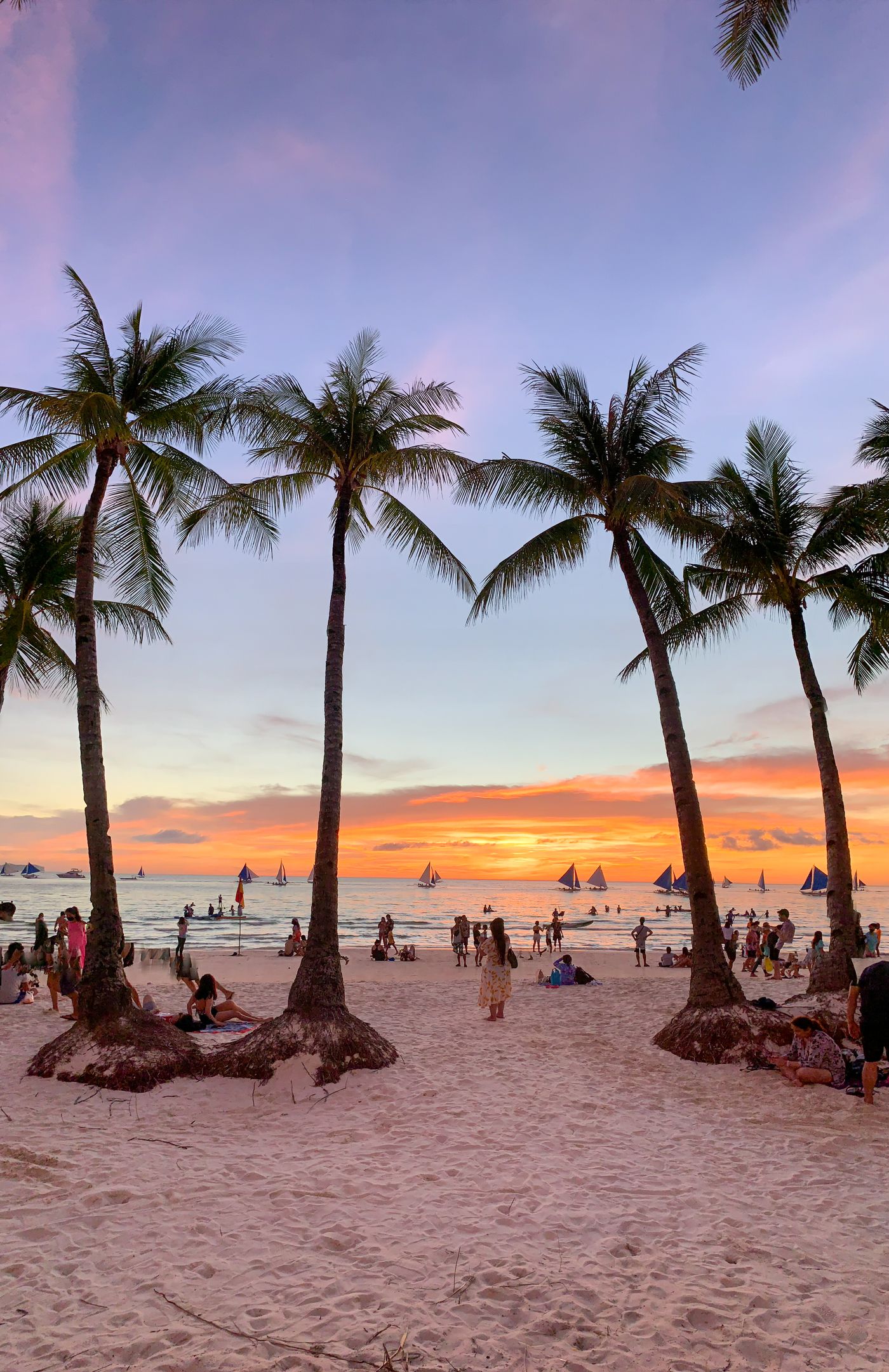
Beyond Shangri-La, Boracay's expanding luxury collection now includes Henann Palm Beach Resort (multiple pools, vibrant atmosphere), Crimson Resort & Spa Boracay (contemporary design), and Mandarin Bay Resort & Spa (Filipino hospitality and beach access). Cross-reference recent guest reviews via Tripadvisor for current operating standards — the post-rehabilitation Boracay still has variable quality across the mid-tier, and the genuinely luxury options are tightly concentrated. For Boracay airport access, the two options are Caticlan Airport (MPH, 10-minute boat transfer to the island) and Kalibo Airport (KLO, 90-minute road plus boat); Caticlan is materially more convenient but more expensive on flight prices — check both via Kiwi.com.
Travel insurance specifically matters in Boracay given the volume of water activities and the boat transfers to/from the island. SafetyWing covers boat-transfer incidents and the diving/snorkelling activities that constitute most Boracay day programming. For travellers preferring a residential-style villa over hotel accommodation (particularly for longer Boracay stays or families), Plum Guide covers a small selection of vetted Boracay villas.
Cebu, Mactan and Bohol: diving and city escape
Cebu — the Philippines' "Queen City of the South" — and its adjacent Mactan Island form one of the country's most accessible diving and resort destinations, with direct international flights into Cebu-Mactan Airport (CEB) from Tokyo, Seoul, Singapore, Hong Kong and Dubai. The Mactan resort cluster sits 30 minutes from the city centre and 15 minutes from the airport; Bohol Island (a short ferry or 25-minute flight away) adds the Chocolate Hills, the Loboc River, and the famously photogenic tarsiers.
Shangri-La Mactan Resort & Crimson Resort Mactan
Shangri-La Mactan anchors the luxury tier on Mactan with a 350-metre beachfront, a marine sanctuary directly off the property, and one of the strongest family resort programmes in the Philippines. Crimson Resort & Spa Mactan offers contemporary villa accommodation on a private beach. Both deliver the resort experience with the convenience of 15 minutes from Cebu's international airport. Rates from approximately PHP 25,000–PHP 80,000 per night. Pre-book the Kawasan Falls canyoneering and Bohol Chocolate Hills day trips via GetYourGuide; for the Oslob whale-shark swim, read recent operator reviews on Tripadvisor first — this is a debated activity with significant operator-quality and animal-welfare variation.
For Bohol specifically, the Amorita Resort and Henann Resort Alona Beach anchor the upper tier on Panglao Island (connected to Bohol mainland by bridge). The Loboc River cruise (with floating-restaurant lunch) is the long-running highlight; the Bohol Bee Farm is a worthwhile farm-to-table stop. Audio walking tours of Cebu City's old Spanish-colonial quarter (Magellan's Cross, Basilica del Santo Niño, Fort San Pedro) via WeGoTrip are useful for travellers wanting historical context without a tour group. Airport transfers from CEB to the Mactan resort cluster via GetTransfer run approximately PHP 1,200–PHP 2,500.
Siargao: surf, Nay Palad, and the new frontier
Siargao — the teardrop-shaped island off northeastern Mindanao — is the Philippines' surf capital. Cloud 9 (the right-breaking reef wave on the island's east coast) hosts international surf competitions and has driven the development of a small but distinctive luxury cluster around General Luna. Access is via Sayak Airport (IAO), with direct flights from Cebu and Clark on Philippine Airlines, Cebu Pacific and Sunlight Air; from Manila the routing runs via Cebu. Siargao's overall vibe is materially less developed than Boracay or El Nido — this is the country's frontier luxury destination, and the right choice for travellers wanting a quieter and more design-led experience.
Nay Palad Hideaway
Nay Palad Hideaway is the headline luxury property on Siargao — an all-inclusive ultra-luxury retreat of around ten villas tucked between 104 hectares of ancient mangrove forest and the white sand of the island's Pacific coast, holder of a Michelin Key and a fixture of the 2026 Condé Nast Traveler Gold List. Villas are crafted from natural materials with open-air living, handcrafted furniture and a genuinely wallet-free all-inclusive format: custom menus, spa treatments, private island-hopping and surf sessions on Cloud 9 (through the resort's Tropicsurf partnership) are all included. The transfer from Sayak Airport is a 40-minute scenic drive in the resort's own jeepney. Rates (all-inclusive) from approximately USD 2,500 per night. Nay Palad is the right Siargao choice for travellers wanting genuine privacy and bespoke programming; surf-focused travellers prioritising waves and budget should look at the General Luna boutique cluster instead.
For independent Siargao programming, the island-hopping tour to Naked Island, Daku Island and Guyam Island is the standard day trip, and beginner surf lessons with English-speaking instructors are widely available — both bookable via GetYourGuide. The Magpupungko tidal rock pools (accessible only at low tide), the Sugba Lagoon kayaking, and the Cloud 9 boardwalk are the defining land-based highlights. Read independent traveller assessments of specific Siargao operators on Tripadvisor before booking — the small-island scene is genuinely variable.
Diving: Tubbataha, Apo Reef, and the Coron wrecks
The Philippines hosts three of Asia's most significant diving destinations. Tubbataha Reef Natural Park (UNESCO listed) in the Sulu Sea is accessible only via liveaboard from late March to mid-June each year, when sea conditions allow the 10-hour crossing from Puerto Princesa. The 97,000-hectare marine park hosts more than 360 coral species and 600 fish species; manta rays, whale sharks and reef sharks are routine sightings. Apo Reef Natural Park (off Mindoro) and the WWII Japanese shipwrecks at Coron round out the bucket-list dive sites.
Three practical considerations for divers. First, liveaboard bookings for Tubbataha require 6–12 months advance planning — the season is short and the boat capacity is limited. Second, dive insurance specifically (separate from standard travel insurance) is essential — SafetyWing's Nomad Insurance covers recreational diving up to 30m depth as standard but specialist technical diving requires DAN or equivalent dedicated dive insurance. Third, the medical evacuation logistics from a Tubbataha liveaboard to Manila or Singapore in a decompression incident are extreme — verify the liveaboard's evacuation protocols before booking, and confirm your dive insurance covers the helicopter-to-fixed-wing transition.
For non-liveaboard diving accessible from luxury hotel bases, the Mactan/Cebu reefs, the Anilao macro diving (3 hours south of Manila), and Coron from a luxury base at Huma Island Resort cover most of the high-quality recreational diving in the country. Read independent operator reviews via Tripadvisor before committing to day-trip dive operators.
Practical logistics: visas, transport, health, payment
Visas and entry
The Philippines offers visa-free entry for 30 days to citizens of more than 150 countries, including the UK, US, Canada, Australia, New Zealand, all EU member states, Japan, South Korea, Singapore and Hong Kong. Extensions to 59 days are available at the Bureau of Immigration in Manila (Intramuros) for approximately PHP 3,000. Indian and mainland Chinese passport holders require a Philippines visa, available as an eTA or through embassy application. Onward travel proof and accommodation may be requested at immigration.
Transport
Inter-island domestic flights are the spine of any Philippines luxury trip — the country is impractical to traverse by surface. Philippine Airlines (PAL), Cebu Pacific and AirSwift (the El Nido specialist) cover the major resort destinations from Manila and Clark. Domestic flight schedules can shift with little notice; AirHelp handles compensation claims for cancelled or seriously-delayed flights where applicable regulations apply. For inter-island ferry routes (Boracay-Caticlan, Cebu-Bohol), 12Go Asia handles English-language bookings. Manila and Cebu have functional Grab ride-hailing; the El Nido and Boracay islands run on tricycles and small boats.
Health and insurance
The Philippines is generally a safe destination for luxury travellers, but several practical health considerations matter. Dengue fever transmission occurs year-round (peak May–November); use of mosquito repellent in the evening is sensible. Tap water is not drinkable; bottled water is universal at luxury hotels. Travel insurance with medical evacuation coverage is genuinely non-negotiable — SafetyWing's Nomad Insurance is the practical standard for most travellers at approximately $56 per four-week period, covering trip cancellation, baggage, and medical evacuation to the nearest adequate hospital (Singapore or Hong Kong in worst-case scenarios).
Payment and connectivity
The Philippine Peso (PHP) trades at approximately PHP 55–PHP 60 to USD 1 in 2026. International credit cards are accepted at all hotels and major restaurants; ATMs are widely available in Manila, Cebu, Boracay and Puerto Princesa but increasingly scarce in El Nido, Coron and Siargao. Carry approximately PHP 5,000–PHP 10,000 cash for the island portions of any trip. GCash is the local mobile payment app but requires a Philippine SIM to set up; tourists generally manage on cards and cash. For data, Airalo Philippines eSIMs run from approximately $4.50 for 1GB; Yesim offers competitive rates on longer plans — our honest Yesim vs Airalo comparison covers which suits which trip. Connectivity is genuinely excellent in Manila and Cebu but variable on the smaller islands — treat the El Nido stay as a planned disconnection.
How to plan a luxury Philippines trip
Three structured itineraries cover most luxury Philippines trips. Each can be extended or compressed. For the wider regional picture, our month-by-month Southeast Asia timing guide shows how the Philippine dry season aligns with Thailand, Vietnam and Indonesia.
| Itinerary | Duration | Route | All-in budget (couple) |
|---|---|---|---|
| Classic introduction | 10 days | Manila (2n) → El Nido (4n) → Boracay (3n) → Manila (1n out) | ~$10,000–$22,000 |
| Amanpulo headline | 10 days | Manila (2n) → Amanpulo (5n) → Cebu/Mactan (2n) → out | ~$25,000–$45,000 |
| Diving and frontier | 12 days | Manila (1n) → Tubbataha liveaboard (6n) → Siargao Nay Palad (4n) | ~$18,000–$40,000 |
| Full archipelago | 14 days | Manila (2n) → El Nido (3n) → Amanpulo (4n) → Boracay (3n) → Manila (2n) | ~$25,000–$50,000 |
Best months are December through April (dry season across all major destinations). May brings the hottest temperatures; June through November is the southwest monsoon with significant rainfall and elevated typhoon risk. Travel insurance specifically for trip cancellation matters more for Philippines trips in the typhoon season — SafetyWing covers weather-related cancellations under standard terms. Premium luxury operators with Philippines expertise include Audley Travel, Imperial Tours, Original Travel and Remote Lands. For self-assembly, layer hotels (book direct), experiences (GetYourGuide, Tiqets), transfers (GetTransfer, Welcome Pickups), ferries (12Go Asia), and apartments where applicable (Plum Guide).
Frequently asked questions
Do I need a visa to visit the Philippines in 2026?
The Philippines offers visa-free entry for 30 days to citizens of more than 150 countries, including the UK, US, Canada, Australia, New Zealand, all EU member states, Japan, Singapore and Hong Kong. No electronic pre-authorisation is required; you receive your 30-day permit on arrival at any Philippine international airport. Extensions to 59 days are available at the Bureau of Immigration in Manila (Intramuros) for approximately PHP 3,000. Indian and mainland Chinese passport holders require a visa.
What is Amanpulo and how do I get there?
Amanpulo is the Aman resort on Pamalican Island in the Cuyo Archipelago between Palawan and the Visayas. The private island contains 42 casitas and 18 villas operated as a single cohesive Aman property, and holds a Michelin Key in the Michelin Guide hotel selection. Access is exclusively via Amanpulo's own scheduled flights from Manila (NAIA) — an approximately 70-minute private turboprop flight from the resort's own hangar and lounge, with round-trip airfare in the region of USD 700–800 per adult. Rates from approximately USD 2,500 per night.
Is the Philippines safe for luxury travel?
The Philippines is generally safe for luxury travellers staying within the major destinations (Manila, Boracay, Palawan, Cebu, Bohol, Siargao). Petty crime exists in Manila but is minimal at the luxury hotel level. Several southern Mindanao provinces remain subject to travel advisories from Western governments and are not part of any standard luxury itinerary. The more material safety considerations are typhoon-season weather (June through November) and the medical evacuation logistics for remote-island stays — trip insurance with medical evacuation cover is genuinely non-negotiable at this price level.
Do I need travel insurance for the Philippines and what does it cost?
Yes — trip and medical insurance is essential for any Philippines trip, particularly given the medical evacuation logistics from remote islands. Standard coverage including trip cancellation, baggage, and medical evacuation to the nearest adequate hospital (frequently Singapore or Hong Kong in worst-case scenarios) runs approximately $56 per four-week period through SafetyWing's Nomad Insurance. Recreational diving up to 30m depth is covered as standard; technical diving requires separate specialist coverage through DAN or equivalent. Verify the precise policy terms before departure, particularly for charter-class small aircraft transfers to private-island resorts.
When is the best time to visit the Philippines?
The best months are December through April (the dry season across all major destinations — Manila, Palawan, Boracay, Cebu and Bohol). May brings the year's hottest temperatures; June through November is the southwest monsoon with significant rainfall and elevated typhoon risk. The Tubbataha liveaboard diving season is short — mid-March to mid-June only — and requires 6–12 months advance booking. Holy Week (variable, late March to mid-April) brings the year's largest domestic tourism surge with accommodation rates peaking and Manila businesses partially closed.
How should I book a luxury Philippines trip?
For travellers wanting full curation, premium luxury operators with Philippines expertise include Audley Travel, Imperial Tours, Original Travel and Remote Lands. For self-assembly, book hotels direct through brand websites (Amanpulo, El Nido Resorts and Shangri-La all offer best-rate guarantees with additional inclusions), then layer experiences via GetYourGuide for tours, Tiqets for attractions and WeGoTrip for audio walking tours. GetTransfer and Welcome Pickups handle airport transfers; 12Go Asia covers inter-island ferries; SafetyWing provides comprehensive trip insurance; and Plum Guide offers vetted private apartment alternatives in Manila.