Guided Overland Safaris in Africa: What the Format Actually Delivers
A guided overland safari puts you in a purpose-built truck with a group capped at around 22, two crew throughout, and participation camping across multiple countries — and for a southern Africa route it costs roughly USD 1,900–3,900 per person before extras, a fraction of a private safari covering the same ground. It is the most credible entry point into serious African overlanding for travellers without the vehicle, the skills, or the logistics appetite for self-drive. What it is not is a private expedition — and knowing where that line falls is the whole decision.
On this page
What a guided overland truck actually is
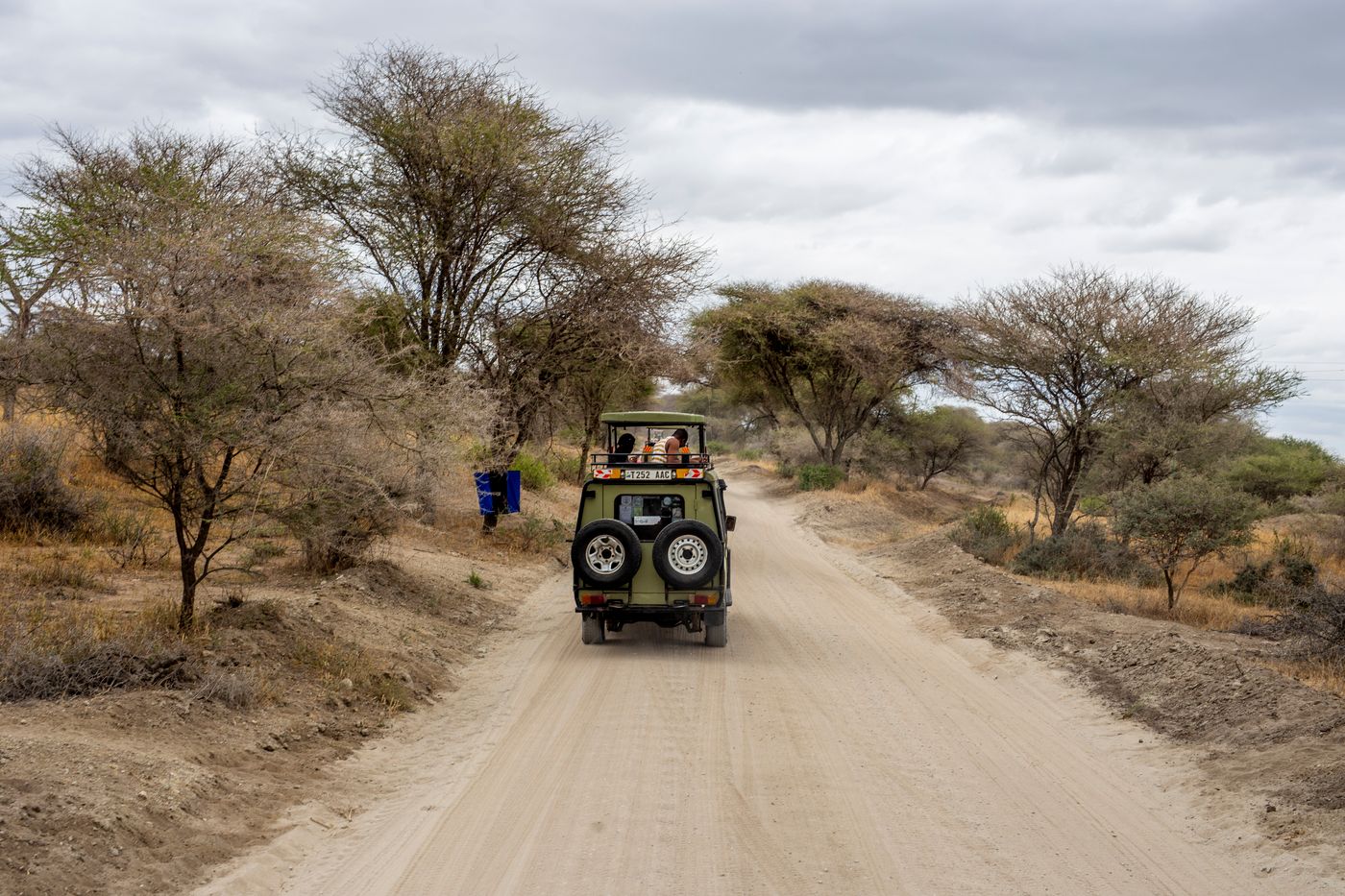
The vehicle at the centre of the format — most operators run a version of the purpose-built overland truck often branded a Lando — is not a converted coach. It is a high-clearance vehicle designed specifically for multi-day, multi-country African travel, carrying around 18–22 passengers in individual window seats with overhead storage, a cool box, roof hatches, and open sides for game viewing. It has a raised seating platform for unobstructed sightlines and the mechanical robustness for sustained travel on the gravel and dirt roads that make up most of sub-Saharan Africa's network off the tar.
The truck's advantage over a private 4WD is scale. It carries the camping equipment, the cooking kit, the fresh food, the water, and a full group across borders through several countries without the vehicle preparation and logistics burden landing on the traveller. The two-person crew — usually a driver-mechanic and a guide-cook — handles mechanical issues, border paperwork, campsite setup, and most meals. Your job is to show up, participate where participation is the format, and pay attention to the landscape. That trade — comfort and privacy given up in exchange for reach, value, and zero logistics — is the entire proposition, and it is a genuinely good one for the right traveller.
This is the opposite end of the spectrum from a self-drive expedition in Namibia, where the vehicle prep, navigation, and recovery are all yours. Between the two sits the question this guide exists to answer: which one is right for the trip you actually want.
Flying in to start the journey?
Most European travellers join a southern Africa overland in Johannesburg, Cape Town, or Windhoek. If you are coordinating a private flight into the start point — or an onward leg out of Victoria Falls — it is worth comparing a charter quote against the commercial connection before you commit.
Compare a private charter quote →The routes that matter
Southern Africa overland (about 15 days, Johannesburg to Victoria Falls)
The flagship southern route runs Johannesburg → a community rhino sanctuary → the Okavango Delta by mokoro with bush camping → Chobe National Park → Matobo National Park in Zimbabwe for a walking rhino safari → Victoria Falls → Kruger National Park → Johannesburg, taking in Botswana, Zimbabwe, and South Africa. The Okavango section — a night or two of bush camping in the delta, reached by traditional dugout canoe, with no facilities and no vehicle — is the centrepiece and among the most extraordinary camping experiences anywhere in Africa. The luxury equivalent is a fly-in mobile camp in the same delta at many times the price; the overland version delivers the same water, the same guide knowledge, and the same stars overhead for a 15-day trip that typically starts around USD 1,900–3,200 per person. The Okavango and Chobe both sit in Botswana — covered in depth in our Botswana safari guide if you want to weigh the camping route against a lodge-based one.
Cape and Namibia (about 12 days, Cape Town to Windhoek)
The other essential southern route runs Cape Town → Fish River Canyon (Africa's largest, around 550m deep) → the Sossusvlei and Deadvlei dunes → Swakopmund on the coast → Etosha National Park → Windhoek. It delivers the canyon, the dunes, the coast, and Etosha's game without requiring any driving capability beyond riding in the truck. For a first Namibia visit, the crew's local knowledge of Etosha's waterholes and the Sossusvlei timing adds material value over going it alone.
Longer expeditions and private departures
Beyond the two-week routes sit the long-haul expeditions — Cape Town to Victoria Falls runs can stretch to seven countries and several weeks, and continent-crossing routes from Nairobi reach 40-plus days. Many operators also offer private departures on the standard routes: your group only in the truck, same two crew, full flexibility on pace. Private departures cost more than scheduled group ones but sit well below a bespoke private safari using dedicated game-drive vehicles and lodges throughout. For a group of eight to twelve, private-departure pricing per person often lands close to a mid-range lodge safari while delivering the overland camping experience rather than a lodge one.
| Route | Length | From (pp, ex-flights) | Note |
|---|---|---|---|
| Johannesburg → Victoria Falls loop | ~15 days | ~USD 1,900–3,200 | Okavango bush camp + Chobe + Kruger |
| Cape Town → Windhoek | ~12 days | ~USD 1,800–2,400 | Fish River Canyon, Sossusvlei, Etosha |
| Cape Town → Victoria Falls | ~22 days | ~USD 3,050–3,900 | Combines the two above plus more |
| Long-haul expedition (multi-country) | 40–56 days | From ~USD/£ 2,500 + local payment | Often a separate on-the-ground kitty |
What participation camping really means — honestly
African overland tours in this category are nearly all classified as participation camping. That means travellers share campsite setup, help with meal preparation on a rota, and load the truck — there is no porter pitching your tent while you take sundowners. This is deliberate. The participation element is what creates the group cohesion that makes the social dimension of the trip work, and the cooking rota tends to produce meals better than the price point suggests, because the crew's cooking is genuinely good.
What participation does not mean is sleeping on the ground in a leaking tent. Camping on these routes generally involves fitted-out campsites with shower and toilet blocks (quality varies by location), dome or rooftop tents on flat ground with sleeping mats, and in some places established camping lodges with a proper kitchen block. The Okavango and Serengeti bush camps are the exceptions — there, facilities are genuinely minimal, and that is the entire point. If the idea of striking your own tent at dawn is the dealbreaker, that is a signal the format is not for you, and worth knowing before you book rather than after.
The optional-activities question
The base price covers the overland transport, most meals, accommodation, and some headline experiences. A significant number of the experiences travellers later remember as the highlights are optional extras at additional cost — the Chobe River sunset cruise, the open-vehicle game drive in Chobe, the Victoria Falls helicopter flight, the Okavango doors-off scenic flight, a hot-air balloon over the Serengeti on east-Africa routes. The crew presents the options at each stop; there is no pressure to take them, but on most routes the best experiences are the optional ones.
Budget the extras up front. Plan for roughly 25–35% above the advertised tour price once you add optional activities, meals not included (operators typically advise USD 60–140 for a trip), visas, and tips. A 25-minute Victoria Falls helicopter flight runs around USD 284; a Chobe sunset cruise around USD 40–60; an open-vehicle game drive USD 50–150. The single most common first-timer regret is under-budgeting these — when the whole group signs up for the balloon or the helicopter, you will want to as well.
Many of these activities can be booked independently rather than through the tour operator, which is often cheaper and gives you a confirmed slot before you arrive. For the bookable, ticketed experiences around the main stops, comparing prices on GetYourGuide before departure is worthwhile — Victoria Falls activities, Chobe cruises, and Cape Town add-ons are all well covered there.
Insurance, evacuation and connectivity
An overland trip through remote southern or east Africa needs travel insurance that explicitly covers emergency medical evacuation from wilderness environments — a bush camp in the Okavango is a long way from a hospital, and standard policies frequently cap evacuation inadequately or exclude adventure activities entirely. SafetyWing covers medical evacuation globally including remote environments and is worth comparing against your existing policy before departure. If you want the full picture on getting out of a remote location when something goes wrong, our crisis evacuation playbook walks through how evacuation cover actually works in practice.
On connectivity: an overland route crosses several countries, and roaming charges across South Africa, Botswana, Zimbabwe, Namibia, and Zambia add up fast. A regional or multi-country eSIM from Airalo set up before you fly means you have data the moment you land and on the campsite evenings where there is signal, without swapping physical SIMs at each border. Coverage is patchy in the genuinely remote sections — which, for a few nights, is rather the point.
When guided overland beats self-drive — and when it doesn't
The honest version of this decision comes down to what you are optimising for. Guided overland trades comfort and privacy for reach, value, and zero logistics. Self-drive trades convenience for total control and solitude. Neither is better in the abstract; they are better for different travellers.
- You want to cross several countries without handling border logistics yourself
- You do not have 4WD expedition or recovery experience
- You are travelling solo and want a ready-made group
- You want Africa's best wildlife access well below private-safari prices
- You are happy to camp and pitch in on the chores
- You want a private vehicle and a guide available at any hour
- You want lodge comfort rather than camping
- You want complete control of pace and route
- The participation format of a group tour does not suit how you travel
- You have the skills and time for a remote self-drive route
A private departure addresses some of the right-hand column — your own group, your own pace — but not the camping or the shared-vehicle reality. If the answer is really lodge comfort and a single region done intensely, you are looking at a private safari rather than overland at all; our luxury safari operator index is the better starting point there. And if it is control and solitude across a single self-drive-friendly country, Namibia is where that case is strongest.
One note on operators: this is a crowded category, and the names range from large global adventure brands to specialist long-haul expedition outfits. The thing that varies most between them is not the route — most run similar circuits — but the truck condition, the crew quality, the group-size cap, and what is included versus optional. Read the inclusions line by line and compare the true total cost, extras and all, rather than the headline price.
Frequently asked questions
How much should I budget on top of the advertised tour price?
Plan for roughly 25–35% above the advertised price. On a 15-day southern Africa route, the optional activities most travellers identify as highlights are extras: a Chobe River sunset cruise (around USD 40–60), an open-vehicle game drive in Chobe (USD 50–150), a Victoria Falls scenic helicopter flight (a 25-minute flight runs around USD 284, shorter ones less), and an Okavango doors-off scenic flight from Maun. Add meals not included (operators typically advise USD 60–140 for the trip), visa costs, and guide tips (commonly USD 5–8 per person per day for the lead guide plus smaller amounts for the driver and local guides). The combined extras routinely add 25–35% to the headline figure.
What does participation camping actually involve?
Participation camping means travellers share the work of the trip — pitching and striking your own tent, helping with the cooking rota, and loading the truck — rather than having staff set up camp while you watch. It is a deliberate format choice, not a cost cut: the shared chores create the group cohesion that makes the social side of an overland trip work. What it does not mean is roughing it in a leaking tent. Most nights are spent at established campsites with shower and toilet blocks; the genuinely minimal nights — a bush camp in the Okavango Delta, for example — are the exception, and that remoteness is the entire point of them.
Is a guided overland truck just a tour bus in disguise?
No. A purpose-built overland truck — the Lando-style vehicle most operators run — is a high-clearance, raised-platform vehicle engineered for sustained travel on the gravel and dirt roads that make up most of sub-Saharan Africa off the tar. It carries the camping kit, cooking equipment, food, water, and around 18 passengers across multiple border crossings without that logistics burden falling on the traveller. The seats are individual window seats with roof hatches and open sides for game viewing, not a coach layout. It is not a private safari vehicle, but it is a long way from a tour bus.
Guided overland or self-drive — which should I choose?
Choose guided overland if you want to cross several countries without handling the border paperwork and vehicle prep yourself, you do not have 4WD expedition experience, you are travelling solo and want a ready-made group, or you want serious wildlife access at a price well below a private safari. Choose self-drive if you want full control of pace and route, you have the recovery and navigation skills for remote tracks, and you would rather be alone with the landscape than in a group. Namibia is the most self-drive-friendly country in Africa; multi-country routes through Botswana, Zimbabwe, and beyond are where guided overland earns its place because the cross-border logistics are genuinely complex.
How large are the groups and what is the age mix?
Most African overland trucks cap at around 22 passengers with an average of roughly 18, and run with two crew throughout — typically a driver and a guide-cook. Standard departures attract a wide age range, usually mid-20s to mid-50s, with no upper age limit. Several operators also run age-capped variants (often under 35) for travellers who specifically want a younger group. The physical requirement is moderate: you need to be comfortable getting on and off the truck several times a day, pitching a tent, and walking on game-viewing excursions. There is no sustained physical exertion beyond that.
Is the Okavango Delta mokoro section worth it?
It is the section most participants describe as the emotional centrepiece of a southern Africa route. The journey into the delta by mokoro — the traditional dugout canoe, poled by guides from the local community — leads to a bush camp on a spot the polers choose rather than a fixed site, with a walking safari and no vehicle noise or artificial light. Wildlife on the walking element — elephant, hippo heard from the water, antelope and birds — is real rather than guaranteed, which is the right expectation to bring. Travellers set on guaranteed big-cat sightings should look at Botswana's Moremi or Savute instead.
How does a guided overland safari differ from a private lodge safari?
A guided overland safari is a camping-based group trip in a shared truck, covering long distances and several countries for roughly USD 1,900–3,900 on a two-to-three-week route before extras. A private lodge safari uses dedicated game-drive vehicles, professional guides, and permanent or mobile luxury camps, with far higher daily rates but maximum comfort, privacy, and game-viewing intensity in a single region. Some operators offer private overland departures — your own group in the truck with the same two crew — which sit between the two on both price and privacy. The choice is fundamentally between breadth and value on one hand and depth and comfort on the other.
Coordinating a private flight into Johannesburg, Cape Town, or Windhoek to meet your overland departure — or flying out from Victoria Falls?
Get a private charter quote →Continue reading
Prices are indicative, based on published 2026 fares across multiple operators researched in mid-2026, and vary significantly by season, departure date, and operator. Always confirm current pricing and inclusions directly with the operator before booking. This article contains affiliate links — bookings made through our partner links may earn us a commission at no additional cost to you.